
What is a Machine Shop
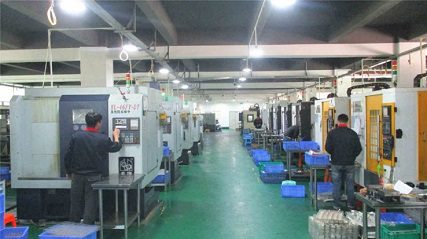
Struggling to source custom parts? The world of manufacturing can be confusing. A machine shop is the core, turning raw materials into finished components with precision.
A machine shop is a specialized workshop where raw materials, such as metal and plastic, are shaped into custom parts. Using tools like lathes, mills, and grinders in a process called subtractive manufacturing, it produces precise components essential for industries from aerospace to automotive.
Understanding what a machine shop does is the first step. But to truly appreciate its role, you need to see how it fits into the bigger picture of manufacturing. From simple brackets to complex engine components, these facilities are the backbone of modern production. Let's explore the specific functions and the incredible journey these shops have taken through history.

What Exactly is a Machine Shop and What Functions Does It Serve in Manufacturing?
A machine shop is a facility where machining, a form of subtractive manufacturing, is performed. The basic principle is to take a block of raw material, often called a workpiece or blank, and selectively remove material from it to achieve a desired final shape and size. This process is guided by technical drawings or computer-aided design (CAD) files.
The functions of a machine shop are critical across the entire product lifecycle.
Core Functions in Manufacturing
- Prototyping: Machine shops create functional prototypes from design files. This allows engineers and designers to test the form, fit, and function of a part before committing to expensive tooling for mass production. This is essential for design validation and iteration.
- Low to High-Volume Production: After a design is finalized, machine shops handle the production runs. This can range from a single custom part to millions of identical components. Modern shops like ours use CNC technology to ensure consistency and efficiency for any volume.
- Low-Volume Machining: Ideal for specialized equipment, custom projects, or initial market entry.
- High-Volume Machining: Used for consumer products, automotive components, and other large-scale applications where economies of scale are important.
- Repair and Modification: Machine shops can repair broken equipment by manufacturing replacement parts. They can also modify existing components to improve performance or adapt them for new uses.
- Tool and Die Making: This is a specialized function where a machine shop creates the tools, dies, jigs, and fixtures that other manufacturing processes rely on. For example, a shop might create the mold for an injection molding process or the stamping die for a sheet metal press.
Key Processes and Equipment
Machine shops utilize a range of equipment to perform these functions. The primary categories are:
- Milling: This process uses rotating multi-point cutting tools to remove material from the workpiece.
- Vertical Mills: The spindle axis is vertically oriented.
- Horizontal Mills: The spindle axis is horizontally oriented.
- CNC Milling: A computer controls the movement of the tool and workpiece, allowing for complex shapes and high precision. 5-axis CNC milling is an advanced form that can move a part or tool on five different axes simultaneously, enabling the creation of extremely complex geometries.
- Turning: This process involves rotating the workpiece while a single-point cutting tool moves along its surface to create cylindrical features.
- Lathes: The primary machine used for turning operations.
- CNC Turning Centers: Automated lathes that can perform multiple operations, including drilling, threading, and milling, in a single setup.
- Drilling: This creates or refines holes in a workpiece using a drill bit.
- Grinding: This uses an abrasive wheel as the cutting tool for finishing parts to very fine tolerances and smooth surface finishes.
How Have Machine Shops Evolved From the Industrial Revolution to the Modern CNC Era?
The machine shop has transformed dramatically since its inception, reflecting the major technological shifts of the last two centuries. This evolution can be understood in two main phases: the manual era and the automated era.
The Manual Era: The Industrial Revolution
The concept of the modern machine shop was born during the Industrial Revolution in the late 18th and 19th centuries. The invention of machine tools like the screw-cutting lathe, the milling machine, and the planer was revolutionary. For the first time, metal parts could be made with a level of interchangeability and precision that was previously impossible.
- Early Machine Tools: These machines were powered by water wheels or steam engines through a complex system of overhead shafts, belts, and pulleys.
- Skilled Machinists: Operation was entirely manual. A skilled machinist was a master craftsman who relied on their experience, feel, and manual measurements to produce parts. Accuracy was dependent on the individual's skill.
- Impact: This era enabled the mass production of machinery like steam engines, textile looms, and firearms, which powered industrialization across the world.
The Automated Era: The Rise of CNC
The second major transformation began in the mid-20th century with the development of numerical control (NC) and later, computer numerical control (CNC).
- Numerical Control (NC): Developed in the 1940s and 1950s, NC technology used pre-programmed instructions on punched tape to control the motion of machine tools. This was the first step toward automation, reducing the need for constant manual operator input.
- Computer Numerical Control (CNC): With the advent of computers, NC evolved into CNC. Instead of punched tape, CNC machines are controlled by computer programs. CAD (Computer-Aided Design) software is used to create a digital model of the part, and CAM (Computer-Aided Manufacturing) software generates the G-code that instructs the machine tool's every move.
- Modern CNC Machine Shop: Today's machine shops are defined by CNC technology.
- Precision and Repeatability: CNC machines can produce thousands of identical parts with tolerances as tight as +/- 0.001" (0.025 mm) or even finer. Human error is virtually eliminated from the cutting process.
- Complexity: Multi-axis CNC machines can create highly complex geometries that would be impossible to make with manual machines.
- Efficiency: Operations are faster, setups are quicker, and machines can often run unattended, significantly increasing productivity and reducing costs for our customers.
- Flexibility: A CNC machine can be quickly reprogrammed to produce a completely different part, making it ideal for everything from one-off prototypes to high-volume production.
At Worthy, we operate a modern CNC machine shop. This allows us to offer our clients the highest levels of precision, consistency, and efficiency, turning their complex designs into tangible, high-quality parts.
Which Core Machines and Equipment Are Essential in a Well-Equipped Machine Shop?
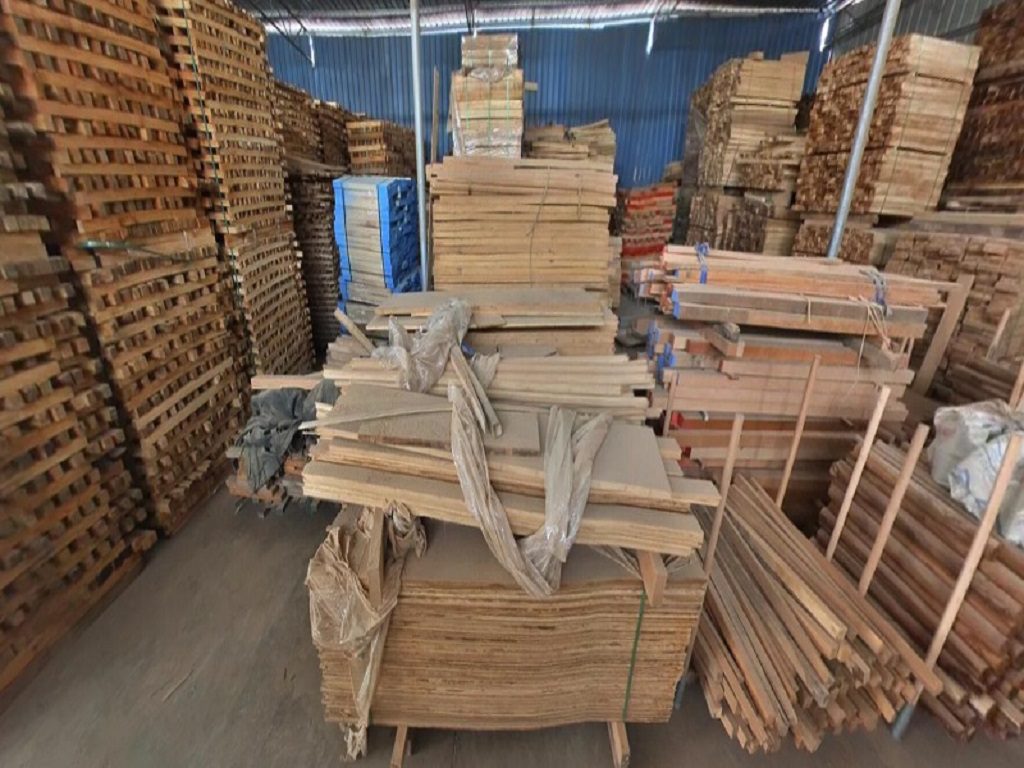
A well-equipped machine shop is built around a core set of machines designed for material removal. These machines, combined with support equipment, allow us to transform raw stock into finished components that meet precise specifications. The essential equipment can be grouped into primary machining centers and support machinery.
Primary Machining Centers
These are the machines that perform the bulk of the material cutting. In a modern shop, these are almost always CNC (Computer Numerical Control) machines.
- CNC Milling Machines: These are the most versatile machines in a shop. They use a rotating cutting tool to remove material from a stationary workpiece.
- 3-Axis and 4-Axis Mills: These machines move the tool or workpiece along the X, Y, and Z axes, with the 4th axis allowing rotation. They are used for a wide range of parts, from simple plates to more complex housings.
- 5-Axis CNC Mills: These are highly advanced machines that add two rotational axes. This allows the cutting tool to approach the workpiece from any direction. At our facility, we use 5-axis machining to produce parts with extremely complex geometries in a single setup, which increases accuracy and efficiency.
- CNC Turning Centers (Lathes): Turning centers create cylindrical parts. They work by rotating the workpiece at high speed while a stationary cutting tool removes material from the diameter or face.
- Functions: We use our CNC lathes to produce shafts, pins, bushings, and other components with rotational symmetry. They are also capable of performing secondary operations like drilling, milling, and threading, often in the same setup.
- Capacity: Our lathes can handle parts up to 62” (1,575 mm) in length and 32” (813 mm) in diameter, accommodating a wide range of project sizes.
Secondary and Finishing Machines
These machines perform specialized or finishing operations.
- Grinding Machines: Grinders use a spinning abrasive wheel to remove very small amounts of material. Their primary purpose is to achieve very tight tolerances and an extremely smooth surface finish, often better than Ra 32.
- Drill Presses: While CNC machines can drill holes, a dedicated drill press is still essential for simple, quick drilling operations or secondary work.
- Saws: Industrial saws, such as band saws, are used for the first step of many projects: cutting raw material stock (like bars, blocks, or sheets) down to a manageable size for the CNC machines.
What Precision Tools Do Machine Shops Use and How Do They Enhance Manufacturing Quality?
Manufacturing precise parts is impossible without equally precise measurement tools. These tools are used at every stage of the process, from initial setup to final inspection, to ensure every dimension matches the customer's drawing. This commitment to measurement is why we can confidently offer 100% inspection on all products.
Common Measurement and Inspection Tools
These tools are categorized by their application and level of precision.
- Handheld Measuring Tools: These are used by machinists directly at the machine for quick checks and setup verification.
- Digital Calipers: The most common tool for measuring length, width, depth, and diameter. They provide quick and reasonably accurate readings.
- Micrometers: Used for measuring external and internal diameters, as well as thickness, with higher precision than calipers. They are critical for holding tight tolerances.
- Gauges: These are fixed-dimension tools used for pass/fail checks. Common types include pin gauges (to check hole sizes), thread gauges (to verify thread specifications), and height gauges (to measure and scribe vertical distances).
- Advanced Inspection Equipment: This equipment is typically used in a quality control lab for final inspection and to verify the most critical dimensions.
- Coordinate Measuring Machine (CMM): A CMM is a cornerstone of modern quality assurance. It uses a highly sensitive probe to measure the geometry of a part in three-dimensional space. We use our CMMs to verify complex features and geometric dimensioning and tolerancing (GD&T) callouts, ensuring we can meet tolerances below +/- 0.001".
- Optical Comparators: This machine projects a magnified shadow of a part onto a screen, allowing inspectors to easily check its profile and dimensions against a template.
- Surface Roughness Testers: Also known as profilometers, these devices measure the texture of a part's surface. This is essential for verifying surface finish requirements, such as our standard finish of 125 Ra or better.
How These Tools Enhance Quality
The systematic use of these tools is fundamental to quality manufacturing.
- Verification: The primary function is to verify that the finished part conforms to all specifications on the technical drawing. This prevents out-of-spec parts from ever reaching the customer.
- Process Control: Machinists use measurement data during production to monitor tool wear and make adjustments. This proactive approach maintains consistency from the first part to the last in a high-volume run.
- Documentation and Certification: Data from CMMs and other advanced tools can be used to generate detailed inspection reports. These reports provide our customers with documented proof that their parts meet all quality requirements, building trust and ensuring component reliability.
How Has CNC Technology Revolutionized Traditional Machining Processes?
The shift from traditional, manual machining to Computer Numerical Control (CNC) machining represents the single greatest revolution in manufacturing history. Before CNC, the quality and speed of a part depended entirely on the skill of a human operator turning cranks and levers. CNC technology replaced manual control with computer precision, fundamentally changing what is possible.
This revolution has impacted every aspect of the machining process.
- Precision and Repeatability:
- Traditional: A skilled machinist could produce precise parts, but consistency across hundreds of parts was difficult. Every part was slightly different, and human error was always a factor.
- CNC: A CNC machine follows a computer program. It can execute the same cuts with the same precision, thousands of times in a row. This is how we can consistently hold tolerances of +/- 0.005" or even tighter, down to sub +/- 0.001", ensuring every part in a batch is virtually identical.
- Complexity of Geometries:
- Traditional: The shapes that could be machined were limited by the operator's ability to coordinate movements on different axes manually. Complex curves and angles were extremely difficult or impossible.
- CNC: Modern 5-axis CNC machines can articulate the tool and workpiece simultaneously, allowing for the creation of organic curves and highly complex shapes in a single setup. This capability is essential for industries like aerospace and medical devices.
- Efficiency and Speed:
- Traditional: Manual machining was a slow, labor-intensive process. Each operation required the machinist's full attention.
- CNC: CNC machines operate at optimized speeds and feed rates that are much faster than manual methods. They can also run for extended periods with minimal supervision, which is why we can offer lead times as short as 3 business days. Automation drastically reduces cycle times and labor costs.
- Flexibility and Prototyping:
- Traditional: Setting up a machine for a new part was a long process. This made producing a single prototype or small batch very expensive.
- CNC: To make a new part, we simply load a new program. This makes CNC machining incredibly flexible. It is equally cost-effective for creating a single prototype for testing or for a high-volume production run of thousands of units.
- Integration with Digital Design:
- Traditional: The machinist worked from a printed 2D drawing, interpreting the design and translating it into machine movements.
- CNC: The process is now a direct digital thread. A 3D CAD model is used to generate a CAM toolpath, which creates the G-code that the machine reads. This ensures that the final physical part is a perfect match to the original digital design.
What Quality Control Methods Ensure Precision in Machine Shop Operations?
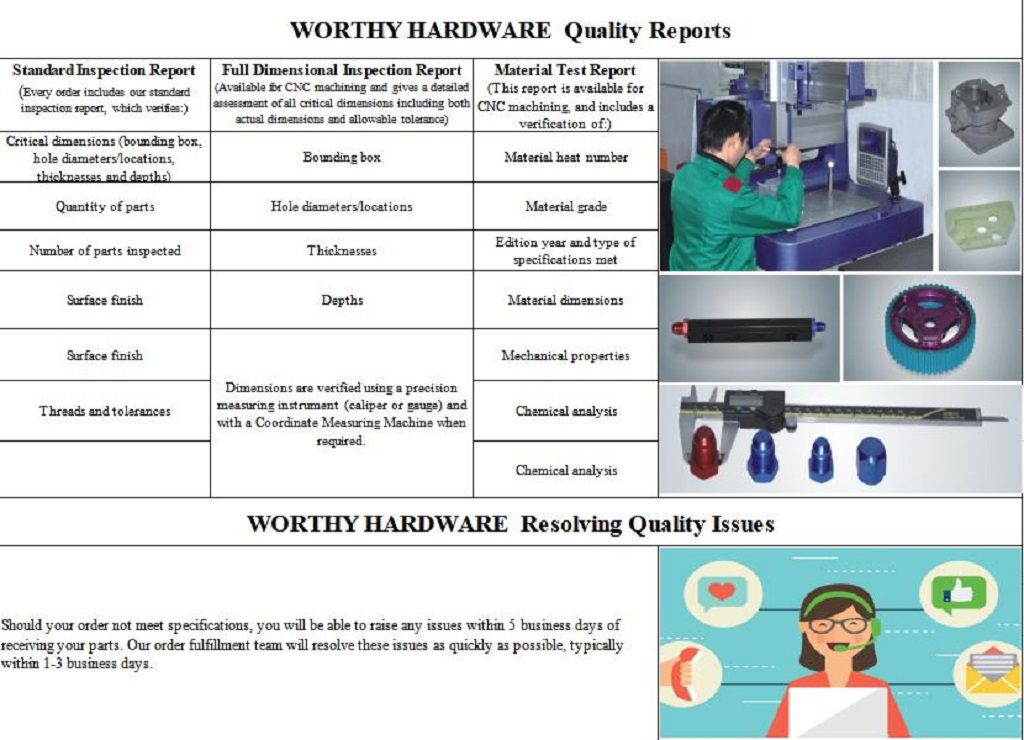
In our machine shop, quality control is not a final step; it is a comprehensive system integrated into every stage of the production process. Delivering parts that meet or exceed customer specifications is our primary goal. This is why we perform 100% inspection and have built our reputation on reliability.
Our quality assurance process is built on several key methods.
- 1. Design for Manufacturability (DFM) Review: Quality begins before any metal is cut. Our team of engineers reviews every customer drawing and CAD file. We look for potential issues that could affect quality or increase cost. By suggesting design improvements, we help our customers achieve better results and save money.
- 2. Raw Material Verification: We only use materials from trusted suppliers. Upon arrival, all raw materials are inspected to confirm they are the correct type and grade specified by the customer. We verify material certificates to ensure properties like hardness and composition are accurate. A part made from the wrong material is a failed part.
- 3. In-Process Inspection: During the machining process, quality checks are performed continuously.
- First-Off Inspection: The very first part produced from a new setup is taken to our quality lab for a complete inspection. We do not proceed with the full production run until this first part is confirmed to be perfect.
- Operator Checks: Our machine operators use calibrated tools like micrometers and calipers to measure parts at regular intervals during the production run. This allows them to monitor for tool wear or any process deviations and make immediate corrections.
- 4. Final Inspection: Every part goes through a final, rigorous inspection before packaging and shipping. Our dedicated Quality Control department uses advanced metrology equipment for this stage.
- Coordinate Measuring Machine (CMM): For parts with complex geometries and tight tolerances, the CMM provides precise 3D measurements to verify all dimensions, including complex GD&T callouts.
- Optical Comparators and Vision Systems: These are used to inspect profiles and features that are difficult to measure with hand tools.
- Surface Roughness Testers: We use these to guarantee that the surface finish meets the specified requirement, whether it is a standard 125 Ra finish or a highly polished surface.
- 5. Calibration and Documentation: All our measuring tools and machinery are regularly calibrated to ensure their accuracy. We provide full inspection reports and material certifications with our shipments. This documentation gives our customers complete confidence and traceability for every part they receive, addressing key pain points like discovering quality issues after long waits.
What Safety Standards Must Be Maintained in Modern Machine Shops?
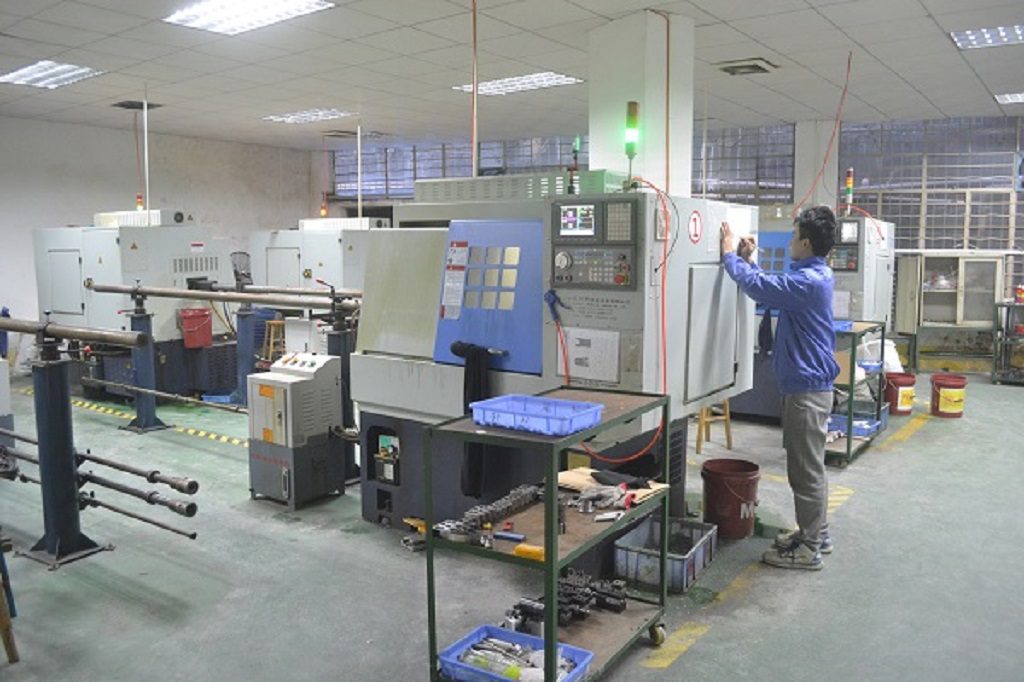
A modern machine shop is a dynamic environment with powerful machinery. Because of this, maintaining strict safety standards is not optional; it is essential for protecting our team and ensuring smooth operations. A safe shop is an efficient shop. The standards we enforce fall into three main categories.
- 1. Personal Protective Equipment (PPE): This is the first line of defense for every individual in the shop.
- Eye Protection: Safety glasses are mandatory at all times on the shop floor to protect against flying chips and fluids.
- Proper Attire: Loose clothing, neckties, and jewelry are prohibited as they can get caught in rotating machinery. Long hair must be tied back and secured.
- Footwear: Sturdy, closed-toe shoes, typically with steel toes, are required to protect feet from falling objects or sharp debris.
- Hand Protection: Gloves are used when handling raw materials or sharp-edged parts, but they are strictly forbidden when operating rotating equipment like lathes or mills, where they can be pulled into the machine.
- 2. Machine and Operational Safety: These standards relate directly to the machinery and how it is operated.
- Machine Guarding: All machines must have guards in place to cover belts, gears, and points of operation. These guards must never be removed while the machine is running.
- Emergency Stops (E-Stops): Every CNC machine and piece of powered equipment is fitted with a large, accessible emergency stop button. All personnel are trained on their locations and use.
- Lockout/Tagout (LOTO): Before any maintenance or repair, machines must be completely de-energized and locked out. This procedure ensures that a machine cannot be accidentally started while someone is working on it.
- Operator Training: No one operates a machine without being fully trained on its specific functions, safety features, and emergency procedures.
- 3. Environmental and Shop-Wide Safety: This covers the overall working environment.
- Housekeeping: The shop floor must be kept clean and organized. Spills are cleaned up immediately, and floors are kept free of chips and obstacles to prevent slips, trips, and falls.
- Ventilation: Proper air circulation and ventilation systems are in place to remove any fumes from cutting fluids or cleaning agents.
- Material Handling: We use approved lifting equipment like cranes and forklifts to move heavy blocks of material or large finished parts. This prevents manual handling injuries.
What Criteria Should You Consider When Selecting a Machine Shop for Your Project?
Choosing the right machine shop is one of the most critical decisions you will make for your product's success. The quality of your parts, your production timeline, and your overall costs are all at stake. Based on my experience working with clients like Mark from Canada, here are the essential criteria to consider.
- 1. Technical Capabilities and Equipment: Does the shop have the right technology for your parts?
- Machine Size and Type: Verify their maximum part size. Our mills, for example, can handle parts up to 80” long, and our lathes up to 62”. Ask if they have 5-axis capabilities for complex parts.
- Tolerances: What level of precision can they guarantee? Ask for their standard tolerance (ours is +/- 0.005") and if they can hold tighter tolerances. We can manufacture to sub +/- 0.001" specifications from your drawings.
- Materials and Finishes: Confirm they can source and machine your specified material and provide any necessary secondary operations like anodizing or powder coating. We work with over 100 metals and plastics.
- 2. Quality Control Systems: This is non-negotiable and a direct solution to the pain point of receiving bad parts after a long wait.
- Inspection Process: Ask them to describe their quality process. Do they perform 100% inspection like we do?
- Metrology Equipment: Do they use advanced equipment like a Coordinate Measuring Machine (CMM) for verification?
- Certifications: Ask if they are certified (e.g., ISO 9001) and if they can provide full documentation, including material certificates and final inspection reports.
- 3. Engineering Support and Communication: Inefficient communication is a common frustration.
- Responsiveness: How quickly and clearly do they respond to your inquiries?
- Engineering Expertise: Do they have engineers on staff? Our four engineers regularly help customers improve designs for better performance and lower costs. This support can be invaluable.
- 4. Lead Time and Production Volume: Your schedule depends on your supplier's reliability.
- Lead Time: What is their typical turnaround time? We offer lead times as short as 3 business days.
- Flexibility: Can they accommodate your schedule and production volume? A good partner should be able to produce a single prototype and scale up to mass production without issue. We have no minimum order quantity (MOQ).
- 5. Price and Overall Value: While price is important, the lowest quote is not always the best value.
- Transparent Quoting: Is the quote clear and detailed?
- Total Cost: Consider the total cost of partnership. A slightly more expensive part from a reliable supplier who communicates well, delivers on time, and guarantees quality is far cheaper than a low-cost part that fails or delays your project.
How Do Machine Shops Impact Different Industries From Aerospace to Consumer Products?
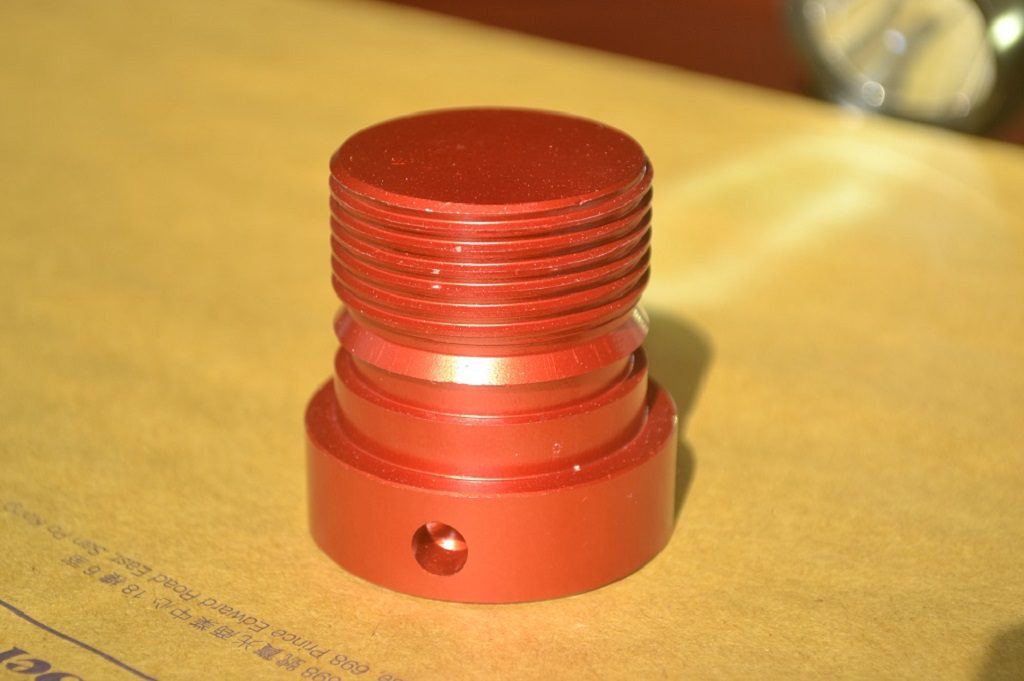
Machine shops are the essential, often unseen, foundation of nearly every modern industry. We create the critical components that enable innovation and production, turning digital designs into physical parts. The requirements for these parts vary dramatically from one industry to the next, showcasing the versatility of modern machining.
- Aerospace and Defense: This industry demands the highest level of precision, reliability, and material performance. Failure is not an option.
- Components: We machine flight-critical parts such as structural brackets, engine components, and landing gear assemblies.
- Requirements: These parts require the use of advanced materials like titanium and high-strength aluminum alloys. We use our 5-axis CNC machines to create complex aerodynamic surfaces and lightweight structures. Tolerances are extremely tight, often requiring us to hold dimensions below +/- 0.001" to ensure perfect fit and function.
- Medical and Dental: In the medical field, precision is directly linked to patient safety. The focus is on biocompatibility, micro-features, and absolute cleanliness.
- Components: We produce surgical instruments, dental implants, bone screws, and parts for complex diagnostic equipment like MRI machines.
- Requirements: Materials must be biocompatible, such as medical-grade titanium and PEEK plastic. Parts are often very small with intricate details, requiring micro-machining capabilities. Every edge must be perfectly deburred and surfaces must be smooth to prevent any harm to the patient.
- Automotive: The automotive industry relies on machine shops for high-volume production, durability, and cost-efficiency.
- Components: We manufacture a wide range of parts, including engine blocks, transmission gears, suspension components, and the custom jigs and fixtures used on assembly lines.
- Requirements: Repeatability is key. Our CNC turning and milling centers produce thousands of identical parts with consistent quality. The ability to handle high-volume orders with a flexible delivery time is critical to keep our clients' production lines moving without interruption.
- Consumer Products and Electronics: For this market, appearance is just as important as function. Speed to market is also crucial.
- Components: We create parts that consumers see and touch every day, such as the aluminum bodies for laptops and smartphones, camera housings, and high-end audio knobs.
- Requirements: A flawless surface finish is paramount. We provide many finishing options, including various types of anodizing, polishing, and powder coating to achieve the desired aesthetic. We also support hardware startups by providing rapid prototyping, allowing them to iterate on their designs quickly before committing to mass production.
- Industrial and Robotics: This sector needs robust, reliable components that can withstand continuous operation.
- Components: We produce parts for industrial machinery, robotic arms, and automated systems, including gears, shafts, mounting plates, and custom enclosures.
- Requirements: Durability and precision are key to ensuring the long-term reliability of a machine or robot. Our ability to machine large parts, with milled components up to 80" long, makes us a valuable partner for industrial equipment manufacturers.
What Are the Main Advantages and Challenges of Running a Machine Shop Business?
Operating a precision machine shop is a demanding but highly rewarding business. We are in the business of creation, but that process comes with a unique set of advantages and significant challenges.
Advantages of the Business
- Producing Tangible Value: The greatest advantage is the satisfaction of creating something real. We take a raw block of aluminum or steel and transform it into a complex, precise part that will play a critical role in a larger assembly. Seeing the finished product is incredibly fulfilling.
- Serving Diverse Industries: Every day brings a new challenge. One day we might be making a critical aerospace component, and the next we are prototyping a new consumer electronic device. This variety keeps the work engaging and pushes us to constantly expand our expertise.
- Being an Essential Partner: High-quality machined parts are a fundamental need across all manufacturing sectors. This makes our services essential, providing a stable business foundation. We become a critical part of our customers' supply chains.
- Engineering and Problem-Solving: We are more than just a parts manufacturer. Our team of experienced engineers works with customers to refine their designs. Helping a client improve their part's function or reduce its cost is a major value-add and a source of pride for us.
Challenges of the Business
- High Capital Investment: The technology required for precision machining is extremely expensive. CNC machines, CMMs for inspection, and specialized software represent a massive upfront and ongoing investment. Staying competitive means constantly upgrading to the latest technology.
- Finding and Retaining Skilled Talent: Operating this advanced equipment requires highly skilled machinists, programmers, and quality control technicians. There is a shortage of this talent, making it a constant challenge to find, train, and retain a great team.
- Intense Pressure on Quality: The demand for ever-tighter tolerances never stops. A single part that is out of specification can cause a customer's entire production line to shut down. This is why our commitment to 100% inspection is not just a selling point; it's a core operational necessity to avoid costly failures.
- Global Competition and Pricing: We compete with shops from around the world. Customers are always looking for competitive pricing, so we must be incredibly efficient in our operations to offer value without compromising on the quality and reliability that our clients depend on.
- Managing Timelines and Supply Chains: Our clients, like Mark in Canada, face huge losses if shipments are delayed. This means we are under constant pressure to manage our own supply chain for raw materials and meet our promised delivery times. Any delay on our end can create a significant problem for our customer, so logistics management is a critical part of our business.
Conclusion
Running a machine shop presents major challenges, from high investment to intense quality pressures. However, the reward is being an essential partner to every industry, turning innovative ideas into the tangible, precision components that build our modern world. Our role is fundamental, and we take that responsibility seriously.