
How To Machine Composite Materials Without Delamination?
Are you struggling with composite parts failing due to delamination after machining? It's frustrating when layers separate, ruining expensive materials and causing project delays. Proper machining techniques are crucial.
Delamination in composites occurs when layers separate due to machining forces, especially during drilling or cutting. Preventing it requires sharp tools, appropriate cutting speeds and feeds, proper workpiece support (especially at exit points), and sometimes specialized techniques like orbital drilling.
Understanding why delamination happens and how to prevent it is key to successfully working with these advanced materials. If you've faced this issue, read on, because mastering composite machining is achievable with the right knowledge and approach. Let's explore how to keep those layers perfectly bonded.
How does delamination occur in composites?
Have you ever drilled into a composite panel, only to find the edges frayed and layers split? This common problem, delamination, weakens the part and compromises its integrity. It's a costly mistake.
Delamination happens when machining forces, like the push from a drill bit or the pull during cutter exit, exceed the strength holding the composite layers (plies) together. This causes separation, often starting at the entry or exit surface.
To really get why this happens, we need to look closer at the structure and forces involved. Composites are amazing because they combine different materials, often strong fibers within a matrix material like resin. Think of it like reinforced concrete, but on a micro level. These layers give the material its strength and specific properties. But, the bond between these layers is often the weakest point, especially when subjected to specific stresses during machining. Let's break down the main culprits.
Understanding the Forces
When you machine a composite, especially drilling, several forces come into play:
-
Thrust Force: This is the pushing force as the tool enters the material. If it's too high, it can push the layers apart before the cutting edge even gets there, causing delamination below the surface or at the exit side (push-out delamination).
-
Peeling Force: As the cutting edge exits the material on the bottom side, it can pull the final layers upward, peeling them away from the main body (peel-up delamination). This is very common.
-
Cutting Torque: The twisting force can also stress the bond between layers.
The table below shows how different factors contribute:
| Factor | Influence on Delamination |
|---|---|
| Tool Geometry | Dull tools increase thrust force. Specific drill point angles (like dagger or brad point drills) reduce thrust. |
| Machining Parameters | High feed rates increase thrust. High speeds can cause heat buildup, weakening the matrix. |
| Material Properties | The type of fiber, resin, and how the layers are stacked affect the interlaminar strength. |
| Workpiece Support | Lack of backing support allows the exit layers to bend and peel away easily. |
In my experience, the exit side is often the most critical. Without proper backing, even a sharp tool can cause significant peel-up delamination. Understanding these mechanisms is the first step towards prevention.
How to prevent delamination in composites?
Tired of seeing composite parts ruined by delamination? It wastes time and expensive material, potentially delaying your entire project. Finding reliable prevention methods is essential for consistent quality.
Preventing delamination involves using ultra-sharp tools with specific geometries (like brad point or dagger drills), optimizing cutting speed and feed rate, providing rigid backing support at the tool exit point, and employing coolants effectively.
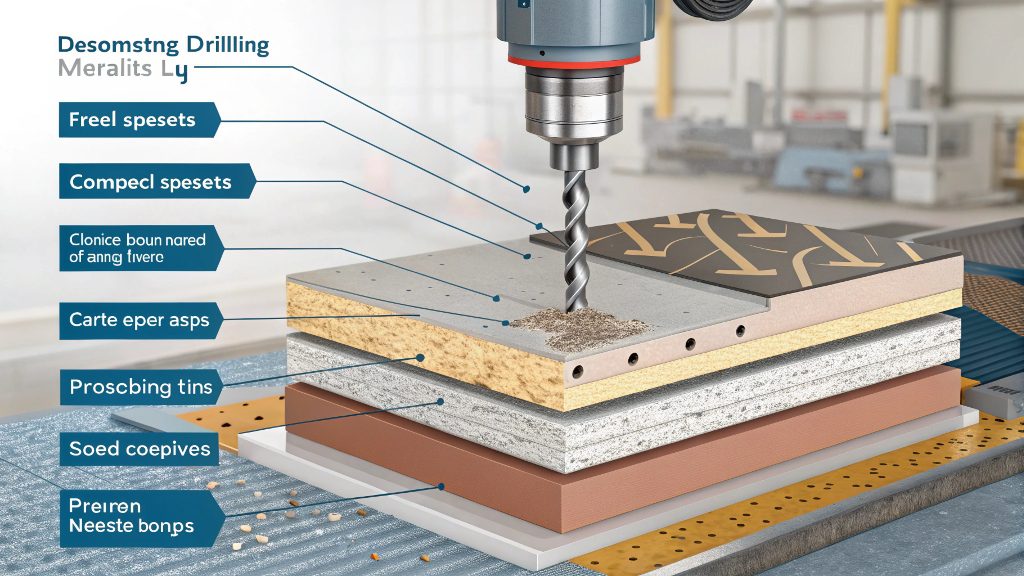
Preventing this issue isn't just about one trick; it's a combination of careful planning and execution. Based on years of machining various composites like carbon fiber and G10 Garolite here at Worthy Hardware, I've learned that attention to detail makes all the difference. Let's dive into the specifics that help us deliver high-quality composite parts consistently.
Key Prevention Strategies
Successfully machining composites without delamination relies on controlling the factors we discussed earlier. Here’s a more detailed look:
-
Tool Selection and Condition:
-
Sharpness: This cannot be stressed enough. Tools must be extremely sharp. Dull tools drastically increase thrust force. Polycrystalline Diamond (PCD) tools are often preferred for their hardness and ability to maintain a sharp edge when machining abrasive composites. Carbide tools coated with diamond are another good option.
-
Geometry: Standard twist drills are often unsuitable. Specialized geometries are designed to reduce thrust and peeling forces.
- Brad Point/Dagger Drills: These have a central point that cuts fibers cleanly before the outer edges engage, reducing thrust.
- Special Point Angles: Lower point angles (e.g., 90-118 degrees) generally produce less thrust than higher angles (e.g., 135 degrees).
- Orbital Drilling: This advanced technique uses a smaller tool that moves in a circular path to create the hole, significantly reducing thrust forces.
-
-
Machining Parameters:
- Feed Rate: Lower feed rates generally reduce thrust force, minimizing push-out delamination. However, too low a feed rate can cause rubbing and heat. Finding the optimal balance is key.
- Cutting Speed: Higher cutting speeds can sometimes improve surface finish but also generate more heat, potentially damaging the resin matrix. Coolant use becomes critical. The optimal speed depends heavily on the specific composite material and tooling. We often run tests on scrap material first.
-
Workpiece Support:
- Backing Material: Always use a rigid backing plate (e.g., aluminum or sacrificial composite) clamped firmly against the exit surface. This provides support and prevents the final layers from bending and peeling away.
- Clamping: Ensure the workpiece itself is securely clamped to minimize vibration, which can also contribute to poor cut quality.
-
Coolant Usage:
- Coolants help reduce heat buildup, which can weaken the resin matrix and make delamination more likely. They also help flush away abrasive dust. Compressed air can sometimes be used, but liquid coolants are often more effective for heat management.
By carefully controlling these elements, we significantly reduce the risk of delamination. It requires precision and experience, something we pride ourselves on at Worthy Hardware, ensuring parts meet specifications even with complex materials.
How to machine composite materials?
Machining composites seems daunting due to their unique structure, right? Unlike metals, they combine fibers and resin, leading to issues like tool wear, dust, and delamination if not handled correctly.
Machining composites involves processes like drilling, milling, turning, and routing, using specialized sharp tools (often diamond-coated), optimized speeds and feeds, proper workpiece support, and effective dust extraction or coolant systems to manage heat and abrasive dust.
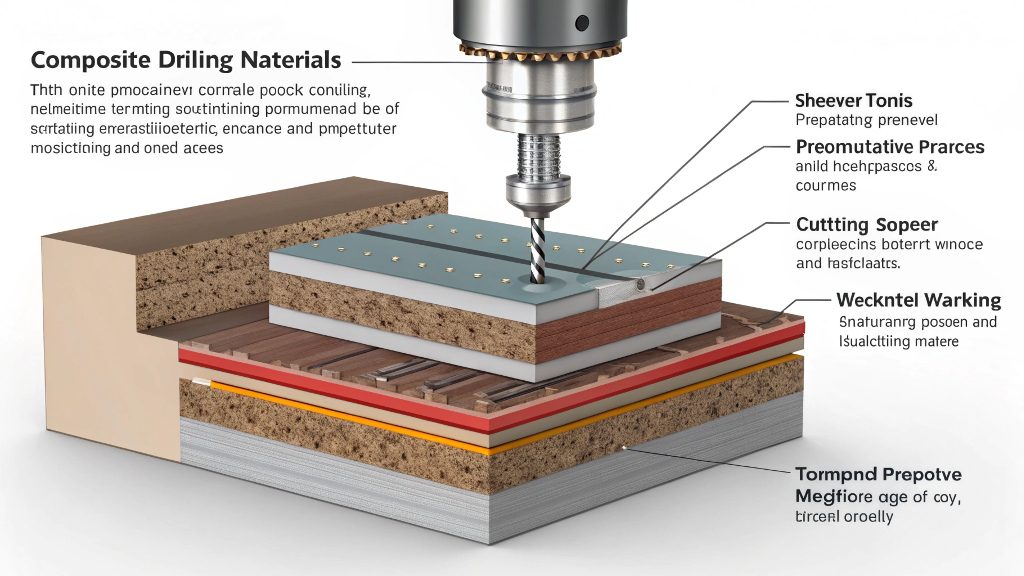
Successfully working with composites requires adapting techniques used for metals and understanding the specific challenges these materials present. It's not just about preventing delamination; it's also about achieving good surface finish, tight tolerances, and managing tool life. Let’s explore the common methods and considerations.
Common Composite Machining Processes
While many standard machining operations can be adapted for composites, they require specific approaches:
-
Drilling: As discussed, this is prone to delamination. Key considerations are specialized drill bits (PCD, diamond-coated, specific geometries), controlled feed rates, high speeds (with cooling), and essential backing material. Orbital drilling is a superior but more complex alternative for critical holes.
-
Milling (Including Routing): Used for shaping, slotting, and contouring.
-
Tools: Cutters designed for composites often have specific helix angles and rake angles to shear fibers cleanly. Up-cut or down-cut tools are chosen based on whether surface finish on the top or bottom is more critical.
Compression cutters (combining up-cut and down-cut flutes) are excellent for edge finishing laminates, pushing chips towards the center and minimizing fraying on both surfaces. PCD or diamond-coated end mills are vital for longevity due to the abrasive nature of fibers like carbon and glass.
- Parameters: High spindle speeds and moderate feed rates are common. Climb milling is often preferred over conventional milling as it tends to pull the workpiece into the cutter, reducing chipping on the top surface.
- Dust Extraction: Composite dust (especially carbon fiber) is conductive and a health hazard. Efficient vacuum extraction systems are mandatory.
-
-
Turning: Less common than drilling or milling but used for cylindrical composite parts. Similar principles apply: use extremely sharp tools (PCD often required), manage heat, and select appropriate speeds and feeds to avoid fiber pull-out or matrix damage.
-
Abrasive Waterjet Cutting: This non-traditional method uses a high-pressure stream of water mixed with abrasive particles.
- Advantages: No heat generation, no tool wear, minimal delamination risk as there's very little mechanical force. Can cut complex shapes and thick laminates.
- Disadvantages: Can cause edge tapering or water ingress into the material if not controlled carefully. Slower than conventional machining for some tasks.
-
Laser Cutting: Uses a focused laser beam.
- Advantages: High speed for thin materials, non-contact process.
- Disadvantages: Creates a heat-affected zone (HAZ) which can damage the matrix material and potentially weaken the composite. Not suitable for all composite types or thick sections.
At Worthy Hardware, we utilize high-precision CNC machining centers, including 5-axis machines, equipped for handling various composites. We match the process and tooling specifically to the material and the customer's requirements, ensuring quality from prototypes to high-volume production.
What are the two most common methods of manufacturing composite materials?
Ever wonder how composite materials get their layered structure in the first place? The way they are made directly impacts how they behave during machining. Inconsistent manufacturing can lead to hidden problems later.
The two most common methods for manufacturing composite parts are Hand Lay-up (manual placement of fiber layers impregnated with resin) and Automated Fiber Placement (AFP) or Automated Tape Laying (ATL), which use machines for precise layer deposition.
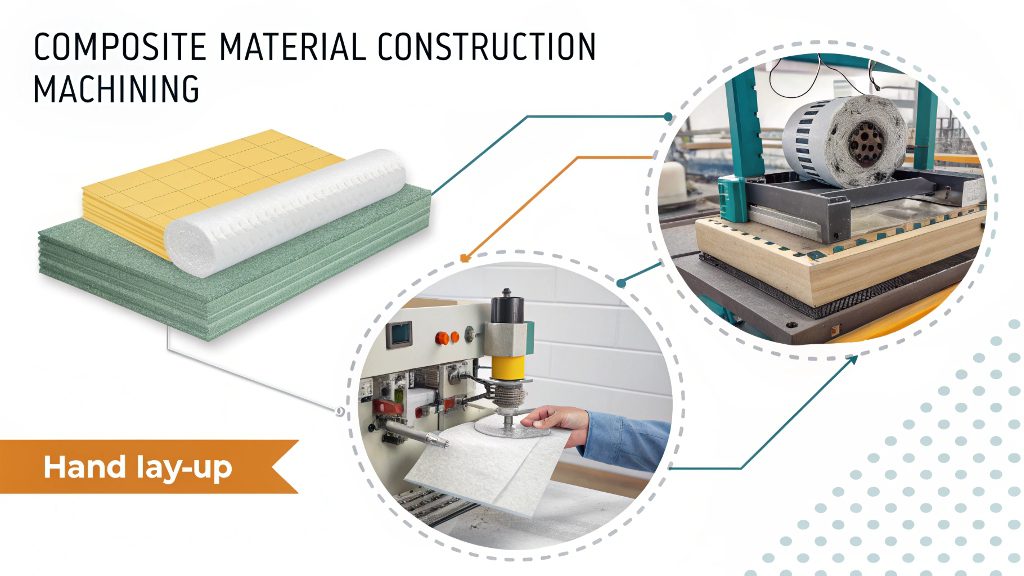
Understanding the basics of how these materials are constructed helps explain why machining them can be tricky and why properties might vary. Different methods result in different levels of fiber alignment, resin content, and potential for defects like voids, all of which influence machining outcomes, including the risk of delamination.
Exploring Common Manufacturing Techniques
Let's look briefly at these two dominant approaches:
-
Hand Lay-up:
- Process: This is often the simplest and oldest method. Layers of dry fiber fabric (like woven cloth or unidirectional mat) are placed into a mold by hand. Liquid resin is then applied using brushes or rollers to saturate ("wet out") the fibers. The process is repeated layer by layer until the desired thickness is achieved. Often, a vacuum bag is applied over the layup to consolidate the layers and remove excess resin and trapped air before curing (hardening), typically at room temperature or in an oven.
- Characteristics:
- Pros: Low tooling cost, flexible for complex shapes, suitable for prototypes and low-volume production.
- Cons: Labor-intensive, quality heavily dependent on operator skill, potential for variability in resin content and fiber alignment, higher risk of voids or dry spots compared to automated methods. This variability can make consistent machining challenging.
- Machining Impact: Parts made this way might have less uniform density and interlaminar strength, potentially increasing delamination risk in certain areas.
-
Automated Fiber Placement (AFP) / Automated Tape Laying (ATL):
- Process: These are advanced, computer-controlled processes. AFP machines use robotic heads to precisely lay down narrow strips of pre-impregnated composite fibers (called "tows") onto a complex mold surface. ATL uses wider pre-impregnated tapes. The machine controls placement, direction, compaction, and cutting of the material. Curing usually happens afterward in an autoclave (a pressurized oven).
- Characteristics:
- Pros: High precision and repeatability, excellent fiber alignment control, consistent resin content, reduced void content, faster lay-down rates for large parts, suitable for high-performance applications (like aerospace).
- Cons: High equipment and programming cost, generally suited for medium to high volume production or very large structures.
- Machining Impact: Parts are typically more uniform and predictable, often exhibiting higher interlaminar strength. However, the precise fiber orientations might require specific machining strategies to avoid cutting directly against dense fiber bundles in critical directions.
While these are two common methods, others like Resin Transfer Molding (RTM), Pultrusion, and Filament Winding also exist, each creating composites with distinct characteristics that influence how they should be machined. Knowing the manufacturing origin helps anticipate potential machining challenges.
Conclusion
Machining composites without delamination requires sharp tools, correct speeds and feeds, solid support, and understanding the material. Careful planning and execution are key to achieving quality results every time.
Need custom composite parts machined with precision? I'm Sandra Gao from Worthy Hardware, a CNC machining expert in China. We handle various composites, ensuring quality and tight tolerances (even +/- 0.001"). We offer milling, turning, routing, and more for prototypes to mass production. Contact me at [email protected] or visit www.worthyhardware.com for a quote.