
What Is Short Run Stamping? Which Customers Should Choose It?
Author: Sandra Gao Business Manager at Worthy, 20 Years of Experience in Business Management Technical Review: Jason Engineer, 25 Years of Experience, Specializing in Compound Die Design, Progressive Die Design, and Four-Slide Process | Last Updated: June 2025
Over the past 20 years, the most common situation I've encountered is this: a customer comes with a drawing, wants to validate a design, but finds that every supplier requires a minimum order of 10,000 pieces. They end up paying for inventory they don't need, and their product launch gets pushed back. This article is written to help you avoid exactly that.
If you need 500 stamped parts but find every supplier requires a minimum of 10,000 pieces — you may end up paying for tooling you can't use, and your time-to-market gets delayed. Short run stamping is designed for exactly this situation.
Short run stamping is a method of producing small quantities of metal parts using stamping dies, typically ranging from a single piece to a few thousand pieces. It is suitable for customers who need prototypes, pilot runs, or low-quantity orders, reducing upfront investment and risk before committing to full production.
As the person who handles customer projects at Worthy day-to-day, I get asked the same question all the time: "Is it worth doing stamping for such a small order?" This article will clearly explain what short run stamping is, how it works, what it costs, and when to transition to mass production.
The most critical step usually happens in the first week: have an engineer review your drawing — for free. A small adjustment to a bend location or hole-to-edge distance can save you a month of rework down the line.
Key Facts About Worthy
| Item | Details |
| Company | Worthy (Dongguan, China), established 1998 |
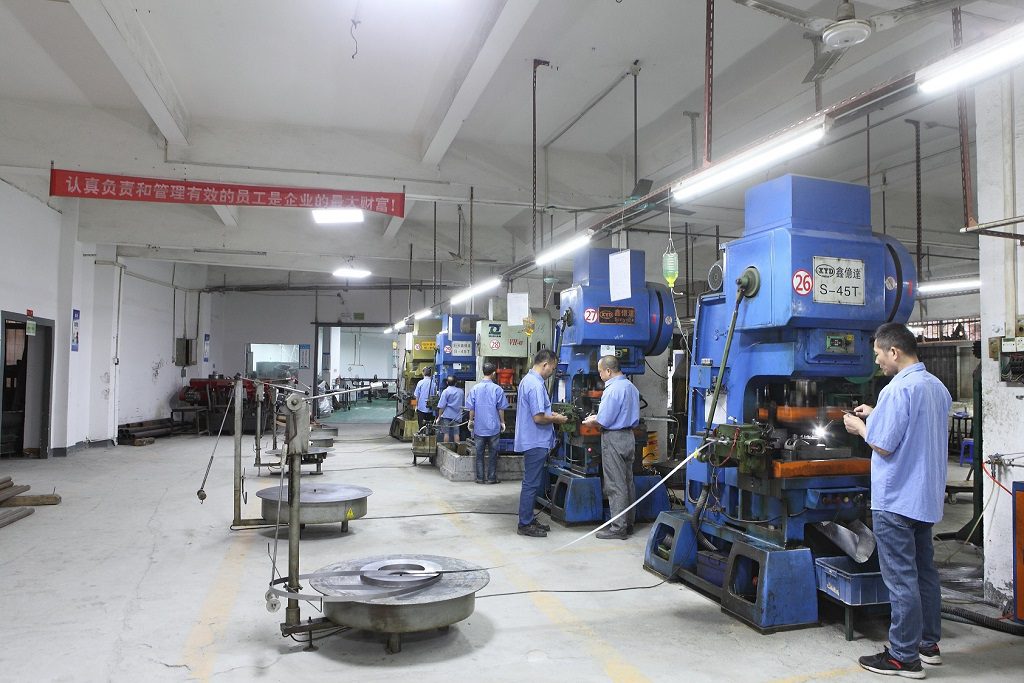
| Facility | 2,000 sqm, approximately 50 employees |
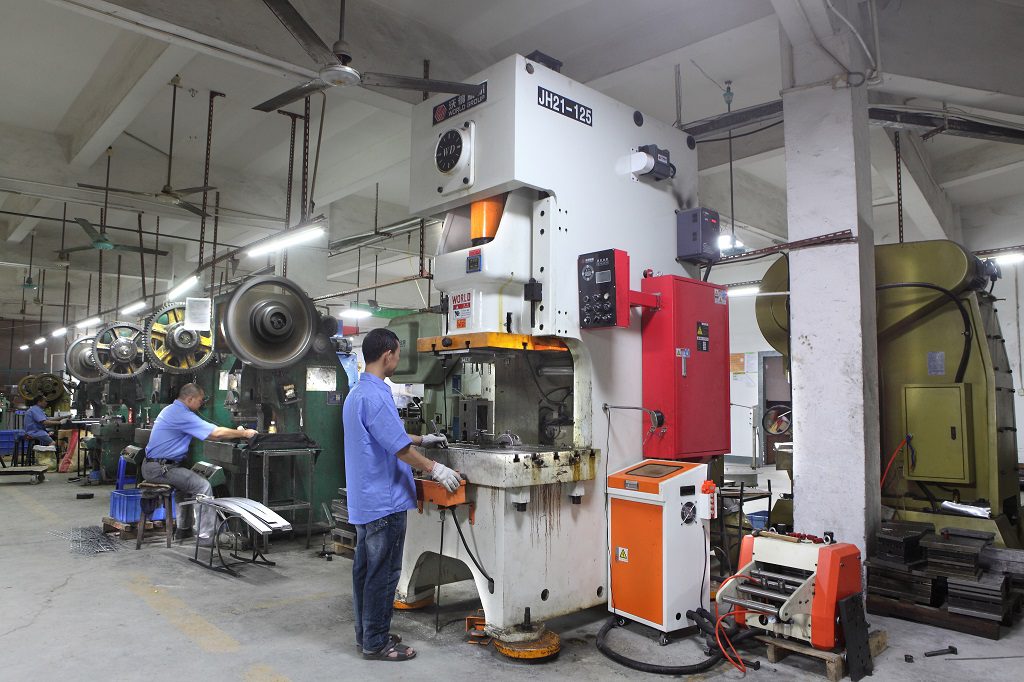
| Equipment | 40 stamping presses, 5–500 tons |
| Processes | Precision stamping, progressive die, compound die, four-slide, in-die tapping, metal forming, assembly |
| Materials | 100+ types: aluminum, brass, steel, stainless steel, titanium, copper, alloy steel, bronze, and more |
| Surface Finishing | 50+ options: plating, anodizing, powder coating, polishing, and more |
| Tolerance Standard | General tolerance per ISO 2768-M; tightest achievable: ±0.01mm (subject to engineer evaluation) |
| Transfer Die | Up to 200 tons, material thickness up to 15mm, part length up to 500mm |
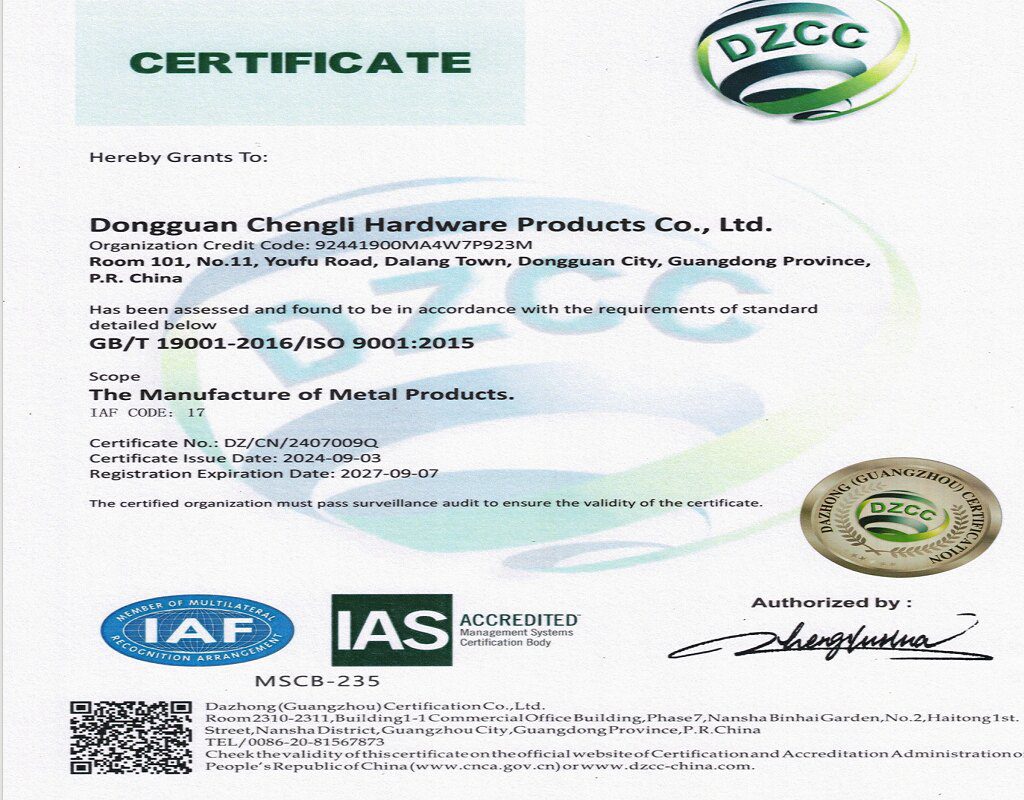
| Certifications | ISO 9001, RoHS |
| Quality Documents | Material Test Certificate (MTC), First Article Inspection Report (FAI), Dimensional Inspection Report; PPAP available at customer's cost |
| Minimum Order Quantity | No MOQ — from single prototypes to mass production |
| Business Model | B2B wholesale only; all parts manufactured to customer drawings |
| Main Export Regions | Singapore, North America, Japan, Europe, Australia, New Zealand, Jordan |
| Industries Served | Aerospace & Defense, Automotive, Consumer Products, Electronics & Semiconductors, Energy, Medical & Dental, Robotics, Lighting, Industrial Equipment, and more |
View our ISO 9001 certificate and sample quality documents: www.worthyhardware.com All drawings and technical files are strictly confidential and will never be shared with third parties.
What Is Short Run Stamping?
Short run stamping is a method of producing metal parts in limited quantities. A stamping press feeds sheet metal into a die, which performs three basic operations: blanking (cutting out the outline and holes), bending (forming angles), and drawing (creating three-dimensional shapes). The underlying process is identical to mass production — the difference lies in the tooling approach and order quantity.
There is no universal boundary between "short run" and "long run." In my experience, anything from a single prototype to a few thousand pieces falls within the short run range. Some customers order 200 pieces, others order 5,000 — both are short run to us.
Worthy has no minimum order quantity. Customers can start with prototypes and scale into mass production with the same team, without switching suppliers.
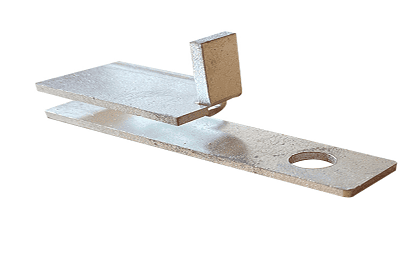
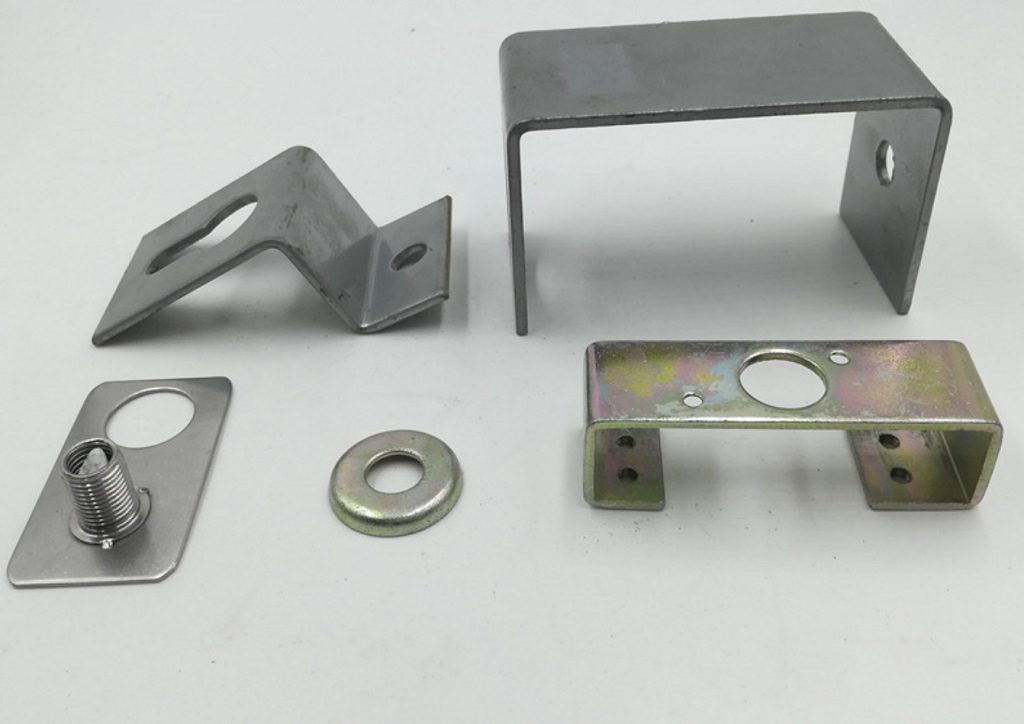
Common parts we produce include: brackets, clips, terminals, shields, flat springs, and mounting plates. All parts are manufactured to the customer's own design.
Which Customers Are Right for Short Run Stamping?
Hardware startups: Validate your product design with real metal parts before committing to expensive production tooling.
Product development teams and design agencies: Your design may still change — you need physical metal parts for functional testing and assembly verification.
Importers and distributors: Test a new market with limited inventory without taking on the risk of large stock commitments.
Procurement teams: Develop a backup supplier or source small quantities of custom parts.
Low-volume industries: Medical, aerospace, robotics, and lighting sectors frequently require short run, high-precision parts.
Short run stamping is not the right fit for every project. If you need hundreds of thousands of parts per year with a finalized design, hard tooling with progressive dies is more cost-effective — and we can do that too. But for new products or designs that haven't been finalized, I typically recommend starting with a short run — because it surfaces problems while they're still cheap to fix.
Case Study 1 — Published with written customer authorization (details anonymized)
A Canadian consumer electronics customer wanted to move into mass production of a stainless steel mounting bracket, but was concerned about discovering design problems after tooling was already built. They placed a short run trial order of 200 pieces first.
Our technical review engineer Jason — with 25 years of die design experience — completed the first article review within 5 business days and identified two issues: the holes were placed too close to the bend line and would deform after bending, and one non-critical dimension carried an unnecessarily tight tolerance of ±0.02mm.
Jason recommended moving the holes 1.0mm outward and relaxing that tolerance to ±0.10mm. The customer implemented both changes before committing to progressive tooling — avoiding an estimated $2,000 USD in die rework costs, a 2–3 week delay, and achieving approximately 8% lower unit cost in mass production.
Jason's note: "Finding this kind of hole placement issue on a production die typically costs 5–10 times more to fix than catching it at the design stage. Short run stamping exists to keep that cost as low as possible."
How Does Short Run Stamping Work?
Below is Worthy's actual production workflow.
Step 1: Submit Your Drawing — Free Engineer Review
Send us your 2D drawing (DWG/PDF) or 3D file (STEP), and our engineer will perform a Design for Manufacturability (DFM) review. Technical review engineer Jason has 25 years of experience across compound dies, progressive dies, and four-slide processes. He will identify areas where small adjustments — to bend radii, hole-to-edge distances, or corner radii — can meaningfully reduce cost or improve reliability.
Step 2: Select the Right Tooling Approach
The tooling solution depends on part geometry and order quantity:
| Die Type | Best Suited For |
| Compound die | Simple geometry, smaller batch sizes |
| Progressive die | Multi-operation parts, medium to large volumes, high production speed |
| Four-slide die | Complex small parts requiring bends in multiple directions |
| Transfer die | Large parts (up to 500mm), up to 200 tons |
We operate 40 stamping presses ranging from 5 to 500 tons, covering the vast majority of part requirements.
Step 3: Tooling Fabrication (Approximately 20 Business Days)
Once we receive the tooling deposit, we notify you immediately and begin production. Progress photos are sent throughout the fabrication process — you won't need to chase us for updates.
Step 4: First Article Samples (Approximately 5 Business Days)
After tooling is complete, first article samples are produced — typically within 5 business days. Before samples are shipped, we send photos and videos for your review and approval. Any issues are resolved before parts leave our facility.
Step 5: Batch Production (Approximately 2–3 Weeks)
After you approve the samples, batch production typically takes 2–3 weeks. The specific schedule is confirmed in writing before you place your order.
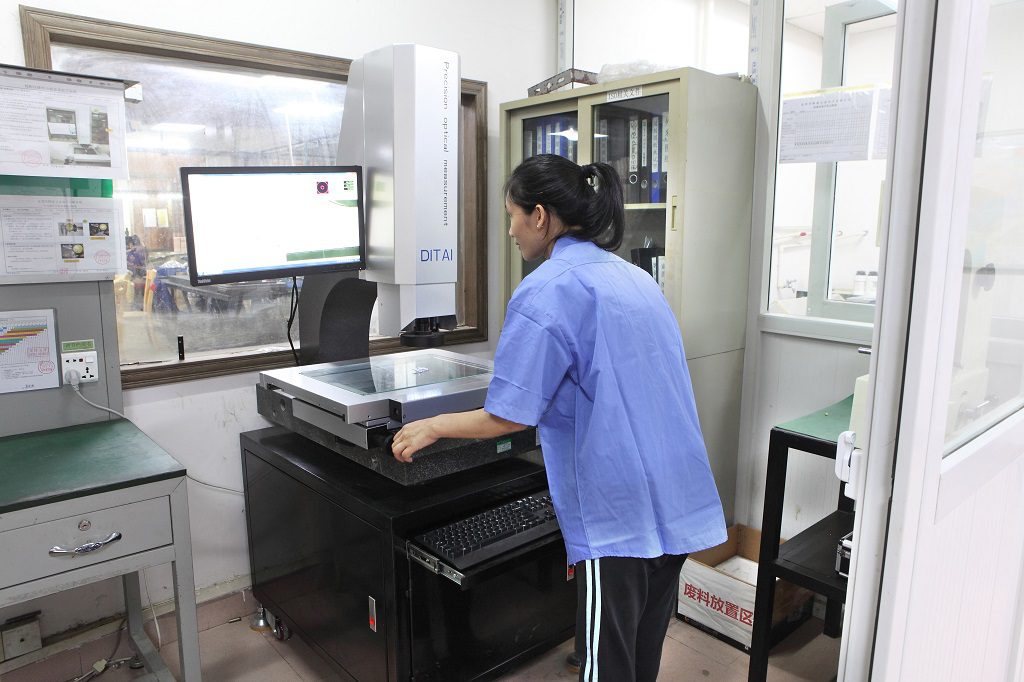
Step 6: Four-Stage Quality Inspection
One of the most common concerns I hear from buyers is: "I waited a long time, then discovered quality problems after the fact." Our approach is to move inspection upstream — problems are caught at four stages before they reach you:
- Incoming Material Inspection: Conducted in accordance with ISO 9001 procedures. Suppliers are required to provide Material Test Certificates (MTC); we verify dimensions and appearance. Specialty materials are sent for third-party testing when required.
- First Article Inspection: Strictly executed against the drawing, with dedicated inspectors at every stage.
- In-Process Inspection: Die wear and precision are monitored throughout production; each critical dimension is verified by 2–3 inspectors to confirm tolerance compliance.
- Pre-Shipment Inspection: 100% inspection on all parts. An inspection report is included with every shipment, along with photos and video for your confirmation.
Tolerance Note: General tolerances are per ISO 2768-M, which is sufficient for most structural parts. Tighter tolerances (down to ±0.01mm) are achievable but require more precise die fabrication and additional inspection, which increases cost. We recommend specifying tight tolerances only on dimensions that genuinely affect assembly or function — typically just 2–3 dimensions per part.
Step 7: Surface Finishing and Assembly
- Surface Finishing (50+ options): Cleaning, deburring, heat treating, plating, anodizing, powder coating, polishing, and more
- Assembly Operations: Riveting, welding, tapping (in-die or secondary), staking
Step 8: Shipping and Payment
- Trade Terms: EXW, FOB, DDP
- Payment Methods: TT (wire transfer) or PayPal; 30% deposit, balance due before shipment
Case Study 2 — Published with written customer authorization (details anonymized)
A Canadian customer placed an urgent order for 3,000 brass terminals before peak season, requiring delivery within 12 days.
During pre-shipment 100% inspection, we identified burr residue on approximately 6% of parts. We immediately put the shipment on hold and investigated. The root cause was identified as minor die edge wear. After die reconditioning and re-deburring, all parts were re-inspected. The full quantity of conforming parts was ready within 3 days, with daily photo and video updates sent to the customer throughout. Shipment was made on time with a full inspection report included.
The customer responded: "You caught the problem before it reached me. That's more reliable than any supplier I've worked with before."
What Are the Benefits of Short Run Stamping?
1. Lower Upfront Investment
High-volume production requires complex hard tooling. Short run stamping uses simpler dies, which means you spend less before the first part ships — and you don't have to commit to thousands of pieces you may not be able to sell. This is especially valuable for startups and new product launches.
2. Reduced Risk
Designs may need to change, and market response can be unpredictable. When something goes wrong in a short run, the cost is manageable. The same mistake in a mass production run can be very expensive.
3. Faster Access to Real Parts
Short run stamping gets physical parts into your hands sooner — for testing, customer samples, or early sales. See the workflow above for reference lead times.
4. Opportunity to Optimize Your Design
Some drawings look fine on screen but reveal problems as soon as they hit a press — a bend too close to a hole, a corner radius too tight for the die. Short run stamping surfaces these issues early. We have 4 engineers with extensive experience helping customers improve designs and reduce costs. Fix the design first, then commit to production tooling.
5. Healthier Cash Flow
Capital tied up in inventory can't be deployed elsewhere. Short run orders keep your cash flexible, with the option to reorder as demand develops.
6. Low-Risk Supplier Evaluation
For buyers working with a Chinese manufacturer for the first time, concerns about quality and delivery are completely reasonable. A short run order is the right way to test: you get to evaluate our communication, inspection reports, photos, videos, and the parts themselves — before making a larger commitment.
We have 10 sales representatives, each customer assigned a dedicated contact. We respond to inquiries immediately upon receipt and provide photo and video updates at every key milestone. You can reach us by email, phone, WhatsApp, or WeChat.
7. The Same Quality Standards — Regardless of Order Size
Some buyers worry that short run orders won't receive the same attention. At Worthy, every order — regardless of quantity — goes through 100% inspection, with an inspection report included with every shipment. MTC, FAI, and dimensional inspection reports are available as standard. PPAP documentation can also be provided at the customer's cost; please specify this requirement when requesting a quote.
Case Study 3 — Published with written customer authorization (details anonymized)
An Australian industrial equipment customer originally planned to order 10,000 spring steel clips directly, but was uncertain about clamp force performance after zinc plating. They placed a short run order of 300 pieces first for testing.
During testing, we found that zinc plating caused springback deformation, with approximately 15% of parts failing to meet the specified clamp force. Engineer Jason adjusted the heat treatment parameters and bend angle, produced new samples for validation, and all parts passed within 5 business days. The customer then approved mass production.
Going straight to 10,000 pieces would have resulted in an estimated loss of approximately US$12,000 in material and processing costs, plus a roughly 3-week delivery delay.
The customer said: "Running the short run first was the best decision we made this year."
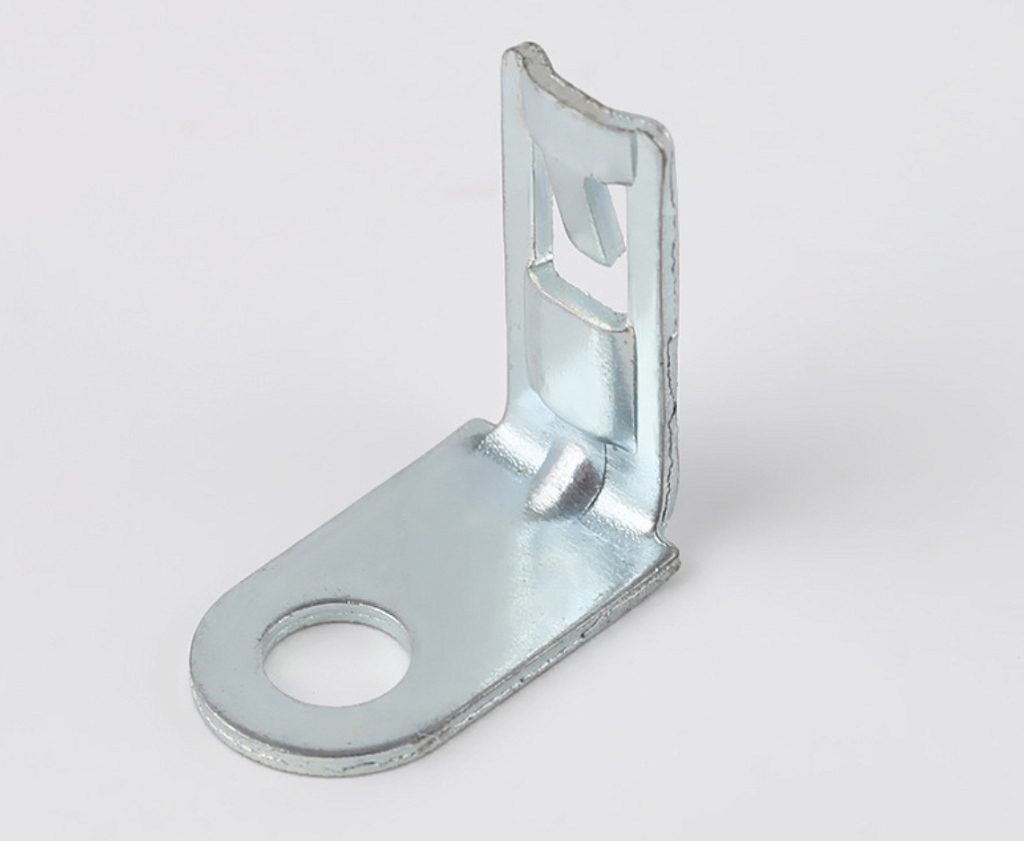
The underlying process is the same — a press and die form metal into a shape. The differences lie in tooling approach, per-unit cost, and design flexibility.
| Comparison | Short Run Stamping | Long Run Stamping |
| Order Quantity | 1 piece to a few thousand | Tens of thousands to millions |
| Tooling | Simpler dies, lower tooling cost | Hard tooling (progressive, four-slide), higher cost |
| Upfront Investment | Low | High |
| Per-Unit Cost | Higher | Lower |
| Design Changes | Easy and low-cost | Difficult and expensive |
| Best For | Prototypes, pilot runs, new products | Stable designs with consistent ongoing demand |
| Risk Level | Low | Higher when demand is uncertain |
Tooling is the biggest differentiator. High-volume production typically uses progressive or four-slide dies — fast cycle times, low unit cost, but expensive to build and time-consuming to fabricate. Only worth it at sufficient volume. Short run stamping uses simpler tooling; unit cost is slightly higher, but total spend is lower because you're buying fewer pieces.
Design changes are far more expensive in high-volume production. Hard tooling is built for a specific design. Changing a part may require die modification or a complete rebuild — significant cost and time. Validate the design with a short run first, then commit to final tooling.
Look at total cost, not just unit price. Total cost includes tooling, inventory carrying cost, and the risk of unsold stock. A lower unit price does not necessarily mean lower total cost.
Before advising a customer on which path to take, I typically ask:
- Is your design finalized?
- How many pieces do you need this year?
- Is demand confirmed, or are you still in the testing phase?
- What is your current budget for tooling?
- When do you need the parts?
Design not finalized or demand uncertain → start with short run stamping. Design stable and demand confirmed → proceed directly to long run stamping.
Many customers follow this natural progression: prototype → short run → progressive die mass production, with the entire process handled by the same team at Worthy — no need to switch suppliers at any stage.
How Much Does Short Run Stamping Cost?
Without seeing your drawing, I can't give you an accurate number. A simple bracket and a high-precision medical terminal represent completely different scopes of work. I won't give you a figure that changes later — but I can tell you exactly what drives the cost, so you can build a realistic budget before you request a quote.
1. Tooling Cost
Typically the largest single cost in a short run project. Simple parts may use a single-stage or compound die; parts with multiple bends and holes may require a progressive or four-slide die. More complex tooling means higher cost and longer fabrication time.
2. Material Cost
Aluminum, brass, steel, stainless steel, titanium, copper, alloy steel, and bronze are all priced differently. Stainless steel and titanium cause greater die wear, which adds to cost. We work with 100+ materials. Where the drawing allows, our engineers can suggest more cost-effective alternatives that still meet your functional requirements.
3. Part Size and Complexity
Larger parts use more material and require higher-tonnage presses. More bends, holes, and forming features mean more die stations and higher tooling cost.
4. Tolerance Requirements
General tolerances are per ISO 2768-M, which is sufficient for most structural applications. Tighter tolerances (such as ±0.01mm) require more precise die fabrication and more intensive inspection — both add cost. Specify tight tolerances only where they genuinely affect assembly or function. In most cases, only 2–3 dimensions on a part require the tightest control.
5. Order Quantity
Smaller quantities mean tooling cost is spread across fewer parts, resulting in a higher per-unit price. As quantity increases, unit cost decreases. We have no minimum order quantity. If you can share your estimated annual volume, we can provide pricing for both short run and mass production simultaneously, so you can make an informed comparison.
6. Surface Finishing and Assembly
Plating, anodizing, powder coating, polishing, heat treating, deburring, riveting, welding, tapping, and staking — each additional operation adds to the cost. Tell us what your part actually requires, and we'll quote only the operations that apply.
7. Quality Documentation
MTC, FAI, and dimensional inspection reports are provided as standard with every shipment. PPAP (Production Part Approval Process) documentation can be provided at the customer's cost — please specify this requirement when requesting a quote.
8. Logistics and Trade Terms
We support EXW, FOB, and DDP. DDP pricing includes freight and customs duties — the quote looks higher, but you have no additional clearance costs to manage on your end.
How to Get an Accurate Quote
The more complete your information, the faster and more accurate the quote. Please provide as much of the following as possible:
- ✅ 2D drawing (DWG/PDF) + 3D file (STEP)
- ✅ Material and thickness (if unsure, tell us the application and we'll recommend)
- ✅ First order quantity + estimated annual volume
- ✅ Critical dimensions and tolerances (please mark on the drawing)
- ✅ Surface finish requirements
- ✅ Assembly requirements, if any
- ✅ Required quality documents (MTC / FAI / PPAP, etc.)
- ✅ Destination port and required delivery date
You don't need to have everything ready before reaching out. Send us what you have — our engineer will tell you what else is needed. We respond to all inquiries immediately upon receipt, with a dedicated sales representative assigned to your account.
How to Reduce the Cost of Short Run Stamping
1. Start with a free engineer drawing review. Bend radii, hole-to-edge distances, and corner radii are common hidden cost drivers. Our engineers review your drawing for free during the quoting stage and provide specific optimization suggestions — at no charge.
2. Tighten tolerances only where it matters. General tolerances per ISO 2768-M are sufficient for most features. Don't apply the tightest tolerance across the entire drawing. Specifying tight tolerances only on dimensions that genuinely affect assembly and function can significantly reduce tooling and inspection cost.
3. Choose the right material, not the most expensive one. More expensive is not always better. The material only needs to meet your functional requirements. If you're unsure, describe the application and let our engineers recommend.
4. Consolidate orders where possible. Ordering similar parts together in a single run helps spread tooling setup and changeover costs across a larger quantity.
5. Share your annual volume estimate upfront. This allows us to design the tooling with future mass production in mind, avoiding the need to rebuild tooling from scratch when you scale up.
6. Finalize your drawing before placing the order. Making design changes after tooling fabrication has begun significantly increases cost and lead time. Locking in your drawing before ordering saves both.
When Should You Transition from Short Run to Mass Production?
Consider transitioning to mass production when the following conditions are met:
- Your design is finalized and will not change
- Orders are consistent and repeat business is established
- Per-unit cost has become a primary pressure point, and the investment in production tooling can be recovered through unit cost savings
- Delivery requirements are tighter and higher production efficiency is needed
A simple breakeven calculation:
(Mass production tooling cost − Short run tooling cost) ÷ Per-unit cost savings = Breakeven quantity When your expected volume exceeds this number, the investment in mass production tooling is justified.
We can run this calculation for you and provide pricing for both options simultaneously.
When you transition to mass production, we apply the validated dimensions and inspection methods from your short run to the new tooling. You don't need to restart with a new supplier.
How to Evaluate a Short Run Stamping Supplier
Don't evaluate suppliers on price alone. Here are the key dimensions to assess:
| Evaluation Criteria | Questions to Ask | How Worthy Handles It |
| Communication | Who is my contact? How fast do you respond? What channels do you use? | Dedicated contact person; immediate response upon inquiry; email, phone, WhatsApp, WeChat |
| Lead Times | How long for tooling, samples, and production? | Tooling ~20 business days; samples ~5 business days; production ~2–3 weeks |
| Process Visibility | Can I see progress during production? | Progress photos during tooling; photos and video confirmation before shipment |
| Quality Control | How many inspection stages? What methods? | Four-stage inspection: incoming, first article, in-process, pre-shipment; 100% inspection |
| Quality Documents | What reports can you provide? | MTC, FAI, dimensional inspection report; PPAP available at customer's cost |
| After-Sales | What happens if there's a quality issue? | See "How Quality Issues Are Handled" below |
| Flexibility | Is there a minimum order quantity? | No MOQ — from 1 prototype to full mass production |
| Certifications | What quality certifications do you hold? | ISO 9001, RoHS |
Reference Lead Time Summary
| Stage | Reference Time | Notes |
| Drawing review and quotation | ~1 business day | Depends on completeness of information provided |
| Tooling fabrication | ~20 business days | Begins upon receipt of tooling deposit |
| First article samples | ~5 business days | After tooling is complete |
| Sample approval | Per customer confirmation | — |
| Batch production | ~2–3 weeks | After sample approval |
| Shipping | Depends on trade terms and destination | Air freight or sea freight |
These are reference timelines. Actual lead times vary based on part complexity, quantity, and production scheduling. All lead times are confirmed in writing before you place your order. If anything during production could affect the schedule, we will notify you immediately and discuss solutions together.
How Quality Issues Are Handled
- Internal root cause analysis is conducted immediately to prevent recurrence
- Repairable defects: We cover all round-trip freight and customs costs; parts are repaired and reshipped at no charge to you
- Non-repairable defects: Parts are scrapped and remanufactured at our cost; all freight and duties are covered by us
- Other losses attributable to our error: Handled per contractual terms — we do not deflect responsibility
Frequently Asked Questions
Q: What is the minimum order quantity for short run stamping? A: Worthy has no minimum order quantity. We accept orders from a single prototype through to large-scale mass production.
Q: How long does it take from placing an order to receiving samples? A: From the date we receive the tooling deposit: tooling takes approximately 20 business days, followed by first article samples in approximately 5 business days — totaling approximately 25 business days. If you have a tighter deadline, please mention it when you inquire and we will assess what's possible.
Q: What are your tolerance standards? What is the tightest tolerance you can achieve? A: General tolerances are per ISO 2768-M. Under specific conditions, we can achieve tolerances as tight as ±0.01mm. If you have requirements tighter than standard, please mark them on your drawing — our engineer will evaluate feasibility and advise on the cost impact.
Q: What quality documents can you provide? A: We provide Material Test Certificates (MTC), First Article Inspection Reports (FAI), and Dimensional Inspection Reports as standard. PPAP (Production Part Approval Process) documentation is also available at the customer's cost — please specify when requesting a quote. All parts undergo 100% inspection, with an inspection report included with every shipment.
Q: What certifications do you hold? A: ISO 9001 and RoHS. Certificate originals are available for viewing on our website: www.worthyhardware.com
Q: What materials and surface finishes can you work with? A: We work with 100+ materials including aluminum, brass, steel, stainless steel, titanium, copper, alloy steel, and bronze. We support 50+ surface finishing options including plating, anodizing, powder coating, and polishing.
Q: Can I order samples only, without committing to mass production? A: Yes. We have no minimum order quantity, and whether or not you proceed to mass production is entirely your decision.
Q: Can I start with a short run and later transition to progressive die mass production? A: Yes. We have full capability across compound dies, progressive dies, and four-slide processes. Customers can progress from prototypes to mass production with the same team — no supplier change required.
Q: Can you produce transfer dies? A: Yes. We handle transfer dies up to 200 tons, with material thickness up to 15mm and part length up to 500mm.
Q: Is the drawing review free? A: Yes. Our engineers review your drawing and provide optimization suggestions at no charge.
Q: What are the payment terms? A: We accept TT (wire transfer) and PayPal. Payment terms are 30% deposit, with the balance due before shipment.
Q: Which countries do you ship to? A: Our primary export regions include Singapore, North America, Japan, Europe, Australia, New Zealand, and Jordan. Inquiries from other regions are welcome.
Q: What happens if there is a quality problem? A: We conduct an internal root cause investigation first. If parts can be repaired, we cover all round-trip freight and customs costs and repair them free of charge. If parts cannot be repaired, they are scrapped and remanufactured at our cost, with all freight and duties covered by us. Any other losses attributable to our error are handled per the terms of our agreement.
Next Step: Send Us Your Drawing
Not sure whether your project is a good fit for short run stamping? Send us your drawing and our engineer will provide a free Design for Manufacturability (DFM) review — along with a clear recommendation on whether short run stamping or direct mass production makes more sense for your situation.
| Contact | Details |
| [email protected] | |
| 🌐 Website | www.worthyhardware.com |
| 📱 WhatsApp / Phone / WeChat | +86 131 4325 4839 |
| 📍 Address | No. 18, Dalutu Area, Huangcaolang, Dalang Town, Dongguan, Guangdong, China |
About the Author
Sandra Gao is the Business Manager at Worthy, with 20 years of experience in business management for precision metal stamping. She oversees customer technical liaison and project management. Worthy is based in Dongguan, China, established in 1998, and specializes in precision metal stamping, die design and fabrication, metal forming, and assembly services.
Technical Reviewer: Jason (Engineer, 25 years of stamping process experience) Specializations: compound die design, progressive die design, four-slide process. Jason is responsible for the technical accuracy of all published content and conducts Design for Manufacturability (DFM) reviews on customer drawings.
All customer case studies in this article are published with written customer authorization and have been anonymized. All technical specifications reflect Worthy's verified production capabilities. For questions or clarifications, please contact us directly.
Worthy Hardware — Precision Metal Stamping Manufacturer, China | ISO 9001:2015 Certified | Serving Global B2B Customers
Primary Markets: North America | Europe | Japan | Singapore | Australia | New Zealand | Middle East