
Progressive Die Stamping vs. Transfer Die Stamping: How to Choose?
Author: Sandra Gao Business Manager at Worthy, 20 Years of Experience in Precision Metal Stamping | Worthy Hardware 📧 [email protected] | 🌐 www.worthyhardware.com/ | Published: 2025-10-01 | Last Updated: 2026-11-10
Bottom Line First
Choosing the wrong stamping process costs you money, delays your schedule, and creates quality problems — and all of that is decided before the first tool is cut.
| Your Part | Start Here |
| Small parts, high volume | Progressive die stamping — typically the lowest piece price at scale |
| Large parts, deep draw, complex 3D geometry | Transfer die stamping |
| Small multi-bend parts (clips, flat springs, terminals) | Evaluate fourslide stamping first — tooling cost is often lower |
| Simple flat parts (washers, flat brackets) | Compound die |
Three things drive the decision: part size and geometry, total volume, and tolerance and secondary operation requirements.
The rest of this article explains how each process works, how costs compare, a break-even calculation you can run yourself, and two real cases from our shop floor.
About Worthy
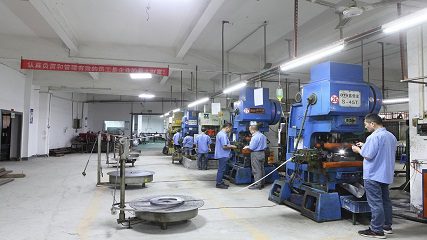
Worthy (Worthy Hardware) is a precision metal stamping manufacturer based in Dongguan, China. We work B2B only, wholesale only. Every part is made to customer drawings.
- Founded: 1998
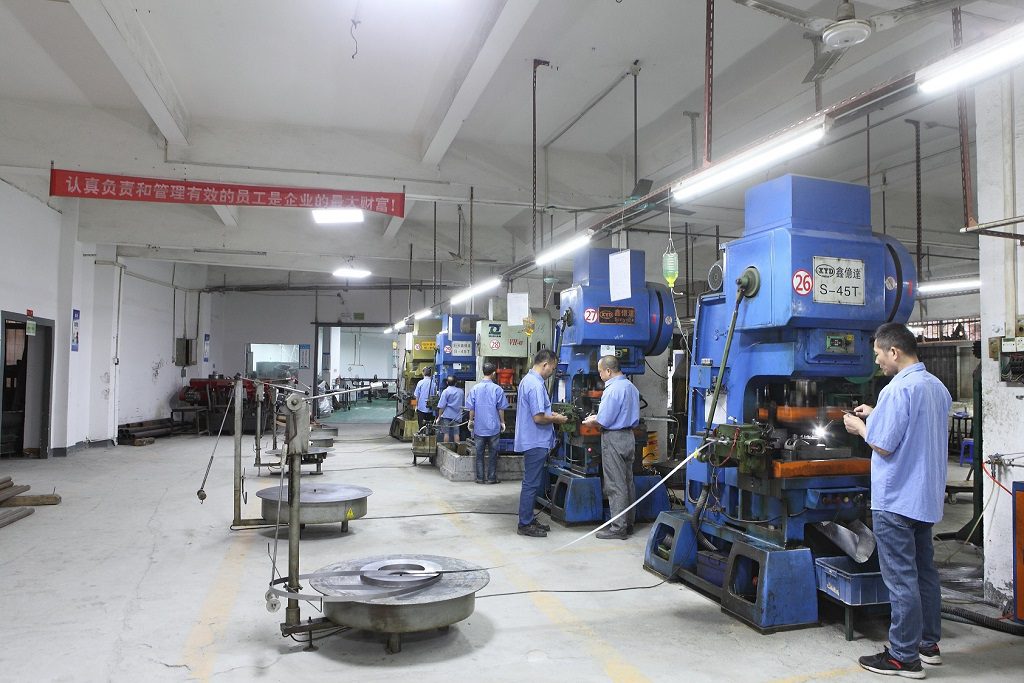
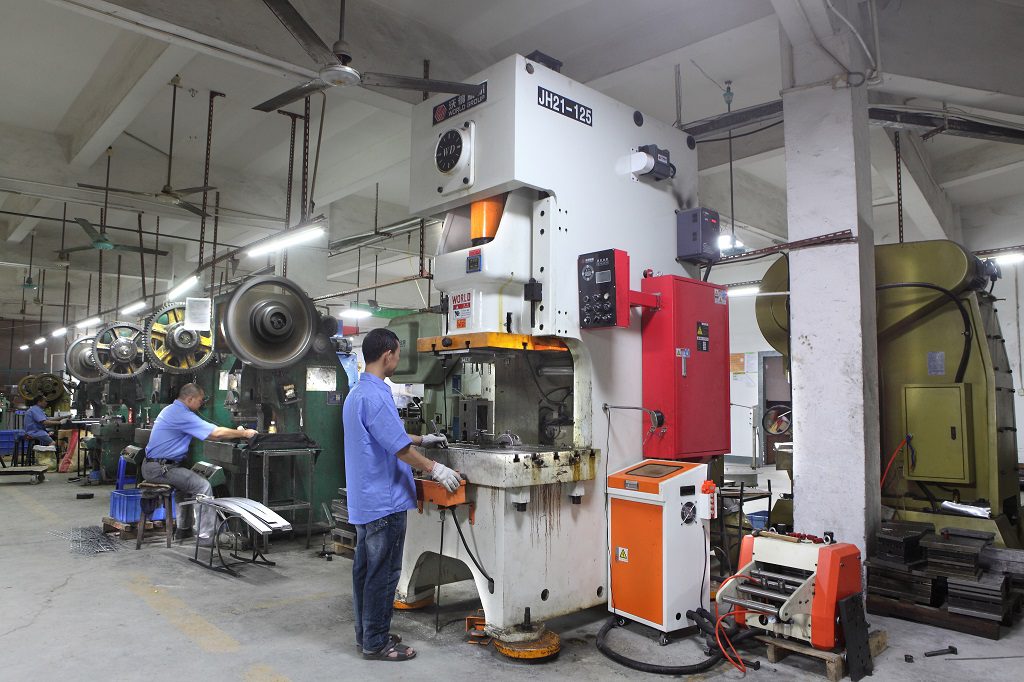
- Facility: 2,000 sqm, 50 employees, 40 stamping presses (as of 2025)
- Press capacity: 5 to 500 tons
- Core capabilities: Progressive die stamping, fourslide stamping, tool and die, stamped part assembly, prototype stamping
- Equipment: In-die tapping, electronic tool and press monitoring
- Materials: 100+ including aluminum, brass, steel, stainless steel, titanium, copper, alloy steel, bronze
- Surface finishing: 50+ including plating, anodizing, powder coating, polishing
- Quality system: ISO 9001
- Export markets: North America, Europe, Japan, Singapore, Australia, New Zealand, Jordan
- Industries served: Aerospace and defense, automotive, consumer products, electronics and semiconductors, energy, lighting, medical and dental, robotics, industrial equipment
- Order quantity: No MOQ — from prototype to mass production
- Engineering team: 4 engineers who review customer drawings before tooling begins, identify design risks, and help reduce cost
What Is the Difference Between Progressive and Transfer Die Stamping?
The short version: In progressive die stamping, the part stays connected to the metal strip and moves forward station by station. In transfer die stamping, the part is cut into a blank first, then transferred between stations by mechanical fingers.
How Progressive Die Stamping Works
A metal coil feeds into the die. Each press stroke advances the strip one step. Each station does one thing — pierce, bend, trim, or form. The part stays on the strip until the final station, where it is cut off. One finished part drops out with every stroke.
Fast, consistent, and well-suited for small parts like clips, terminals, contacts, and small brackets.
Engineer's note: The "carrier" that holds parts to the strip as they advance becomes scrap at the end. Carrier design and strip layout directly determine material utilization, which directly affects piece price. This is one of the main reasons progressive die quotes vary between suppliers. Do not just compare final prices — ask about the strip layout and material utilization rate.
https://www.youtube.com/watch?v=10vNgC4LpkQ
How Transfer Die Stamping Works
The part starts as a separate blank, cut from the strip at the first station. Mechanical fingers pick it up and carry it to each subsequent station. Because the part is free from the strip, the die can work it from multiple directions — making transfer stamping the right choice for larger parts, deep drawn parts, and complex three-dimensional shapes such as housings, cups, and covers.
Worthy transfer die capability: Press capacity up to 200 tons, material thickness up to 15mm, part length up to 500mm.
If your part falls outside this range, or if our review suggests a different process would serve you better, we will tell you directly. We will not push a process just to take the order.
When Does Fourslide Stamping Make Sense?
Fourslide uses four slides approaching from four directions to bend and form wire or strip material simultaneously. It is the right tool for small clips, flat springs, hooks, and multi-bend terminals.
Advantages: Flexible forming for complex multi-bend shapes, tooling cost is often lower than progressive dies, less material waste.
Limitations: Not suitable for material thicker than 3mm or for deep drawn parts.
Compound Die
For simple flat parts — washers, flat brackets — that only need an outside profile and holes punched in a single stroke, a compound die is worth considering. It completes blanking and piercing in one station, produces good flatness, and involves a simpler tool structure.
Compound Die Comparison of the Four Main Processes
The table below is a starting-point filter based on experience. Final process selection depends on part review.
| Progressive Die | Transfer Die | Fourslide | Compound Die | |
| Part size | Small to medium | Medium to large | Small | Small to medium |
| Part geometry | Flat, bent, shallow formed | Deep drawn, complex 3D | Multi-bend, wire formed, clips | Simple flat parts |
| Production speed | Very fast | Slower | Fast | Medium |
| Tooling cost | Higher | Higher | Usually lower | Lower |
| Piece price at volume | Usually lowest | Medium | Lower | Lower |
| Material utilization | Depends on carrier and strip layout | Often better on large parts | Less waste | Good |
| Not suitable for | Large parts, deep draw | Small parts, high-speed high-volume | Thick material (>3mm), deep draw | Complex forming |
| Suitable volume | Medium to high | Medium to high | Low to high | Low to medium |
No process is best in every situation. The part decides.
Which Stamping Process Cost Less?
For small parts at high volume, progressive die typically delivers the lowest piece price. For large parts, transfer die can be more economical because of better material utilization. For small multi-bend parts, fourslide usually has the lowest tooling cost.
Cost comparison requires looking at two numbers together:
- Tooling cost: Paid once. Covers design, fabrication, and tryout.
- Piece price: Paid for every part.
Low tooling cost paired with high piece price can end up more expensive over a year. High tooling cost paired with low piece price is often the better deal at high volume. That is why we always ask about total volume before quoting. A tool that pays for itself at 500,000 parts may never pay for itself at 5,000.
Four Factors That Drive Piece Price
| Factor | How It Affects Price |
| Material utilization | Better strip layout means less scrap, which means lower piece price |
| Production speed | Higher strokes per minute means more parts per hour, which lowers processing cost |
| Tolerance requirements | Tighter tolerances require more precise tooling and tighter process control, which increases cost |
| Secondary operations | Plating, heat treating, and assembly all add cost. Some operations can be done in-die, such as in-die tapping |
Which Stamping Process Cost Less?
Total cost = Tooling cost + (Piece price × Quantity)
Break-even quantity = Tooling cost difference ÷ Piece price difference
The numbers below are for illustration only. They are not Worthy's actual pricing.
| Option A: Progressive Die | Option B: Fourslide | |
| Tooling cost | $20,000 | $8,000 |
| Piece price | $0.10 | $0.16 |
- Tooling cost difference = $20,000 − $8,000 = $12,000
- Piece price difference = $0.16 − $0.10 = $0.06
- Break-even quantity = $12,000 ÷ $0.06 = 200,000 parts
How to use this:
- Total volume below 200,000 parts: Option B (fourslide) has lower total cost
- Total volume above 200,000 parts: Option A (progressive die) has lower total cost
What this formula does not include:
- Lead time: Different tools take different time to build, which affects your time to market
- Tool maintenance and lifespan
- The effect of each process on tolerance capability and quality consistency
- Secondary operations, freight, and import duties
The formula gives you a baseline before you request quotes. Final decisions should be based on a specific part review. Send us your drawings and volume, and we will run this comparison against your actual part.
Costs That Are Easier to Overlook Than Piece Price
The problems procurement managers lose the most sleep over are not a few cents difference in piece price. They are:
- Finding out the design has a problem after the tool is already built
- Receiving defective parts and missing the peak sales season
- Communication gaps where requirements get lost between your team and the supplier, and the samples do not match the drawings
None of these costs show up on a quotation. They are often larger than the piece price difference between suppliers. The two cases below are both examples of problems caught before the tool was cut.
Case 1: How One Bend Angle Changed Production Output
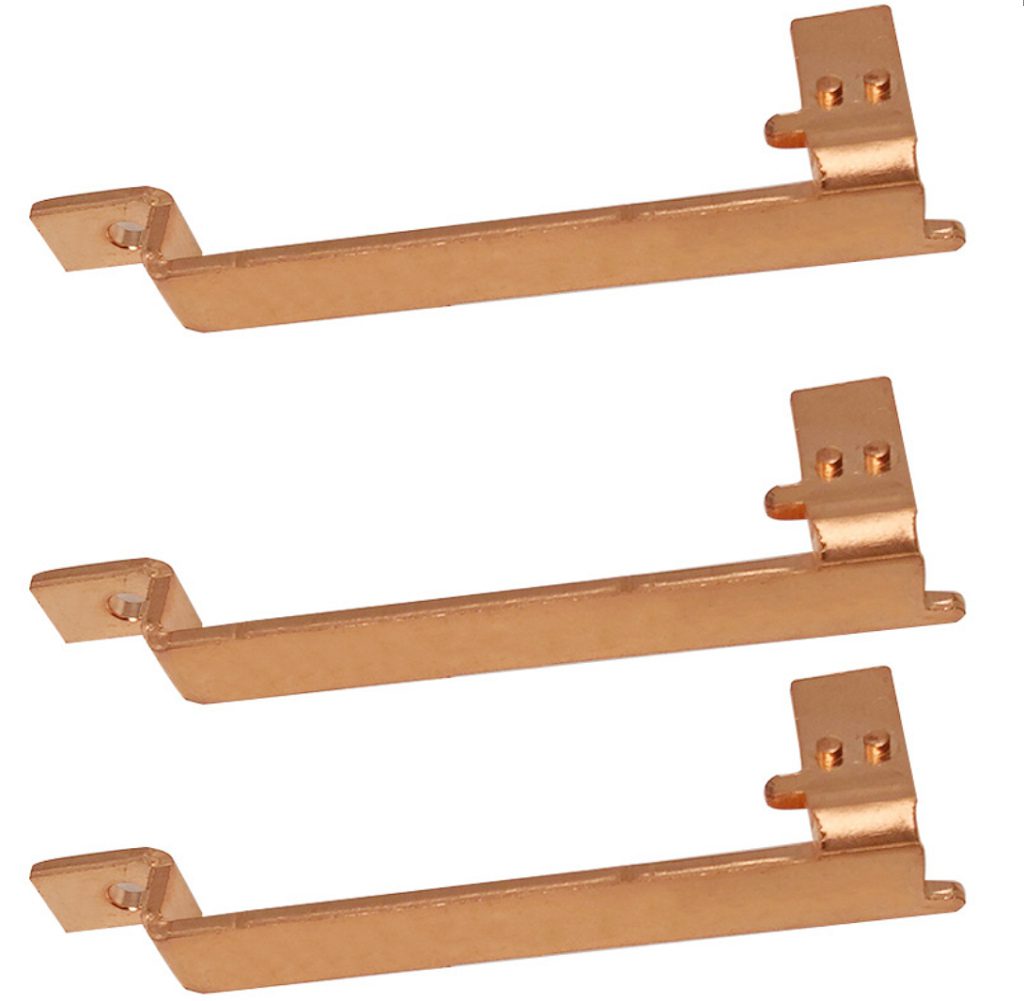
Customer: Lighting industry, Germany|Part: Metal flat spring|Process: Progressive die stamping Published with customer's permission. Customer identity kept confidential.
The Problem
The original design had one bend at 5°. Small-angle bends are difficult to hold consistently in progressive stamping for three reasons:
- Springback proportion is higher: At small angles, springback accounts for a larger share of the target angle, making consistent results harder to achieve
- Punch geometry is constrained: A 5° bend punch has a thin cross-section that wears faster under continuous stamping, reducing tool life
- Stroke rate is limited: To maintain angle consistency, the press had to run slower than optimal, which capped actual output
What We Did
Our engineer did not proceed directly to tooling. Instead, he first discussed the design with the customer's engineering team to confirm whether the 5° angle was a functional requirement for assembly. After review, both teams agreed that adjusting the bend from 5° to 10° would have no effect on assembly fit or part function.
Result
- Tool was easier to build and more stable in production
- Daily output increased from approximately 10,000 parts to approximately 15,000 parts
- Piece price reduced by approximately 10%
- Customer's assembly and function were not affected
What This Case Shows
Many cost problems are solvable at the design stage. A small angle adjustment saved more than switching processes or equipment would have.
Drawing review matters more than tooling speed. Changes made after the tool is built cost significantly more.
A good supplier does more than follow drawings. Our 4 engineers review drawings before tooling and raise questions directly with your engineering team. You decide whether to change anything. We do not modify your design without your approval.
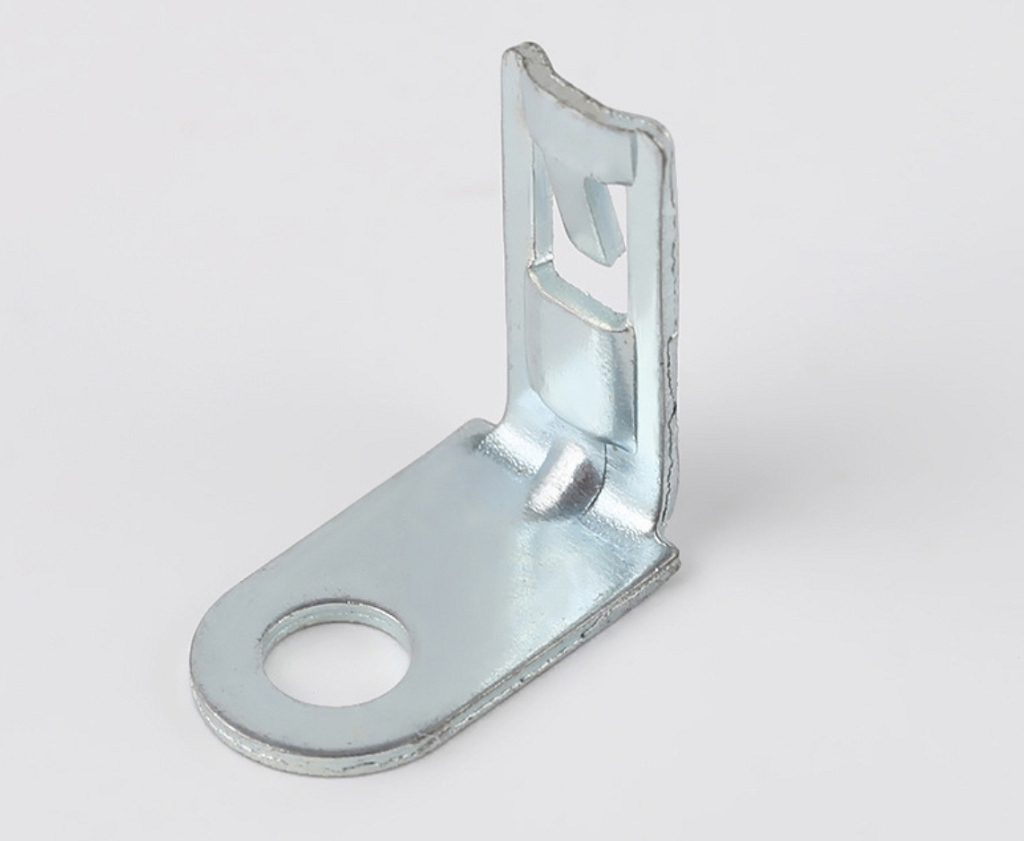
Case 2: Why a 6061 Aluminum Bracket Was Cracking at the Bend
Customer: Electronics industry, United States|Part: Aluminum bracket|Process: Stamping and bending Published with customer's permission. Customer identity kept confidential.
The Problem
Two issues in the design were working against each other:
- Bend radius was too small relative to material thickness: The outer surface of the bend was being stretched beyond the material's elongation limit
- Material specified was 6061-T6: 6061 has high strength but lower elongation and poorer bend formability than 5052. At a small bend radius, 6061-T6 is prone to cracking at the bend
The combination caused the parts to crack during bending. The tool could not go into production.
What We Did
Our engineer identified the risk during drawing review and made two recommendations to the customer:
- Change material from 6061-T6 to 5052-H32: 5052 has better bend formability and higher elongation, making it more suitable for bracket parts that require bending
- Adjust the bend radius to match the material thickness and meet the minimum bend radius requirement for 5052-H32
The customer's engineering team reviewed both recommendations and confirmed that 5052-H32 met the strength requirements for the application before approving the changes.
Result
- Parts no longer cracked during bending
- Tooling development completed successfully
- Part went into mass production
What This Case Shows
Material selection is not only about strength. For parts that require bending, formability is equally important.
Material, thickness, and bend radius are a system. Change one, and you need to review the other two.
Finding the problem before tooling is far less expensive than finding it after. Discovering a cracking issue after the tool is built means losing both the tooling cost and the lead time
Six-Step Process: How to Select a Stamping Process and Supplier
This is the sequence we follow when reviewing a new project. You can use it directly.
Step 1: Start With the Part
- Size: Small parts — look at progressive die and fourslide first. Large parts or deep draws — look at transfer die
- Geometry: Multi-bend small parts — evaluate fourslide first. Simple flat parts — consider compound die
- Material and thickness: Material affects bending, drawing, and tool life. We work with 100+ materials
- Application: Determines appearance requirements, strength requirements, and tolerance requirements
Step 2: Confirm Your Volume
Volume determines whether the tooling investment makes sense. Have these numbers ready:
- First order quantity
- Annual volume
- Expected total lifetime volume
We have no MOQ. We handle prototype quantities through mass production. But the most cost-effective process depends on volume, so give us your numbers and we will recommend accordingly. For small runs of a few hundred pieces, a simpler tool or a different process may make more sense than investing in a full progressive die — we will tell you that directly.
Step 3: Identify Which Tolerances Actually Need to Be Tight
Tighter tolerances cost more. The practical approach:
- Apply ISO 2768-M general tolerances to non-critical dimensions
- Specify tight tolerances only on features where it matters — assembly interfaces, hole locations, mating surfaces
Worthy tolerance capability: Standard capability ±0.025mm (0.001"). Critical features can reach ±0.01mm after engineering review. Whether that is achievable in production depends on part geometry, material, and process.
Common waste to avoid: Specifying tight tolerances on every dimension is one of the most common ways to add cost without adding value. Before tightening a tolerance, ask whether it actually affects function or assembly.
Step 4: Include Secondary Operations in Your Inquiry
Stamping is only the first step. Let us know at inquiry stage whether you need:
- Surface finishing: 50+ options including plating, anodizing, powder coating, polishing
- Heat treating
- Cleaning and deburring
- Assembly: Riveting, welding, tapping, staking
- In-die tapping: Tapping completed during stamping, eliminating a separate operation
Secondary operations are much easier to plan and price at the start. Adding them later affects both price and lead time.
Step 5: Confirm Lead Time and What Happens if There Is a Delay
Our standard lead times:
| Stage | Standard Lead Time |
| Tooling | Approximately 20 working days |
| Samples | Approximately 5 working days after tooling is complete |
| Mass production | Approximately 2–3 weeks after sample approval |
Complex tools may require longer lead times. We will state this clearly in the quotation. If you have an urgent requirement, let us know at inquiry stage and we will assess whether it can be accommodated.
You will not need to chase us for updates. We communicate proactively at every stage:
- Deposit received: confirmed immediately
- During tooling: progress photos sent
- Tooling complete, samples starting: notification sent
- Samples complete, before shipping: photos and video sent for your approval
- During mass production: progress updates at key milestones, mid-production photos available on request
Communication channels: Email, phone, WhatsApp, WeChat. Inquiries received on business days are answered within 24 hours.
If a delay is possible: We will notify you as soon as we identify a risk to the schedule — with the reason and a revised expected date. We do not wait until the deadline has passed to tell you.
Step 6: Confirm Inspection Process, Quality Documents, and How Defects Are Handled
When pricing is similar, inspection process and defect handling often determine your actual total cost. Ask these three questions before placing an order.
1. How is each stage inspected?
| Stage | Our Process |
| Incoming material | Inspected per ISO 9001 procedures. Material certificates required from suppliers. Dimensions and appearance verified. Materials with special requirements sent to third-party testing |
| First article | Full dimensional inspection against drawing. Mass production does not start until first article is approved |
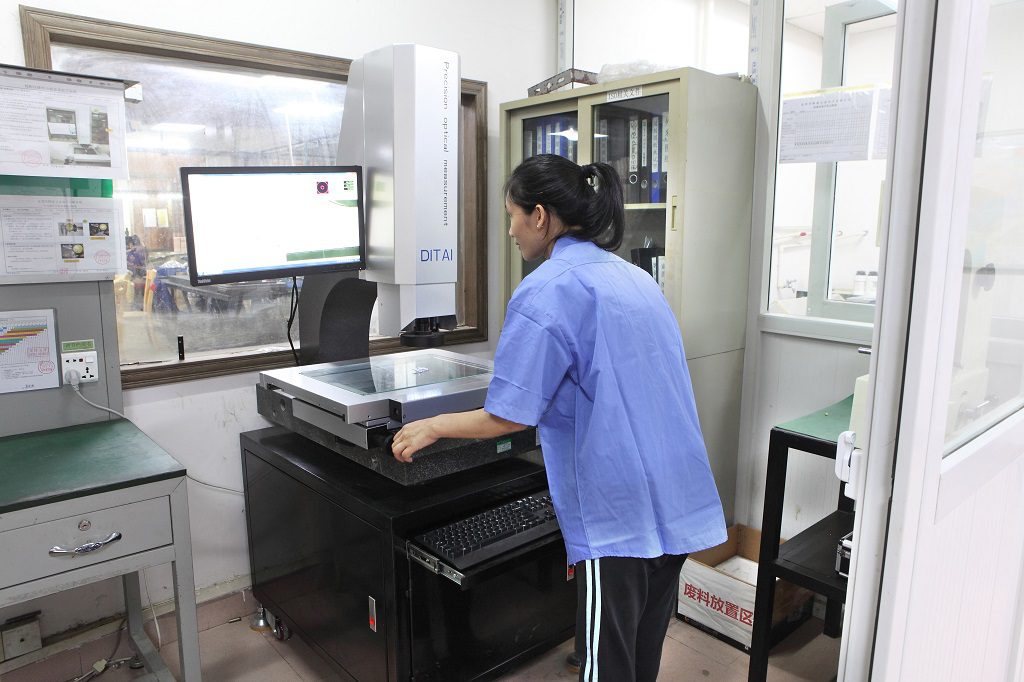
| In-process | Regular checks of tool wear and dimensional accuracy. Critical dimensions verified by multiple inspectors |
| Outgoing | 100% visual inspection. 100% inspection of critical dimensions. Inspection report included with shipment. Photos and video sent to customer for confirmation before goods are dispatched |
2. What quality documents can you provide?
- Material test certificate (MTC)
- First article inspection report (FAI)
- Dimensional inspection report
- RoHS test report
- If your industry has additional requirements (automotive, medical, etc.), please specify at inquiry stage
3. What happens if there is a defect?
- We identify the root cause internally and implement corrective action to prevent recurrence
- Repairable defects: repaired at no charge
- Non-repairable defects: remanufactured
- For defects confirmed as our responsibility, we cover the cost of repair or remanufacture and the associated shipping
- We will respond with a resolution plan within 5 business days of receiving a defect report
Our goal is to catch problems before you receive the goods — not after you have sold them.
One sentence summary for Step 6: Price is negotiable. Inspection process and defect handling should be confirmed in writing before you place the order.
Six-Step Selection Checklist
| Step | What to Confirm | What to Prepare |
| 1 | Part size, geometry, material, application | Drawings (PDF + 3D files) |
| 2 | First order quantity, annual volume, lifetime volume | Volume estimates |
| 3 | Which dimensions are truly critical | Critical dimensions marked on drawing |
| 4 | Surface finishing, heat treating, assembly requirements | Secondary operation requirements |
| 5 | Required delivery date, update cadence, delay protocol | Expected delivery date |
| 6 | Inspection reports, quality documents, defect process | Certificate and report requirements |
What to Include in Your Inquiry
The more complete your information, the more accurate the quote and the fewer back-and-forth emails.
Required:
- 2D drawing (PDF or DWG) and 3D file (STEP)
- Material grade and thickness
- Quantity: first order and annual volume
- Surface finish requirements
Helpful to include:
- Critical dimensions and tolerance callouts
- Application and functional requirements — load direction, conductivity, corrosion resistance, etc.
- Target price range and required delivery date
- Certificate and inspection report requirements
- Problems you have experienced with your current supplier — we will pay specific attention to those areas in our review
No complete drawings yet? Send us a sample, a sketch, or a functional description. Our engineers will assess feasibility and help you move forward.
Frequently Asked Questions
Do you have a minimum order quantity? No. We work from prototype quantities through mass production. The recommended process varies by volume — we will recommend the most cost-effective option based on your numbers.
How long from tooling start to samples? Tooling takes approximately 20 working days. Samples take approximately 5 working days after tooling is complete. Complex tools will have a stated lead time in the quotation. We send progress photos at each stage — you will not need to ask.
What tolerances can you hold? Standard capability is ±0.025mm (0.001"). Critical features can reach ±0.01mm after engineering review. Achievability depends on part geometry, material, and process.
What certifications do you have? ISO 9001 (see certificate image below — issuing body and expiry date visible). RoHS test reports are available for materials. If your industry requires additional certifications, please specify at inquiry stage.
What are your payment terms? Payment is by T/T (bank transfer). Standard terms: tooling deposit paid at order placement, balance paid before shipment of mass production. Specific proportions and terms are confirmed in the quotation.
Which trade terms do you support? EXW and FOB are standard. Other arrangements can be discussed at inquiry stage.
Which regions do you export to? North America, Europe, Japan, Singapore, Australia, New Zealand, Jordan. We have experience handling packaging, customs documentation, and shipping requirements for all of these markets.
Which industries do you serve? Aerospace and defense, automotive, electronics and semiconductors, medical and dental, energy, lighting, robotics, consumer products, industrial equipment, and others.
Will you tell me if there is a problem with my design? Yes — the two cases above are both examples of this. Our engineers review drawings before tooling starts, identify anything that may affect cost, quality, or tool life, and raise it with your team. You decide whether to make changes. We do not modify your design without your approval.
What if there is a quality problem after delivery? We identify the root cause, implement corrective action, and respond with a resolution plan within 5 business days of receiving your report. Repairable defects are repaired at no charge. Non-repairable defects are remanufactured. Where the defect is confirmed as our responsibility, we cover the associated cost and shipping.
Summary
- There is no universally best stamping process — only the right one for your part. Progressive die for small parts at high volume. Transfer die for large parts and deep draws. Fourslide for small multi-bend parts. Compound die for simple flat parts.
- Total cost matters, not just piece price. Run the break-even calculation before you request quotes.
- Many problems are solvable at the design stage. A bend angle or a material change can determine whether a project succeeds or fails.
- When comparing suppliers, inspection process, communication, and defect handling are as important as price.
Contact Us: Free Drawing Review Before Tooling
Send us your drawings, material, and volume. We will review your part before tooling starts, identify potential risks, and compare process options based on your actual quantities — at no charge.
Sandra Gao Email: [email protected] Website: www.worthyhardware.com Company: Worthy (Worthy Hardware), Dongguan, China Contact: Email, phone, WhatsApp, WeChat Response time: Inquiries received on business days (8:00–18:00 Beijing Time) answered within 24 hours
Author and Reviewer Information
Author: Sandra Gao, Business Manager, Worthy — 20 years of experience in precision metal stamping LinkedIn: https://www.linkedin.com/in/sandragaocncmachiningparts/
Technical Reviewer: Jason Liu, Lead Engineer, Worthy — 25 years of industry experience, has led the design of over 500 progressive dies, compound dies, and fourslide tooling, with specialization in complex multi-station die design and fourslide processes
Published: 2025-10-01|Last Updated: 2026-11-10
Cases in this article are from real Worthy projects, published with customer permission. All customer identities are kept confidential. Cost figures used in examples are for calculation illustration only and do not represent Worthy's actual pricing.
Worthy Hardware — Precision Metal Stamping Manufacturer, China | ISO 9001:2015 Certified | Serving Global B2B Customers
Primary Markets: North America | Europe | Japan | Singapore | Australia | New Zealand | Middle East