
Sheet Metal Fabrication vs Metal Stamping: What’s the Difference?
Author: Sandra Gao Founder, Worthy Hardware | 30+ Years in Precision Metal Stamping 📧 [email protected] | 🌐 www.worthyhardware.com Last Updated: 2026
You need custom metal parts, but you're not sure whether to go with sheet metal fabrication or metal stamping?
Choosing the wrong process means wasted time and money — and I've seen it happen more times than I can count over the past decade. Some customers invested in stamping tooling for low-volume orders, only to find the tooling cost ate up most of their budget. Others used sheet metal fabrication for high-consistency terminals, then watched their entire assembly line grind to a halt because of batch-to-batch variation.
This article isn't a textbook. It's the process selection logic I've built up after handling hundreds of real orders from procurement teams in North America, Europe, Japan, and Australia. By the time you finish reading, you should be able to determine which process fits your parts within five minutes.
The Short Answer: The Core Difference
Sheet metal fabrication is a broad manufacturing method that covers cutting, bending, welding, and assembly across multiple separate processes. It's suited for low volumes, evolving designs, or parts with complex welded structures.
Metal stamping is a specialized forming process that uses dies and presses to produce parts at high speed. It's suited for medium-to-high volumes where tight tolerances and consistent repeatability are required.
One-line summary: Low volume, design still changing — go sheet metal. High volume, high precision — go stamping.
What Is Sheet Metal Fabrication?
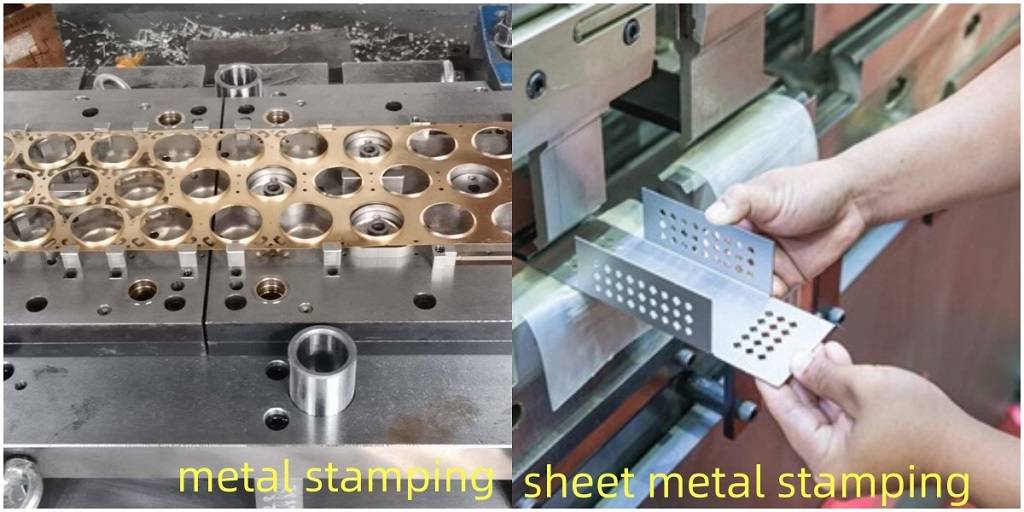
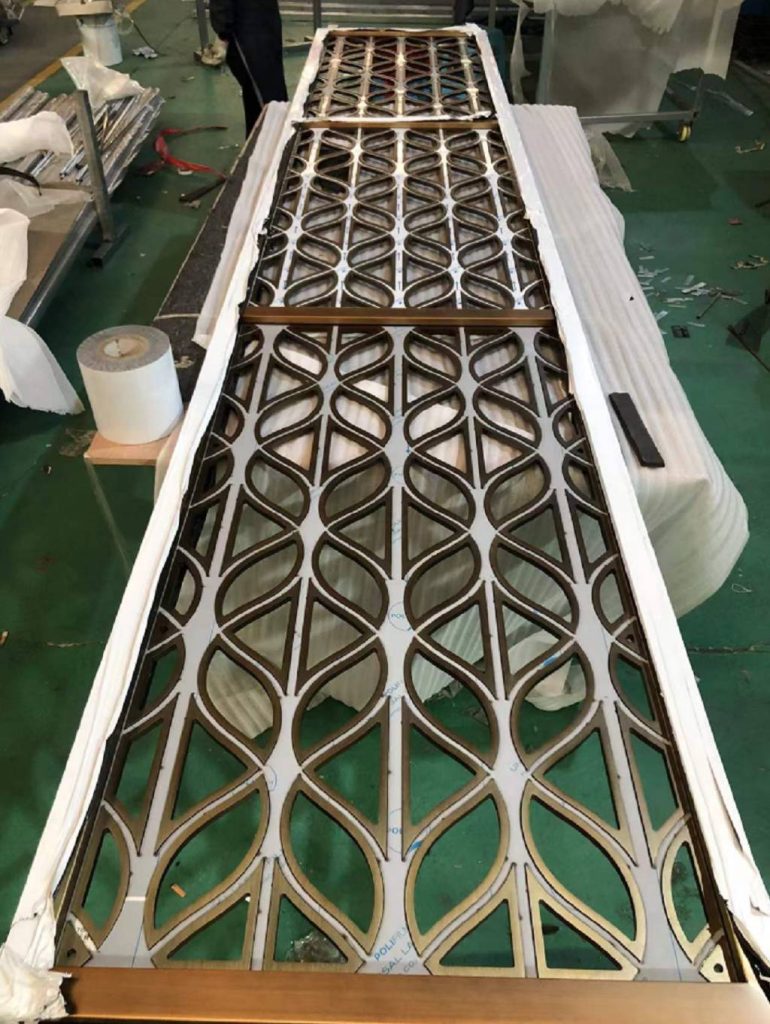
Sheet metal fabrication is a general-purpose manufacturing method. It transforms flat metal stock into finished parts or structural components using a combination of laser cutting, plasma cutting, bending, welding, CNC punching, and other independent processes.
Think of sheet metal fabrication as a toolbox. Based on what the part requires, the shop selects the right combination of steps: laser cut the profile, press the bends on a brake, then weld the pieces together. Each step can be performed independently, and design changes only require adjusting the relevant operation — no tooling investment needed.
When sheet metal fabrication makes sense:
- Low-volume custom parts (1–100 pieces)
- Designs that are still evolving or subject to frequent revision
- Parts with complex welded structures or thick-wall sections (typically over 6mm)
- Rapid prototype validation
Limitations of sheet metal fabrication: Each part may require multiple re-fixturing and setup changes, which drives up labor costs. The more volume you add, the less the per-piece cost improves. For assembly-critical parts that demand high consistency, the accumulated error across multiple operations is a real concern.
What Is Metal Stamping?
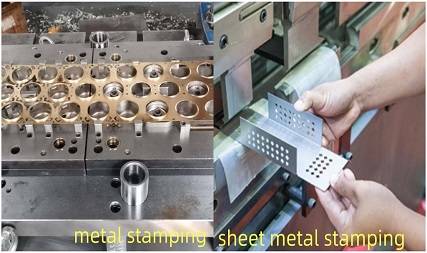
Metal stamping uses a stamping press and custom-built dies to cut or form metal sheet into finished parts. Strip material feeds into the press, the die closes, and a finished part is produced in seconds — a production rate that sheet metal fabrication simply cannot match.
According to the Precision Metalforming Association (PMA), metal stamping is one of the most widely used processes in precision metal parts manufacturing globally, with broad application across automotive, electronics, aerospace, and medical device industries.
Worthy Hardware's Stamping Capabilities:
- Press capacity: 5 to 500 tons
- Materials: 100+ options including steel, stainless steel, aluminum, copper, brass, titanium, alloy steel, bronze, and more
- Standard tolerance: 0.025mm; tight tolerance capability: 0.01mm
- Typical parts: brackets, clips, terminals, shields, contacts, flat springs, mounting plates, retainers, strain reliefs
- Lead times: prototype parts typically 7–14 business days; production runs typically 3–6 weeks depending on order volume
Progressive Stamping
Strip material advances through a series of stations within a single die set. Each station completes one operation, and a finished part exits at the end of the progression. Best suited for complex geometries and high-volume production. Typical applications include electrical terminals, EMI shielding covers, and precision brackets.
Fourslide Stamping
Four sliding tool heads simultaneously work the metal from different directions, forming complex multi-directional bends in a single operation. Particularly suited for small precision parts in the 0.1mm–3mm thickness range, such as spring clips, flat springs, and cable clips. Compared to progressive stamping, fourslide tooling typically costs less while enabling more complex three-dimensional bend geometries.
How to Choose Between the Two Stamping Methods:
| Progressive Stamping | Fourslide Stamping | |
| Best for | Flat blanking + bend combinations | Multi-directional 3D forming |
| Typical parts | Terminals, shields, brackets | Flat springs, clips, cable clamps |
| Tooling cost | Higher | Relatively lower |
| Volume fit | High volume | Medium to high volume |
| Material thickness | Typically 0.2mm–4mm | Typically 0.1mm–3mm |
What Equipment Does Each Process Use?
| Sheet Metal Fabrication | Metal Stamping | |
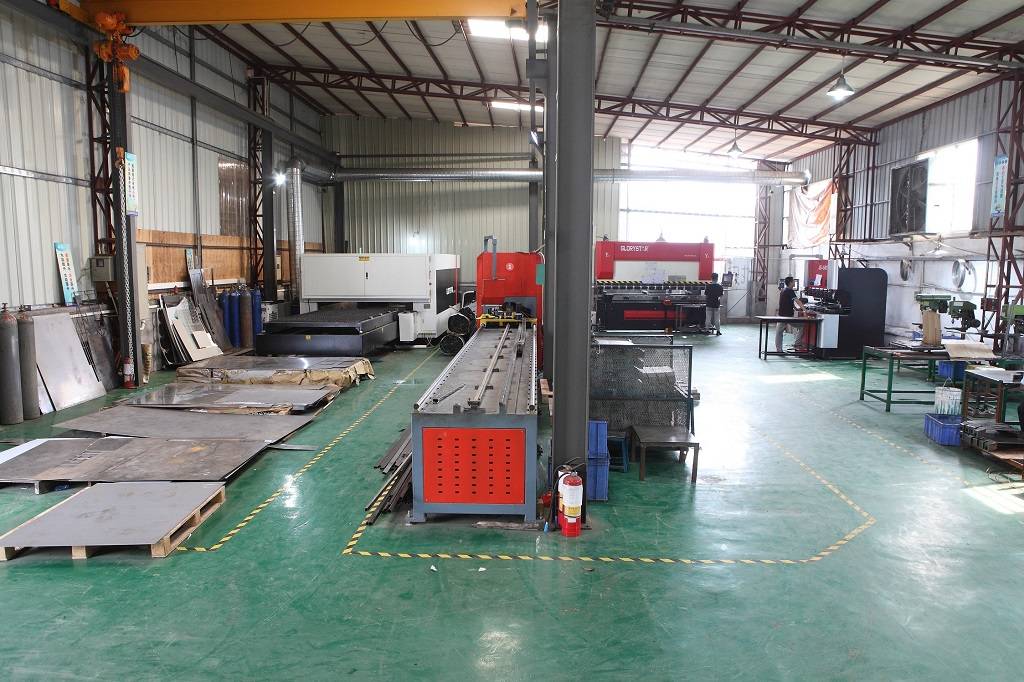
| Primary equipment | Laser cutter, press brake, welding machine, CNC punch | Stamping press + custom die tooling |
| Number of operations | Multiple separate operations | Multiple operations in a single press |
| Changeover flexibility | High | Low (dies are part-specific) |
| Suitable volume | Low volume | Medium to high volume |
| Automation level | Moderate | High |
Which Process Holds Tighter Tolerances?
Stamping has a clear advantage on precision.
Standard sheet metal fabrication typically achieves ±0.1mm to ±0.25mm tolerances, which is sufficient for many applications. But when your parts require precision fit-up, stamping is the right answer.
Worthy Hardware's Precision Capability:
- Standard tolerance: 0.025mm
- Tight tolerance: 0.01mm
- Inspection equipment: CMM (coordinate measuring machine), optical comparator, vision measuring system
The precision in stamping comes from the die itself. Once the die is built to specification, every part it produces matches the drawing — piece after piece. Sheet metal fabrication has more sources of variation: every bend and every weld introduces small deviations, and those deviations accumulate across multiple operations, reducing batch-to-batch consistency.
A Real Case from Our Shop: A Canadian electronics equipment manufacturer was producing a mounting bracket using sheet metal fabrication at approximately 5 per part. After volume delivery, they found a bend angle variation of ±0.15 mm between batches, causing repeated stoppages on their assembly line and over 3,000 per month in rework costs. Our engineers reviewed the design and converted it to a progressive stamping solution. After production launch, the per-piece cost dropped to $0.50, bend angle variation was brought within ±0.02mm, assembly rework dropped to zero, and the customer recovered the tooling investment within six months.
For high-precision applications including terminals, contacts, medical device components, and aerospace parts, we consistently recommend stamping.
How Does Springback Affect Precision?
Springback is a factor most procurement buyers overlook — but its impact on dimensional accuracy is significant.
When metal is bent, the material partially returns toward its original shape after the forming pressure is released. The amount of springback varies considerably by material:
| Material | Typical Springback | Difficulty |
| Soft aluminum (e.g., 6061-T0) | Low | Straightforward |
| Low-carbon steel | Moderate | Standard compensation |
| Stainless steel (304) | Higher | Requires careful calculation |
| High-strength steel (HSLA) | High | Complex compensation |
| Titanium alloy | Very high | Difficult — prototype validation recommended |
Springback in sheet metal fabrication: Operators compensate by "overbending" — bending the part past the target angle so it springs back to the correct position. This relies on operator experience and introduces variation between batches, especially when operators change.
Springback in stamping: We calculate the springback compensation at the die design stage and build it directly into the die geometry. Once the die is validated, every part comes out at the correct angle — no guesswork involved.
Worthy's four engineers have extensive hands-on experience with the forming behavior of 100+ materials under press load. For high-strength materials or tight-tolerance bend features, we strongly recommend prototype validation before committing to production tooling. The cost of adjusting a prototype die is a fraction of the cost of correcting a production run.
How Does Volume Affect Process Selection?
| Order Quantity | Recommended Process | Reason |
| 1–50 pieces | Sheet metal fabrication | No tooling cost, short lead time, design flexibility |
| 50–500 pieces | Depends on part complexity | Simple parts: fabrication. High-precision parts: consider stamping |
| 500+ pieces | Metal stamping | Per-piece cost drops rapidly, consistency is higher |
| Annual repeat orders | Metal stamping | Tooling stored at Worthy at no charge — reorders go straight to production |
Recommended workflow: Start with prototype stamped parts to validate fit and function, then open production tooling and scale up once confirmed. This is the approach we use with the majority of our North American and European customers — it reduces risk and avoids costly surprises at production scale.
Why Is Stamping Expensive for Small Quantities?
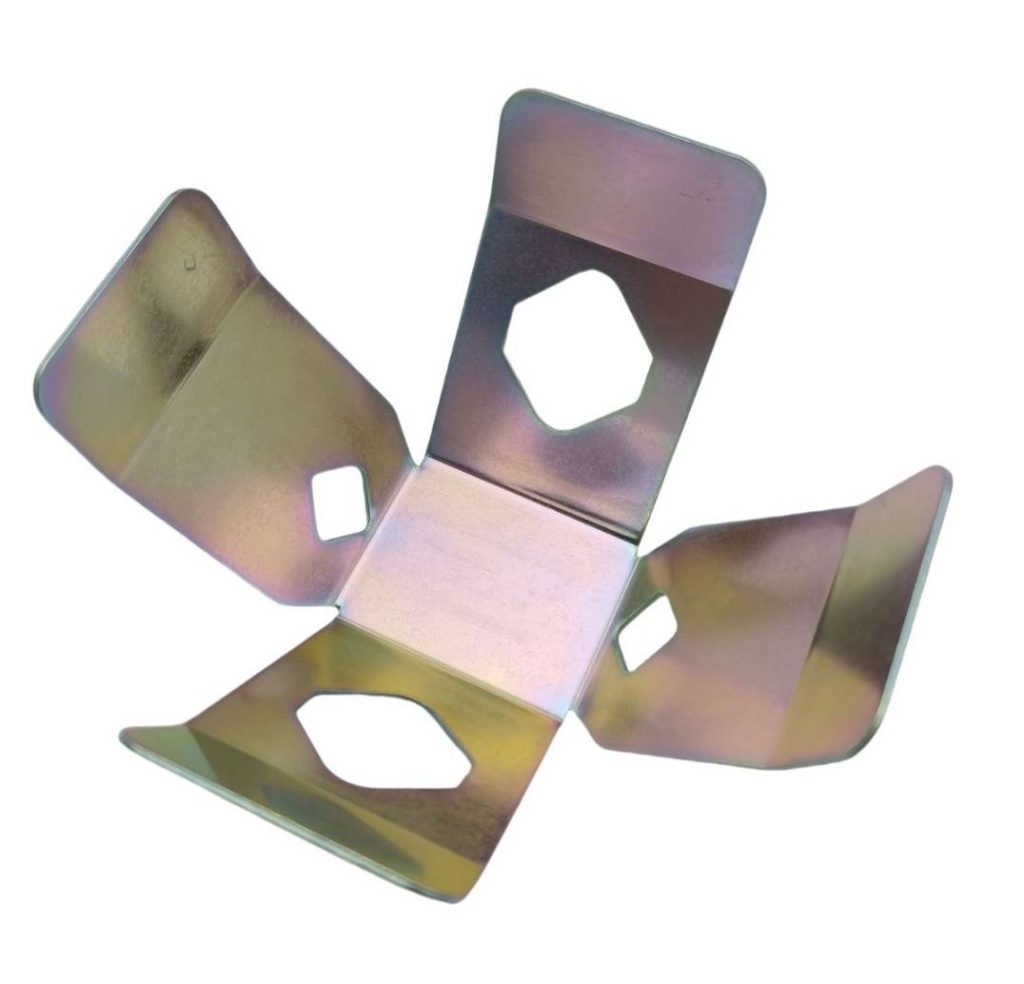
The answer comes down to how tooling cost gets amortized. A stamping die is a custom precision tool machined from hardened steel. The manufacturing cost is fixed — it occurs once, regardless of how many parts are produced.
Illustrative cost structure (actual quotes vary by material and complexity):
| Order Quantity | Tooling Cost | Per-Piece Cost | Blended Per-Piece Cost |
| 100 pieces | ¥20,000 | ¥0.7/pc | ≈ ¥200.7/pc |
| 1,000 pieces | ¥20,000 | ¥0.7/pc | ≈ ¥20.7/pc |
| 10,000 pieces | ¥20,000 | ¥0.7/pc | ≈ ¥2.7/pc |
This is why I always ask customers about their long-term purchasing plans. A one-time order of 50 pieces is probably better served by sheet metal fabrication. But if you're reordering the same part every quarter, the tooling cost typically pays for itself within the first order or two.
Worthy's tooling policy: we store customer tooling at no charge. When you reorder, we go straight to production — no re-tooling fees. Many of our customers in North America, Europe, and Japan have been reordering the same parts for years, with the per-piece cost getting more favorable over time.
Which Parts Are Best Suited for Metal Stamping?
Stamping is best suited for precision parts made from thin sheet material with relatively well-defined geometry.
Parts Worthy stamps most frequently:
- Brackets: Mounting brackets, L-brackets, fixed brackets
- Clips: Spring clips, retaining clips, cable clips
- Terminals: Electrical terminals, connector terminals
- Shields: EMI/RFI electromagnetic shielding covers
- Contacts: Electrical contacts for switches and connectors
- Flat Springs: Small springs used in assemblies
- Mounting Plates: Base plates with hole patterns and bends
- Retainers: Component positioning and retention parts
- Strain Reliefs: Cable and wire protection parts
Parts that are not well suited for stamping: Thick-wall sections (typically over 6mm), parts with extensive welded joints, and one-off special profiles. Sheet metal fabrication is the better fit for these.
How Does Design Affect Process Selection?
Part design sometimes determines the process before volume even comes into the conversation. Parts with deep-draw features, thick-wall construction, or complex welded assemblies are limited to sheet metal fabrication. Stamping is designed for thin sheet material — cut, bent, and formed to shape.
What Worthy's Engineering Review Actually Catches:
Our four engineers review every new design before quoting. They actively look for features that could cause stamping problems:
- Bend lines located too close to holes or edges
- Inside radii that are too tight, creating material tear risk
- Material specifications that don't match the forming requirements
- Tolerances that are over-specified and unnecessarily drive up tooling cost
- Grain direction conflicts with bend orientation
Common Design Mistakes to Avoid
1. Applying Tight Tolerances to Every Dimension
Not every dimension needs 0.025mm precision. Only critical fit-up dimensions require that level of control. Over-tolerancing drives up tooling cost and reduces production efficiency. Tell us which dimensions are actually critical — we'll focus the precision where it matters.
2. Placing Bend Lines Too Close to Holes or Edges
Metal needs sufficient material to bend cleanly. Placing a bend line too close to a hole or edge causes tearing or distortion of nearby features. General rule: the distance from a bend line to any hole or edge should be at least 2× the material thickness. Our engineers flag this during every design review.
3. Wrong Material Selection
Some customers carry forward material specifications from older designs, but a different alloy may offer better formability, lower cost, and equivalent performance. With 100+ materials available, we can recommend alternatives worth considering.
4. Ignoring Grain Direction
Sheet metal has a grain direction established during rolling. Bending perpendicular to the grain can cause cracking, especially in high-strength steel and stainless steel. This is easy to design around — our engineers check for it during review.
5. Skipping Prototype Validation Before Production
Modifying production tooling is expensive. We always recommend starting with prototype stamped parts to validate fit and function before committing to production dies. Prototype parts typically take 7–14 business days — a small investment compared to the cost of a production rework.
Which Process Offers Better Repeatability?
Stamping has no equal on repeatability.
Once the die is built and validated, every stroke produces an identical part. The die controls all cutting, bending, and forming — no operator judgment involved. A standard die typically lasts 500,000+ strokes; a well-maintained carbide die can run into the millions, with every part matching the drawing.
Sheet metal fabrication involves more human intervention. Even with CNC control, subtle differences between shifts and operators introduce batch-to-batch variation. For parts that go into an assembly, a 0.1mm variation in bend angle can make an entire batch unusable.
Worthy's Three-Layer Quality Assurance:
- Die precision: Tooling is machined on precision machining centers — die accuracy directly determines part accuracy
- Electronic press monitoring: Real-time tonnage and stroke tracking on every hit; automatic press stop if any drift is detected
- 100% outgoing inspection: Every outgoing part is measured using CMM and optical comparator; inspection report ships with every order
This is one of the core reasons we've built long-term relationships with customers in industries where consistency is non-negotiable — aerospace, medical, and electronics.
Cost Comparison
Sheet metal fabrication cost structure:
- Low upfront cost — no custom tooling required
- Higher per-piece cost — more time and labor per part
- Limited improvement in per-piece cost as volume increases
- More post-processing typically needed (deburring, grinding, additional inspection), each adding time and cost
Metal stamping cost structure:
- Higher upfront tooling investment
- Very low per-piece cost — parts complete in seconds
- Per-piece cost drops significantly as volume increases
- Parts exit the die clean and consistent; rework rate is low; total cost is typically lower over time
Hidden costs that are easy to miss: Sheet metal parts often require more secondary operations — deburring, grinding, additional inspection. Each adds time and cost. Stamped parts come off the die in clean, consistent condition, with lower rework rates and a better total cost of ownership for medium and high volumes.
Process Selection Decision Framework
Choose Sheet Metal Fabrication if:
✅ You need fewer than 100 pieces ✅ Your design is still being revised ✅ Parts have thick-wall sections (>6mm) or extensive welding ✅ You need fast delivery and can't wait for tooling lead time
Choose Metal Stamping if:
✅ Annual volume exceeds 500 pieces ✅ Design is finalized ✅ Parts require tight tolerances (<0.1mm) ✅ High batch-to-batch consistency is required ✅ You plan to reorder the same part on an ongoing basis
Not Sure? Here's What to Do:
- Send us your drawing and estimated volume: [email protected]
- Our engineers review the design at no charge — response typically within 24 hours
- If both processes are viable, we'll quote both so you can compare
- If stamping is the better fit, we'll start with prototype parts to validate before opening production tooling
Payment and Logistics
We understand that international procurement teams have real concerns about payment terms and logistics. Here's how we handle it:
- Payment methods: T/T (wire transfer), L/C (letter of credit); payment terms available for established long-term customers
- Logistics: DHL and FedEx express, LCL and FCL sea freight; we assist with export documentation
- Quality documentation: Inspection report with every shipment; third-party inspection reports available on request for critical parts
- If parts don't meet spec: We provide free rework or re-production until the parts meet drawing requirements
For specific logistics or payment questions, contact us directly: [email protected]
About Worthy Hardware
Worthy Hardware is a precision metal stamping manufacturer based in China, ISO 9001:2015 certified, serving B2B customers across North America, Europe, Japan, Singapore, Australia, and 15+ countries worldwide.
Our Full Capabilities:
| Capability | Details |
| Stamping processes | Progressive stamping, fourslide stamping, in-die tapping |
| Press capacity | 5 to 500 tons |
| Tolerances | Standard 0.025mm; tight tolerance 0.01mm |
| Materials | 100+ metals (aluminum, copper, steel, stainless steel, titanium, brass, bronze, and more) |
| Surface finishing | 50+ options (plating, anodizing, powder coating, polishing, and more) |
| Secondary operations | Cleaning, deburring, heat treating, plating (all in-house) |
| Assembly | Riveting, welding, tapping, staking |
| Minimum order quantity | No MOQ — prototype to full production |
| Engineering support | 4 experienced engineers; free design review and process recommendations |
Industries We Serve: Aerospace & Defense | Automotive | Consumer Products | Electronics & Semiconductors | Industrial Equipment | Medical & Dental | Robotics | Energy | Lighting
Quality Assurance: 100% outgoing inspection | Electronic press monitoring on every stroke | CMM and optical comparator measurement | Inspection report with every shipment | ISO 9001:2015 certified (certificate available on request)
Ready to Get Started? Request a Free Process Recommendation
Whether you're evaluating process options, need a design review, or want a quote — send us your drawing and we'll give you a straightforward, professional response within 24 hours. No sales pitch. Just practical advice you can act on.
📧 Email: [email protected] 🌐 Website: www.worthyhardware.com
We help you get the right parts, at the right price, on time. That's what we do every day.
Author: Sandra Gao, Founder, Worthy Hardware Written from 10+ years of hands-on experience in precision metal stamping, drawing on hundreds of real customer orders Last Updated: 2025