
What Is Progressive Die Stamping? A Manufacturer’s Complete Guide
Written by Sandra Gao, Overseas Sales Manager at Worthy Hardware, a precision metal stamping manufacturer based in China since 1998.
You need complex metal parts made fast and cheap. Traditional methods waste material and time. Progressive die stamping solves both problems in one continuous process.
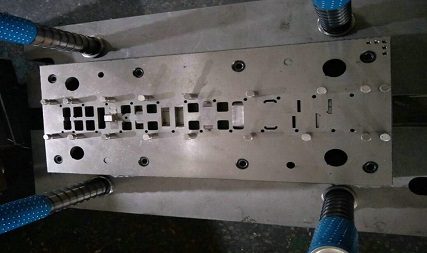
Progressive die stamping is a metal forming process where a strip of metal moves through a series of stations inside a single die. Each station performs a different operation—cutting, bending, punching—until the finished part separates from the strip at the final station.
I've spent over 15 years working with progressive dies at Worthy Hardware, a company that has been manufacturing precision stamped metal parts since 1998. In this guide, I'll walk you through exactly how the process works, when it makes sense, and how to avoid the mistakes I see buyers make when sourcing this service.
What Is Progressive Die Stamping?
Think of it like an assembly line, but inside a single tool. A coil of metal feeds into the press. The strip advances a fixed distance with each stroke. At each station, something happens to the metal — one station punches a hole, the next bends a tab, another trims the edge. By the time the strip reaches the last station, you have a finished part.
The word "progressive" describes exactly this: the part takes shape step by step as it moves through the die. The metal strip acts as a carrier, holding everything in place until final cutoff.
At our 2,000-square-meter facility in China, our team of 50 employees runs progressive dies on presses ranging from 5 to 500 tons. We work with over 100 materials — including steel, stainless steel, aluminum, brass, copper, titanium, alloy steel, and bronze. Our tolerances reach as tight as 0.001" (0.025mm), verified through 100% inspection on every order. Our manufacturing processes are certified to ISO 9001 and IATF 16949 standards, and we support RoHS-compliant production for customers in regulated industries.
How it differs from other methods:
- Transfer stamping moves individual pieces between stations
- Single-hit stamping performs one operation at a time
- Progressive stamping keeps the part attached to the strip throughout the entire process — resulting in faster cycles and less handling
Why Manufacturers Choose Progressive Stamping for Complex Parts
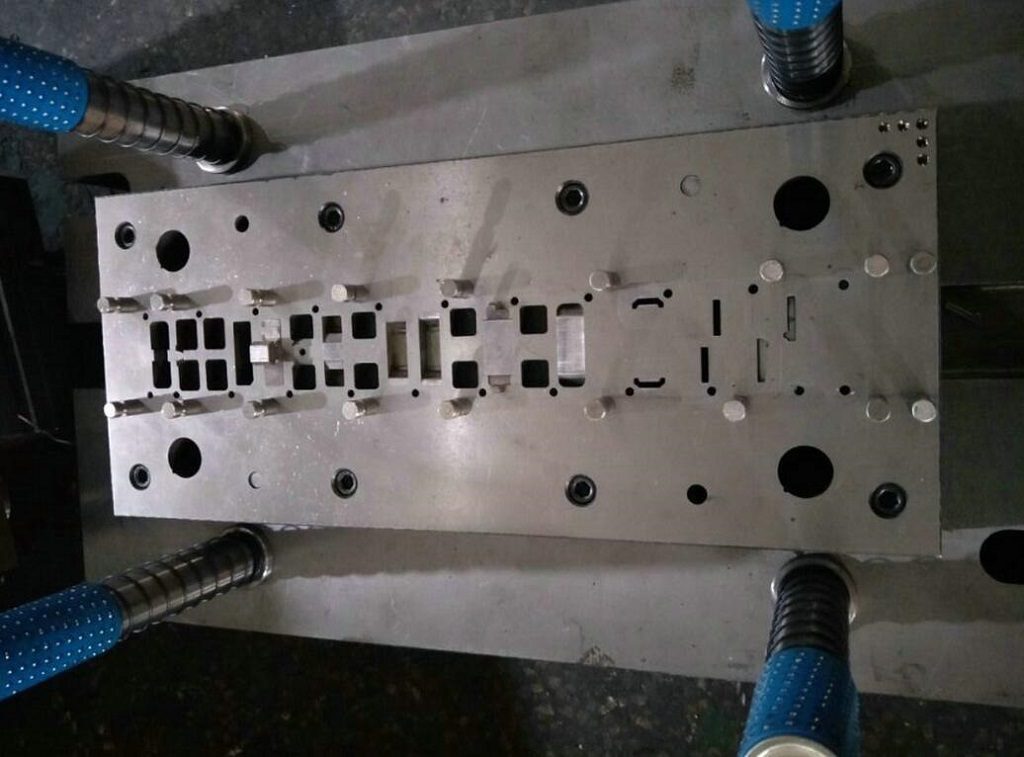
I talk with procurement managers every week, and the same question comes up: "Why choose progressive stamping over other methods?" Here are the real reasons, based on what I've seen across hundreds of projects.
Speed. One press stroke completes operations at every station simultaneously. We produce hundreds or thousands of parts per hour. For high-volume orders, nothing beats this speed.
Consistency. Once the die is set up and running, every part comes out the same. The strip registers precisely at each station, giving repeatable accuracy across millions of parts. Our 100% inspection process, backed by our IATF 16949-certified quality system, confirms this on every shipment.
Cost per part. Tooling costs more upfront. But spread that cost over a large production run, and per-piece price drops fast — less labor, less handling, less scrap.
Complex geometries. Parts requiring multiple operations — holes, bends, forms, taps — can all happen in one die. We even offer in-die tapping. Brackets, clips, terminals, connectors, and shields are all strong candidates for progressive stamping.
Material efficiency. Our engineering team designs strip layouts to minimize waste, carefully nesting parts on the strip. Less scrap means lower material costs for you.
A real example: An automotive parts buyer in Canada came to us after struggling with quality issues and late deliveries from another supplier for stamped brackets. Our engineering team redesigned his progressive die and optimized the strip layout, reducing material waste by 12%. Since switching to Worthy Hardware, his orders have shipped on schedule every time.
When does progressive stamping make sense?
When you need high volumes of small-to-medium parts with tight tolerances and multiple features. If your annual volume is in the thousands or more, this process will likely save you money.
When might it not be the best fit?
Very large parts, very low volumes, or extremely simple parts needing only one operation. For prototypes, we typically start with other methods, then move to progressive tooling once the design is finalized.
At Worthy Hardware, our engineering team — each member with roughly 20 years of experience in mechanical and electronic component design — reviews every project before quoting. They often suggest design changes that simplify the die and reduce your part cost. That's the kind of partnership we believe in.
How the Progressive Die Stamping Process Works, Step by Step
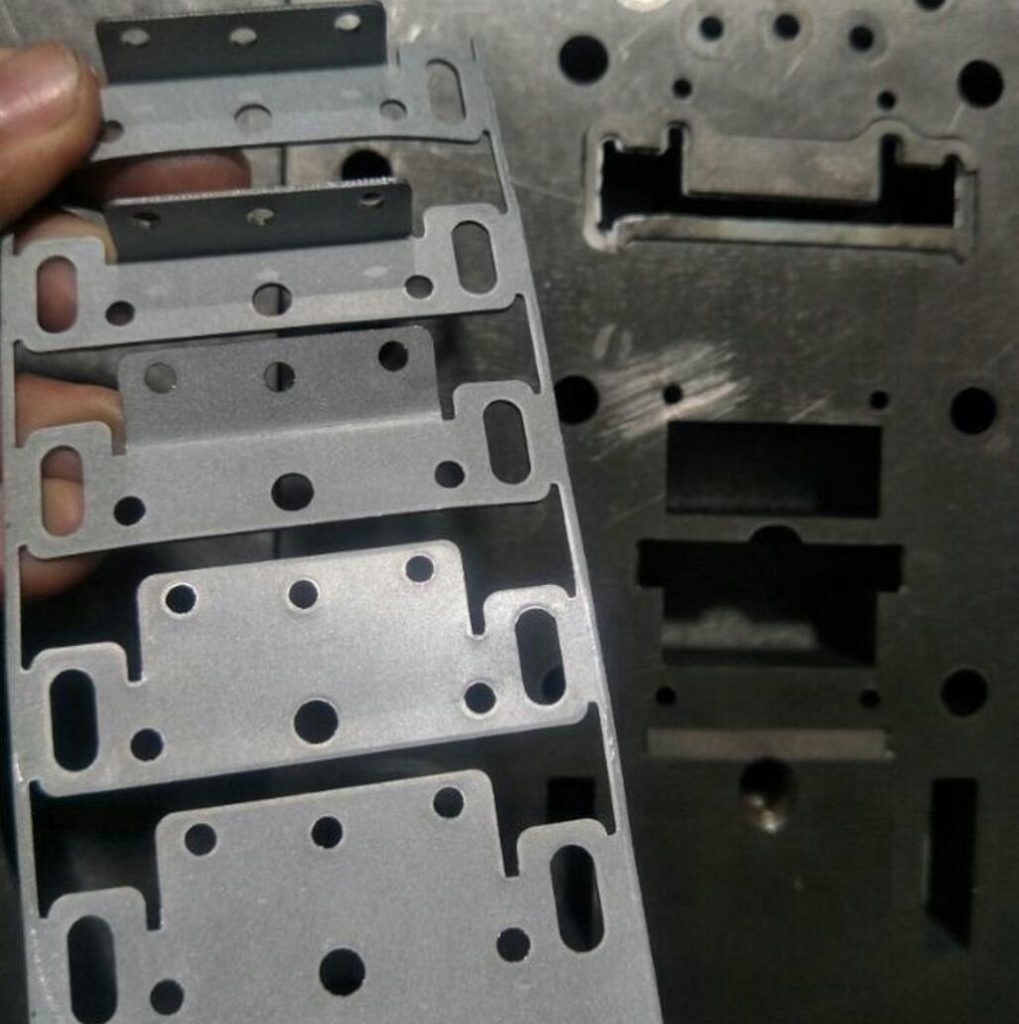
Here's how I explain this process to customers who visit our factory in China.
Step 1: Material Feeding A coil of flat metal strip loads onto an uncoiler and feeds into the press automatically. We work with both ferrous and non-ferrous materials — steel, stainless steel, aluminum, brass, copper, bronze, and more. Material thickness and width depend on your part design.
Step 2: Strip Advancement The press opens, and a feeder advances the strip forward by a precise distance — called the "pitch." Every stroke moves the strip exactly the same amount. Even a tiny error here affects every part downstream, so this step is monitored electronically throughout production.
Step 3: First Station Operation The press closes, and the first station performs its operation — usually punching a pilot hole. Pilot holes guide the strip at every following station, keeping everything aligned.
Step 4: Progressive Operations The strip advances through each subsequent station. Common operations include:
- Punching holes and slots
- Blanking shapes
- Bending and forming
- Coining and embossing
- Drawing and cupping
- In-die tapping
- Trimming excess material
Step 5: Cutoff At the final station, the finished part separates from the carrier strip and drops into a bin or onto a conveyor. The remaining scrap strip exits separately.
Step 6: Secondary Operations (If Needed) Some parts require finishing after stamping. We handle cleaning, deburring, heat treating, and plating in-house, along with assembly work such as riveting, welding, tapping, and staking.
The full cycle — from feed to cutoff — takes less than a second on many jobs. Our presses are equipped with electronic tool and press monitoring systems that watch every stroke. If something goes wrong — a misfeed, broken punch, or strip buckle — the press stops immediately, protecting the die and preventing defective parts from accumulating.
Being transparent about lead time:
A complex progressive die typically takes 4 to 8 weeks to build. I've seen customers hesitate at this lead time, but once the die is ready, production is fast — a well-built die can run for years with minimal maintenance.
Our engineers — with two decades of combined tooling design experience — simulate strip layouts before cutting any steel, checking material flow, stress points, and springback in advance. This step prevents costly problems during tryout, something I've seen other shops skip, resulting in weeks of avoidable delays.
For our customers in automotive, electronics, aerospace, and medical industries, this level of precision isn't optional — it's required. That's why we maintain ISO 9001 and IATF 16949 certified quality systems, inspect 100% of parts, and hold tolerances to 0.001mm when specified.
Industries and Parts Best Suited for Progressive Die Stamping
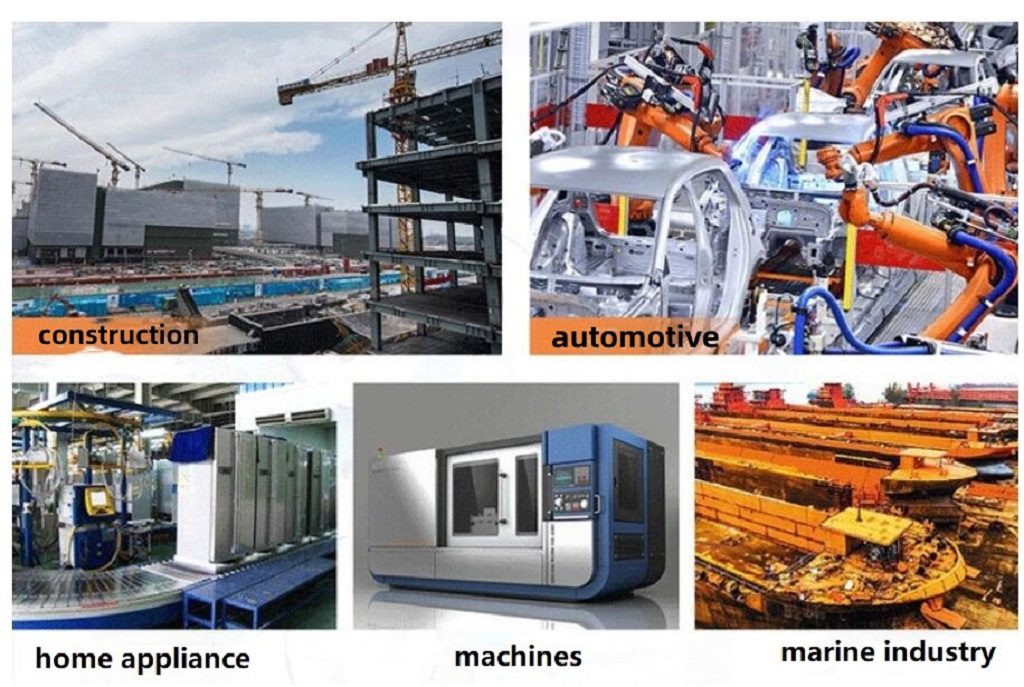
Not every part needs progressive die stamping — but when it fits, nothing else compares. Here's where we see the most demand at Worthy Hardware:
Automotive — Brackets, clips, terminals, shielding components, spring contacts, mounting plates. Cars contain hundreds of small stamped parts requiring high volumes, tight tolerances, and consistent quality. Our IATF 16949 certification specifically supports automotive industry quality requirements.
Electronics and Semiconductors — Connectors, contacts, lead frames, RF shields, battery clips. These parts are small, complex, and produced in massive quantities, often at tolerances of 0.001" or tighter, burr-free and dimensionally consistent. Our engineering team's background in electronics design is especially valuable here.
Aerospace and Defense — Structural brackets, retainers, clamps, electrical contacts. Materials here are tougher — stainless steel, titanium, specialty alloys — with extreme quality requirements and full part inspection.
Medical and Dental — Surgical instrument components, implant housings, connector pins, shielding. Cleanliness and traceability matter as much as dimensional accuracy. We track material lots and provide full documentation for every batch.
Consumer Products — Battery contacts, internal clips, structural brackets — parts invisible to end users but essential to product function. High volumes and low per-piece cost make progressive stamping the natural choice.
Industrial and Hardware — Mounting brackets, fastener components, spring clips, retaining rings — parts that need to be strong, consistent, and affordable at volume.
Lighting — Reflector housings, heat sinks, mounting clips, electrical contacts, especially for LED lighting applications.
Robotics — Precision linkages, sensor brackets, motor contacts, encoder discs, where tight tolerances and repeatable accuracy are non-negotiable.
Part features well-suited to progressive stamping:
- Multiple holes, slots, or cutouts
- One or more bends
- Small-to-medium size (generally hand-sized)
- Annual volumes over 1,000 pieces
- Consistently tight tolerances
- Multiple operations that would otherwise require separate setups
Parts NOT ideal for progressive stamping:
- Very large parts exceeding standard press capacity
- Parts with deep draws requiring transfer tooling
- One-off prototypes (we typically use other methods first)
- Extremely thick material over 6mm
Case Study: Reducing Material Waste by 12% for a Canadian Automotive Parts Buyer
Industry: Automotive Country: Canada Product: Precision stamped mounting brackets Process: Progressive die stamping
The Challenge
A procurement manager at an automotive parts distribution company in Canada came to us after experiencing repeated problems with his previous supplier: inconsistent quality, unclear communication, and material waste that was driving up his per-unit cost. He needed stamped steel brackets in high volume, with tight tolerances, delivered on a predictable schedule to avoid missing his peak sales season.
Our Approach
Our engineering team began by reviewing the existing part design and die layout. We identified that the strip nesting used by the previous supplier left excessive scrap between parts. Our team redesigned the progressive die and optimized the strip layout, reducing material waste by 12% without changing the part's form, fit, or function.
We also implemented 100% inspection on every production run, providing measurement reports with each shipment so the customer could verify consistency before the parts reached his own customers.
The Result
- 12% reduction in material waste, lowering per-unit cost
- 100% on-time delivery across all subsequent orders
- Direct communication with a dedicated project engineer, eliminating the delays he previously experienced with sales representative handoffs
- Full inspection documentation provided with every shipment, giving the customer confidence to pass quality assurance to his own buyers
"Since switching to Worthy Hardware, our delivery schedule has been completely reliable, and the cost savings from the redesign made a real difference to our margins." — Procurement Manager, Automotive Parts Distributor, Canada
Progressive Die Stamping vs. Fourslide Stamping vs. Compound Die Stamping
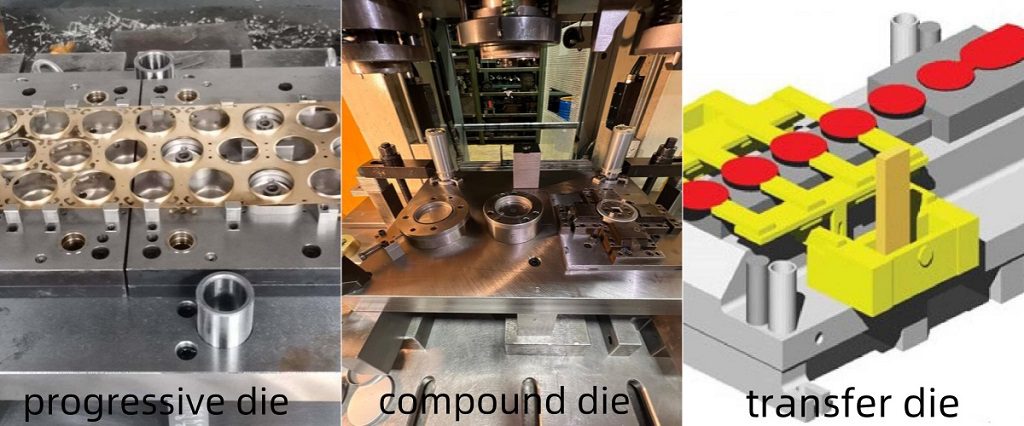
Buyers often ask which stamping method is right for their part. The answer depends on geometry, volume, and budget. Here's a comparison based on daily production decisions at our facility.
Progressive Die Stamping
Best for: High-volume parts with multiple features — holes, bends, forms — all completed in sequence within one strip. Fast cycle times, excellent repeatability. Higher tooling cost, but lowest per-piece cost at volume.
Typical parts:** Brackets, connectors, terminals, shields, mounting plates.
Fourslide Stamping
Best for: Parts with complex bends on multiple planes. A fourslide machine uses four sliding tools approaching the part from different directions — capable of bends a vertical press cannot achieve. Tooling costs are typically lower, with faster setup for design changes. Typical parts: Clips, flat springs, contacts, wire forms, small brackets with bends exceeding 90 degrees or in multiple directions.
Compound Die Stamping
Best for: Flat parts requiring multiple cutting operations in a single stroke. A compound die punches holes and blanks the outer shape simultaneously — no bending or forming, just precision cutting. Typical parts: Washers, flat gaskets, simple plates with holes, shims.
Quick Decision Guide
| Factor | Progressive | Fourslide | Compound |
| Part complexity | High | Moderate (bend-focused) | Low (flat only) |
| Bends | Yes, limited directions | Yes, multiple directions | No |
| Volume sweet spot | 10,000+ | 5,000+ | 10,000+ |
| Tooling cost | Highest | Lower | Moderate |
| Cycle speed | Fastest | Fast | Fast |
| Tolerances | Tightest | Tight | Tight |
Real examples from our production floor:
An industrial equipment customer in Australia sent us a stainless steel clip with four bends in three directions. His previous supplier attempted this in a progressive die, but the part kept springing back unevenly. Our engineering team — drawing on decades of mechanical design experience — moved it to our fourslide machine, adjusted each slide independently, and achieved correct tolerances on the first run.
A consumer electronics customer in Singapore needed a flat copper contact with six holes and a complex outline — no bends required. A compound die produced it in one stroke — clean edges, no secondary operations, fast and cost-effective.
The takeaway: there's no single "best" stamping method — only the method that best matches your part's geometry, volume, and budget. That's exactly what our engineering team evaluates for every quote we prepare.
Partner with Worthy Hardware for Reliable Progressive and Fourslide Stamping Solutions
If you've read this far, you likely have a part in mind — or you're dealing with a current supplier who isn't meeting expectations. Late deliveries, inconsistent quality, slow communication. I hear these frustrations from buyers every week, and it's exactly why Worthy Hardware operates differently.
Over 25 years of manufacturing experience. Founded in 1998, Worthy Hardware has spent more than two decades refining our stamping processes. We've grown from a small workshop into a 2,000-square-meter facility with 50 employees, serving customers across six continents. This isn't a company that learned stamping yesterday — it's decades of accumulated process knowledge, passed down through our engineering team.
Engineering support from day one. Our engineering team — each member bringing approximately 20 years of experience in mechanical and electronic component design — reviews your design before we ever issue a quote. They'll confirm whether your tolerances are achievable, suggest changes that reduce tooling cost, and recommend the most suitable stamping method for your part — saving you time and money before production even begins.
Certified quality systems. We hold ISO 9001 certification for our quality management systems and IATF 16949 certification specifically for automotive-grade manufacturing. We also support RoHS-compliant production for customers in electronics and consumer products. These aren't just certificates on a wall — they represent documented processes we follow on every order.
Flexible production, no minimum order quantity. We handle everything from small prototype runs to ongoing mass production. Need 50 pieces to validate a design? We can do that. Need 500,000 pieces per month? We scale with you.
Quality you can verify. Every part undergoes 100% inspection. We hold tolerances as tight as 0.001mm (0.01mm) when your design requires it. We provide measurement reports, material certifications, and process documentation — the level of traceability our aerospace, medical, and automotive customers depend on.
Clear, responsive communication. This sounds basic, but after speaking with hundreds of buyers who left other suppliers in China, I consistently hear the same complaint: poor communication. At Worthy Hardware, you work directly with your project engineer, not a rotating cast of sales reps. Questions get answered within hours, not days.
Full service beyond stamping. We handle over 50 surface finishing options — plating, anodizing, powder coating, polishing, and more. We also manage assembly work including riveting, welding, tapping, and staking. You receive finished, ready-to-install parts rather than components requiring additional processing on your end.
Global logistics experience. We export to North America, Europe, Japan, Singapore, Australia, New Zealand, and Jordan. We understand international shipping requirements, documentation, and customs processes — and we prioritize on-time delivery, especially for customers managing seasonal demand.
About Worthy Hardware
Founded in 1998, Worthy Hardware is a precision metal stamping manufacturer based in China with over 25 years of manufacturing experience. Our 2,000-square-meter facility employs 50 people, including an engineering team with approximately 20 years of combined experience in mechanical and electronic component design.
We hold ISO 9001 and IATF 16949 certifications and support RoHS-compliant manufacturing. Our capabilities include progressive die stamping, fourslide stamping, tool and die design, metal forming, and assembly — supporting presses from 5 to 500 tons and tolerances as tight as 0.001" (0.025mm). We serve B2B clients across aerospace, automotive, electronics, medical, industrial, and consumer product industries, exporting to North America, Europe, Japan, Singapore, Australia, New Zealand, and Jordan.
If you're sourcing progressive, fourslide, or compound stamped parts and want a manufacturing partner who communicates clearly and delivers consistently, send your drawings to [email protected] or visit www.worthyhardware.com. I personally ensure every inquiry is reviewed by our engineering team within 24 hours.
— Sandra Gao, Worthy Hardware
Frequently Asked Questions About Progressive Die Stamping with Worthy Hardware
1. What is the minimum order quantity (MOQ) for progressive die stamping?
We have no minimum order quantity. We work with customers from the prototype stage — as few as 10 to 50 pieces — all the way through full-scale mass production of hundreds of thousands of parts per month. If you're validating a design before committing to a large order, we can accommodate that.
2. How long does it take to build a progressive stamping die?
Tool and die construction typically takes 4 to 8 weeks, depending on part complexity. Once the die is built and validated, production runs are fast — often producing thousands of parts per day. We provide a clear timeline before starting any tooling project, so there are no surprises.
3. What tolerances can Worthy Hardware achieve?
We hold tolerances as tight as 0.001" (0.025mm), and in some cases down to 0.01mm, depending on material and part geometry. Every part is 100% inspected before shipment, and we provide measurement reports upon request.
4. What materials do you work with?
We process over 100 materials, including steel, stainless steel, aluminum, brass, copper, titanium, alloy steel, and bronze — both ferrous and non-ferrous. If you have a specific grade or spec requirement, send us your drawing and we'll confirm feasibility.
5. Do you provide surface finishing and assembly services?
Yes. We offer over 50 surface finishing options, including plating, anodizing, powder coating, and polishing. We also handle assembly work such as riveting, welding, tapping, and staking — so you receive finished, ready-to-install parts rather than raw stamped components.
6. What certifications does Worthy Hardware hold?
We are certified to ISO 9001 (quality management) and IATF 16949 (automotive quality management). We also support RoHS-compliant manufacturing for customers in electronics and consumer product industries. Certification documents are available upon request.
7. How do you ensure quality on every order?
Every part undergoes 100% inspection — not sampling-based inspection. We use electronic tool and press monitoring systems to catch issues like misfeeds or die wear in real time, preventing defective parts from reaching your shipment. We also provide material certifications and inspection reports for full traceability.
8. What industries do you typically serve?
We manufacture parts for aerospace and defense, automotive, electronics and semiconductors, medical and dental, industrial equipment, robotics, lighting, and consumer products. Our engineering team has specific experience in mechanical and electronic component design, which helps us support tight-tolerance industries effectively.
9. How do you handle communication with international customers?
You work directly with your assigned project engineer — not a rotating sales team. We typically respond to inquiries within 24 hours. For customers in North America, Europe, Australia, and other time zones, we structure our communication to minimize delays and keep you updated at every production stage.
10. What countries do you export to?
We regularly export to North America, Europe, Japan, Singapore, Australia, New Zealand, and Jordan. We understand the shipping documentation, customs requirements, and logistics timelines for these regions, and we prioritize on-time delivery — especially for customers with seasonal demand deadlines.
11. Can you help improve my existing part design to reduce cost?
Yes. This is one of the most valuable parts of working with us. Our engineering team — with roughly 20 years of combined experience — reviews every design before quoting. We frequently identify opportunities to simplify geometry, adjust material specifications, or optimize strip layouts, which can meaningfully reduce your tooling and per-piece cost.
12. How do I get a quote?
Send your part drawing (2D or 3D) to [email protected]. Our engineering team will review it and respond within 24 hours with feedback, a recommended stamping method, and pricing based on your target volume.