
What Is CNC Groove Machining and Why Is It So Important
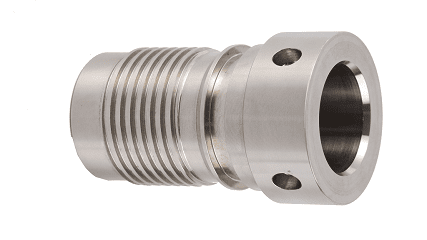
Struggling with precise grooves? A single flawed cut can lead to total part failure. I'm Sandra Gao, and with over 15 years in the precision machining industry, I've seen how these small features can make or break an entire project. Today, I'll guide you through the essentials of machining perfect grooves that guarantee performance and reliability for your components.
CNC groove machining is the process of cutting a narrow channel into a part. This is critical for features that hold O-rings, retaining clips, and provide clearance for mating components. In short, it’s what ensures your final product assembles and functions correctly.
At first glance, it looks simple. But a groove for an O-ring seal requires a vastly different surface finish and tolerance than one for a simple snap ring. Choosing the wrong method leads to costly mistakes. Let’s dive into why these details matter and how we achieve perfection.
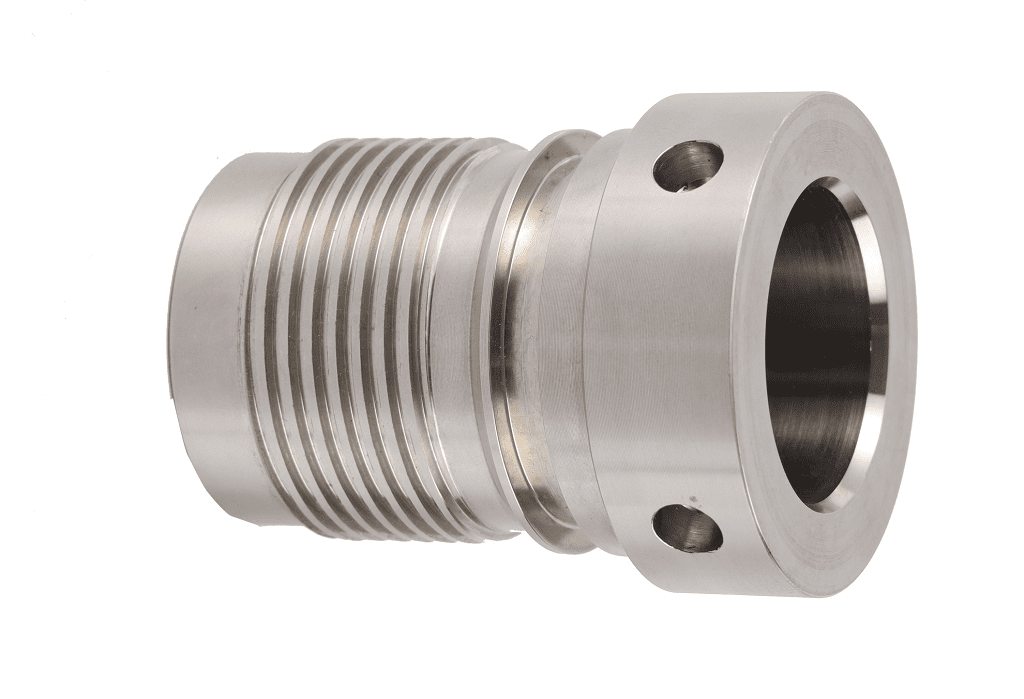
Why Is Groove Machining Critical in Modern Manufacturing?
Groove machining is a fundamental process you find everywhere. But it's not just about removing material; it's about creating a specific feature that serves a critical purpose.
Consider a high-pressure hydraulic valve. The internal grooves holding the O-rings are essential for creating a perfect seal. If the groove's surface finish is too rough, the O-ring will wear out quickly and cause a leak. If the dimensions are off by even a fraction of a millimeter, the seal won't work at all.
This is something I always stress to my engineering team and our clients: We don't just read a drawing; we must first understand its function. Is it for a seal? A retaining clip? Or clearance? The function dictates everything.
Real-World Case: How We Saved a North American Aerospace Client 18%
We recently took on a project for a North American aerospace client that required a tiny internal groove with a tolerance of just ±0.002mm. The client's original design resulted in extremely high tool wear and prohibitive unit costs.
Our team of four engineers immediately provided a free DFM (Design for Manufacturability) analysis. We identified that by optimizing the toolpath and implementing a micro "Peck Grooving" strategy, we could extend tool life by 3x and significantly improve efficiency. In the end, we not only achieved a 100% pass rate but also helped the client reduce their unit cost by nearly 18%, securing their project's profitability and timeline.
At Worthy Hardware, we adhere to a "function-first" principle, ensuring that every part delivered to our global clients—including those in Europe, Japan, and Australia—is trustworthy and dependable
How Does the Groove Machining Process Actually Work?
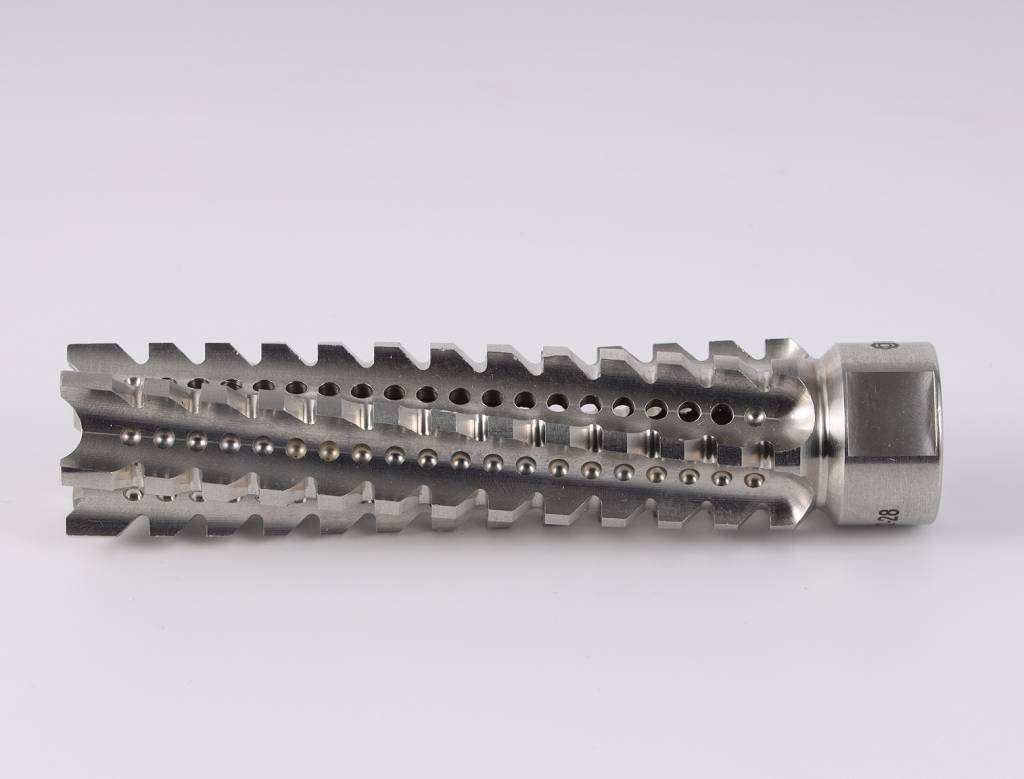
The actual process depends on the part's shape and the groove's specifications. At Worthy Hardware, our facility is equipped with over 30 sets of advanced CNC machines, and we select the perfect technique for each project's unique needs.
- For Cylindrical Parts (Turning): We often use a high-precision CNC lathe. This process, known as Groove Turning or Boring, is highly efficient for creating external or internal grooves on round parts, like the O-ring grooves on a hydraulic piston.
- For Non-Cylindrical Parts (Milling): For parts that are flat or have complex geometries, we use a CNC milling machine. Slot Milling is a common technique where a rotating cutting tool carves out the groove. Our 5-axis machines can even create complex grooves on curved surfaces.
- For Ultra-High Precision (Grinding): When a design for an aerospace or medical application demands exceptional precision and a mirror-like surface finish, simple cutting isn't enough. In these cases, we employ Groove Grinding. This method uses an abrasive wheel to precisely remove material, allowing us to achieve tolerances tighter than +/- 0.001mm and an excellent finish.
The key takeaway is that "groove machining" is a category of processes. From turning and milling to high-precision grinding, we choose the right technique based on the groove's function, the material, and your required tolerances.
Which Groove Machining Technique Will Deliver Best Results for Your Project?
hoosing the right technique is crucial. It’s not a one-size-fits-all situation.
Fundamental Grooving Operations:
- External Grooving: Machining a groove on the outside diameter of a part.
- Internal Grooving (Boring): Machining a groove on the inside diameter of a hole. This is more challenging due to limited visibility and chip evacuation.
- Face Grooving: Cutting a circular groove on the flat face of a component, like a flange.
Common Toolpath Strategies:
- Plunge Grooving: The tool plunges directly into the material. Fast and efficient for narrow grooves.
- Peck Grooving: For deep grooves or tough materials like Titanium, the tool makes multiple "pecking" motions to break chips and manage heat, ensuring a cleaner cut and longer tool life.
- Contour Grooving: For wide or complex-shaped grooves, the tool moves laterally, creating a superior surface finish.
Worthy Hardware's Specialized & Advanced Techniques:
- O-Ring Grooving: This is one of our specialties. We have extensive experience achieving the critical tolerances and surface finishes required for high-pressure seals.
- Micro-Grooving: For tiny parts in the electronics or medical industries, we use specialized micro-tooling and high-precision machines to create grooves measured in microns.
- Digital Twinning: Before touching the real material for a high-value part, we run a complete simulation of the grooving process. This allows us to optimize toolpaths and guarantee a perfect result on the first try, saving time and reducing waste.
Choosing the Best Technique for Your Project: A Simple Decision Guide
With over 30 advanced CNC machines, including high-precision lathes, 5-axis machining centers, and precision grinders, we select the optimal manufacturing path based on your part's geometry, material, and functional needs.
| Technique Type | Best Suited For... | Worthy Hardware's Advantage |
| External/Internal Turning | O-ring grooves, retaining ring slots, any circular groove on cylindrical parts. | This is the most cost-effective method for prototypes to mass production. We precisely control speeds and feeds to ensure an excellent groove floor finish. |
| Face Grooving | Circular grooves on the face of a part, like a flange. | Concentricity and depth control are key. Our high-precision lathes ensure a perfect mate with corresponding components. |
| Milling / Plunge Milling | Straight channels, keyways, and irregularly shaped grooves. | Highly flexible. Our 5-axis CNC machining services can create complex grooves on curved surfaces in a single setup, guaranteeing maximum accuracy. |
| O-Ring Grooving | Sealing applications requiring strict control of surface roughness and dimensions. | This is one of our core specialties. We understand that a surface roughness of Ra 0.4-0.8μm is decisive for seal longevity, and we have proven processes to achieve it. |
| Micro-Grooving | Tiny parts in the electronics or medical industries. | We use specialized micro-tooling and high-power microscopes for inspection, allowing us to machine fine features as small as 0.50mm. |
How Can CNC Technology Transform Your Groove Machining Precision?
Before modern CNC technology, machining precise grooves was a highly manual skill. It relied entirely on the machinist's hand-eye coordination. Today, CNC has completely changed the game. It’s not just about making things faster; it’s about reaching a level of precision and consistency that was once unimaginable.
The biggest transformation comes from removing human error. Once a program is written and verified, a CNC machine can produce thousands of parts, and the groove on the last part will be identical to the first. This repeatability is essential for modern manufacturing. With CNC, we can control the tool's position and movement down to micrometers. This allows us to hold incredibly tight tolerances, which is critical for high-performance applications like O-ring seals or retaining ring slots.
Furthermore, CNC technology unlocks the ability to create complex grooves that would be impossible to make by hand. Using our multi-axis machines, we can cut spiral grooves, grooves on curved surfaces, or other non-standard shapes with perfect accuracy. The combination of advanced software for programming and computer-controlled hardware for execution is how we deliver the precision our customers rely on.
What Essential Equipment Do You Need for High-Quality Groove Machining?
Getting a perfect groove isn't just about having one good machine; it's about having a complete system of the right equipment. Based on my experience, there are a few essential components you absolutely cannot compromise on.
First, you need the core machinery. At our facility, we have more than 30 sets of CNC machining, turning, and milling machines . For grooves on round parts, a high-quality CNC Lathe or turning center is the primary tool. For grooves on flat or complex-shaped parts, a CNC Milling Machine is necessary. For the highest precision requirements, we also rely on specialized machines for processes like Groove Grinding .
Second is the cutting tool itself. The machine is only as good as the tool it holds. We use specialized grooving inserts made from materials like carbide, often with specific coatings designed for the material being cut. The shape, size, and sharpness of the tool are critical for achieving a clean cut and a smooth surface finish. The choice of tooling must match the material; for example, tooling for a soft metal like brass will be different from what's needed for a tough material like titanium or tool steel .
Finally, you need precision inspection equipment. You can't guarantee quality if you can't measure it. We use a range of calibrated metrology tools, from digital calipers and micrometers to advanced Coordinate Measuring Machines (CMMs). This equipment allows us to verify that every groove meets the exact dimensions and tolerances specified on the drawing. This commitment to inspection is how we ensure every part we ship is ready to perform.
How Do You Control Critical Parameters for Perfect Groove Results?
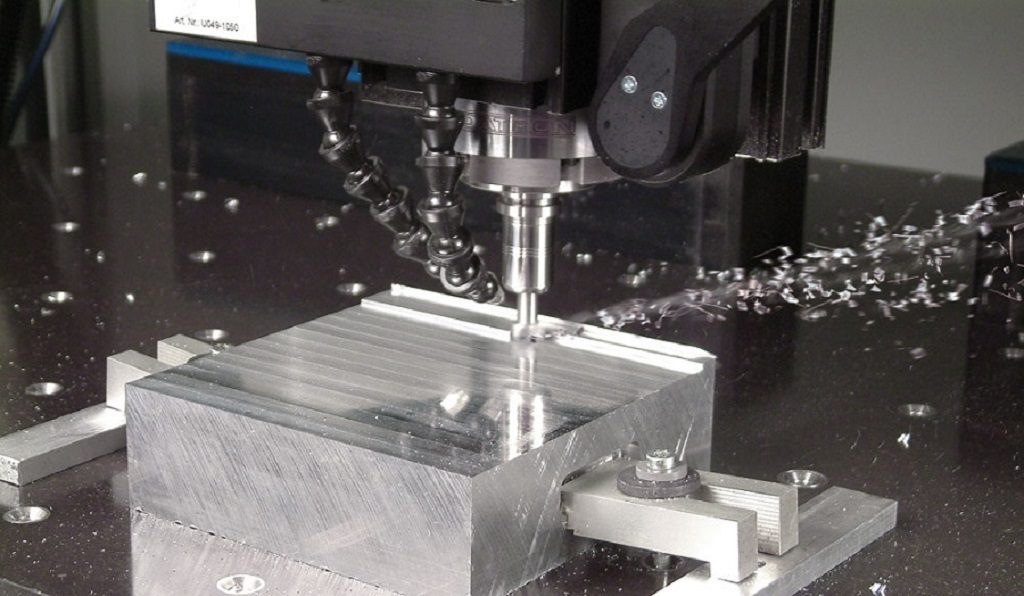
Achieving a perfect groove comes down to controlling the critical parameters with precision. In my experience, it’s all about focusing on two things: dimensional accuracy and surface finish . We have to make sure the groove's size, shape, and position exactly match the design, which is what we call Machining Accuracy . At the same time, the surface must be smooth enough for its job, which relates to Surface Roughness .
To control these parameters, we use several proven methods. For many jobs, we rely on the Fixed-Size Tool Method, where we use a cutting tool that has the exact dimension of the groove we need to machine . This is a very direct and reliable way to ensure accuracy. For producing a batch of identical parts, we use the Adjustment Method. We carefully set the position of the tool and workpiece on the machine and keep it constant to guarantee consistency across the entire batch .
When a project demands the absolute highest precision, we might use a Trial Cut Method. This involves making a small test cut, measuring the result, adjusting the machine, and then cutting again until the dimension is perfect . To get an excellent surface finish, we always perform a Finish Machining pass, which removes a very small amount of material to smooth out the surface . For the most demanding applications, we might even use advanced techniques like Groove Grinding or Groove Lapping to achieve an ultra-smooth finish .
Which Materials Provide Superior Results in Precision Groove Machining?
The truth is, we can achieve precision grooves in over 100 different materials. However, some materials are definitely better suited for high-performance applications where precision is critical. The "superior" choice really depends on what you need the part to do.
For applications that demand incredible strength, low weight, and excellent corrosion resistance, Titanium is a top choice. We often machine Titanium Grade 5, which is extremely popular due to its high strength, and Grade 2, which is also very strong and corrosion-resistant . While it's more challenging and costly to machine, the final result is a highly reliable and durable part
On the other hand, if excellent machinability and cost-effectiveness are the main goals, other metals perform very well. Magnesium alloys are fantastic because they are very lightweight and easy to machine precisely . Zinc alloys are also a great option; they are among the cheapest metals but still offer good mechanical strength and are machined easily .
We also get superior results with high-performance plastics. For demanding applications, PEEK is an excellent material. It's a high-performance thermoplastic with fantastic mechanical properties and chemical resistance that holds up over a wide range of temperatures . Nylon is another great choice; it's an engineering thermoplastic known for its excellent mechanical properties and high resistance to abrasion .
Where Are Groove Machining Applications Most Valuable in Industry?
Groove machining isn't just about cutting a channel into a part; it's about creating a critical feature that allows a product to function correctly. From my experience working with clients across many sectors, I see these applications everywhere. Grooves are essential for sealing, fastening, and alignment, making them incredibly valuable in high-stakes industries.
In the Aerospace and Automotive industries, grooves are fundamental. We machine them to hold O-rings and gaskets that create high-pressure seals in engines, hydraulic systems, and fuel lines. They are also used for retaining rings that hold components together inside transmissions and braking systems. The reliability of these grooves is a matter of safety and performance.
For the Medical and Dental fields, precision is everything. We create micro-grooves on surgical tools to give surgeons a better grip. In implants, specific groove patterns are machined to help them integrate with bone. These features are often tiny, but they are critical to the device's success.
In Industrial Machinery and Robotics, grooves are essential for transmitting power. We frequently machine slots or keyways that lock gears, pulleys, and other components onto a rotating shaft . This ensures that power from a motor is transferred without any slippage. We use various methods like Slot Milling or Keyway Broaching to create these features .
How Can You Avoid Costly Mistakes in Your Groove Machining Process?
We deeply understand the challenges faced by business owners like our Canadian client, Mark Chen: inefficient communication with suppliers, shipment delays, and the immense losses from receiving defective parts. Here is our solution:
- Start with a Clear Design: An ambiguous drawing is the start of a problem. Unsure about optimal tolerances or surface finish? No problem. Before you place an order, our team of 4 experienced engineers will provide a free DFM (Design for Manufacturability) analysis to help you optimize your design and save costs without compromising function.
- Choose the Right Material: From cost-effective Aluminum 6061 to high-performance PEEK and Titanium, we can machine over 100 materials. Our engineers will recommend the most suitable material based on your application, strength requirements, and budget, preventing future performance issues or cost overruns.
- Partner with a Quality-Committed Supplier: Verbal promises are not enough. Worthy Hardware's commitment is built on a rigorous process. All our production processes follow the ISO 9001:2015 quality management system. We promise 100% inspection for all products and can provide detailed CMM (Coordinate Measuring Machine) inspection reports upon request. This means any potential issues are identified and resolved in our factory, not on your assembly line.
What Factors Impact Your Groove Machining Costs?
We are committed to providing transparent quotes. Your final cost is primarily determined by three factors:
- Material Cost & Machinability: Easy-to-machine materials like brass and aluminum are more cost-effective. Difficult-to-machine materials like titanium and high-temperature alloys require longer cycle times and more expensive tooling.
- Complexity & Tolerances: A simple groove with standard tolerances (e.g., ±0.127mm) is far less expensive than a complex profile requiring 5-axis machining and tolerances below ±0.005mm.
- Surface Finish: Our standard as-machined finish (Ra 1.6-3.2μm or better) comes at no extra cost. If you require a smoother surface for high-pressure seals (e.g., Ra 0.4-0.8μm), additional finishing or grinding operations will be needed, which will add to the cost.
Which Maintenance and Safety Protocols Ensure Reliable Groove Machining?
Is your production line at risk from inconsistent parts? Without strict protocols, even the best CNC machines can fail, causing costly delays and quality issues for your project.
To ensure reliable groove machining, we follow strict maintenance and safety protocols. This includes daily machine checks, regular calibration of tools and measurement equipment, and ongoing operator training. These steps prevent unexpected failures and guarantee that every part we produce is consistent and accurate.
Let me walk you through what this looks like in our shop. Every morning, our machinists perform a checklist on their CNC machines. They check fluid levels, inspect the tooling, and ensure all safety guards are in place. This simple daily routine prevents most common mechanical issues that could otherwise stop production or cause a defect.
Beyond daily checks, we have a schedule for preventative maintenance. This involves deeper inspections and calibration of the machines to ensure they are holding the tight tolerances our customers require. Just as important is safety. All our operators are trained on proper machine operation and how to handle materials safely. A safe workshop is an efficient workshop, and it's a critical part of how we deliver reliable, high-quality parts on time, every time.
How Should You Set Up Your Groove Operation for Optimal Results?
Getting the perfect groove isn't about a single secret setup; it's about choosing the right machining method for your specific part. In my experience, the optimal setup starts with a clear understanding of the groove's purpose. Is it for an O-ring, a retaining clip, or a keyway? The answer determines everything that follows.
For optimal results, you need to match the machining process to the design requirements. We look at the part's geometry, the material, and the required precision to select the best method from the many available options. For example, creating a simple groove on a round part is often done with Grooving (by Turning) . It's efficient and very common. If the groove is a straight channel, like a keyway, we would set up the operation using Slot Milling or Keyway Milling.
For more demanding applications, the setup changes. If a part requires an extremely smooth surface finish or exceptionally tight tolerances, a standard cutting operation isn't enough. In these cases, we set up for a secondary finishing process. We might use Groove Grinding to achieve high precision and a fine finish, or even Groove Lapping for a mirror-like surface on the groove walls . The key is that the initial setup always anticipates the final requirements of the part.
How Do Different Cooling Methods Impact Your Groove Machining Results?
Choosing the right cooling method is one of those small details that makes a huge difference in the final quality of a machined groove. Coolant does three critical jobs: it removes heat, lubricates the cutting tool, and flushes away chips. Getting this right directly impacts tool life, surface finish, and dimensional accuracy.
The most common method we use is flood coolant. This is when we drench the cutting area with a liquid coolant. This method is excellent at pulling heat away from both the tool and the workpiece. This prevents the material from overheating, which can ruin the surface finish and cause the part to expand, throwing off the final dimensions. A constant flow of coolant also ensures a longer life for our cutting tools, which helps keep costs down for our customers.
However, flood coolant isn't always the best choice. For some materials, or for very deep and narrow grooves, chip evacuation is the biggest challenge. If chips get packed into the groove, they can break the tool or damage the part. In these situations, we might use a high-pressure coolant system that blasts the chips out of the way. In other cases, like when machining certain plastics, we might use a simple air blast. This avoids contaminating the material with liquid but still effectively clears chips from the cutting zone. The choice of cooling method is a critical decision we make to ensure every part comes out perfectly.
Conclusion
CNC groove machining is far more than just "cutting a slot." It's an art that requires a deep understanding of materials, technology, and function. A perfectly machined groove is a silent guardian of your product's reliability.
At Worthy Hardware, we are more than just a parts supplier; we are your technical partner. With a commitment to 100% inspection and direct access to our experienced engineering team, we eliminate the communication gaps and quality risks you can't afford.
Take Action Now!
Send your design files to my email at [email protected], and our engineering team will provide you with a free DFM analysis and a quote within 24 hours.
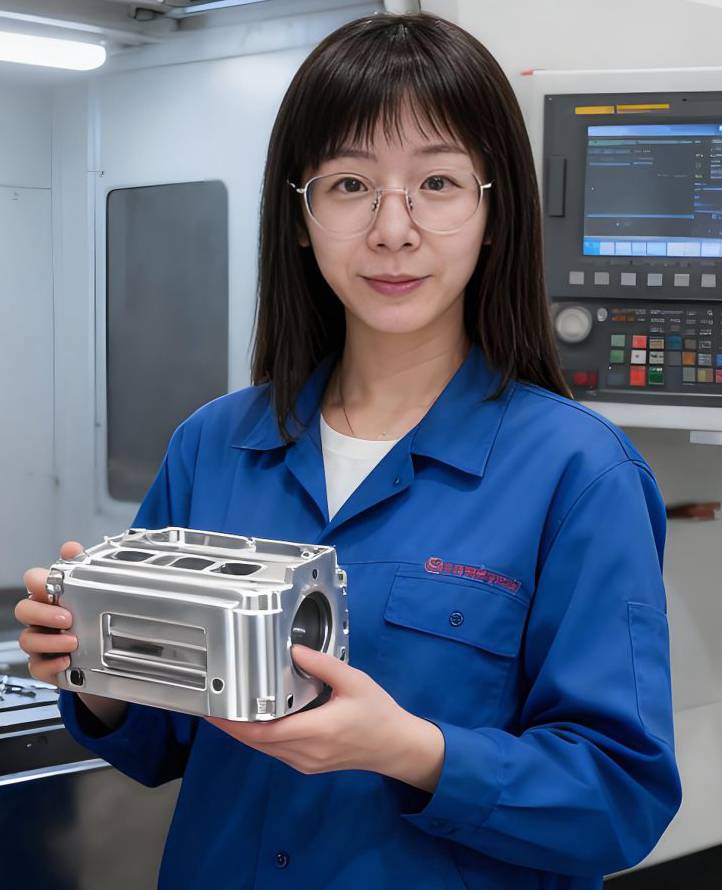
Sandra Gao
Founder, Worthy Hardware
Email: [email protected]
Website: www.worthyhardware.com
Hey, there, I”m Sandra . Sales manager of Worthy Hardware, with over 18 years of CNC Machining and Precision Stamping experience, Give us a try, will never let you down.Send us the parts for quote.