
303 vs 304 vs 316 Stainless Steel Which Is Best for Your Machining Project
Hello, I'm Sandra Gao, the founder of Worthy Hardware. With many years in the CNC machining industry, I've seen that one of the most common challenges clients face is material selection. The wrong choice can mean inflated costs or, worse, premature part failure in the field.
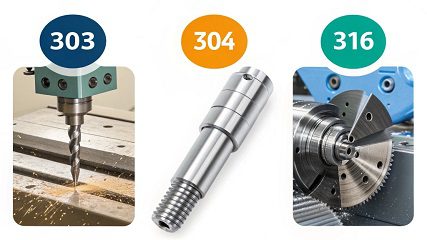
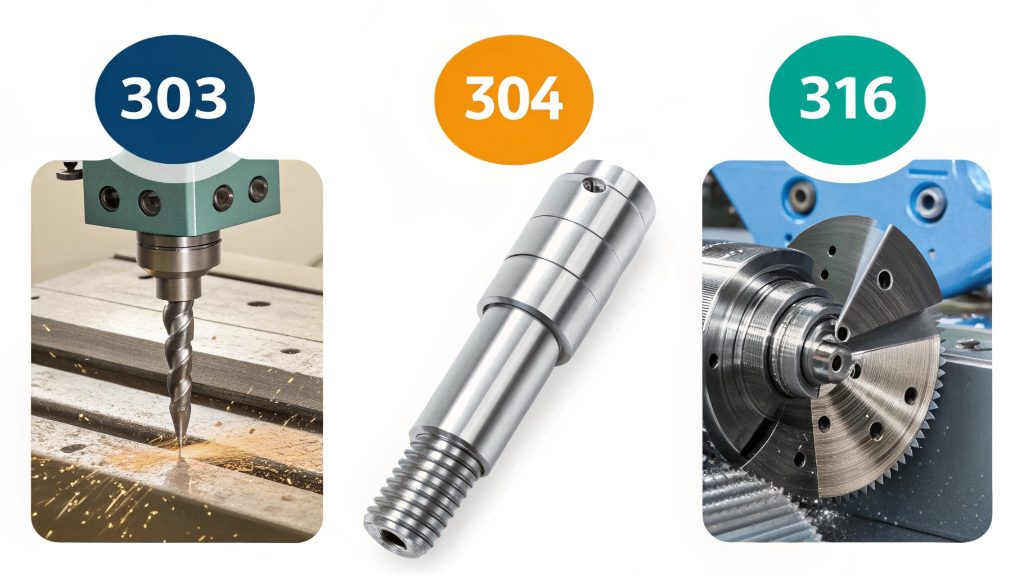
For CNC machining, 303 stainless steel offers the best machinability, making it the most cost-effective for high-volume production. 304 is a balanced "all-rounder" with good corrosion resistance and machinability. 316/316L provides superior corrosion resistance but at a higher cost and machining difficulty.
I remember a Canadian client who manufactures marine equipment. To lower initial costs, he chose 304 stainless steel for a series of fittings exposed to a salt spray environment. Within a year, those parts showed significant rust, forcing a product recall. We then worked together to switch the material to 316L and optimized the machining process. Now, five years later, those parts still shine like new.
This case perfectly illustrates that the right material choice is the foundation of a successful project. As your manufacturing partner, our job isn't just to produce parts efficiently; it's our responsibility to help you avoid risks from the very beginning. Below, I'll break down these common stainless steels based on our workshop's real-world experience.
What is 303 Stainless Steel, Advantages and Disadvantages?
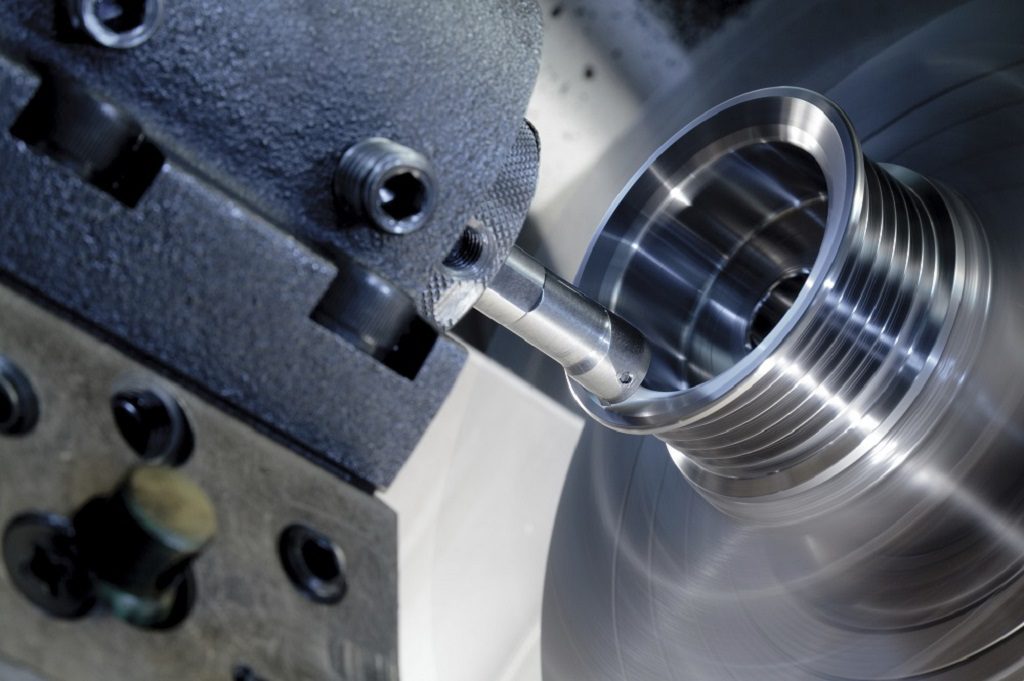
In our CNC shop, our engineers and machinists love working with 303 stainless steel. It’s known as a "free-machining" grade because the added sulfur causes chips to break into small, manageable pieces during cutting, instead of forming long, stringy ribbons that wrap around the tool.
The direct benefit of this is clear: we can run our machines at higher cutting speeds and feed rates. This translates to shorter cycle times, less tool wear, and ultimately, significant cost savings for you, especially on high-volume orders requiring extensive turning or milling.
- Advantages:
- Excellent Machinability: The best machining performance of all austenitic stainless steels, making it the top choice for reducing costs.
- Good Toughness: Meets the structural strength requirements for most non-corrosive applications.
- Disadvantages:
- Lower Corrosion Resistance: The added sulfur compromises some corrosion resistance compared to 304.
- Not Suitable for Welding: The sulfur content makes it prone to hot cracking during welding.
Best For: Internal parts that require heavy machining, such as shafts, gears, screws, bushings, and fittings.
What is 304 Stainless Steel, Advantages and Disadvantages?
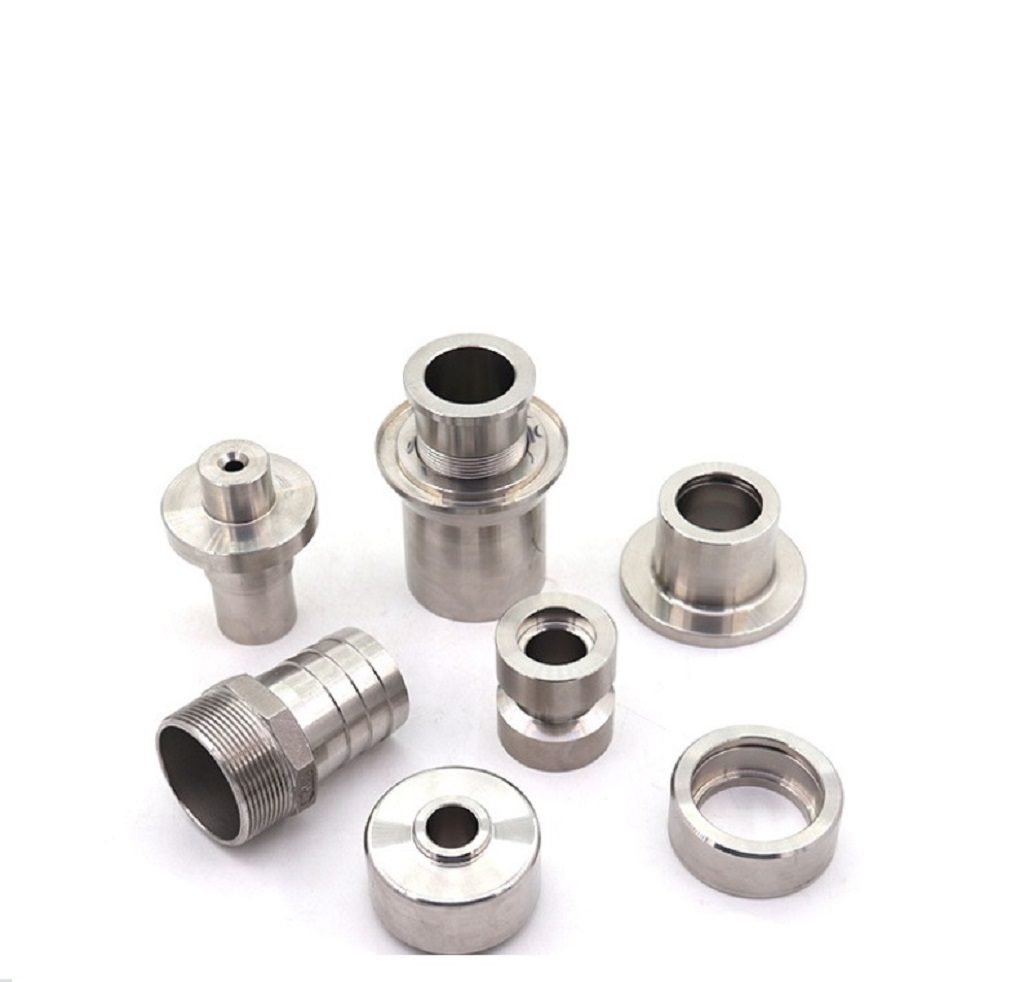
If there's one material that can handle most jobs, it's 304 stainless steel. I call it the "all-rounder." It strikes a fantastic balance between cost, machinability, and corrosion resistance, making it the most widely used stainless steel in the world. While it's not as effortless to machine as 303, its processing is very mature, and its corrosion resistance is far superior.
- Advantages:
- Good Corrosion Resistance: Resists most atmospheric environments and a wide range of corrosive media.
- Excellent Overall Mechanical Properties: A great combination of strength, toughness, and ductility.
- High Value: Represents the sweet spot between performance and price for a huge variety of projects.
- Disadvantages:
- Good, Not Great, Machinability: Tends to produce tough, stringy chips that require more careful process control.
- Susceptible to Chloride Corrosion: Vulnerable to pitting in coastal areas or chemical environments containing chlorides.
Best For: General-purpose applications like kitchen equipment, tanks, pipes, automotive components, and architectural panels.
316/316L Stainless Steel: The Guardian for Harsh Environments
When your parts will face seawater, chemicals, or other aggressive conditions, 316 stainless steel is the undisputed champion. It builds on the 304 base by adding molybdenum, an element that dramatically enhances its resistance to chloride corrosion (like salt).
However, this superior performance comes at a price. From a machining perspective, 316 is "gummier" and has a greater tendency to work-harden. This means we must use slower cutting speeds and specialized coated tools. Despite this, with our experienced engineers and advanced 5-axis CNC equipment, we can reliably achieve the tight tolerances your drawings demand—even down to +/- 0.001" (approx. 0.025 mm) or better—on a challenging material like 316.
316L is the low-carbon version of 316 (the "L" stands for Low Carbon). This lower carbon content allows it to maintain excellent corrosion resistance even after welding, making it the ideal choice for welded assemblies.
- Advantages:
- Superior Corrosion Resistance: Perfect for demanding industries like marine, chemical processing, medical, and food processing.
- Excellent for Welding (316L): Retains its corrosion resistance after welding without needing post-weld heat treatment.
- Disadvantages:
- Higher Cost: Both the raw material and the machining are significantly more expensive than 304.
- Difficult to Machine: Requires longer cycle times and places higher demands on equipment and process control.
Best For: Marine hardware, medical implants, chemical processing equipment, and coastal architectural structures.
What are the Characteristics differences for 303 vs 304 vs 316 vs 316L Stainless Steel?
To make it easy, I've put the main differences in a table.
| Characteristic | 303 Stainless Steel | 304 / 304L Stainless Steel | 316 / 316L Stainless Steel |
| Main Ingredients | Chromium, Nickel, Sulfur (added for machinability) | Chromium, Nickel | Chromium, Nickel, Molybdenum (for increased corrosion resistance) |
| Carbon Content | ~0.15% max | 304: ~0.08% max304L: ~0.03% max | 316: ~0.08% max316L: ~0.03% max |
| Corrosion Resistance | Fair. Lower than 304 due to the sulfur content . | Good. Resistant to most environments and corrosive media . | Excellent. Higher resistance than 304, especially against chlorides and chemicals . |
| Machinability | Excellent. The best of this group, ideal for high-volume production . | Good. A great all-around performer. | Fair. More difficult and costly to machine than 304 due to its toughness. |
| Weldability | Poor. The sulfur content makes it prone to cracking during welding. | Good. 304L is the preferred choice for welding to prevent carbide precipitation. | Excellent. 316L is the preferred version for welding to maintain corrosion resistance. |
| Ultimate Tensile Strength | 528 - 639 MPa | 480 - 620 MPa | 480 - 620 MPa |
| Hardness | 81 - 96 HRB | 75-83 HRB | 75-83 HRB |
| Common Applications | Parts requiring heavy machining: shafts, gears, fittings, bushings. | General purpose applications: kitchen equipment, tanks, pipes, architectural panels. | Marine hardware, medical implants, chemical processing equipment, food processing parts . |
Can 316 stainless steel be machined?
Yes, absolutely. At Worthy Hardware, we offer CNC machining for a wide selection of stainless steel materials, and 316/316L is one of the austenitic stainless steels we work with regularly . It is a very common material in many industries, and we have extensive experience producing custom parts from it.
Is 316 easy to machine?
From a machinist's perspective, 316 stainless steel is not considered easy to machine, especially when compared to other grades. For example, our materials data shows that 303 stainless steel has "excellent machinability" and 304 has "good machinability" . Notice that 316 doesn't get a similar positive description. This is because it is tougher and more prone to work-hardening than 304. While it is perfectly machinable, it requires more care, slower cutting speeds, and sharp tooling to achieve a good result and avoid damaging the tool or the part. So, while we machine it all the time, it's more challenging than 303 or 304.
What is the machinability rating of 316 stainless steel?
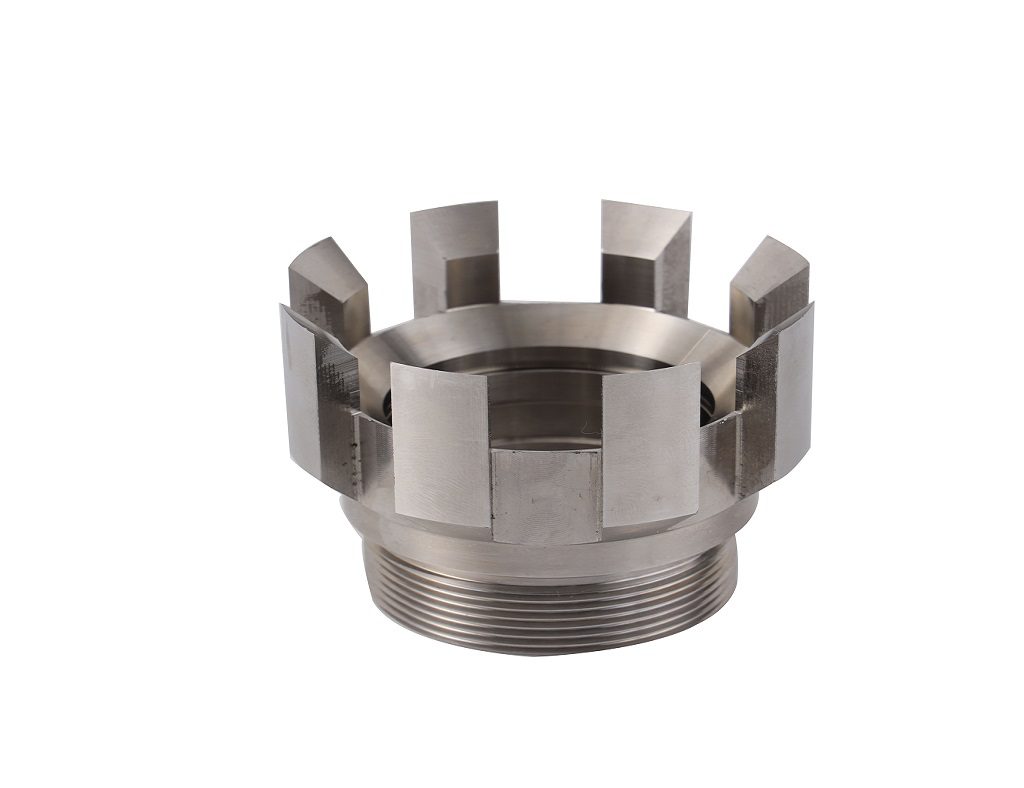
The provided reference materials do not contain a specific numerical machinability rating for 316 stainless steel . Machinability ratings are typically given as a percentage compared to a standard baseline material. However, based on the descriptions, we can know its relative difficulty. Since 303 is described as having "excellent machinability" and 304 has "good machinability" , it's clear that the machinability of 316 would be rated lower than both of those grades.
Between 304 and 316, which is better for machining?
From a purely machining standpoint, 304 is better. While their hardness ratings are similar, 316's toughness and tendency to work-harden make cutting more challenging. At Worthy Hardware, we have optimized processes for 316, but objectively, it is more efficient and therefore less costly to machine an identical part from 304. If your application doesn't require the superior corrosion resistance of 316, choosing 304 is the more economical machining choice.
Is 303 stainless easier to machine than 304?
Yes, absolutely. 303 stainless steel is significantly easier to machine than 304. In fact, 303 was specifically designed to be the "free-machining" version of 304. The main difference is the addition of sulfur to the 303 alloy.
This small chemical change makes a huge difference in the workshop. The sulfur helps to break up the metal chips into small, manageable pieces. When we machine 304, it produces long, stringy, and tough chips that can wrap around the tool and the part, which can cause problems. But when we machine 303, the chips are short and brittle, and they fall away easily. This allows us to run our CNC machines at much higher speeds and feeds, which reduces cycle time and lowers the cost per part. For any project involving high-volume production or complex geometries that require a lot of material removal, 303 is the preferred choice if its lower corrosion resistance is acceptable for the application.
Is 316 stainless harder to machine than 304?
This is a question I get a lot from clients trying to balance cost and performance. Looking at the technical data, you can see that 304 and 316 stainless steel have very similar, and in some cases identical, mechanical properties [. For example, they share the same hardness range of 75-83 HRB and the same ultimate tensile strength of 480 - 620 MPa .
However, the descriptions tell a slightly different story. Our material guide specifically notes that 304 stainless steel has "good machinability". In contrast, the description for 316 focuses on its "higher corrosion and chemical resistance" without mentioning machinability . While their physical properties on paper are alike, the emphasis on good machinability for 304 suggests it is the more favorable of the two for machining processes .
Which stainless steel is best for machining?
When it comes to finding the absolute best stainless steel for machining, the answer is clear: 303 stainless steel .
This grade was specifically designed for this purpose. Our reference material states that 303 has "excellent machinability". It is described as being "Ideal for high volumes" precisely because it is so easy to cut. While other grades like 304 have "good machinability," 303 is in a class of its own . The trade-off is that it has lower corrosion resistance than 304, but for any project where ease of manufacturing and speed are the top priorities, 303 is the best choice .
Can you truly guarantee the quality of high-precision 316 parts?
Absolutely. This is our core value as a precision machining expert. We understand that for overseas clients like Mark Chen, the biggest fear is "uncontrollable quality from a distance." To address this, we have built a strict quality system:
- Experienced Engineers review your design upfront to optimize the manufacturing process.
- We use high-precision CNC machines and premium tooling.
- Most importantly, we promise 100% full dimensional inspection. Every single part is rigorously checked by our quality department before shipment, ensuring what you receive is exactly what your drawing specifies and eliminating the nightmare of discovering quality issues after weeks of waiting.
How to choose 303, 304, 316 and 316L Stainless Steel?
As a Chinese manufacturer specializing in B2B and OEM custom parts, our goal is to be your reliable production partner. When selecting your material, think this way:
Is cost the top priority? If your part isn't exposed to corrosive elements and you have a high production volume, 303 will save you the most money.
Are you looking for a balance? For the vast majority of applications, 304 is the safe, high-value choice.
Is performance non-negotiable? If your part will operate in a marine, chemical, or medical environment, don't hesitate. 316 or 316L is the only choice to ensure long-term product reliability.
In the end, the best material is the one that is best suited for your application.
Conclusion
I'm Sandra Gao. At Worthy Hardware, we are more than just your parts manufacturer; we are your technical consultants. Send your design files or questions to [email protected]. I would be happy to work with our engineering team to provide you with a free material evaluation and cost optimization proposal.
Let's build outstanding products together, starting with the right material.
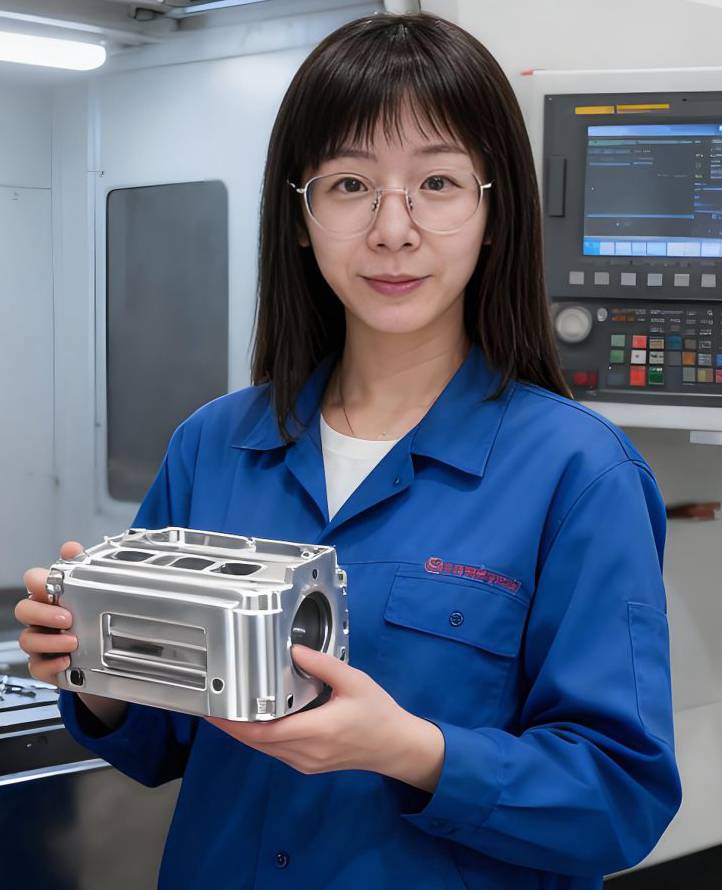
Sandra Gao
Founder, Worthy Hardware
Email: [email protected]
Website: www.worthyhardware.com
Hey, there, I”m Sandra . Sales manager of Worthy Hardware, with over 18 years of CNC Machining and Precision Stamping experience, Give us a try, will never let you down.Send us the parts for quote.