
What’s The Difference Between Small And Large Batch Steel CNC Machining?

Need steel CNC parts but unsure about batch size? Ordering wrong can mean higher costs or waiting too long. Let me help you understand the key differences.
The biggest differences between small and large batch steel CNC machining are quantity, lead time, and price. Small batches often need quick delivery, like 3-5 days. Large batches usually focus more on getting a lower price per part.
So, the basics are clear: quantity, time, and cost vary a lot. But maybe you're wondering more about CNC itself for different production runs. Let's dive into some common questions.
Is CNC good for batch production?
Thinking about making many identical parts? Manual work is too slow and inconsistent for that. CNC machining provides the repeatability and speed needed for batch production.
Yes, CNC machining is absolutely great for batch production. It gives you high accuracy, makes every part the same, and works fast. This makes it perfect for small or large batches.
CNC, which stands for Computer Numerical Control, is really ideal for making parts in batches, whether small or large. Why? Because a computer controls the machine's movements based on a digital design file. This means every single part comes out exactly the same, or within very tight tolerances. This repeatability is crucial for batch production where consistency is key.
Think about it – if you need 100 steel brackets, you want all 100 to fit perfectly. CNC delivers that. Also, once the machine is set up, it can run with minimal supervision, often 24/7. This automation reduces labor costs per part and speeds up production significantly compared to manual methods.
This is especially true for steel parts which require strong, precise machines. We find CNC works perfectly whether a customer needs just a few prototypes (a small batch) or thousands of parts (a large batch). The process scales very well.
| Feature | CNC Machining for Batches | Manual Machining for Batches |
|---|---|---|
| Consistency | Very High | Lower, depends on operator |
| Speed | High | Slower |
| Complexity | Handles complex shapes | Limited by skill/tools |
| Labor Cost | Lower per part | Higher per part |
| Scalability | Excellent | Poor |
Why a CNC lathe would be preferred for large scale production of engineering components?
Need to make many round or cylindrical steel parts? Other machines can be slow or less exact for these shapes in big batches. CNC lathes are designed for this exact job.
CNC lathes are perfect for making round parts fast and accurately. They are automated and very precise. This makes them great for large batches of things like shafts or pins, keeping quality high and costs down.
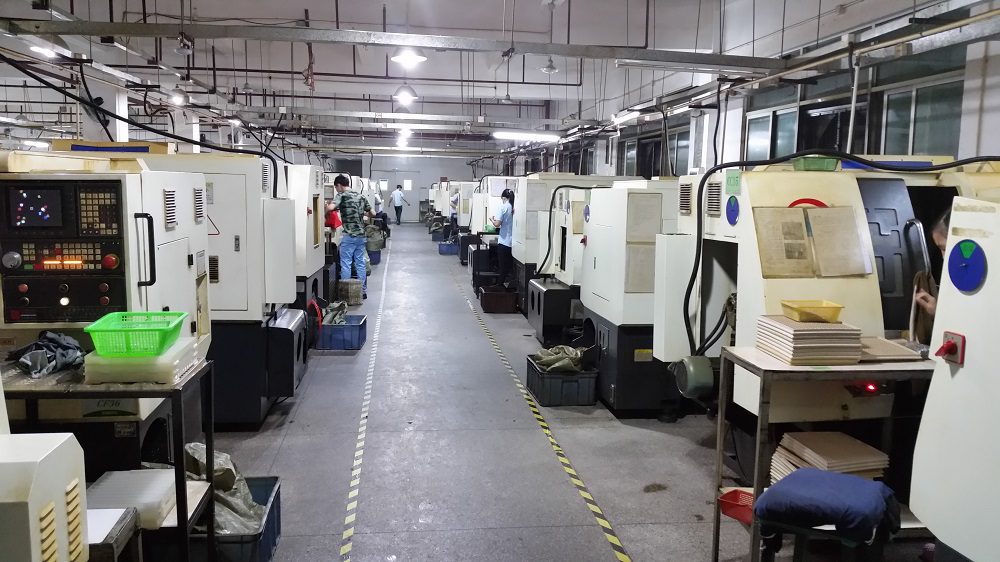
When you need lots and lots of identical round or cylindrical parts, like shafts, pins, bushings, or flanges, a CNC lathe is usually the best choice. The reason is how it works: the steel workpiece spins rapidly while a cutting tool removes material. This is a very efficient way to create symmetrical round shapes. For large scale production, speed and cost per part are critical.
CNC lathes often have features like automatic bar feeders. These feeders push long bars of steel into the machine automatically, so it can keep making parts one after another without stopping. This high level of automation drastically reduces cycle times and labor involvement for large batches.
Also, CNC lathes are known for holding tight tolerances on diameters, ensuring high precision across thousands of parts. While a CNC mill can make round shapes, it's generally slower and less efficient for purely cylindrical components compared to a dedicated lathe, especially when the quantity is large. At Worthy Hardware, our lathes handle parts up to 32" diameter and 62" long.
| Aspect | CNC Lathe (Large Scale) | CNC Mill (for Round Parts, Large Scale) |
|---|---|---|
| Efficiency | Very High for cylindrical shapes | Lower for purely cylindrical shapes |
| Automation | High (e.g., bar feeders) | Possible, but less tailored for rods |
| Primary Use | Turning round/cylindrical parts | Cutting complex shapes, holes, flats |
| Cost/Part | Lower for high volume round parts | Potentially higher for simple rounds |
What is the highest tolerance CNC?
Do your steel parts need to be super precise? Standard accuracy might not cut it for important uses. Knowing CNC tolerance limits helps you ask for exactly what you need.
CNC machines can be incredibly precise, reaching tolerances like +/- 0.001 inches (0.025 mm) or even better. The final precision depends on the machine, the steel, part design, and how carefully it's made.
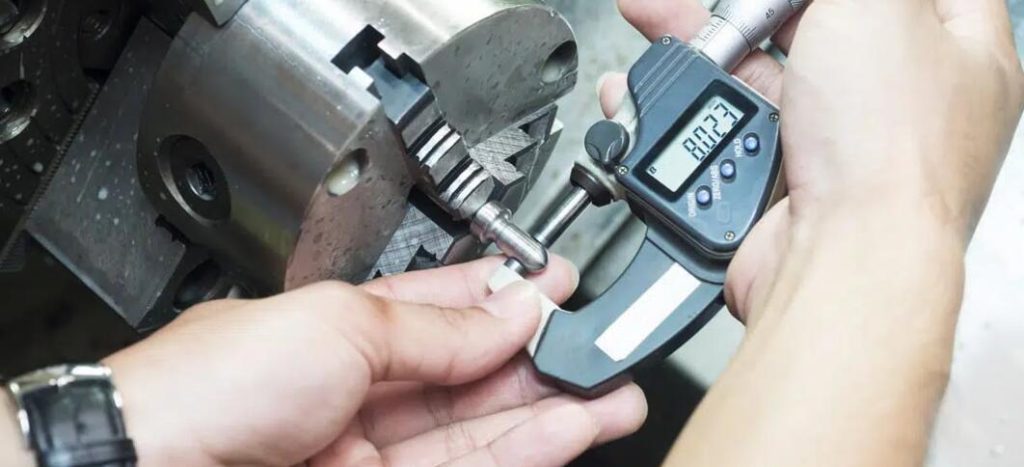
Tolerance refers to the acceptable range of variation for a specific dimension on a part. Tighter tolerances mean less variation is allowed, resulting in a more precise part. Achieving extremely high tolerances with CNC machining is possible, but it depends on several factors. High-end, well-maintained machines are obviously key.
The material being machined plays a role too; different grades of steel behave differently. Part geometry matters – complex features can be harder to hold tight tolerances on. The cutting tools, machining strategy (like cutting speed and feed rate), and even environmental factors like temperature control in the workshop can affect the final precision.
At Worthy Hardware, our standard tolerance for metals like steel is +/- 0.005" (0.127 mm). However, we specialize in precision machining and regularly achieve much tighter tolerances, including down to +/- 0.001" (0.025mm) and sometimes even tighter based on customer drawings and GD&T (Geometric Dimensioning and Tolerancing) specifications. We ensure this with rigorous process control and 100% inspection of parts.
| Factor Influencing Tolerance | Impact on Precision | How We Manage It at Worthy |
|---|---|---|
| Machine Quality | High-end machines are more precise | We use well-maintained, quality machines |
| Material Properties | Stability, hardness affect cutting | Experience with 100+ materials (incl. steel) |
| Tooling & Strategy | Sharp tools, right speeds/feeds matter | Optimized processes by experienced engineers |
| Temperature Control | Metal expands/contracts with heat | Controlled workshop environment |
| Inspection | Verifies parts meet spec | 100% inspection, advanced equipment |
What is the most common CNC machine type?
Ever wonder what machines do most CNC work? There are many types, it can seem confusing. Learning the main ones helps you understand what CNC shops generally offer.
The most common types are CNC milling machines and CNC lathes. Mills cut material from a fixed part using spinning tools. Lathes spin the part itself against a cutting tool. Many shops use both.
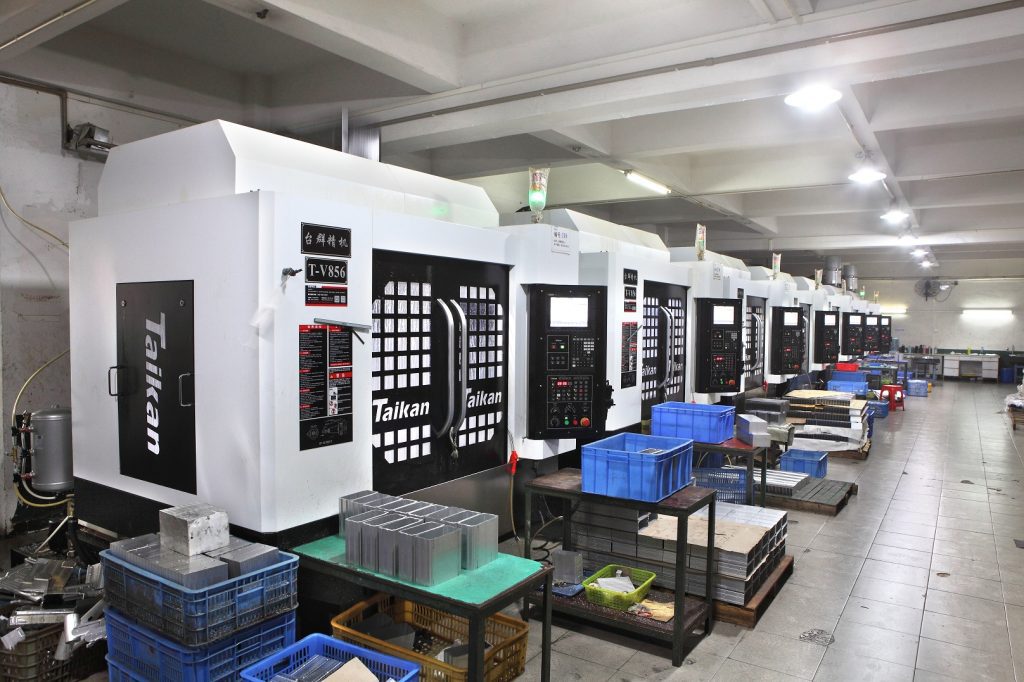
In most CNC machining workshops, including ours, you'll find two main types of machines doing the bulk of the work: CNC mills and CNC lathes (also called turning centers). CNC mills work by holding the workpiece stationary (usually on a movable table) while a rotating cutting tool (like an end mill or drill bit) removes material.
They are versatile and great for creating flat surfaces, pockets, slots, holes, and complex 3D shapes. Mills typically operate in 3, 4, or 5 axes, allowing for increasingly complex geometries. CNC lathes, as discussed earlier, work the opposite way – the workpiece (usually a cylindrical bar of steel) rotates rapidly while a stationary cutting tool shapes it.
They excel at producing round, conical, or threaded parts. Most comprehensive machine shops, like Worthy Hardware, rely heavily on both types because they complement each other. Many parts require both milling and turning operations to complete.
We offer extensive milling (parts up to 80” x 48” x 24”) and turning (parts up to 62” length, 32” diameter) services, including advanced 5-axis milling for highly complex steel components.
| Machine Type | How it Works | Primary Shapes Produced | Common Steel Applications |
|---|---|---|---|
| CNC Mill | Rotating tool cuts stationary workpiece | Prismatic shapes, flats, holes, 3D | Blocks, plates, brackets, molds |
| CNC Lathe | Rotating workpiece cut by stationary tool | Cylindrical, conical, threaded | Shafts, pins, bushings, fittings |
| 5-Axis Mill | Rotating tool, workpiece moves/tilts multi-axis | Highly complex contours, angles | Aerospace parts, impellers |
Conclusion
Choosing small or large batch depends on your needs for speed versus price. CNC, especially mills and lathes, handles both well with high precision. Need steel parts? We can help.