
Anodizing Vs. Powder Coating: Which Is Better For Aluminum Parts?
Choosing the right finish for your aluminum parts feels overwhelming. A bad choice means wasted money and parts that fail. I'll help you understand the best option for your project.
The best finish depends on your needs. Anodizing offers a hard, metallic look by integrating a protective layer into the aluminum. Powder coating adds a thicker, durable, plastic-like layer on top, providing more color options and impact resistance. Your application determines which is better.
When you're designing a new aluminum part, the surface finish is a critical decision. It's not just about looks; it affects durability, resistance to wear, and even the final dimensions of your part. I've helped countless clients navigate this choice, and it almost always comes down to anodizing or powder coating. Both are excellent, but they work in very different ways, making them suitable for different jobs. Let's dig into the details to see which one fits your project perfectly.
Is it better to powder coat or anodize aluminum?
Confused about which process is right for your parts? Picking the wrong one can affect your part's look, feel, and lifespan. Let's break down the core differences.
Anodizing is an electrochemical process creating a protective oxide layer that is part of the aluminum itself. Powder coating applies a dry powder that is cured with heat, forming a separate, durable, paint-like layer on the surface. The choice depends on the desired properties.

To make the right choice, you have to understand how each process works. I see them as two completely different philosophies for protecting aluminum.
Understanding the Processes
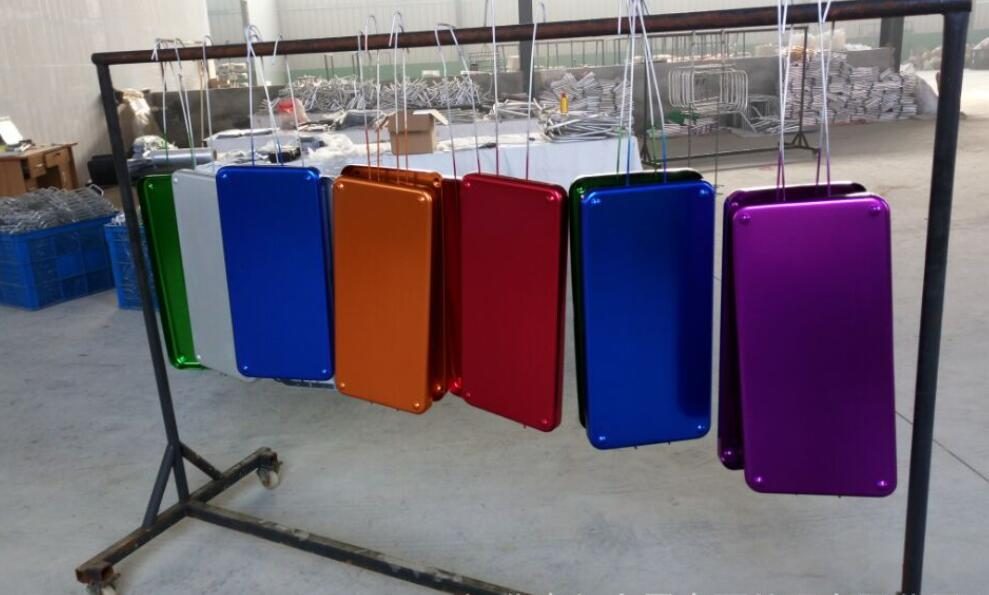
Anodizing is a fascinating process. We use an electrochemical reaction to grow a layer of aluminum oxide right on the surface of the part. This oxide layer is integrated with the base metal; it's not something we add on top. Because this layer is porous, we can then dip it into a dye to add color before sealing it. It becomes one with the aluminum.
Powder coating is more like a very advanced form of painting. We spray a fine polymer powder onto the part. This powder sticks to the surface because of an electrostatic charge. Then, we bake the part in an oven. The powder melts and flows together to form a smooth, hard, and uniform plastic coating.
Here is a simple table to compare them directly:
| Feature | Anodizing | Powder Coating |
|---|---|---|
| Process | Electrochemical, grows a layer from the part | Additive, applies a layer onto the part |
| Appearance | Metallic, translucent finish | Opaque, paint-like finish (various textures) |
| Thickness | Thinner layer, less dimensional change | Thicker layer, adds to final dimensions |
| Durability | Very hard, scratch-resistant, UV stable | Very impact-resistant, flexible |
| Cost | Generally a bit higher than powder coating | Often more cost-effective |
What is the downside of anodized aluminum?
Anodizing sounds great, but what's the catch? Overlooking its limitations can lead to unexpected failures or issues with appearance. You need to know the downsides before you commit.
The main downsides of anodizing are a limited color palette and potential for batch-to-batch color variation. The hard surface can also crack if the part is bent, and it offers poor resistance to harsh chemicals like strong acids or alkalis.
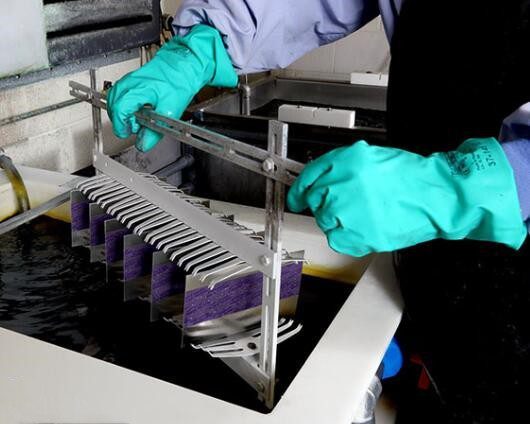
I love the finish that anodizing provides, but I always make sure my clients understand its limitations. It is not the perfect solution for every single application. For some projects, these downsides are deal-breakers.
Key Limitations to Consider
First, let's talk about color. While anodizing looks beautiful, the range of available colors is much smaller than with powder coating. You won't find thousands of custom shades. More importantly, getting the exact same color on different production runs can be tricky. Small changes in the aluminum alloy, the bath chemistry, or the timing can lead to slight color variations. If you need a perfect color match across parts made months apart, anodizing can be a challenge.
Second, the anodized layer is very hard, but it's also brittle. This means it provides amazing scratch resistance, which is great. However, if the underlying aluminum part is bent, flexed, or suffers a sharp impact, that hard outer layer can develop micro-cracks or even chip off. It does not handle deformation well.
Finally, think about the part's environment. The aluminum oxide layer is stable in a neutral pH environment. But if it's exposed to strong acids or alkaline cleaners, the finish can be damaged or even completely stripped away.
Does anodizing make aluminium parts stronger?
You need your aluminum parts to be strong, but does anodizing really help? Misunderstanding its effect on strength could compromise your design. It is crucial to know what "stronger" really means.
Anodizing makes the surface of aluminum much harder and more resistant to scratches and wear. It does not, however, increase the base material's structural strength, like its ability to resist bending or pulling forces (tensile strength).
This is a point of confusion I clear up all the time. People hear that anodizing makes aluminum harder, and they assume it makes the whole part stronger. That's not quite right. It's important to separate surface properties from the bulk properties of the material.
To explain this, I like to use the idea of a knight's armor.
Surface Hardness vs. Structural Strength
Think of the anodized layer as the steel plate armor a knight wears. That armor is extremely hard. It can stop a sword from scratching or cutting the knight. This is surface hardness. The aluminum oxide layer created during anodizing is incredibly hard, much harder than the raw aluminum. For parts that rub against each other or are exposed to abrasive environments, this is a huge advantage. It dramatically improves wear resistance.
However, the armor doesn't make the knight inside any stronger. He can't lift more weight or bend a steel bar just because he's wearing armor. This is structural strength. The anodizing process does not change the core properties of the aluminum alloy underneath. The part will bend and break under the exact same load, whether it is anodized or not. In some very specific cases, the brittle nature of the anodized layer can actually create points for fatigue cracks to start, slightly reducing the fatigue life of the part.
What are the downsides of powder coating?
Powder coating gives you endless colors and great durability, but it isn't perfect. Choosing it without knowing its weaknesses can lead to problems like chipping or dimensional issues later on.
The main downsides of powder coating are the thickness it adds, which can interfere with tight tolerances, and its vulnerability to UV radiation, which can cause colors to fade over time. It is also difficult to apply a very thin, consistent coat.
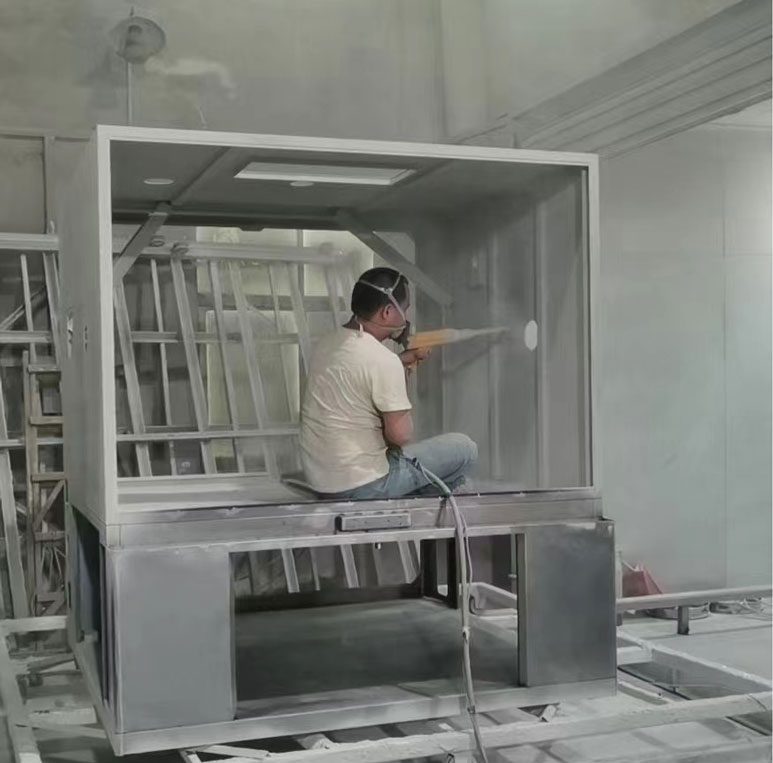
Powder coating is a fantastic, versatile finish. It’s tough, affordable, and looks great. But like any process, it has trade-offs. As an engineer, I believe in knowing both the pros and cons before making a recommendation.
Key Limitations to Consider
The most significant issue for precision parts is thickness. A standard powder coat layer is much thicker than an anodized layer. For parts that need to fit together with very tight tolerances, this added thickness can be a problem. It can clog threaded holes or make press-fit parts too tight. We always have to account for this thickness during the design and machining phase, sometimes by masking off critical areas, which adds cost and complexity.
Next, while powder coating is tough, it can chip. If you hit it very hard with a sharp object, the coating can chip off, exposing the bare aluminum underneath. Unlike a scratch on an anodized part, which is still protected by the surrounding oxide layer, a chip in powder coating can become a point where corrosion starts.
Finally, not all powders are created equal when it comes to sunlight. Standard powder coatings can fade and lose their color after long-term exposure to UV radiation. If your part is going to be used outdoors, you must specify a UV-resistant powder, which can increase the cost.
Conclusion
Both anodizing and powder coating are excellent finishes for aluminum. Anodizing offers superior hardness and a metallic look, while powder coating provides better impact resistance and color variety. Your final choice depends on your part's specific functional and aesthetic requirements.