
Why Is Anodized Aluminum Preferred In Aerospace Applications?

Struggling to find materials that are both lightweight and durable for aerospace parts? The wrong choice can lead to costly failures. Anodized aluminum provides the perfect, reliable solution.
Anodized aluminum is preferred in aerospace because it creates an incredibly hard, corrosion-resistant surface on lightweight aluminum parts. This process enhances the metal's natural strengths, making it ideal for the harsh conditions of flight without adding significant weight to the aircraft structure.
So, we know anodized aluminum is a top choice for aerospace. But what exactly makes it so special compared to other materials and treatments? The advantages are significant, and understanding them can help you make better decisions for your own projects. Let's explore the specific benefits and applications in more detail.
What is the advantage of anodized aluminum?
Worried about your aluminum parts wearing down or corroding over time? This can lead to frequent, expensive replacements. Anodizing provides a durable, protective layer, greatly extending a part's lifespan.
The main advantage of anodized aluminum is its enhanced durability and corrosion resistance. The process creates a hard, ceramic-like layer that protects the metal from wear and environmental damage. It also provides a great surface for primers and allows for various colored finishes.
Let's dive deeper into why this matters so much. The anodizing process creates a layer of aluminum oxide that is integrated with the underlying aluminum. It isn't just a coating like paint; it's grown from the material itself. This makes it incredibly hard and resistant to chipping or peeling. From my experience at Worthy Hardware, clients are often surprised by just how tough an anodized finish is. It protects the part from scratches and wear in high-contact applications.
Another key benefit is corrosion resistance. The aluminum oxide layer is very stable and non-reactive, which seals the base metal from moisture and other corrosive elements in the atmosphere. This is absolutely critical for parts that will be exposed to the elements. Here is a simple breakdown:
| Feature | Untreated Aluminum | Anodized Aluminum |
|---|---|---|
| Surface Hardness | Soft, easily scratched | Very hard, scratch-resistant |
| Corrosion Resistance | Prone to oxidation | Excellent resistance |
| Appearance | Plain metallic | Can be dyed various colors |
| Adhesion | Poor for paint/glue | Excellent primer for adhesion |
Is anodizing used in the aircraft industry?
Aircraft parts face extreme conditions like moisture, salt spray, and temperature swings. This environment can cause rapid material degradation. That's why the aircraft industry extensively uses anodizing to protect critical components.
Yes, anodizing is a standard and essential process in the aircraft industry. It is widely used on many aluminum components, from structural parts and fittings to interior panels. This treatment is critical for protecting parts from corrosion and fatigue, ensuring aircraft safety and longevity.
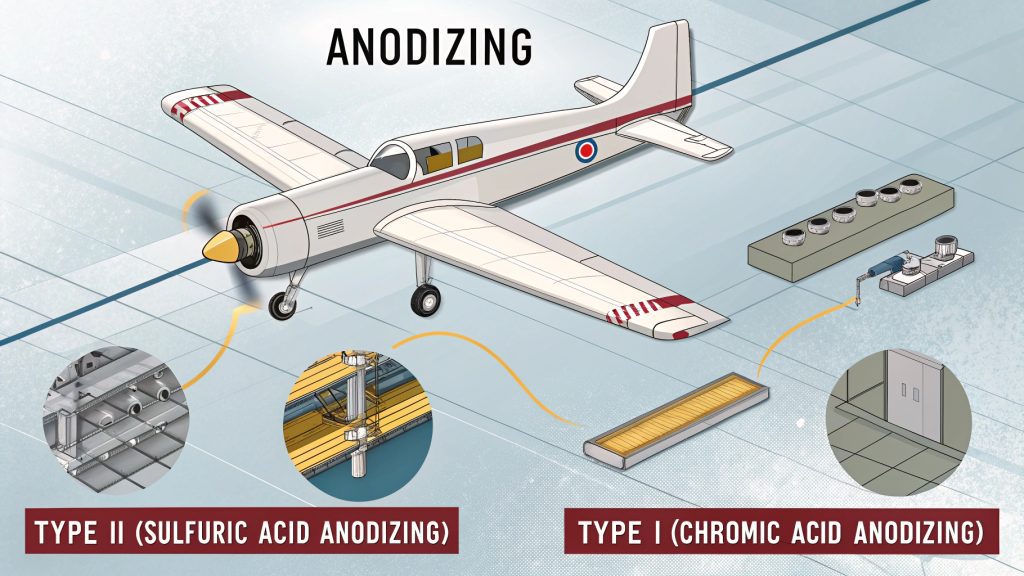
Anodizing is not just an option in aerospace; it's often a requirement specified in the design. We often receive drawings at Worthy Hardware that call out specific military or aerospace standards for anodizing, like MIL-A-8625. This standard defines different types of anodizing. For example, Type II (sulfuric acid anodizing) is very common. It creates a thick, durable coating that is great for corrosion resistance and can be dyed in different colors. Type I (chromic acid anodizing) creates a much thinner layer, which is useful for parts with very tight tolerances where a thick coating would affect the dimensions. It's also excellent for corrosion protection. You will find anodized parts all over an airplane. This includes structural components like wing spars and fuselage stringers, landing gear components, hydraulic manifolds, and even small brackets and fasteners. Every part is treated to ensure it can withstand the demanding
environment of flight for many years.
What type of aluminum is used in aerospace?
Choosing the right aluminum for aerospace is critical. The wrong alloy simply won't handle the immense stress of flight. That's why engineers rely on specific high-strength aluminum alloys for safety.
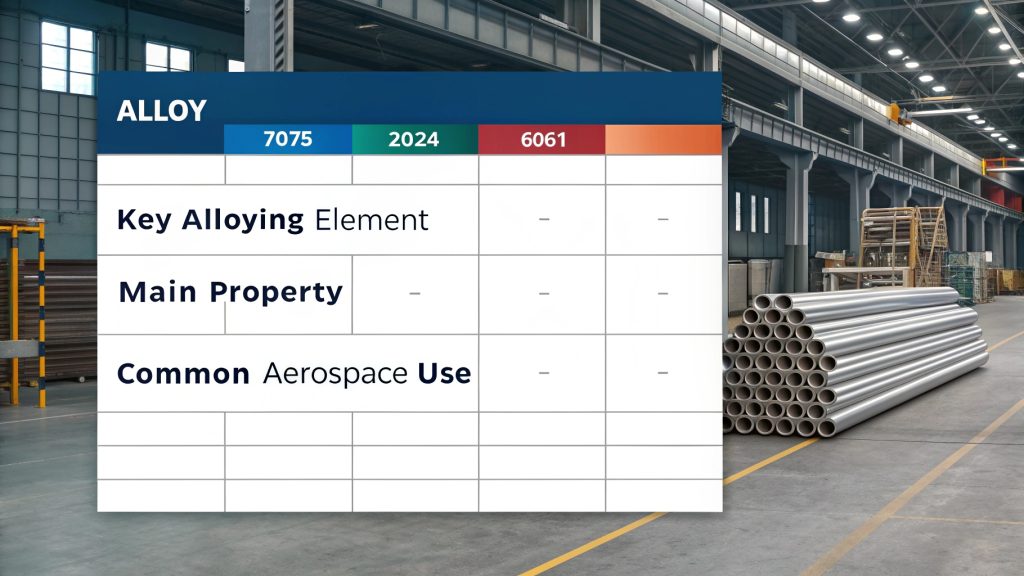
Aerospace primarily uses high-strength aluminum alloys. The most common are 7075, known for its incredible strength-to-weight ratio, and 2024, which has excellent fatigue resistance. 6061 is also used for less critical structures due to its good corrosion resistance and weldability.
These aren't the aluminum alloys you find in everyday products. They are engineered with specific elements like zinc, magnesium, and copper to give them superior properties. At my company, we machine all these alloys regularly. I've seen that while 7075 is tougher to machine, the final part is impressively strong and rigid. It’s a top choice for our clients who need maximum performance in critical components like wing spars or landing gear.
2024 is another workhorse, often used for fuselage and wing skins because it resists the repeated stress cycles of flight very well. 6061 is more of an all-purpose alloy. It's not as strong as 7075 or 2024, but it's easier to machine and weld, and it naturally resists corrosion better. We see it used for things like aircraft interior fittings or secondary structural parts where the absolute highest strength isn't necessary.
Here's a table to show the differences:
| Alloy | Key Alloying Element | Main Property | Common Aerospace Use |
|---|---|---|---|
| 7075 | Zinc | Highest Strength | Wing spars, landing gear |
| 2024 | Copper | Fatigue Resistance | Fuselage, wing skins |
| 6061 | Magnesium, Silicon | Versatility, Weldability | Secondary structures, fittings |
What is the main benefit of using aluminum in aerospace applications?
Every gram counts when building an aircraft. Extra weight means more fuel and less cargo, which costs money. Aluminum's incredible lightness is the key reason it's the top choice.
The main benefit of using aluminum in aerospace is its excellent strength-to-weight ratio. It provides the necessary structural integrity to withstand the forces of flight while being significantly lighter than steel. This weight saving directly improves fuel efficiency and payload capacity.
Let's put this into perspective. Aluminum is about one-third the density of steel. Imagine building a large part of an aircraft's structure. If you used steel, the plane would be so heavy it might struggle to get off the ground. By using aluminum, engineers can design a strong and safe airframe that is also light enough to fly efficiently. This benefit goes beyond just fuel savings.
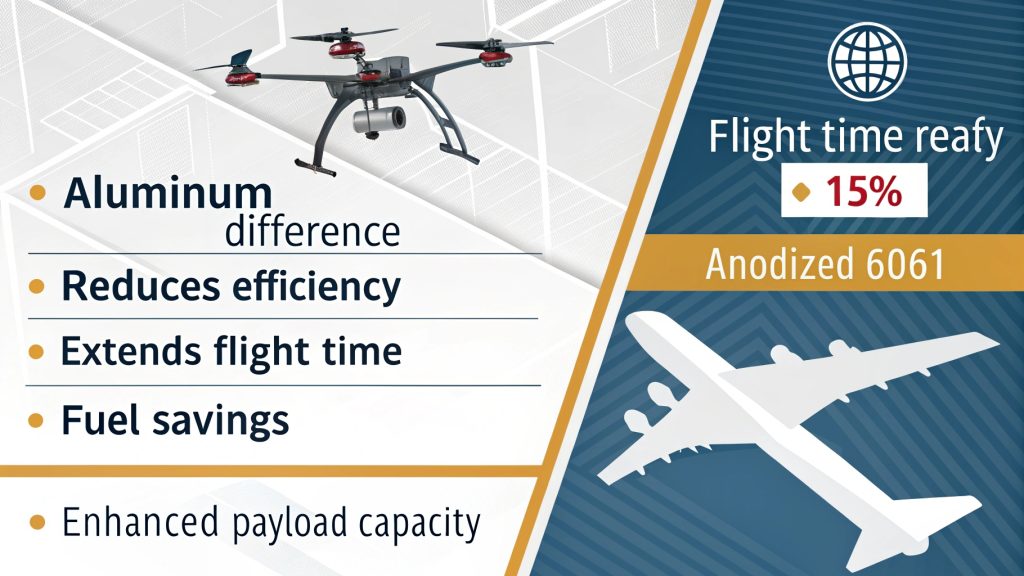
A lighter aircraft can fly further, carry more passengers or cargo, and requires less powerful (and thus lighter) engines. It’s a positive cycle. I remember working on a project for a client developing a new commercial drone. They switched a key structural component from steel to an anodized 6061 aluminum part we machined for them. The weight savings extended their drone's flight time by nearly 15%. For their business, this was a huge competitive advantage, allowing them to cover more ground on a single battery. This is the real-world impact of aluminum's low weight.
Conclusion
Anodized aluminum is essential for aerospace. Its combination of light weight, strength, and superior corrosion resistance makes it the ideal material for building safe, efficient, and durable aircraft components.