
Which carbon steel grade should I choose for high-strength mechanical components?
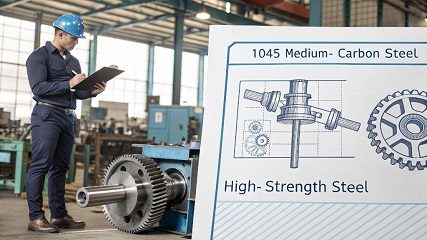
Choosing the wrong steel can lead to part failure and costly downtime. Your entire project is at risk. Let's make sure you select the right grade for the job.
Based on our 28 years of machining experience, 1045 medium-carbon steel is a top choice. It offers an excellent balance of high tensile strength, wear resistance, and good machinability. This makes it ideal for a wide range of high-strength mechanical components like gears, shafts, and axles.
I know that making the right material choice can feel overwhelming. A drawing might call for "high-strength steel," but that simple term hides a world of complexity. The wrong choice can lead to parts that wear out too quickly or, even worse, fail under load. But don't worry, getting it right is simpler than you think.
Over my years in this business, I've helped countless clients navigate this exact problem. It's not about memorizing every single steel grade. It's about understanding the key differences and how they relate to your specific application. Let's break down the important grades together so you can choose with confidence.
What are the grades of high strength carbon steel?
The sheer number of steel grades is confusing. Picking one without knowing the differences feels like a gamble. Let's simplify the options to make your choice clear and easy.
High-strength carbon steels are generally medium-carbon (like 1045) and high-carbon (like 1095) grades. The strength and hardness increase with the carbon content. Medium-carbon steels offer a great balance of strength and ductility, while high-carbon steels are harder but more brittle.
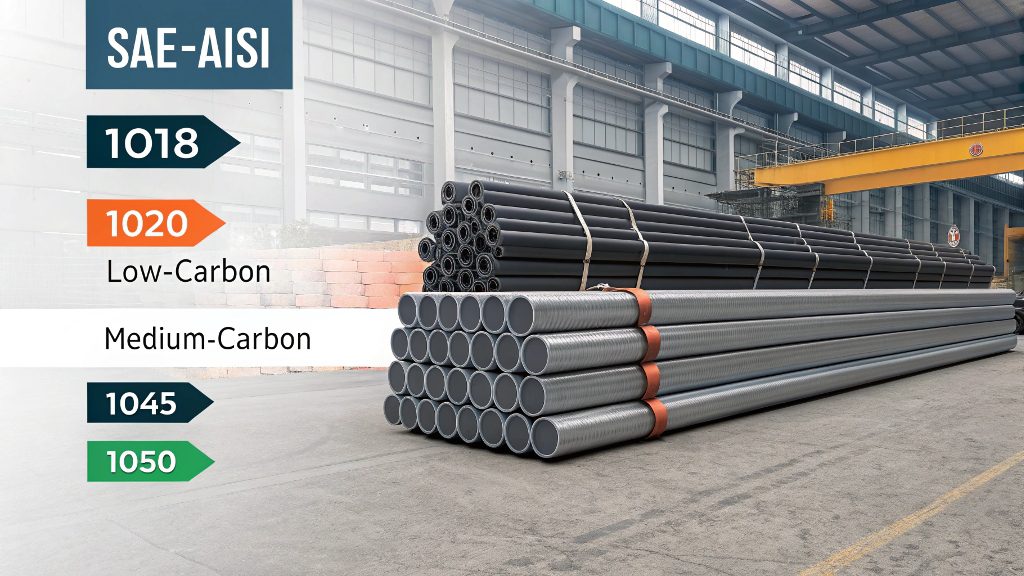
When we talk about carbon steel, the grade is usually defined by a four-digit number from the SAE-AISI system. The first two digits, "10," simply mean it's a plain carbon steel. The last two digits show the approximate carbon content. For example, 1045 steel has about 0.45% carbon. This simple code tells us a lot about the material's properties.
To help you understand, I've broken down the main categories.
Low-Carbon Steel
This group includes grades like 1018 and 1020. They have low carbon content (below 0.30%), which makes them soft and easy to form but not very strong. They are great for things like panels or simple brackets but are not suitable for high-strength mechanical parts.
Medium-Carbon Steel
This is the sweet spot for many applications. Grades like 1045 and 1050 contain between 0.30% and 0.60% carbon. This gives them a fantastic combination of high strength, good hardness, and reasonable toughness. We can also heat-treat them to make them even stronger. This is why we see 1045 used so often for gears, bolts, and shafts.
High-Carbon Steel
With carbon content above 0.60%, grades like 1095 are very hard and strong. They can hold a sharp edge, which makes them perfect for cutting tools and high-wear springs. However, this hardness comes at a price—they can be brittle and harder to machine.
| Carbon Steel Type | Carbon Content | Key Characteristics | Common Applications |
|---|---|---|---|
| Low-Carbon | < 0.30% | Soft, ductile, easily welded | Sheet metal, pipes, fasteners |
| Medium-Carbon | 0.30% - 0.60% | Balanced strength and toughness | Gears, axles, shafts, couplers |
| High-Carbon | > 0.60% | Very hard, strong, holds an edge | Springs, cutting tools, wires |
Is grade 1 or grade 2 steel better?
Hearing terms like "Grade 1" or "Grade 2" can be misleading. You might worry you are choosing the wrong material. Let's clarify what these terms actually mean for your project.
"Grade 1" and "Grade 2" are not standard material identifiers for custom machined parts. These terms often refer to specific product standards, like for bolts or pipes. For precision components, specifying a clear material like "1045 steel" or "4140 alloy steel" is always better.
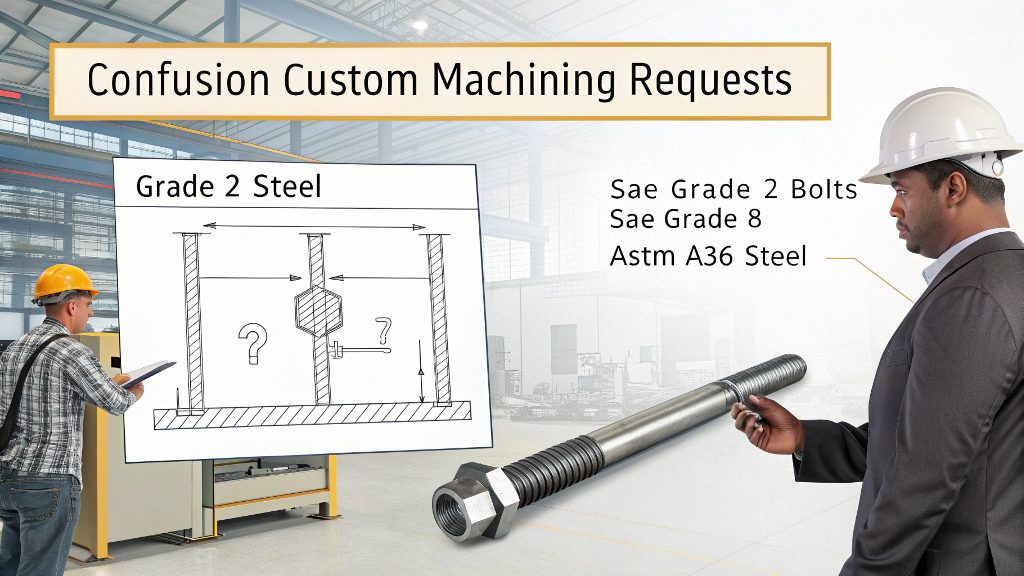
I've seen this confusion cause problems for my clients before. A customer once sent a drawing calling for a custom shaft made from "Grade 2 steel." The term was too vague. Did they mean a low-strength structural steel, or were they referring to a bolt grade? This ambiguity can lead to delays and incorrect material selection. For custom machining, we need precision from the very start.
The term "Grade" has different meanings depending on the context.
Grades for Fasteners (Bolts)
In the world of fasteners, grades are very specific. An SAE Grade 2 bolt is a standard, low-carbon steel hardware-store bolt. An SAE Grade 8 bolt, on the other hand, is made from a heat-treated medium-carbon alloy steel and is significantly stronger. These grades define the finished bolt's mechanical properties, like tensile strength, not just the raw material.
Grades for Structural Steel
For building materials, you might see grades like ASTM A36 steel. This is a common structural steel with specific properties suitable for construction beams and plates. But its properties are very different from the steel needed for a high-performance machine component.
Why It Matters for Your Custom Part
When you need a custom part machined, we are not making a standard bolt or I-beam. We are creating a unique component from raw material stock. That's why your drawing must specify the exact material, such as "1045 Carbon Steel, heat-treated to HRC 28-32." This leaves no room for error and ensures your part has the exact strength, hardness, and performance characteristics you need.
Which carbon steel is the strongest?
You want the absolute strongest part possible. But choosing the strongest steel often involves trade-offs. Let's look at what "strongest" really means and which grade fits that description.
Generally, the carbon steel with the highest tensile strength is a high-carbon grade like 1095. However, its strength comes with low ductility, making it brittle. For many mechanical parts, a heat-treated medium-carbon steel like 1045 offers more practical, usable strength and toughness.
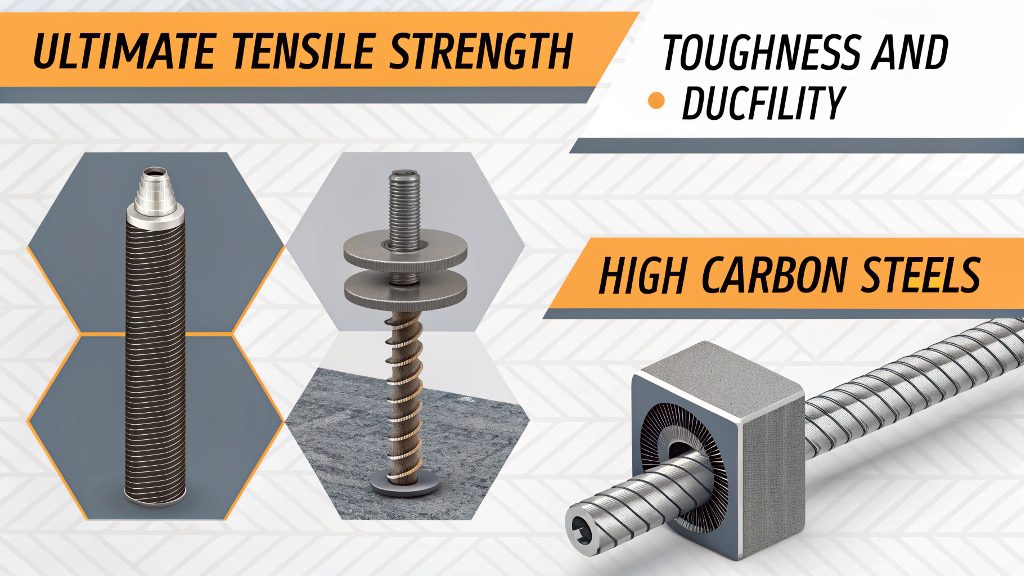
I always tell my customers that strength isn't just one number. The "strongest" steel on paper might not be the best for your application. A part that needs to withstand sudden impacts requires toughness (the ability to absorb energy), not just raw tensile strength. A part that is too hard can shatter like glass under shock. This is why understanding the different types of strength is so important.
Ultimate Tensile Strength
This is the maximum stress a material can withstand before it starts to break.
- Highest Strength: High-carbon steels like 1095 excel here. After heat treatment, they can achieve very high tensile strength, which is why they are used for things like springs and cutting tools that need to resist being pulled apart or bent.
Toughness and Ductility
This is the material's ability to deform and absorb energy without fracturing. It's crucial for parts that experience shock or impact.
- The Trade-Off: High-carbon steels are not very tough. They tend to be brittle. Medium-carbon steels like 1045 offer a much better balance. They have good strength but also enough ductility to handle unexpected loads without failing catastrophically.
Alloy Steels: The Next Level
If you need even more strength and toughness than carbon steel can provide, we would look at alloy steels like 4140 or 4340. Adding elements like chromium and molybdenum enhances the steel's properties far beyond what carbon alone can do. They can be heat-treated to achieve incredible strength while remaining tough.
So, while 1095 is technically one of the strongest carbon steels, a heat-treated 1045 is often the better choice for high-strength mechanical parts because it provides a more reliable and resilient performance.
Is T10 high carbon steel good?
You may have come across T10 steel, especially when looking at tools. It sounds impressive, but is it the right choice for your machined component? Let's break it down.
T10 is a high-carbon tool steel, not a standard plain carbon steel. It is excellent for applications requiring high hardness and wear resistance, like knives and cutting tools. However, its brittleness and difficulty in machining make it unsuitable for most general-purpose mechanical parts.
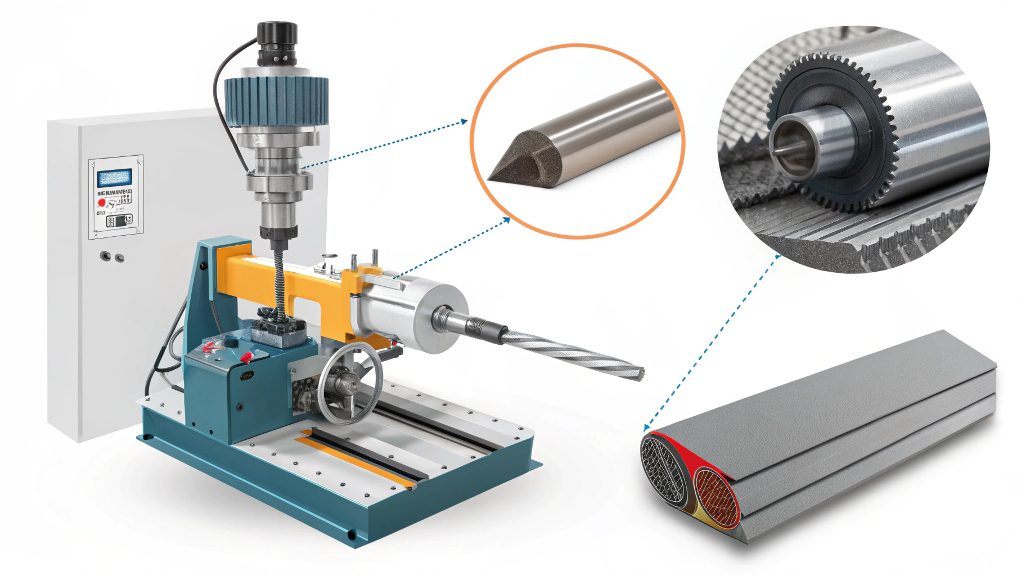
T10 steel belongs to a special category. The "T" in its name indicates it's a tool steel. These steels are designed for very specific jobs, primarily cutting and shaping other materials. I remember a client who wanted to use a tool steel for a machine shaft, thinking its extreme hardness would be a benefit. However, the shaft needed to handle some vibration and flex, and a tool steel would have been too brittle and likely would have fractured under the operational stress.
What Makes T10 Steel Different?
- Very High Carbon Content: T10 has around 1.0% carbon, which puts it in the very high-carbon category. This allows it to be hardened to an extreme degree.
- Focus on Hardness and Wear Resistance: Its main job is to hold a sharp edge and resist abrasion. Think of files, taps, dies, and blades. In these roles, it performs exceptionally well.
Why It's Not Ideal for Most Mechanical Parts
- Brittleness: The primary drawback is a lack of toughness. A gear or axle made from T10 could easily shatter if it receives a sudden shock load.
- Machinability: T10 is much more difficult and expensive to machine than a standard carbon steel like 1045. The tooling wears out faster, and the process is slower, driving up costs.
- Weldability: It is also very difficult to weld properly without cracking.
For these reasons, unless you are designing a cutting implement or a part that needs extreme surface hardness with no impact load, a medium-carbon steel like 1045 or an alloy steel like 4140 will be a much more practical, cost-effective, and reliable choice for your component.
Conclusion
For high-strength parts, 1045 steel is often the best choice due to its balanced properties. Always match the specific grade to your application's load, impact, and machining needs.