
When Is Monel The Best Choice For Corrosive Environments?
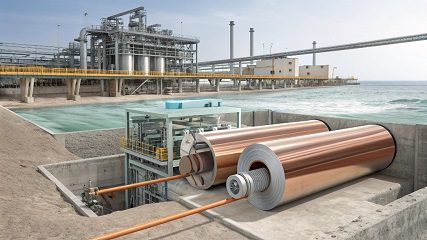
Struggling with materials that fail in harsh conditions? The wrong choice leads to costly failures. Monel is often the superior alloy you have been searching for in these demanding situations.
Monel is the best choice in highly corrosive environments involving seawater, acids like hydrofluoric and sulfuric, and alkalis, especially at high temperatures. Its unique nickel-copper makeup provides superior resistance where even stainless steels might fail, making it ideal for marine and chemical industries.
Choosing the right material for a tough job is one of the most important decisions you can make. It can mean the difference between a project that lasts for decades and one that fails in months. I've seen it happen many times. When customers come to us at Worthy Hardware, they need a partner who understands the details. Let's look closer at why Monel might be the perfect solution for your most challenging applications.
Is Monel corrosion resistant?
Worried about rapid material breakdown in your projects? Seeing parts fail too early from rust or chemical contact? Monel's natural resistance gives you a reliable and long-lasting answer.
Yes, Monel is highly corrosion-resistant. This nickel-copper alloy excels in a wide range of corrosive media, including flowing seawater, hydrofluoric acid, sulfuric acid, and strong alkaline solutions. This makes it extremely durable in tough chemical and marine applications.
Monel's impressive ability to fight corrosion comes from its main ingredients: nickel and copper. This combination creates a material that is stronger and more versatile than either metal on its own. It's especially good at resisting something called stress corrosion cracking, which is a common problem for many stainless steels in salty environments.
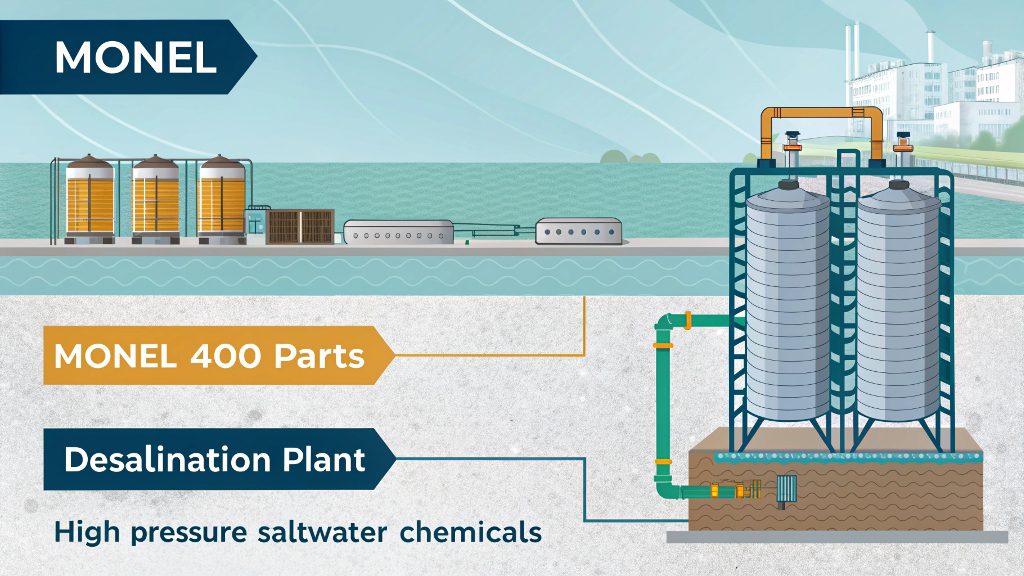
I remember a client from Australia who needed parts for a desalination plant. They originally used a high-grade stainless steel, but the combination of high-pressure saltwater and chemicals was causing the parts to fail quickly. They were frustrated and losing money on constant replacements. We recommended they switch to Monel 400. After we machined the new parts for them, the problem disappeared. The Monel parts held up perfectly, saving them a lot of time and money. This is a perfect example of Monel's strength in action. Its ability to handle aggressive environments is truly remarkable.
Key Environments Where Monel Excels
| Environment | Monel's Performance | Common Application |
|---|---|---|
| Seawater | Excellent, especially high-flow | Marine propellers, pump shafts |
| Hydrofluoric Acid | Excellent | Chemical processing equipment |
| Strong Alkalis | Excellent | Valves and pumps for caustic solutions |
Is Monel 400 better than 316 stainless steel?
Choosing between Monel 400 and 316 stainless steel? Making the wrong call can risk your project's success. Understanding their key differences ensures you pick the best material for your needs.
Monel 400 is not always "better," but it performs much better in specific corrosive situations where 316 stainless steel fails. This includes resistance to hydrofluoric acid, high-speed seawater, and certain caustic solutions. However, 316 SS is often more cost-effective for general use.
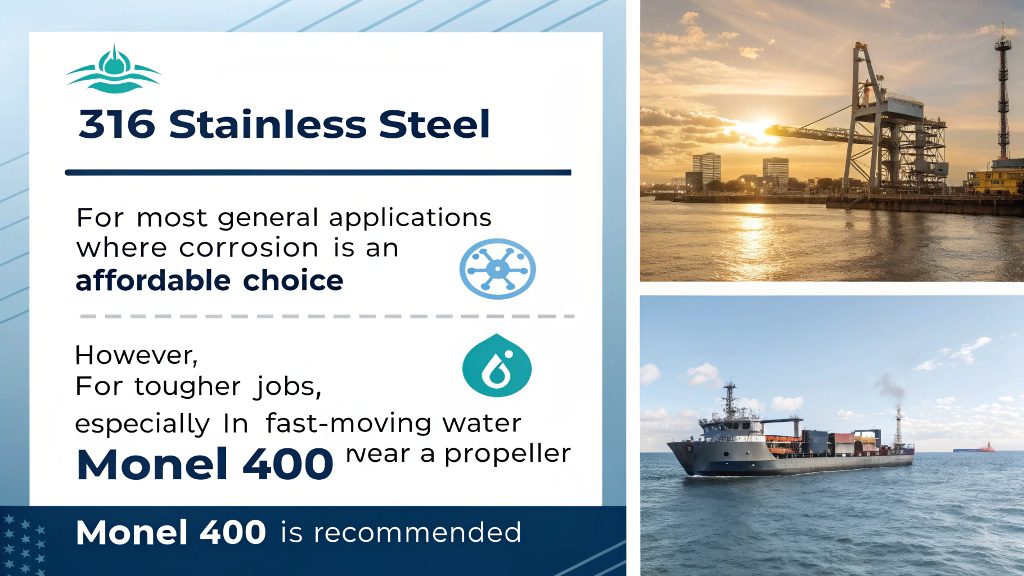
The choice between Monel 400 and 316 stainless steelreally comes down to the specific job. For about 80% of general applications where corrosion is a concern, 316 stainless steel is a great, affordable choice. But for the other 20%—the really tough jobs—Monel 400 is the clear winner. This is especially true in marine applications with fast-moving water, which can quickly wear away the protective layer on stainless steel. Monel 400 doesn't have this problem.
I was once talking with Mark, a long-time customer from Canada. He owns a company and needs parts that are both high-quality and well-priced. He was thinking about using 316 stainless steel for a new marine product. I asked him about the specific conditions, and he mentioned the parts would be near a propeller. I explained that in that high-flow environment, 316 SS could pit and corrode over time. We decided to machine the parts from Monel 400 instead. It cost a bit more upfront, but it saved him from future product failures and protected his company's reputation.
Monel 400 vs. 316 Stainless Steel
| Feature | Monel 400 | 316 Stainless Steel |
|---|---|---|
| Main Elements | Nickel, Copper | Chromium, Nickel, Molybdenum |
| Seawater Resistance | Excellent, especially high-velocity | Good, but can pit in still water |
| Acid Resistance | Excellent for HF, sulfuric | Poor for HF and sulfuric acid |
| Cost | Higher | Lower |
What are the advantages of Monel metal?
Are you searching for a material that does more than just resist rust? Do you need strength and durability under extreme heat? Monel offers a special mix of benefits for your toughest jobs.
The main advantages of Monel are its great corrosion resistance, high strength, and toughness over a wide temperature range. It stays strong from freezing temperatures up to about 480°C (900°F). It's also easy to fabricate, weld, and machine into complex parts.

When we talk about Monel's advantages, we have to look beyond just its corrosion resistance. This material is a true workhorse. Its ability to maintain high strength at both very low and very high temperatures makes it incredibly versatile. This means it can be used in everything from cryogenic applications to high-temperature processing equipment.
Another big advantage, especially for a CNC machiningshop like mine, is its workability. While it's tougher than standard steel, it can be machined with great precision. At Worthy Hardware, we can hold very tight tolerances, even down to +/- 0.005 inches, on Monel parts. My engineers can also help customers refine their designs to make them easier and more cost-effective to produce without losing any quality. This combination of top performance and good manufacturability is rare. It allows us to create custom parts that are not only strong and durable but also perfectly suited to our customers' designs, whether it's a single prototype or a large production run.
Which steel do you recommend for corrosive applications?
Do you feel unsure about which steel to choose for a project in a corrosive setting? Using the wrong one can be a costly mistake. Let's find a reliable option that works for you.
For most corrosive applications, 316L stainless steel is an excellent starting point due to its affordability and good all-around resistance. However, for extreme conditions involving specific acids or high-velocity seawater, a nickel alloy like Monel is a far superior and safer choice.
When a customer asks me to recommend a steel for a corrosive environment, I always start by asking more questions. What is the exact chemical exposure? What is the temperature? Is the liquid moving or still? The answers help us choose the right material. While 316L stainless steel is a fantastic and popular material, it’s not a one-size-fits-all solution. Its weakness against certain acids and chloride environments means it isn’t always the right choice.
This is where our experience at Worthy Hardware becomes so valuable. We don't just make parts; we help our clients solve problems. We stock over 100 different materials, including various grades of stainless steel and high-performance alloys like Monel. We can guide you to the material that offers the best balance of performance and cost for your project. A recent client from a hardware startup needed parts for a marine sensor. They were on a tight budget and wanted to use 304 stainless steel. We explained that 304 would quickly fail in saltwater and recommended 316L as a better, yet still affordable, option. For another industrial client dealing with hydrofluoric acid, we made it clear that only Monel would do the job safely. Choosing the right material is the first step to success.
Conclusion
In summary, Monel is the ultimate choice for extreme corrosion and high temperatures. For general use, stainless steel works well, but for the toughest jobs, Monel provides unmatched reliability.