
What’s the Difference Between CNC Router and CNC Mill? A Complete Comparison Guide?
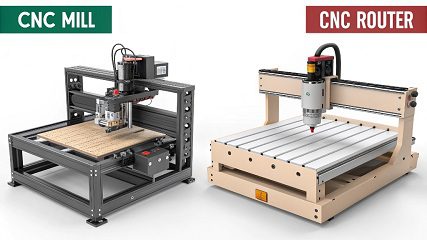
Struggling to choose between a CNC router and a CNC mill? Making the wrong choice can waste time and money. This guide will help you understand the key differences.
A CNC router is primarily for softer materials like wood, plastic, and soft metals, using a gantry system to move the cutting tool. A CNC mill is more robust, built with greater rigidity to precisely cut hard metals like steel and titanium.
That's the short answer, but the real choice depends on machine construction, capabilities, and the specific projects you have in mind. Understanding these details is crucial for picking the right machine. Let's dive deeper to ensure you make an informed decision for your needs.
What is the difference between a CNC mill and a CNC router?
You see two very different machines but struggle with the practical differences. This confusion can lead to buying the wrong, expensive machine for your projects, causing major setbacks.
The main difference is in their build and spindle. CNC mills are heavy and rigid, with high-torque, lower-speed spindles for cutting hard metals. CNC routers are lighter, with low-torque, high-speed spindles that excel at cutting softer materials like wood and plastics quickly.

When I first started, I thought they were almost the same. But I quickly learned their designs are for very different jobs. A CNC milluses its heavy, often cast-iron frame to absorb vibrations when cutting tough materials. This rigidity is key for achieving the tight tolerances needed in industries like aerospace and medical. The entire machine is built to handle the immense forces of cutting steel.
A CNC router, on the other hand, is built for speed over force. Its gantry-style design, where the tool moves over a stationary workpiece, lets it cover large areas quickly. This is perfect for making signs or furniture parts. Think of it like a sprinter versus a weightlifter; both are athletes, but their bodies are built for completely different tasks.
Key Structural and Application Differences
| Feature | CNC Mill | CNC Router |
|---|---|---|
| Primary Use | Machining hard metals (steel, titanium) | Cutting soft materials (wood, plastic) |
| Structure | Heavy, rigid cast-iron frame | Lighter steel or aluminum gantry |
| Spindle | Lower RPM, high torque | High RPM, low torque |
| Precision | Extremely high (tolerances to +/- 0.001") | Good (tolerances around +/- 0.005") |
| Axis Movement | Bed moves in X and Y axes | Gantry moves tool in X and Y axes |
What is the difference between CNC and CNC milling?
The terms "CNC" and "CNC milling" often sound the same. Using them incorrectly can create confusion when you talk to suppliers or engineers, making you seem less experienced.
"CNC" (Computer Numerical Control) is the broad technology that uses computers to automate machine tools. "CNC milling" is a specific manufacturing process that uses CNC technology to control a milling machine. CNC is the "brain," while CNC milling is one of its many "actions."

Think of it like this: "Vehicle" is a general term, but a "car" is a specific type of vehicle. In the same way, CNC is the general technology used to control all sorts of machines. It takes a digital design and turns it into a set of instructions, called G-code, that the machine's motor can understand.
CNC milling is just one application of this technology. There are many others:
- CNC Turning: Used on lathes to create cylindrical parts.
- CNC Routing: Used on routers for cutting large, flat sheets of material.
- CNC Laser Cutting: Uses a laser controlled by CNC to cut or engrave.
- 3D Printing: Builds objects layer by layer, guided by CNC principles.
A customer once asked me if we offered "CNC services." I had to ask for more details because that could mean anything from turning a small pin to milling a large engine block. Saying you need "CNC milling" is much more specific. It tells me you need a part made by a rotating cutter removing material.
Can you use a CNC mill as a manual mill?
You have a CNC mill but need a quick, simple part made. You wonder if you can just operate it by hand, but you're worried about damaging the expensive machine.
Yes, you can use a CNC mill as a manual mill, but it's not ideal. Most CNC mills have electronic handwheels or joysticks that let you manually control the axes. However, they lack the tactile feedback and simple handles of a dedicated manual mill.
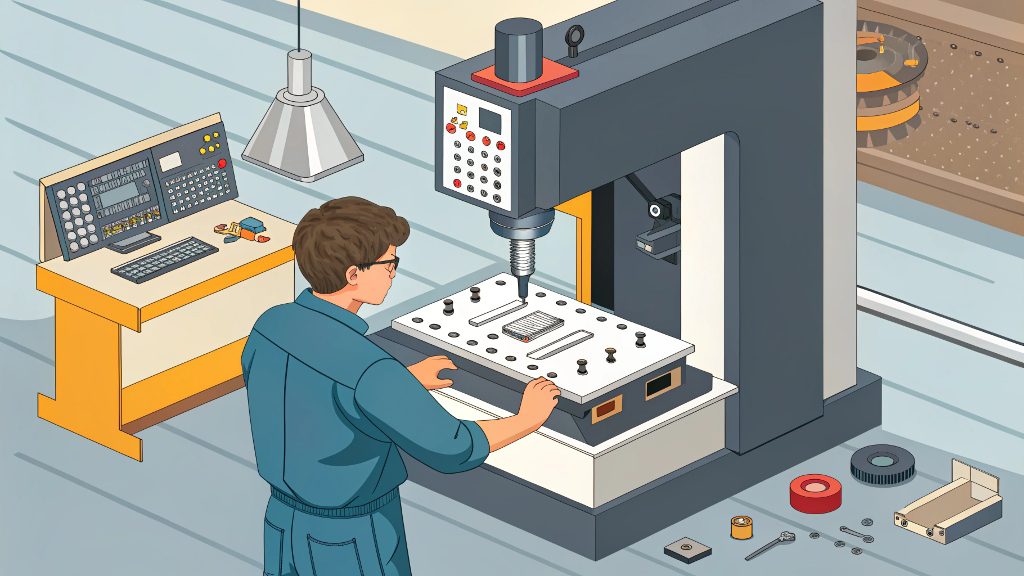
Using a CNC mill manually is often called "conversational programming" or using a Manual Data Input (MDI) mode. You don't write a full program; instead, you use the controller to move the tool step-by-step. This is great for simple tasks like facing a block or drilling a single hole without going through the whole process of creating a CAD model and CAM toolpath.
However, I remember a time we had a rush job for a simple fixture plate. My engineer decided to use the manual controls on our 5-axis CNC machine. It was clumsy. The electronic handwheel just doesn't feel the same as turning a physical handle on an old Bridgeport mill. You lose that direct connection and "feel" for the cut. While it worked, it was slower than if we had used a proper manual machine. It's a useful feature in a pinch, but it's not what the machine is designed for.
What are the disadvantages of a CNC milling machine?
CNC milling sounds like a perfect solution, but you're worried about hidden costs or challenges. Investing without knowing the downsides could lead to unexpected problems and financial strain.
The main disadvantages of CNC milling machines are their high initial cost, the need for skilled operators, and significant maintenance requirements. They are also less efficient for simple, one-off jobs where a manual machine would be faster and cheaper.

While CNC mills are incredibly powerful, they are not a magic bullet. The first barrier is the price. A good industrial CNC mill can cost hundreds of thousands of dollars. On top of that, you need special software, tooling, and a proper facility. A customer once thought he could just buy a machine and start making parts. He didn't account for the cost of training, programming, and maintenance, which quickly added up.
Skilled labor is another big issue. You can't just hire anyone to run a CNC machine. You need a trained machinist who understands G-code, tooling, materials, and how to troubleshoot problems. These experts are in high demand and can be expensive. Finally, these machines are complex. If something breaks, repairs can be costly and lead to significant downtime, stopping your entire production. For a simple prototype, it's sometimes just easier and cheaper for me to use our manual equipment.
Conclusion
Choosing between a CNC router and a CNC mill depends on your material and precision needs. Routers are for soft materials and speed; mills are for hard metals and accuracy.