
What’s The Difference Between 6061 and 7075 Aluminum Alloys?
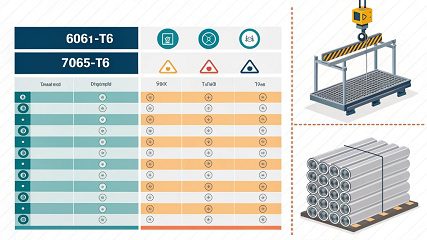
Struggling to choose the right aluminum for your project? Picking the wrong one can lead to failures, costing you time and money. Understanding the key differences is crucial for success.
The main difference is in their composition and properties. 6061 aluminum, with magnesium and silicon, offers excellent corrosion resistance and is easily welded. 7075 aluminum, with zinc, is much stronger but harder to weld, less corrosion-resistant, and more expensive.
Choosing between these two popular alloys can feel overwhelming. I see clients like Mark Chen from Canada wrestle with this decision often. They need high-quality parts but are also looking for competitive pricing. On one hand, you have the reliable, versatile 6061. On the other, the high-strength 7075. The best choice depends entirely on your specific application, budget, and manufacturing needs. Let's break down each one so you can make a confident decision for your next CNC machining project.
What are the disadvantages of 7075 aluminum?
Thinking about 7075 for its amazing strength? Be careful. Overlooking its downsides can lead to unexpected costs from corrosion or manufacturing headaches, hurting your project's budget and timeline.
The primary disadvantages of 7075 aluminum are its higher cost, poor weldability, and lower corrosion resistance compared to 6061. It is also more susceptible to stress corrosion cracking, making it unsuitable for certain applications without proper protective coatings.
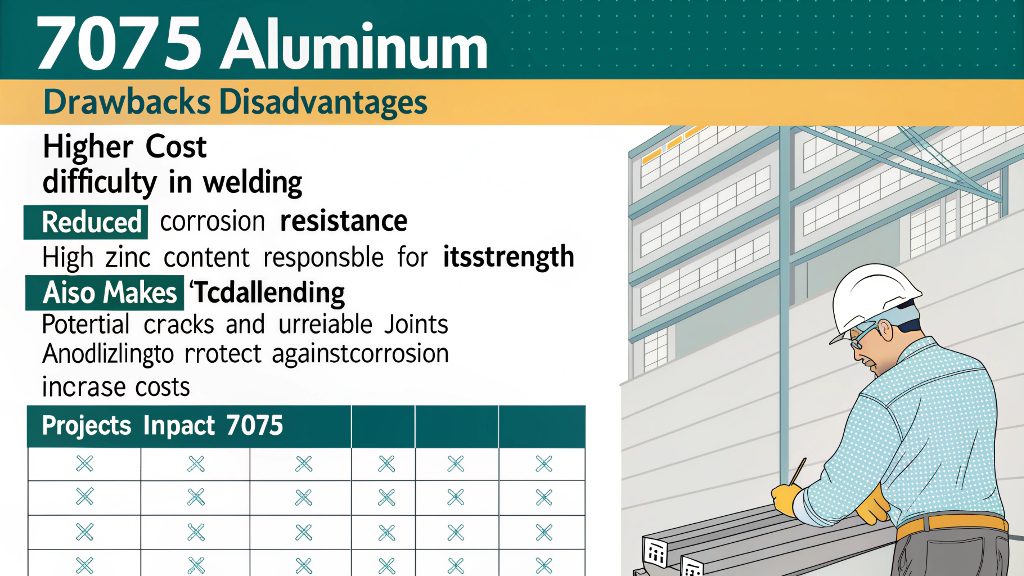
While 7075 aluminum is a powerhouse in terms of strength, it's not the right fit for every job. I often have to explain these trade-offs to clients. The high zinc content that gives it incredible strength also makes it very difficult to weld. The heat from welding can cause cracks, creating weak and unreliable joints. For any part that needs to be welded, I almost always recommend 6061 instead. Furthermore, its resistance to corrosion is not as good as the 6000 series alloys. In many cases, we have to add a surface finish like anodizing to protect the parts, which adds to the overall cost. This combination of higher material cost, processing challenges, and the need for protection means you should only choose 7075 when its superior strength is absolutely necessary for your application.
Key Drawbacks of 7075 Aluminum
| Disadvantage | Description | Impact on Projects |
|---|---|---|
| Higher Cost | The alloying elements and processing required are more expensive than for 6061. | Increases the total cost of raw materials and finished parts. |
| Poor Weldability | The high zinc content makes it prone to cracking during welding. | Not recommended for applications requiring welded joints. |
| Lower Corrosion Resistance | More susceptible to environmental corrosion than 6061. | Often requires protective coatings like anodizing, adding cost. |
| Stress Corrosion Cracking | Can fail under tensile stress in a corrosive environment. | Requires careful design and material selection for specific uses. |
What are the advantages of 7075 aluminum?
Do you need a material that can handle extreme stress and high performance? Using a weaker alloy could lead to part failure under load, which is a serious safety risk.
The main advantage of 7075 aluminum is its exceptional strength-to-weight ratio, which is comparable to many types of steel. It also has excellent fatigue strength, making it perfect for components that endure repeated stress cycles, like those in aerospace and high-performance industries.
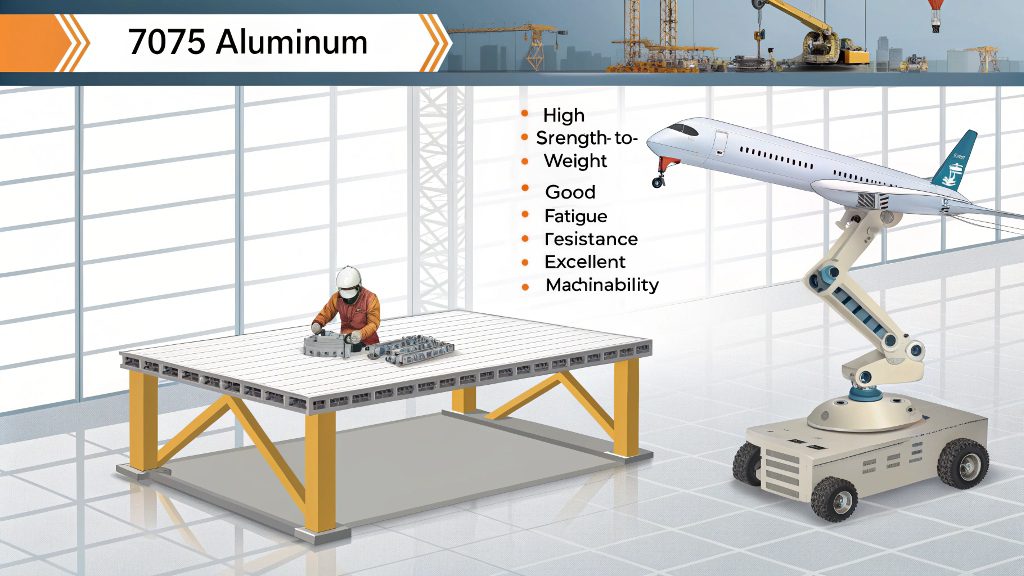
When a project demands the highest strength without the weight of steel, 7075 is my go-to recommendation. I remember working on a project for a robotics company in North America. They needed a robotic arm that was both lightweight for speed and incredibly strong to handle heavy loads. 6061 aluminum just wasn't strong enough. We chose 7075-T651, and it was a perfect fit. Its strength is truly impressive, often called "aircraft aluminum" for a reason. It's used in aircraft frames and other critical aerospace parts where failure is not an option. This high strength, combined with its good fatigue resistance, means it can withstand a lot of stress over a long time. While it's harder than 6061, it machines very well, allowing us at Worthy Hardware to produce parts with excellent surface finishes and tight tolerances down to +/- 0.001".
Top Strengths of 7075 Aluminum
| Advantage | Description | Common Applications |
|---|---|---|
| High Strength-to-Weight | One of the strongest aluminum alloys available. | Aerospace structures, military equipment, high-stress parts. |
| Excellent Fatigue Strength | Withstands repeated stress and loading cycles without failing. | Aircraft wings and fuselages, high-performance engine parts. |
| Good Machinability | Despite its hardness, it can be machined to a fine finish. | Complex CNC machined parts, molds, tooling. |
| High Hardness | Resists wear and deformation under pressure. | Gears, shafts, structural components in robotics. |
What is the difference between 6061 and 7000 aluminum?
You hear terms like "6061" and "7000 series" and wonder what the difference is. Confusing a specific alloy with an entire material family can lead you to specify the wrong thing.
The difference is that 6061 is a specific alloy, while the 7000 series is a family of alloys. 6061 is part of the 6000 series (using magnesium and silicon), whereas the 7000 series uses zinc as its main alloying element to achieve very high strength.
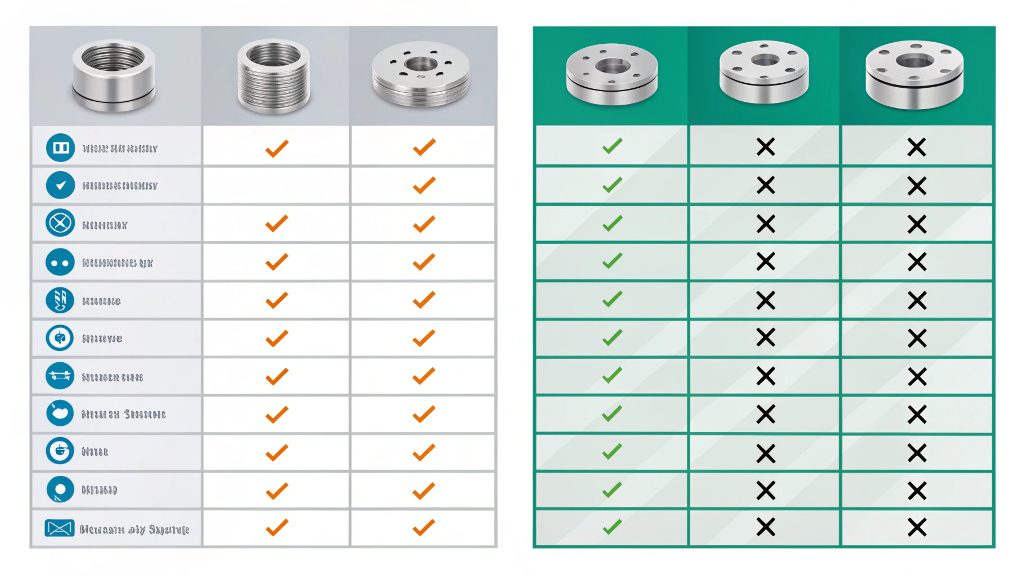
Think of it like this: "7000 series]" is a category, and "7075" is a specific item within that category. The same goes for the 6000 series, where 6061 is the most popular member. The number system for aluminum helps us understand the main ingredients. For my business, this distinction is very important. The 6000 series, including 6061, is what we use for most general-purpose industrial parts. They are cost-effective, corrosion-resistant, and easy to work with. On the other hand, when a client from the aerospace or defense sector needs parts for a high-stress application, we look to the 7000 series. This series contains the strongest aluminum alloys available. Knowing the difference between the series helps us guide our customers to the right material family first, and then we can select the specific alloy that best fits their budget and technical needs.
Aluminum Series General Comparison
| Feature | 6000 Series (e.g., 6061) | 7000 Series (e.g., 7075) |
|---|---|---|
| Primary Alloying Elements | Magnesium (Mg) & Silicon (Si) | Zinc (Zn) |
| Key Characteristic | Versatility, good corrosion resistance, weldable. | Very high strength. |
| Typical Strength Level | Medium | Very High |
| Common Use | Structural components, electronics, consumer goods. | Aerospace, military, high-performance sporting goods. |
What is the difference between T6 and 7075?
You've probably seen designations like "6061-T6" and "7075-T6" and found them confusing. Mistaking an alloy for a heat treatment can cause you to order a material with the wrong properties.
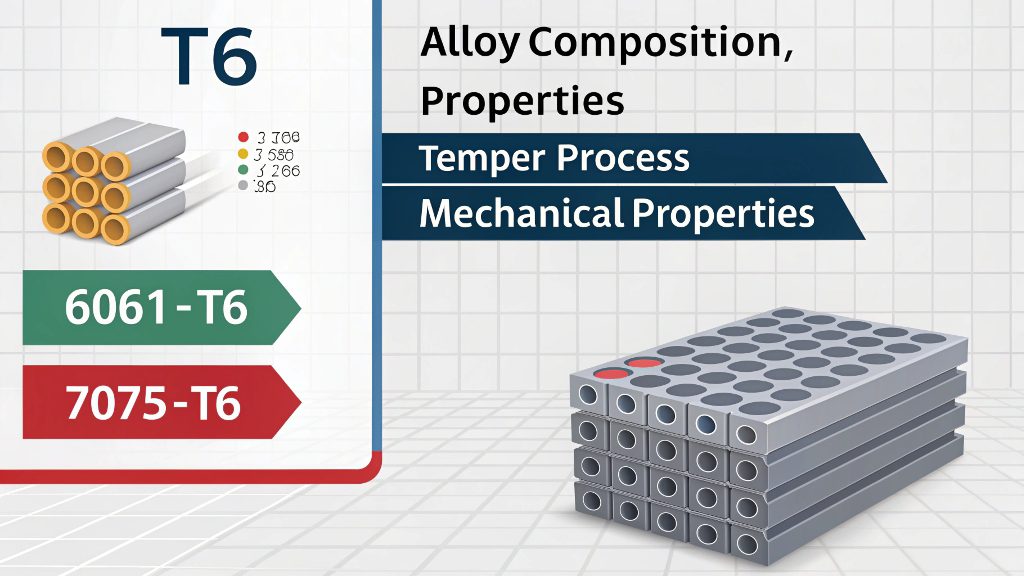
The difference is fundamental: 7075 is the name of the aluminum alloy itself. T6 is a temper designation, indicating that the alloy has been solution heat-treated and then artificially aged to increase its strength and hardness. Both 6061 and 7075 can be T6 tempered.
![]()![]()![]()![]()
This is a point of confusion I clear up for customers almost every week. A client might ask for a quote on a "T6 part," and I have to ask, "Which alloy?" The "T6" is the process, not the material. Think of it as a workout routine for the metal. We heat it up, cool it down rapidly, and then "age" it at a low temperature. This process dramatically improves the mechanical properties. For example, 6061-T6 is much stronger than non-heat-treated 6061. The same is true for 7075. However, the starting point matters. 7075 is naturally stronger than 6061, so 7075-T6 is significantly stronger than 6061-T6. Understanding this helps you specify exactly what you need: both the base metal (the alloy) and its final condition (the temper).
Comparing T6 Temper on Different Alloys
| Property | 6061-T6 | 7075-T6 |
|---|---|---|
| Alloy | Aluminum-Magnesium-Silicon | Aluminum-Zinc |
| Temper | Solution Heat-Treated & Artificially Aged | Solution Heat-Treated & Artificially Aged |
| Tensile Strength (Approx) | 45,000 psi (310 MPa) | 83,000 psi (572 MPa) |
| Primary Use | Strong, versatile parts for many industries. | Extremely high-strength parts for critical applications. |
Conclusion
Choose 6061 for versatile, weldable parts with good corrosion resistance. For applications needing maximum strength, 7075 is the superior choice. For expert help, email me, Sandra Gao, at [email protected].