
What’s Better For Precision Parts: EDM or Traditional CNC Machining?
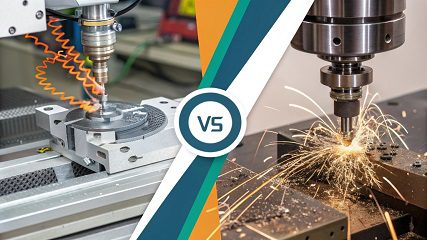
Struggling to choose the right process for your high-precision parts? The wrong decision can be costly and delay your project. Understanding the core differences between these two methods is key.
For the highest possible precision, especially on very hard materials or for complex internal shapes, Electrical Discharge Machining (EDM) is generally better. While our advanced CNC machines achieve incredible tolerances, slow-wire EDM can consistently hit accuracies of 0.001mm without stressing the material.
We've established that EDM often has an edge in pure precision, but that's not the whole story. The best method truly depends on your part's specific material, geometry, and the quantity you need. Let's dig deeper into where each process shines, especially for demanding industries.
Which CNC machine is best suited for high precision aerospace components?
Aerospace parts demand absolute perfection. A tiny flaw can have huge consequences, so choosing the right machine is not just a suggestion, it's a requirement for safety and performance.
For intricate features in hard superalloys, 5-axis EDM is often the best choice. For larger structural parts made from aluminum or titanium, high-precision 5-axis CNC milling is typically faster and more cost-effective. The best machine depends entirely on the part's job.
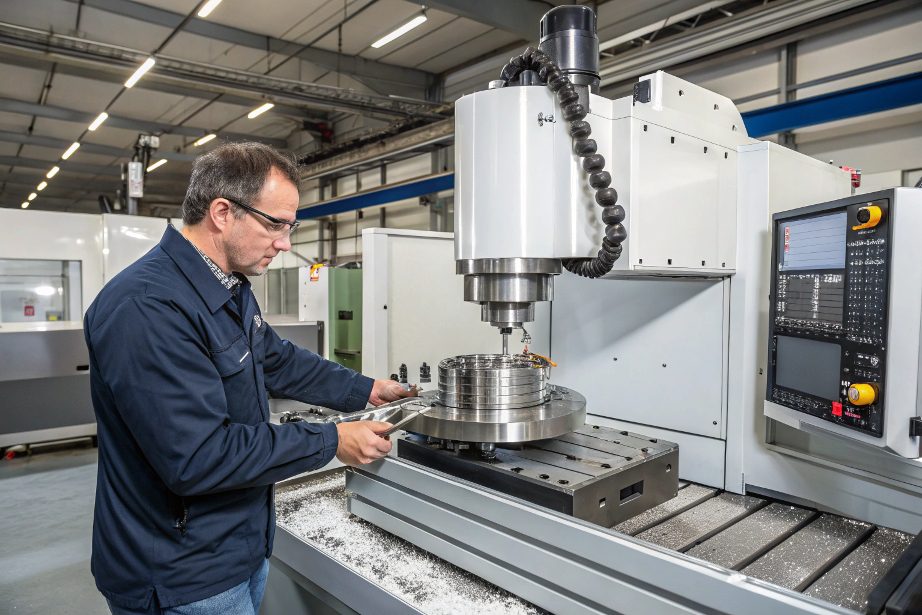
In my experience working with aerospace clients, the conversation always comes down to material and complexity. These components push the limits of what's possible in manufacturing.
When to Choose 5-Axis CNC Milling
I recommend 5-axis CNC milling for aerospace parts that are larger, have complex external surfaces, and are made from materials like aluminum or titanium. A 5-axis machine can move a part or the cutting tool on five different axes at the same time. This allows us to create complex shapes and contours in a single setup, which improves accuracy and saves time. It's perfect for things like airframe structures, brackets, and housings. The speed of milling makes it more economical for these kinds of parts.
When to Choose 5-Axis EDM
On the other hand, for parts with features that are impossible to create with a spinning tool, EDM is the only answer. Think of turbine blades with complex internal cooling channels or components made from incredibly hard materials like Inconel. EDM uses an electrical spark to erode material, so it doesn't matter how hard the metal is. It's a non-contact process, meaning no tool pressure is applied to the part. This is critical for thin-walled or delicate components that could warp or break under the stress of traditional milling.
| Feature | 5-Axis CNC Milling | 5-Axis EDM |
|---|---|---|
| Best For | Large structural parts, complex external surfaces | Intricate internal features, very hard materials |
| Speed | Faster | Slower |
| Materials | Aluminum, Titanium, Steel | Inconel, Hardened Tool Steel, Conductive Metals |
| Key Advantage | Speed and efficiency for bulk material removal | No-stress machining, creating impossible shapes |
What is the most precise type of machining?
You have a design that requires the tightest tolerances possible. Standard precision might not be good enough for your micro-part or advanced component. Knowing the ultimate limit helps you design better products.
Slow-wire EDM is one of the most precise machining methods commercially available. It can achieve tolerances and accuracies down to 0.001mm (1 micron). This allows it to create razor-sharp internal corners and incredibly detailed patterns that are physically impossible with a rotating cutter.
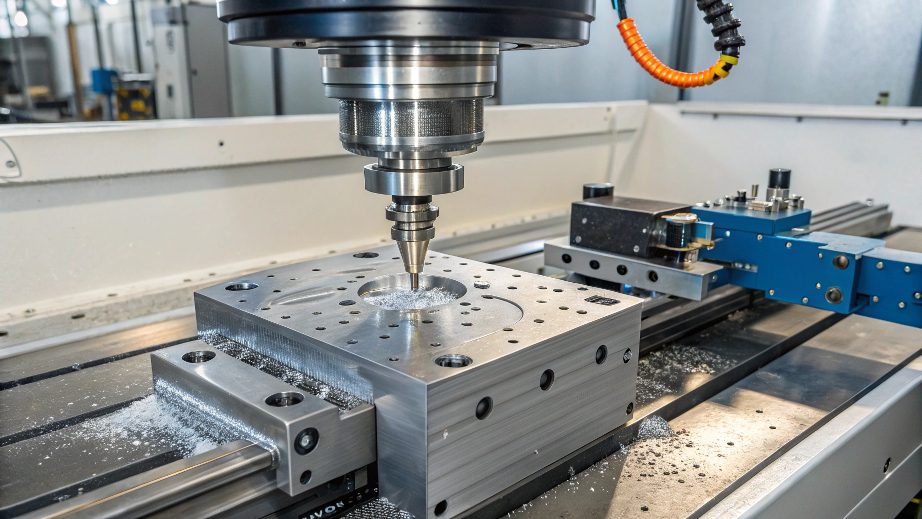
When a customer comes to me and says, "I need this to be perfect," the conversation often turns to wire EDM. While our best CNC machines can hold tolerances of +/- 0.005" (+/- 0.127 mm) as standard and can go much tighter, slow-wire EDM operates on another level.
Understanding Precision: Accuracy vs. Tolerance
It's important to understand what "precision" means. Accuracy is how close a measurement is to the true value. Tolerance is the acceptable range of variation for a dimension. At Worthy, we can hold very tight tolerances with CNC, but the fundamental accuracy of slow-wire EDM is often higher.
Why Slow-Wire EDM Excels
The secret to EDM's precision is that nothing physically touches the workpiece except for a thin, electrically charged wire.
-
No Tool Pressure: A traditional cutting tool pushes on the material. Even on the best machines, this can cause microscopic deflection or vibration. EDM has zero tool pressure, making it ideal for extremely delicate or thin-walled parts.
-
No Heat Distortion: The process uses sparks, but the heat is localized to a microscopic area and is flushed away by a dielectric fluid. This prevents the heat from warping the bulk of the material, a common concern in high-precision milling.
-
Sharp Internal Corners: A CNC milling tool is round, so it will always leave a radius in an internal corner. A wire EDM can create a nearly perfect, sharp 90-degree internal corner.
For the absolute pinnacle of precision, slow-wire EDM is the champion.
What is the main advantage of CNC machines in terms of precision?
You know that CNC machining is precise, but what is the fundamental reason for this? If you don't understand the 'why,' you can't fully use its power in your part designs.
The single biggest advantage of CNC machines for precision is repeatability. Once a program is proven, the machine can create one part or ten thousand parts that are virtually identical, all holding the same high-precision tolerances. This consistency is the foundation of modern manufacturing.
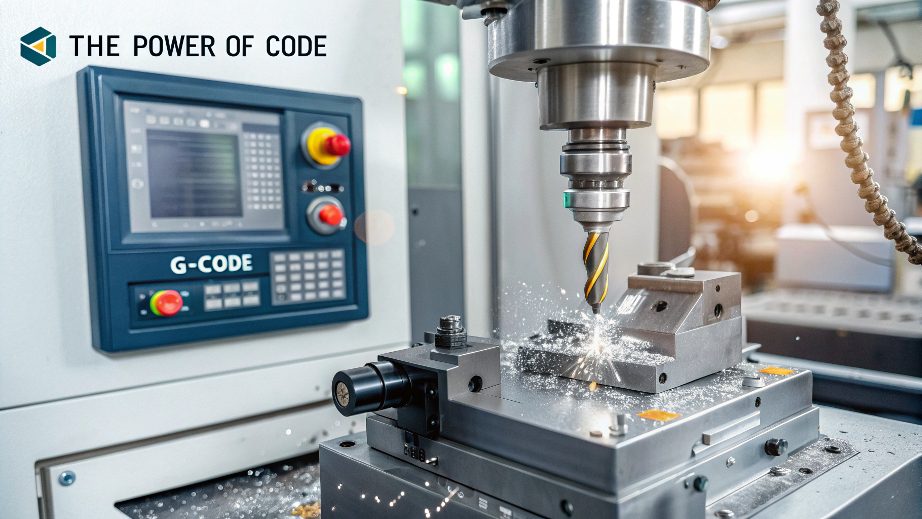
I've worked with many procurement officers like Mark from Canada. He needs to know that the 1,000th part he receives is just as good as the first one. He can't afford quality issues in the middle of a production run. This is where the repeatability of CNC machining provides enormous value and peace of mind.
The Power of Code
The precision comes from the computer control. Every movement is dictated by a program—G-code—that we write and optimize. This code tells the machine exactly where to move, how fast to spin the tool, and how quickly to feed into the material. The machine follows these instructions to the letter, every single time. There is no guesswork. A specific line of code results in a specific action, and it will perform that same action tomorrow, next week, and next year.
Eliminating Human Error
This coded approach removes the variable of human error. A skilled manual machinist is an artist, but even the best artist has slight variations from piece to piece. A CNC machine doesn't get tired, distracted, or have a bad day. It just executes the program. This guarantees that every part in a batch meets the exact same quality standard, which is critical for our customers who build complex assemblies or resell products under their own brand. It's this reliability that allows for things like high-volume production and interchangeable parts.
Why do CNC machines provide so much additional precision over traditional manual machines?
For a simple, one-off part, a manual machine might seem good enough. But when you need multiple parts or complex shapes, relying on manual work introduces risk, cost, and inconsistency.
CNC machines are more precise because they use a closed-loop feedback system with high-resolution encoders. These devices constantly check the machine's exact position and send that data back to the computer, which instantly corrects for any deviation. This eliminates the mechanical slop and human misjudgment found in manual machines.
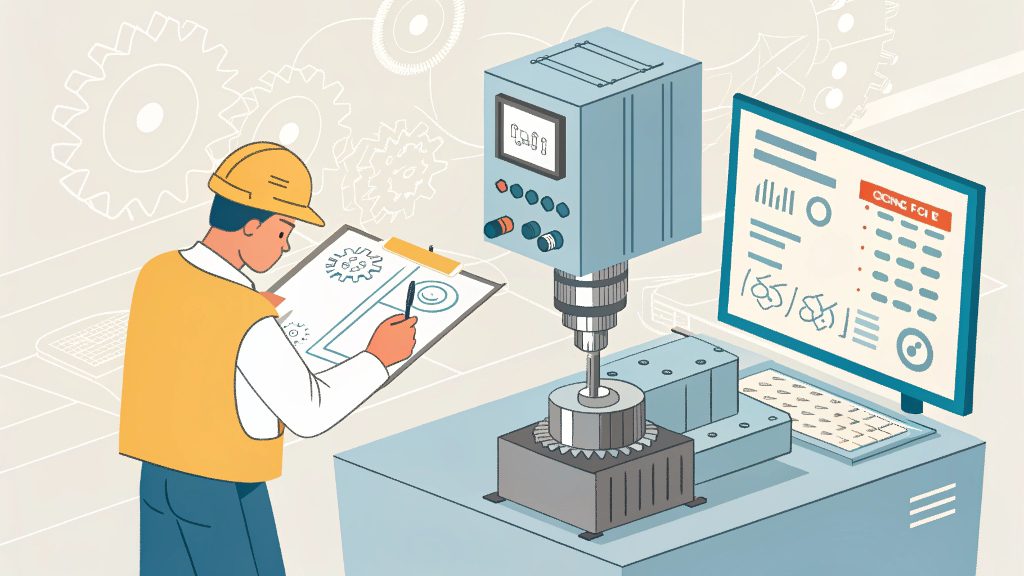
I remember a client who came to us with a part that had a complex curve. A manual shop had tried to make ten of them, and no two were the same. The problem wasn't the skill of the machinist; it was the limitation of the technology. We programmed the part on one of our 5-axis machines and produced 100 identical pieces in a few days. The difference is in the machine's core technology.
The Role of Feedback Systems
Manual machines rely on a person turning handles connected to lead screws. Over time, these screws wear, creating "backlash" or slop. The machinist has to compensate for this by feel. A CNC machine uses precision ball screws and a feedback system.
- Encoders: These are digital sensors that track the exact rotation of the motors and position of the machine axes to within a thousandth of a millimeter.
- Computer Control: The computer tells an axis to move to position X. The encoder reports back the actual position. If there is any difference, the computer makes a micro-adjustment in milliseconds to get it perfect. This happens thousands of times a second.
Beyond Human Capability
This system allows a CNC machine to perform movements that are simply impossible for a human. Think about moving the X, Y, and Z axes all at the same time in a perfect, smooth arc. A person can't turn three handles at once with that level of synchronized perfection. A CNC machine does it without even trying. This is how we create the complex 3D surfaces found on everything from consumer products to aerospace components.
| Feature | Manual Machine | CNC Machine |
|---|---|---|
| Control | Human operator, handwheels | Computer, G-code program |
| Feedback | Operator's eyes and feel | Closed-loop encoders |
| Repeatability | Low; depends on operator skill | Extremely high; identical parts |
| Complexity | Limited to what a human can coordinate | Almost unlimited 3D and 5-axis motion |
| Best For | Simple one-off parts, repairs | Prototypes, high-volume production, complex parts |
Conclusion
For ultimate precision, especially on hard materials or for intricate shapes, EDM is superior. For speed, repeatability, and versatility across a wide range of parts, traditional CNC machining remains the champion.