
What Types Of Special Holes Can Be Machined In Stainless Steel Parts?
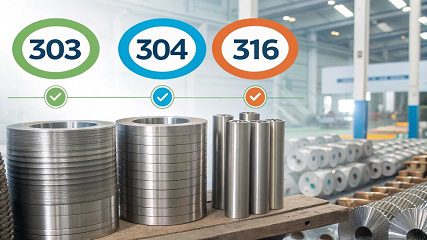
Machining holes in tough stainless steel can be a big problem. The wrong approach leads to broken tools and wasted parts, costing you money. But we can machine many special holes with the right expertise.
Yes, many types of special holes can be machined in stainless steel. Beyond standard round holes, modern CNC machining allows for the creation of square, oval, conical, and threaded holes. We can even produce very small micro-holes for specialized applications using advanced techniques and equipment.
It's clear that machining stainless steel isn't simple, especially when it comes to creating holes that aren't just plain and round. The material's toughness means we have to be very careful. Each type of hole presents its own set of challenges and requires a specific approach, from the choice of cutting tool to the speed of the machine. Understanding these details is key to getting the high-quality, precise parts you need for your project. Let's look closer at how we manage this process, starting with the most important factor: the material itself.
What is the most machinable stainless steel?
Choosing the wrong stainless steel grade can completely ruin your machining project. It causes extreme tool wear and poor finishes, wasting your time and money. Selecting a "free-machining" grade makes the entire process much smoother.
The most machinable stainless steel is Grade 303. It contains added sulfur, which helps break chips into smaller pieces during cutting. This makes machining easier, improves the surface finish, and extends the life of our cutting tools, making it perfect for complex parts.
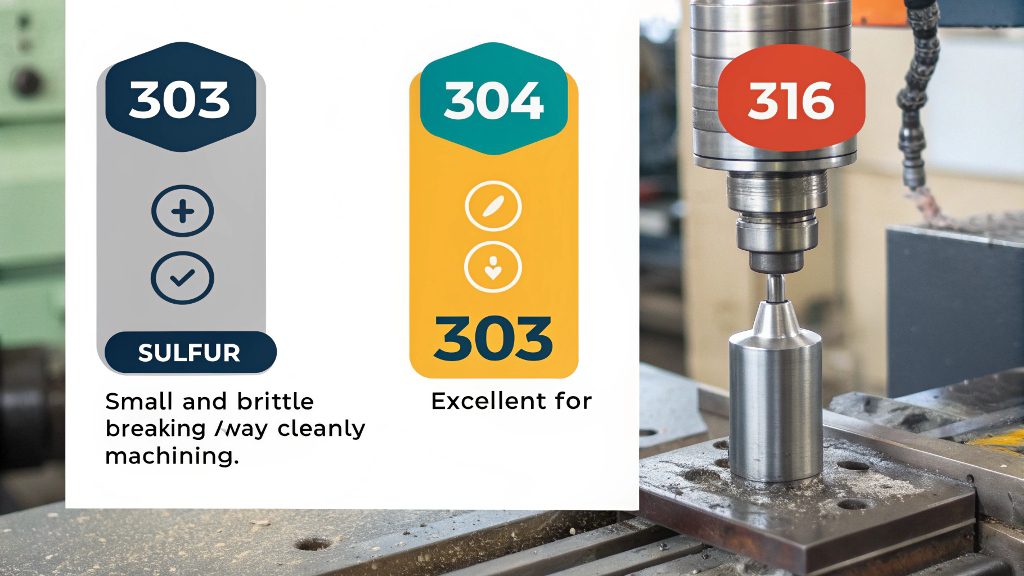
The secret to 303's excellent machinability is the sulfur added to its composition. This element makes the metal chips small and brittle, so they break away cleanly from the part and the tool. This prevents long, stringy chips from tangling around the equipment, which is a common problem with other stainless steel grades. At my company, Worthy Hardware, we often recommend 303 for high-volume jobs where speed and efficiency are critical. However, it's important to know there is a trade-off. The sulfur that makes it easy to machine also slightly reduces its corrosion resistance compared to grades like 304 or 316.
Comparing Common Grades
When a customer needs both machinability and performance, we have to look at the application.
| Grade | Key Element Added | Machinability | Key Property |
|---|---|---|---|
| 303 | Sulfur | Excellent | Best for machining |
| 304 | None | Poor | Good general corrosion resistance |
| 316 | Molybdenum | Very Poor | Excellent corrosion resistance |
For most parts, 303 is fantastic. But for a medical device or a part used in a marine environment, 316 is the better choice, even though it's much harder to work with. We help our customers make the right choice every day.
What are the three types of holes?
Not all holes are created equal in manufacturing. Using the wrong term on your engineering drawing can cause a lot of confusion. This leads to us making the wrong part. Understanding the basic types ensures we are all on the same page.
In machining, the three basic hole types are through holes, blind holes, and counterbored holes. A through hole goes all the way through the part. A blind hole stops at a specific depth. A counterbore adds a larger diameter at the top.
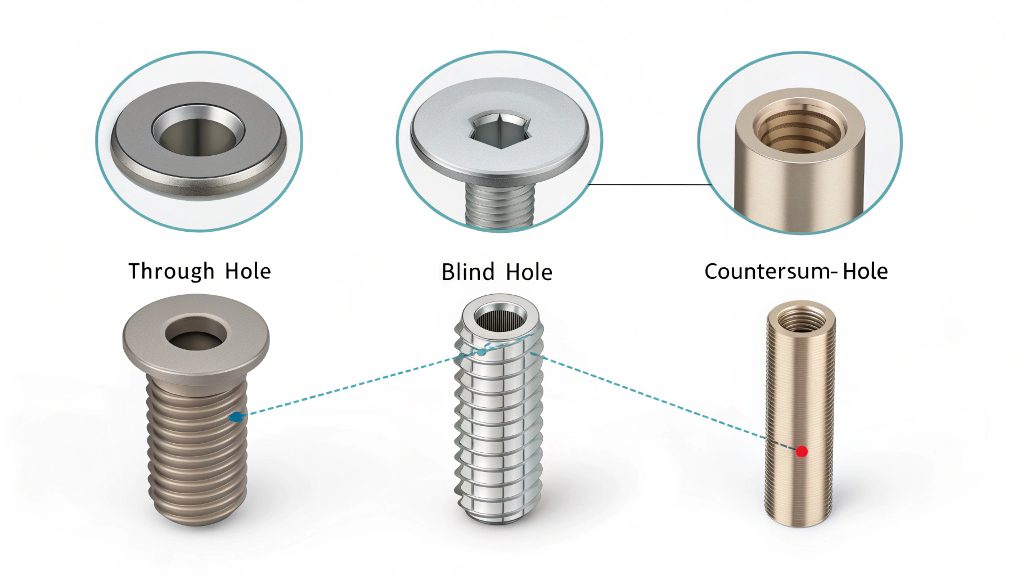
These three types form the basis for almost every design that requires a hole. Getting them right is fundamental to what we do. Each one serves a different purpose, and we use different techniques and checks to make sure they match the drawing perfectly. For example, a blind hole's depth is a critical dimension that we inspect carefully. A counterbore must have a flat bottom so a screw head can sit flush. It's this attention to detail that ensures the final part functions exactly as the designer intended. My team is trained to spot these features on a drawing and plan the manufacturing process accordingly.
Defining Hole Functions
Here is a simple breakdown of these holes and their uses. We also include countersunk holes, which are very common.
| Hole Type | Description | Common Use |
|---|---|---|
| Through Hole | Passes completely through the workpiece. | For bolts, pins, or fluid flow. |
| Blind Hole | Drilled to a specific depth, not all the way through. | For mounting points or set screws. |
| Counterbore | A flat-bottomed cylindrical step at the opening. | To hide the head of a cap screw. |
| Countersink | A conical opening for the hole. | To let a flat-head screw sit flush. |
Can 316 stainless steel be machined?
You need the fantastic corrosion resistance of 316 stainless steel for your product. But you have heard that it is very difficult to machine. This makes you worry about high costs and long delays.
Yes, 316 stainless steel can be machined successfully. It is much tougher than other grades, so it requires special expertise. We must use slower speeds, strong tooling, and a lot of coolant to manage heat and prevent the material from hardening during cutting.
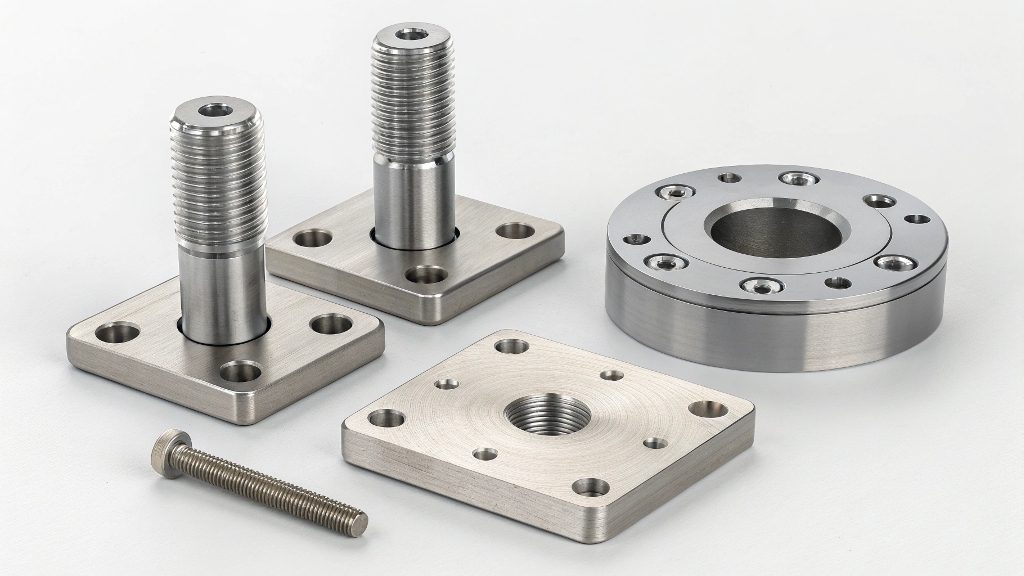
Machining 316 stainless steel is a serious challenge, but it's one we handle regularly at Worthy Hardware. The main problem is "work hardening." This means the material becomes harder as we cut it, which can destroy a cutting tool in seconds if you're not careful. To prevent this, we use very sharp, strong carbide tools, often with special coatings. We also run our machines at slower rotational speeds but use a steady, aggressive feed rate. This helps the tool cut cleanly under the hardened layer created by the previous pass. A constant flood of high-pressure coolant is also essential. It washes away chips and, most importantly, keeps the part and the tool from overheating. I remember a customer from Canada, Mark, who needed a complex manifold for a marine application. His previous supplier failed. We used our specific protocols for 316 and delivered perfect parts.
Key Machining Strategies for 316
| Challenge | Our Solution |
|---|---|
| Work Hardening | Use aggressive feed rates to stay under the hardened layer. Never let the tool rub without cutting. |
| Low Thermal Conductivity | Flood the cutting area with high-pressure coolant to remove heat quickly. |
| Toughness | Use rigid, powerful CNC machines and sharp, coated carbide cutting tools. |
How many types of holes are there?
Your product design needs more than just a simple round hole. You might not be sure if these special shapes are possible to make, especially in a tough material like stainless steel. You can get them with modern machines.
There are many types of holes we can create. Using our advanced CNC milling and turning centers, we can machine complex shapes like square holes, oval slots, conical holes, and holes with internal threads, all with very high precision in stainless steel.
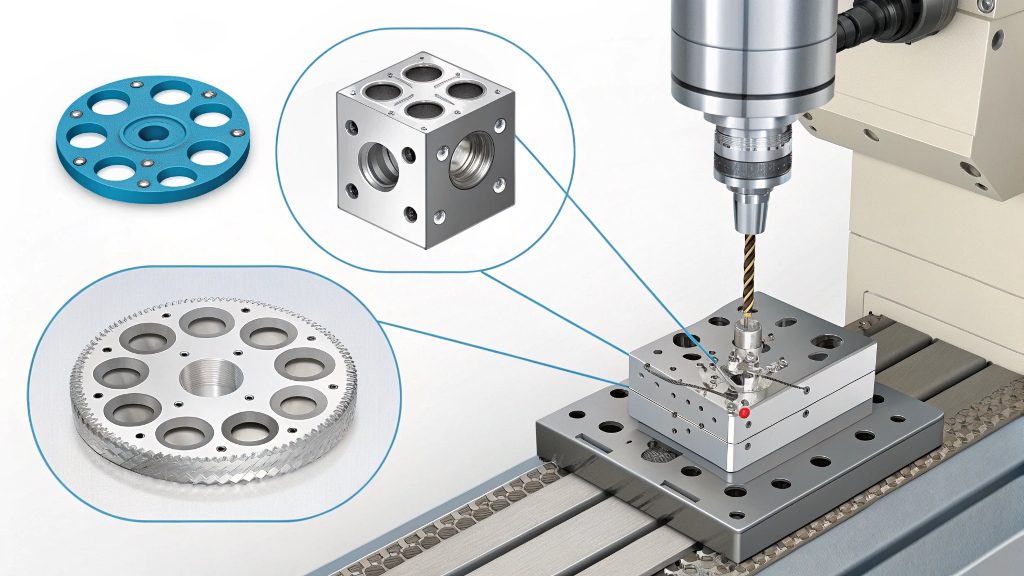
With today's technology, a "hole" can be almost any shape you can imagine. My company, Worthy Hardware, has invested in 5-axis CNC machinesthat can move the cutting tool along complex paths. This allows us to create non-circular holes efficiently. For example, we use a CNC mill with an endmill tool to cut out square or oval shapes. For threaded holes, we first drill a pilot hole and then use a special tool called a tap or a thread mill to cut the internal threads to exact specifications. Even very difficult features like conical holes, where the diameter changes from one end to the other, are straightforward for our modern equipment.
Machining Methods for Special Holes
The method we choose depends on the hole's shape, size, and the required precision.
| Hole Type | Description | Primary Machining Method |
|---|---|---|
| Square/Hexagonal | A hole with flat, straight sides. | CNC Milling, Broaching |
| Oval/Slotted Hole | An elongated round hole. | CNC Milling |
| Conical/Tapered | Diameter changes along its length. | CNC Turning or 5-Axis Milling |
| Threaded Hole | Contains internal screw threads. | Tapping or Thread Milling |
| Micro Hole | A hole with a very small diameter (<0.5mm). | Micro-Drilling or EDM |
No matter the shape, our goal is always the same: to produce a part that meets your drawing's specifications with 100% accuracy.
Conclusion
Machining special holes in stainless steel is tough but very possible. With the right material, tools, and experience, we can create almost any hole shape your design needs.