
What is the difference between conventional milling and climb milling?
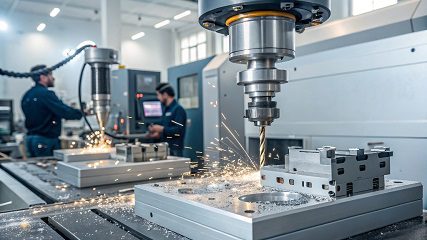
Choosing the wrong milling technique can ruin your part's finish and wear out your tools. This wastes material, money, and valuable time. Understanding the key differences ensures you get it right.
The main difference is how the cutter rotates relative to the workpiece's movement. In climb milling, the tool rotates in the same direction as the feed. In conventional milling, the tool rotates against the feed direction. This choice impacts finish, tool life, and machine stability.
This single choice might seem small, but I've seen it make or break countless projects in my years of running a CNC shop. It affects the final quality of your part, how long your tools last, and even the stress put on the machine itself. Getting it right is fundamental to good machining. But how do you know which to use and when? Let's break it down further so you can make informed decisions for your projects.
What is the difference between conventional and climb milling?
Are you unsure which milling technique to specify for your project? The wrong choice leads to poor finishes, chatter, and broken tools. Let's break down the core differences simply.
Climb milling (or down milling) cuts in the same direction as the feed, creating a smoother finish and causing less tool wear. Conventional milling (or up milling) cuts against the feed, which can be better for older machines or roughing cuts but often results in a poorer finish.
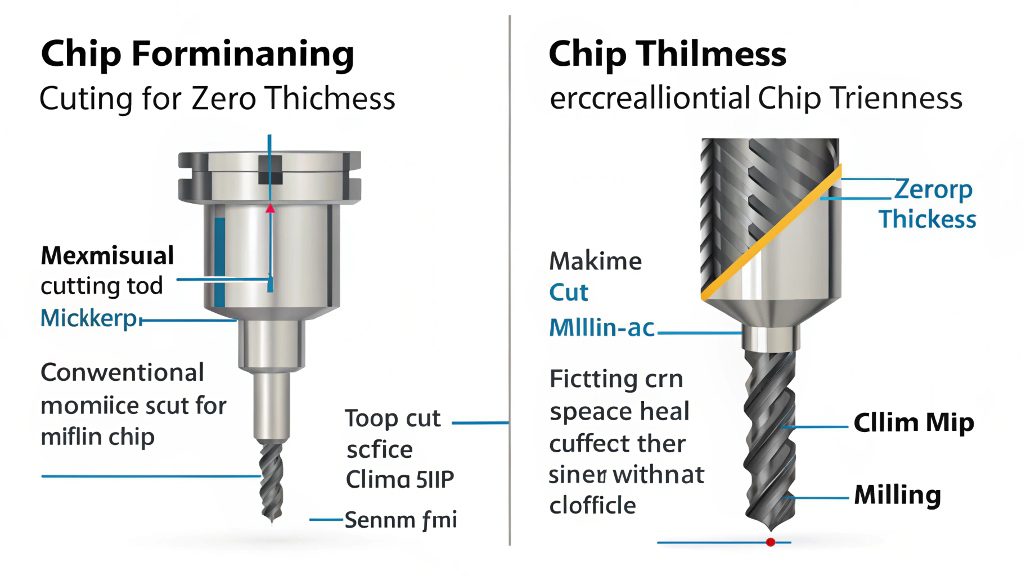
To really understand this, we need to look at how the cutting tool interacts with the material. I tell my new engineers to always think about the chip. The chip tells you everything. In machining, controlling the chip is controlling the cut. The way these two methods form a chip is completely opposite, and that's where the important differences come from.
Chip Formation
In conventional milling, the cutting edge starts with zero chip thickness and ends with the maximum thickness. The tool essentially rubs against the surface before it starts to cut, which generates heat and work-hardens the material. In climb milling, it’s the opposite. The cutter starts with the maximum chip thickness and ends with zero. It takes a big bite right away and then exits the cut.
Surface Finish and Tool Life
Because climb milling takes a clean bite and exits, it usually produces a much better surface finish. The downward cutting force also helps hold the workpiece firmly against the machine bed. The rubbing action in conventional milling creates more friction and heat, which wears the tool out faster and can leave a rougher surface. In my experience, we almost always use climb milling for the final finishing pass to get that perfect surface our customers expect.
Machine Considerations
Here's a key point. Conventional milling creates forces that pull the workpiece up and push the machine table against the leadscrew, taking up any backlash (looseness) in older, manual machines. Climb milling can pull a loose table along with the cutter, which is dangerous. For modern CNC machines with backlash compensation, this isn't an issue. That’s why we use climb milling 99% of the time at Worthy Hardware.
| Feature | Conventional (Up) Milling | Climb (Down) Milling |
|---|---|---|
| Chip Thickness | Thin to thick | Thick to thin |
| Tool Life | Shorter | Longer |
| Surface Finish | Rougher | Smoother |
| Cutting Force | Upward, pushes workpiece away | Downward, holds workpiece down |
| Best For | Roughing, older manual machines | Finishing, most CNC operations |
What is the difference between climb and conventional thread milling?
Thread milling requires extreme precision for a perfect fit. Using the wrong milling direction can create bad threads or, even worse, break your expensive tool inside the part.
For thread milling, the difference is the same, but the choice is clearer. Climb milling is almost always the best method. It produces cleaner threads, a better surface finish, and puts less stress on the small, delicate thread mill, which helps it last longer.
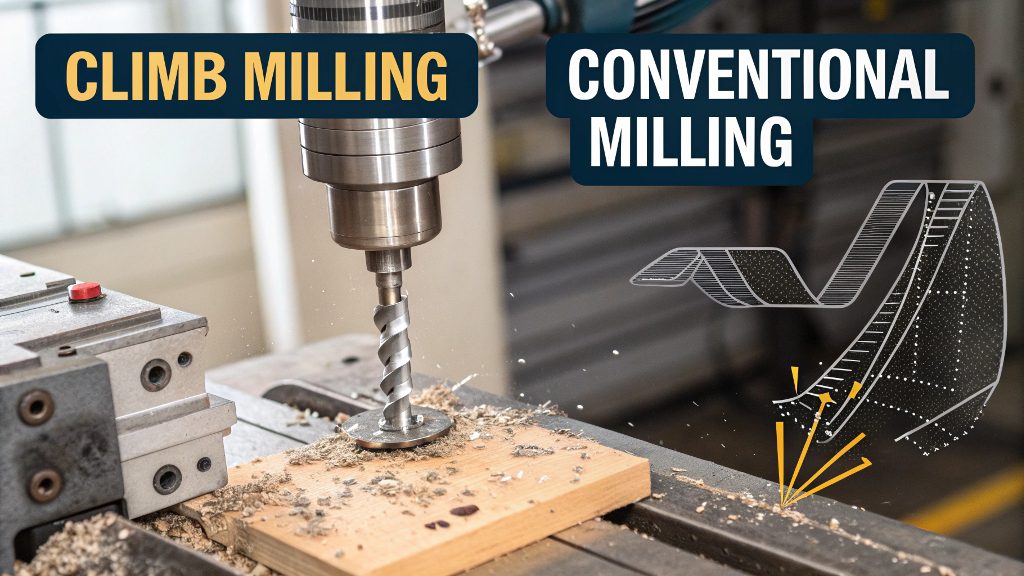
When you're creating threads, especially small or fine ones, the tool you are using is often quite fragile. I’ve seen operators snap a brand-new thread mill on the first try because they accidentally programmed a conventional toolpath. The forces involved are very different, and for delicate operations like this, you need every advantage you can get. That's why we have standardized climb milling for all thread-making processes in our shop.
Why Climb Milling is Standard for Threads
With climb milling, the cutting forces tend to push the tool slightly away from the material wall. This creates a very stable cutting condition. The tool smoothly shears the material and leaves a clean thread flank. Since the chip gets thinner as it exits, there's less chance of the chip getting caught and recut, which is critical for a smooth thread surface. This stability and clean cutting action are why it’s the industry standard.
Risks of Conventional Thread Milling
Conventional milling for threads is risky. As the tool cuts from thin to thick, it wants to "climb" over the material. This can pull the tool deeper into the cut than you intended. For a rigid tool, this might cause it to break. For a less rigid tool, it can cause deflection, leading to threads that are not to specification—they might be oversized or have a poor finish. This is a quality control nightmare that is easily avoided by simply choosing the correct milling direction from the start.
What is the difference between climb and conventional milling plastic?
Machining plastics like ABS or Acrylic can be tricky. The biggest problem is melting. The wrong cut generates too much heat, which can gum up your tool and completely ruin the part.
When milling plastics, climb milling is the clear winner. The cutter immediately bites into the material and ejects the chip, which carries most of the heat away. Conventional milling creates friction and heat before the cut even starts, often melting the plastic instead of cutting it.
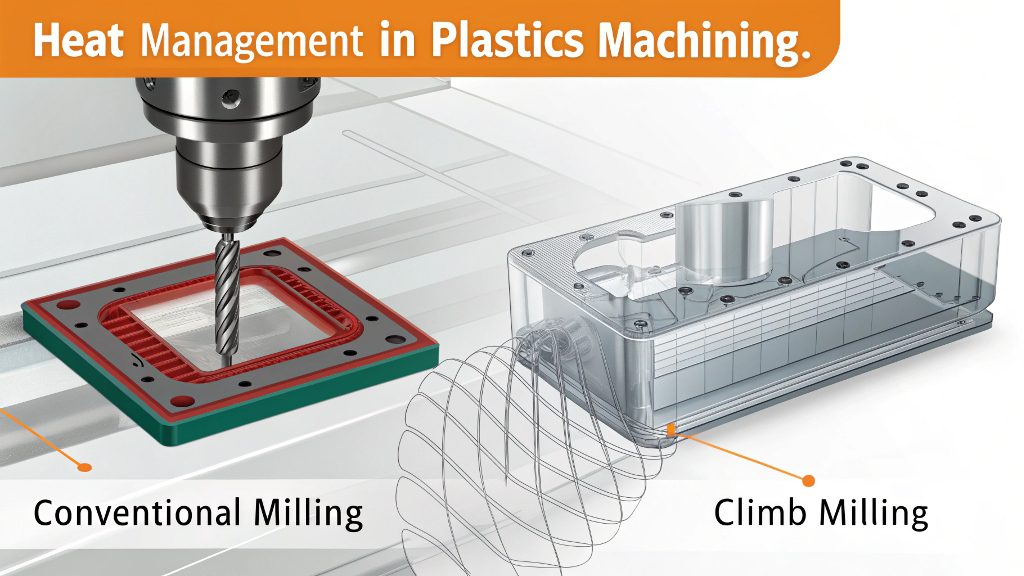
I remember a project we did with polycarbonate parts. The first batch had terrible, melted edges. The operator was using conventional milling out of habit. We switched to a climb milling toolpath, adjusted the feed and speed, and the problem disappeared completely. The parts came out with clean, sharp edges. For plastics, managing heat is the most important rule.
Heat Management in Plastics
Plastics don't conduct heat well. Any heat you generate stays right at the cutting edge. The rubbing action of conventional milling is a disaster for this reason. It creates a lot of friction before the chip is even formed, raising the temperature past the plastic's melting point. The result is a gummy mess, not a clean chip.
Chip Evacuation
Climb milling is perfect for plastics because its "thick-to-thin" cutting action creates a proper chip immediately and throws it out of the cut. This process of chip evacuation is critical because the chip itself carries away a significant amount of heat. By getting the hot chip away from the part and the tool quickly, you prevent melting and keep the cutting zone cool.
Material-Specific Tips
While climb milling is a general rule for plastics, you still need to adjust for the specific material.
- Acrylic (Plexiglass): Very prone to melting. Use a sharp, single-flute cutter with climb milling and high RPMs to get the chip out fast.
- Delrin (Acetal): Machines beautifully. It's more forgiving, but climb milling still gives the best surface finish.
- PEEK: A high-performance plastic that is tough but can be abrasive. Climb milling helps extend tool life and prevent heat buildup, which can cause internal stresses in the part.
What is the difference between conventional and dynamic milling?
Have you heard of dynamic milling but are not sure what it is? Sticking to older machining methods means slower production cycles and more tool wear, which directly impacts your costs.
Conventional milling is a cutting direction (against the feed). Dynamic milling is a complete toolpath strategy. This modern strategy uses high speeds, a shallow side cut, but a deep axial cut. It almost always uses climb milling to maintain constant tool load and clear chips effectively.
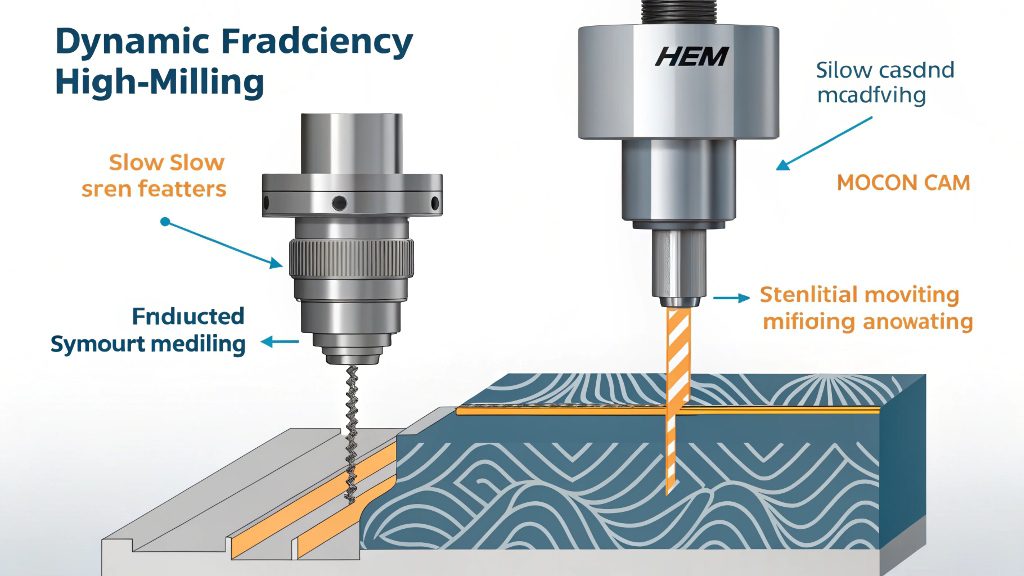
This is where modern manufacturing really shines. Dynamic milling[^1], which you might also hear called high-efficiency milling (HEM), changed how we approach pocketing and roughing. Instead of using a big, slow tool to plow through material, we use a smaller tool moving very fast. For our high-volume CNC machining services at Worthy, this strategy allows us to remove material much faster while actually being gentler on our tools.
What is a Toolpath Strategy?
Think of it this way: conventional vs. climb is how the individual cutter tooth meets the material. A toolpath strategy is the entire path the tool follows to clear out a pocket or shape a feature. A traditional strategy might be a simple zigzag. A dynamic strategy uses complex, smooth, arcing motions controlled by CAM software.
Dynamic Milling vs. Traditional Pocketing
A traditional approach to clearing a pocket might use 50% of the tool's diameter for the cut (stepover). This puts a lot of stress on the tool, especially in corners where engagement can jump to 100%. Dynamic milling uses a very small stepover, maybe 5-15%, but uses the full length of the tool's cutting edge. This keeps the load on the tool constant.
| Feature | Traditional Strategy | Dynamic Milling Strategy |
|---|---|---|
| Tool Engagement | High and variable | Low and constant |
| Depth of Cut | Shallow axial, high radial | High axial, low radial |
| Heat Management | Heat builds up in tool and part | Heat is ejected with the chip |
| Material Removal Rate | Slower | Much faster |
| Tool Life | Shorter | Significantly longer |
The Role of Climb Milling in Dynamic Toolpaths
Dynamic toolpaths rely entirely on the principles of climb milling. The strategy is designed to create a consistent, thin chip that can be evacuated easily. This keeps the tool cool and the cutting forces stable, which is what allows for such high speeds and deep cuts. You simply cannot run a dynamic toolpath using conventional milling; it would defeat the entire purpose of the strategy.
Conclusion
Choosing between conventional and climb milling affects finish, tool life, and speed. Use conventional for roughing on older machines. Use climb milling for finishing, plastics, and modern dynamic strategies.
If you have questions about your next project or need a quote for custom CNC parts, please contact me, Sandra Gao, at [email protected] or visit our website at www.worthyhardware.com. We deliver precision parts with fast turnarounds.