
What Is the Cost Comparison Between Aluminum and Other Metal Stamping Materials?
Struggling with material choices for your stamping project? The wrong metal can inflate your budget. I will break down the costs to help you make a smart, cost-effective choice.
Yes, aluminum is generally cheaper than stainless steel, brass, and copper for metal stamping projects. However, carbon steel is typically the most budget-friendly option. Your final project cost will also depend heavily on tooling, labor, and the part's complexity, not just the raw material price.
Understanding the raw material price is a great start. But as someone who has run a stamping factory for years, I know the real cost story is much more detailed. You have to look beyond just the price per pound or kilogram. Let's dig into how aluminum stacks up against other common stamping metals so you can make an informed decision for your project.
Does aluminum cost more than other metals?
Feeling confused when comparing metal costs? It's easy to get lost in the numbers. This can lead to budget mistakes or choosing a material that isn't right for your part. Let's clear this up by comparing aluminum directly to other common options.
Aluminum's cost sits in the middle of the pack. It is more expensive per kilogram than basic steel. But it is cheaper than stainless steel, brass, copper, and high-nickel alloys. The key is to look at the total value, not just the initial price tag.
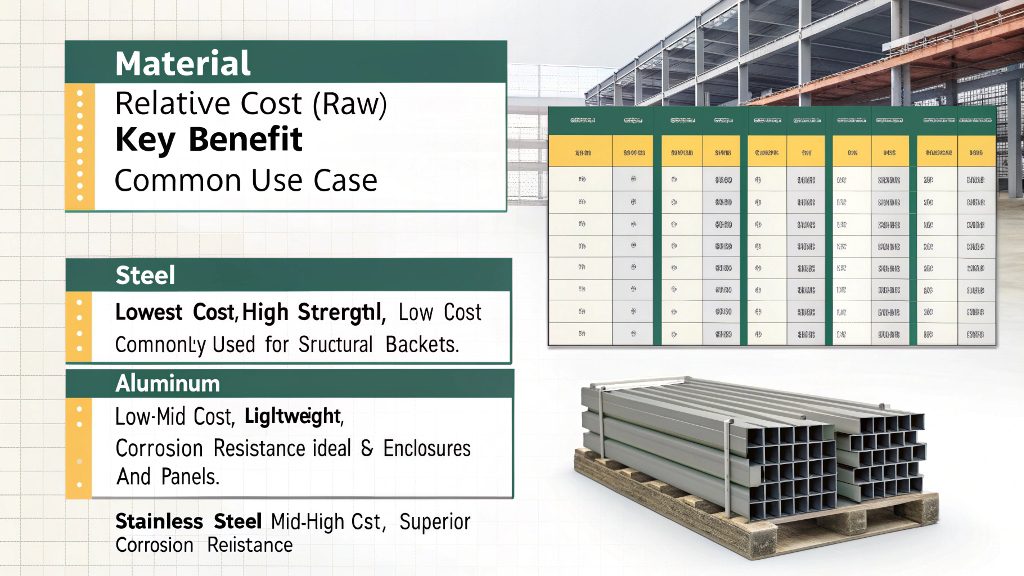
When I help clients choose materials, the conversation always goes beyond the price per kilogram. You have to consider the "why" behind your choice. Aluminum is lightweight and naturally resists corrosion. Steel is strong and cheap but heavy and needs a protective coating. Stainless steel offers great corrosion resistance but is harder to form and more expensive. For my clients in North America and Europe, the final application dictates the best material choice. For an electronic enclosure, aluminum might be perfect. For a heavy-duty industrial bracket, steel is often the winner. Here's a quick reference I use:
| Material | Relative Cost (Raw) | Key Benefit | Common Use Case |
|---|---|---|---|
| Steel | Lowest | Strength, Low Cost | Structural Brackets |
| Aluminum | Low-Mid | Lightweight, Corrosion Resistance | Enclosures, Panels |
| Stainless Steel | Mid-High | Superior Corrosion Resistance | Medical, Food Grade Parts |
| Brass | High | Good Conductor, Decorative | Terminals, Fittings |
| Copper | High | Excellent Conductor | Electrical Contacts |
This table helps put the raw material cost into perspective with the performance you get.
What material is cheaper than aluminum?
Worried that aluminum might break your budget? There are other options available. Choosing the wrong one can mean you pay for features you don't need. I'll show you the most common low-cost alternative to help you save money where it counts.
The most common and consistently cheaper material than aluminum for stamping is carbon steel. It's the go-to metal for many industrial applications where low cost and high strength are the most important factors, and weight is not a primary concern for the design.

In my experience, many procurement managers, like my Canadian client Mark, are very sensitive to price. When they see a quote, the first thing they look at is the unit price. Steel almost always provides the lowest raw material cost. This makes it very attractive for high-volume projects where every cent matters. But the savings on material can sometimes be offset by other costs. For instance, steel is heavy. This means shipping costs, especially for large orders going overseas, will be higher than for the same number of parts made from aluminum. Also, steel rusts easily. This means you must add a secondary finishing process like plating or powder coating, which adds to the total cost and production time. We handle over 50 types of surface finishes here at Worthy, so we always factor this step into our quotes when customers choose steel.
What is the best material for metal stamping?
Searching for the single "best" material for stamping? This often leads to frustration. The reality is that the perfect material doesn't exist for every project. Choosing incorrectly can compromise your part's quality and performance. Let's find the best material for your specific needs.
There is no single "best" material for all metal stamping projects. The best choice depends entirely on your specific application. Key factors include the required strength, weight limitations, corrosion resistance, electrical conductivity, and of course, your target budget. A successful part starts with the right material.

I often have conversations with designers and engineers who are developing new products. We don't just ask for a drawing; we ask about the part's function and its environment. This helps us guide them to the best material. For example, a client making parts for a marine environment needed excellent corrosion resistance, so we immediately recommended 316 stainless steel over aluminum or basic steel.
For another client in the electronics industry making heat shields, aluminum was the perfect fit because it's lightweight and dissipates heat well. My four engineers have years of experience helping customers improve their designs this way. We can often suggest a slight design change or a different material that does the job better and saves money. It's this partnership that helps our customers succeed. The "best" material is the one that meets all your performance needs at the most effective total cost.
Which one is more expensive between steel and aluminum?
Trying to decide between steel and aluminum for your project? The price difference can be confusing. Making the wrong choice based on raw cost alone could lead to unexpected expenses later. I'll give you a clear comparison to guide your decision.
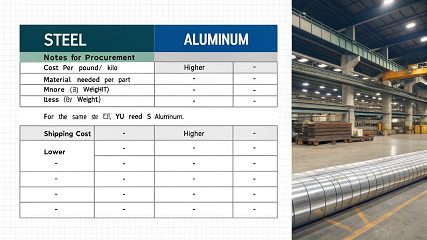
On a per-kilogram basis, aluminum is more expensive than standard carbon steel. However, aluminum is about one-third the weight of steel. This means you can often make more parts from one kilogram of aluminum than you can from one kilogram of steel.
![]()![]()![]()![]()
The cost calculation isn't as simple as comparing the price per kilogram. Let's break it down with a simple table, focusing on factors that my client Mark would care about: cost, quality, and logistics.
| Factor | Steel | Aluminum | Notes for Procurement |
|---|---|---|---|
| Cost per Pound/Kilo | Lower | Higher | Steel wins on initial material purchase cost. |
| Material Needed per Part | More (by weight) | Less (by weight) | For the same size part, you need less aluminum. |
| Tooling Wear | Higher | Lower | Aluminum is softer, so stamping tools last longer. |
| Finishing required | Yes (e.g., plating) | Often not needed | Aluminum's natural oxide layer prevents rust. |
| Shipping Cost | Higher | Lower | A big factor for international wholesale orders. |
When you look at this, you see the "total cost of ownership" is more complex. Yes, the initial PO for steel will look cheaper. But after you factor in the longer tool life, no need for plating, and lower shipping costs, aluminum can sometimes become the more economical choice, especially for lightweight applications.
Conclusion
Choosing between aluminum and other metals depends on your budget, weight goals, and performance needs. Steel is cheapest, but aluminum offers a great balance of cost, weight, and durability.