
What Is The Best Plastic For CNC Machining Parts?

Struggling to choose the right plastic for your project? The wrong choice can lead to failed parts and wasted money. You need a material that machines well and meets your needs.
The best plastic for CNC machining depends on your specific application needs like strength, temperature resistance, and cost. Based on my 30 years of experience, top choices include ABS, POM (Delrin), Polycarbonate (PC), Nylon, PEEK, and PTFE (Teflon) due to their excellent machinability and diverse properties.
Choosing a material can feel overwhelming. There are so many options, and each one has different strengths and weaknesses. It's a critical decision that impacts the final product's performance, durability, and cost. I've seen many clients struggle with this first step. But don't worry, I am here to help you break it down. Let's explore the most common and effective plastics to make your decision easier.
What plastics are best for CNC machining?
Finding a plastic that machines cleanly without melting or cracking is a common problem. A bad material choice can ruin your design and your budget. You need reliable options for your parts.
The best plastics for CNC machining offer a great balance of machinability, stability, and performance. My go-to list includes ABS, POM, PC, Nylon, PEEK, and Teflon. These materials cut cleanly, hold tight tolerances, and serve a wide range of applications from prototypes to production parts.
When my clients ask for advice, I always start with the intended use of the part. This helps us narrow down the choices. A part for a consumer electronic will have very different needs than a high-stress gear in an industrial machine. In my experience, a few plastics cover most of the projects we see. They are popular for a reason: they work well and are predictable on the machine. This predictability is key for us at Worthy Hardware to deliver consistent quality. Let me break down the most common plastics we machine for our customers.
| Plastic Material | Key Features | Common Applications |
|---|---|---|
| ABS | High impact strength, good rigidity, low cost | Enclosures, prototypes, consumer products |
| POM (Delrin) | High stiffness, low friction, excellent wear resistance | Gears, bearings, bushings, rollers |
| PC (Polycarbonate) | High impact strength, temperature resistance, transparent | Lenses, safety guards, medical devices |
| Nylon (PA 6/6) | Strong, tough, good chemical resistance | Screws, gears, wear pads |
| PEEK | High-performance, excellent mechanical and chemical resistance at high temperatures | Aerospace parts, medical implants |
| PTFE (Teflon) | Very low friction, excellent chemical resistance, wide temperature range | Seals, insulators, non-stick coatings |
What is the highest quality plastic?
Are you looking for a plastic that can handle the most extreme conditions? Many standard plastics fail under high heat, harsh chemicals, or intense mechanical stress. This failure can be catastrophic for your application.
For the highest quality and performance, PEEK (Polyether Ether Ketone) is often the best choice. It is an advanced engineering plastic with outstanding mechanical strength, stability at high temperatures (up to 250°C), and resistance to harsh chemicals. It's the material for critical components.
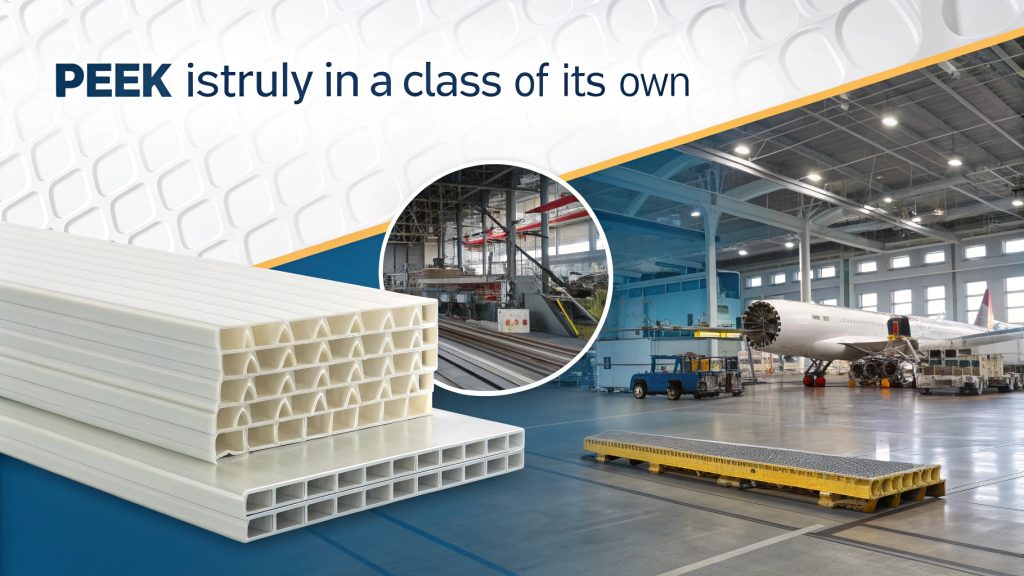
PEEK is truly in a class of its own. When a customer from the aerospace or medical industry comes to me, PEEK is often on their list. The price is higher, for sure, but you are paying for incredible performance and peace of mind. It’s much stronger and stiffer than most other plastics and retains these properties even when it gets very hot. I remember a project for a medical device company. They needed a part that could be sterilized in an autoclave many times without degrading. PEEK was the only plastic that could meet this tough requirement. It also resists almost any chemical you can think of. So, while materials like Nylon or PC are great for many jobs, PEEK is the solution for the most demanding applications where failure is not an option.
What is the best material for CNC frame
Building a CNC machine and unsure what to use for the frame? The frame’s stability is critical. A weak or vibrating frame will ruin the accuracy of your parts, making your machine useless.
While metal is common, high-density plastics like Garolite (G-10) or cast tooling plate are excellent choices for CNC frames. They offer great vibration damping, are easy to machine, and are more affordable than steel or aluminum. They provide the necessary rigidity for precise machining operations.
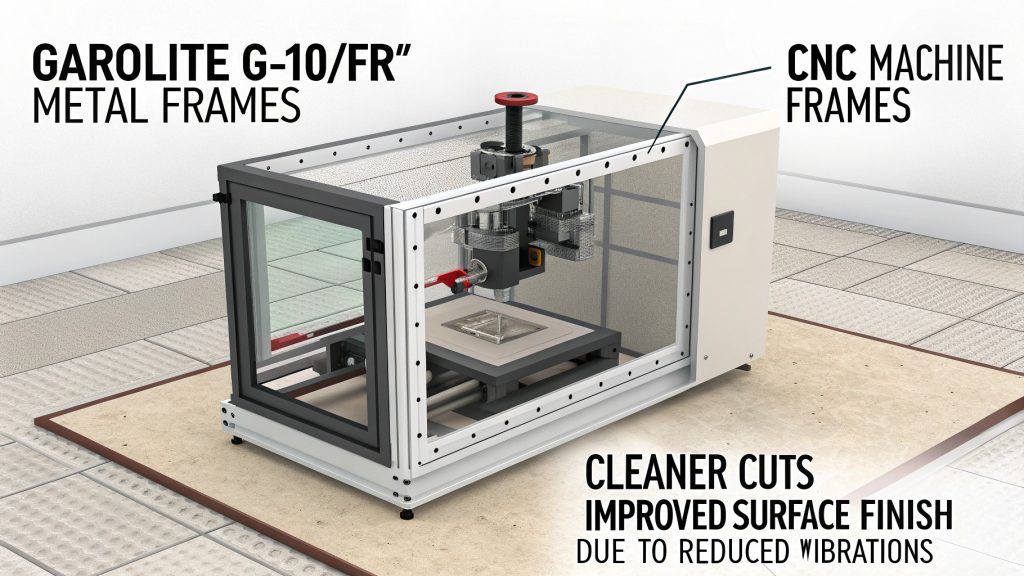
When people think of machine frames, they usually think of metal, like aluminum or steel. And for large industrial machines, that's often the right choice. But for smaller, custom, or desktop CNC machines, high-performance plastics can be a better option. I've helped several startups build their prototype machines. We often use Garolite G-10/FR4. It's a glass-reinforced epoxy composite that is incredibly strong, stable, and doesn't expand or contract much with temperature changes. A key benefit is its ability to damp vibrations.
Metal frames can sometimes resonate, which hurts the surface finish of the part. G-10 absorbs those vibrations, leading to cleaner cuts. It is also lighter and often easier to machine than a big block of aluminum. For many applications, a well-designed plastic composite frame delivers the required performance without the cost and
weight of metal.
Is HDPE plastic good for machining?
Considering HDPE for your project but worried about its machinability? You've heard it's cheap, but you're concerned it might be too soft or won't hold tolerances well. This could lead to unusable parts.
Yes, HDPE (High-Density Polyethylene) is very good for machining. It is a soft, low-friction material that is easy to cut, doesn't dull tools, and produces clean finishes. It's an excellent, cost-effective choice for prototypes, non-load-bearing components, and parts requiring chemical resistance.
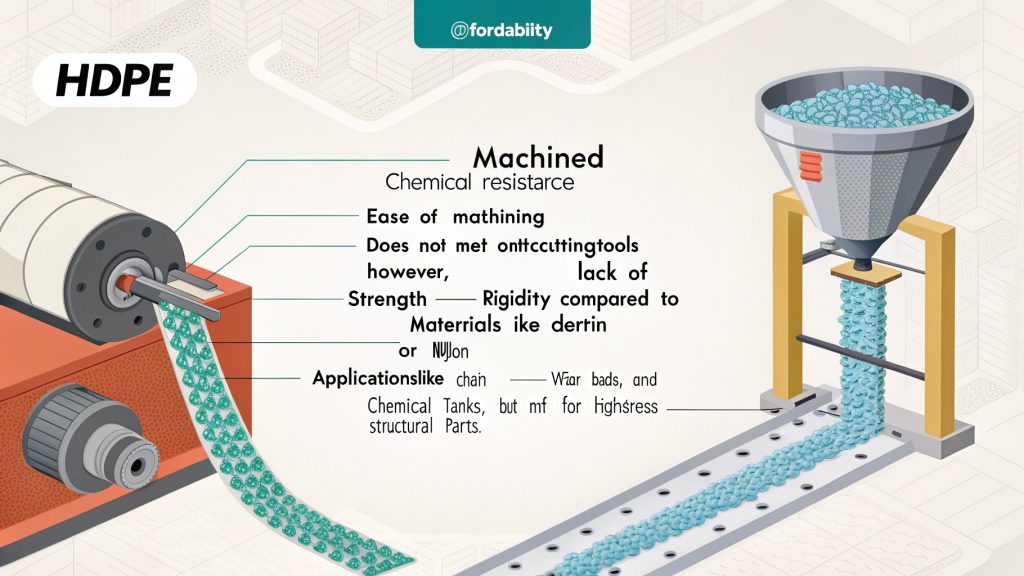
HDPE is one of the most popular materials we work with at Worthy, especially for customers in industries like food processing or industrial fluid handling. It is very affordable and has amazing resistance to chemicals. The machining process itself is very smooth. The plastic chips come off cleanly in long ribbons, and you don't have to worry about the material melting onto the cutting tool, which can happen with some other soft plastics.
However, you need to understand its limitations. HDPE is not very strong or rigid compared to materials like Delrin or Nylon. It also expands and contracts a lot with temperature changes. This means we can't hold extremely tight tolerances like we could with PEEK or metal. So, it's perfect for things like chain guides, wear pads, or chemical tanks, but not for high-stress structural parts.
Conclusion
Choosing the best plastic depends on your part's needs. From versatile ABS and tough PEEK to machinable HDPE, we can help you find the right material for your project.