
What Is Shore A Hardness and Why Does It Matter for Your CNC Parts?
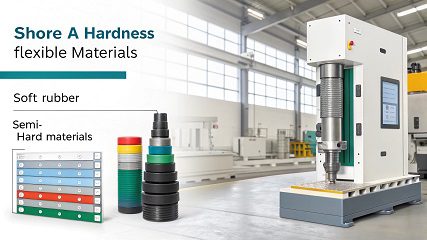
Choosing the wrong material softness can ruin your project. This mistake leads to part failure and wasted money. Understanding Shore A hardness prevents this from happening to you.
Shore A hardness measures the softness of flexible materials like rubber and soft plastics. It is crucial for your CNC parts because it determines a material's suitability for its final application, ensuring durability and proper function. It helps you pick the right material for the job.
Choosing the right material is a big decision for any project. Hardness is a key factor that many people can overlook. This property affects everything from how the part feels in your hand to how long it will last in the field. Let's look closer at why this measurement is so important for your projects and how you can use it to your advantage.
What is the purpose of Shore hardness?
You need a reliable way to compare the softness of different materials. Without a standard measurement, you are just guessing, which can lead to very costly production errors. Shore hardness provides a clear, numerical value.
The main purpose of Shore hardness is to provide a standardized measurement of a material's resistance to indentation. It helps engineers and designers select the right material with the correct flexibility for a specific application. This ensures consistent quality and performance across production runs.
Shore hardness gives us a simple number to talk about a material's softness or hardness. The measurement is taken with a tool called a durometer. At my company, Worthy, we often use an A-type Shore durometer. This instrument is a key tool for measuring Shore hardness. It is perfect for general rubber, synthetic rubber, and soft rubber. It also works well for other materials like polyester, leather, and even wax. The durometer presses a specific shaped indenter into the material under a specific force.
The depth of the indentation gives us the Shore hardness value. This number is critical for quality control. It makes sure that the raw material we receive and the final parts we ship meet the exact specifications of our customers. I remember a client in Canada needed a custom gasket. We used the Shore A scale to test several rubber samples. This helped them find the perfect balance of flexibility and durability for their product.
How does the hardness of a material affect the machining process?
Are your CNC machining costs too high? Harder materials can wear out your tools very quickly and slow down production. This increases your expenses. Understanding material hardness helps optimize the machining process and control costs.
Material hardness directly impacts CNC machining. Softer materials are generally easier and faster to cut, which reduces tool wear and machining time. Harder materials require slower speeds, specialized cutting tools, and more robust machinery. This can increase the overall cost and complexity of manufacturing the part.
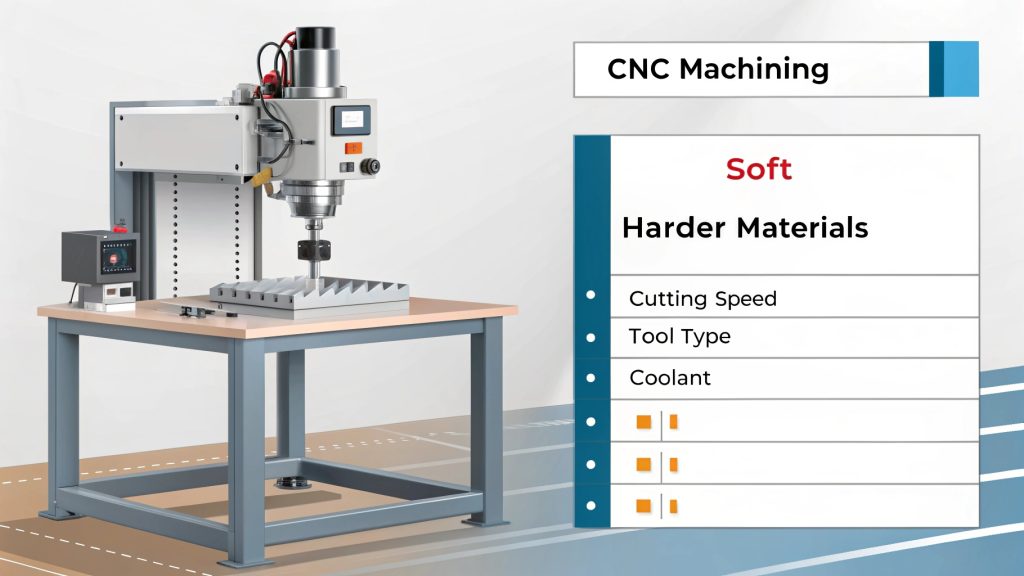
When we plan a CNC machining job, the material's hardness is one of the first things we consider. It tells our engineers how to set up the machines. For example, a soft material like nylon can be machined much faster than a hard material like tool steel. We can use higher spindle speeds and faster feed rates for softer materials. This saves time and money.
However, some very soft materials can be "gummy" and difficult to machine cleanly. They might melt or deform if the tool gets too hot. For harder materials, we must use much slower cutting speedsto avoid breaking the cutting tools. We also use tougher tools, like those made from carbide, and we often need to use coolant to manage heat and friction. This careful planning prevents tool damage and ensures the final part has a good surface finish and accurate dimensions.
Here is a simple table to show the difference:
| Feature | Softer Materials (e.g., Nylon) | Harder Materials (e.g., Steel) |
|---|---|---|
| Cutting Speed | High | Low |
| Tool Wear | Low | High |
| Machining Time | Short | Long |
| Surface Finish | Can be challenging (gummy) | Often smoother |
| Cost | Lower | Higher |
What is the difference between the Shore A and D hardness scales?
You see Shore A and Shore D mentioned but do not know the difference. Choosing the wrong scale can lead to selecting a completely unsuitable material for your application. You can learn the simple distinction now.
The key difference is the materials they measure. The Shore A scale is for soft, flexible materials like rubber and soft plastics. The Shore D scale is for harder materials like hard rubbers, semi-rigid plastics, and hard plastics. The measurement tools and their indenters are also different.
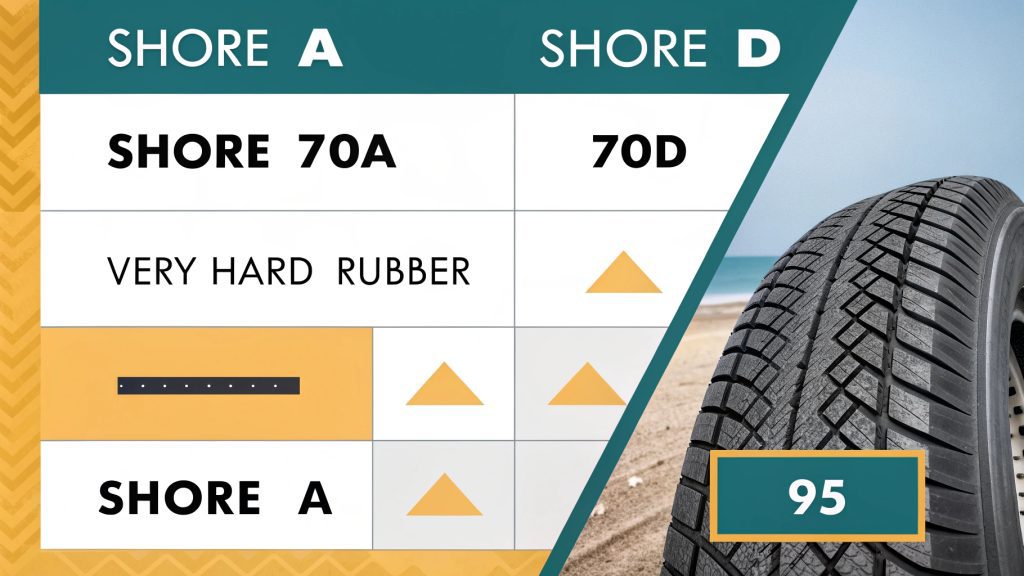
The main physical difference between the two scales is the shape of the indenter on the durometer tool. The Shore A scale uses an indenter with a flat, truncated cone. This shape is good for measuring softer materials without piercing them. The Shore D scale uses a sharper, pointed cone indenter. This point can penetrate the surface of harder plastics to get an accurate reading. There is some overlap between the scales.
For instance, a very hard rubber with a Shore A value of 95 is similar in hardness to a softer plastic with a Shore D value of around 45. A customer once specified a part with "Shore 70" hardness. I had to ask them if they meant Shore A or Shore D. A Shore 70A part is a firm rubber, like a tire tread. A Shore 70D part is a very hard plastic, like a hard hat. Clarifying this saved the entire project from failure and a lot of wasted money.
| Scale | Measured Materials | Example Products | Indenter Shape |
|---|---|---|---|
| Shore A | Soft elastomers, rubbers, flexible plastics | Rubber bands, soft gaskets, shoe soles | Truncated Cone |
| Shore D | Hard rubbers, semi-rigid plastics, hard plastics | Hard hats, shopping cart wheels, PVC pipes | 30° Pointed Cone |
Why is the hardness of a material important?
You might be focused only on a material's strength or its cost. But ignoring hardness can cause parts to wear out, deform, or break unexpectedly in use. You need to understand that hardness is vital for durability.
Material hardness is important because it predicts how a part will perform in the real world. It affects a product's durability, wear resistance, scratch resistance, and ability to function as intended. It is a critical specification for ensuring a part's quality and long-term reliability.
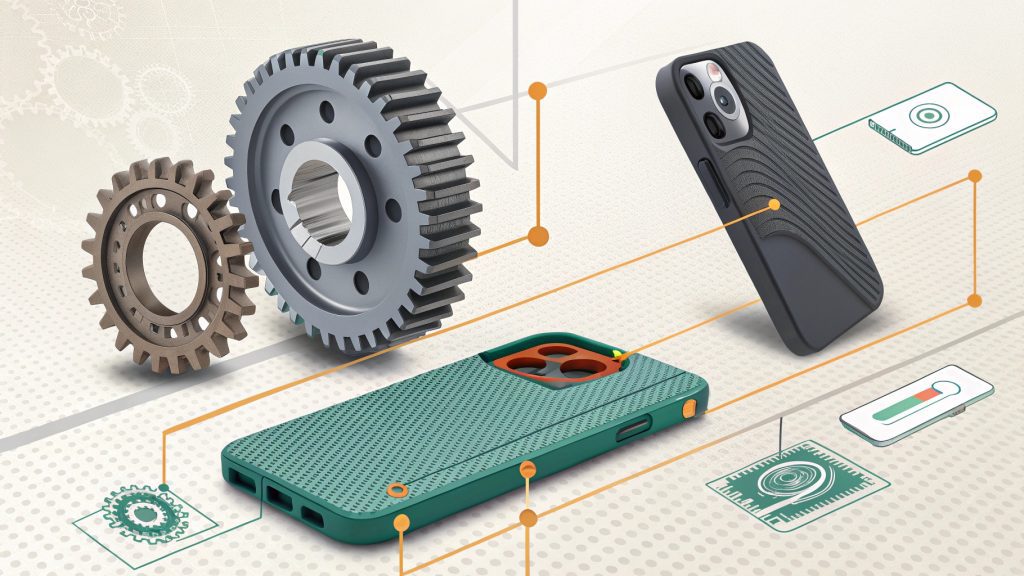
Hardness is directly related to a part's lifespan. For example, if you are making a gear, it needs to be hard enough to resist wear from constant contact with other gears. If it is too soft, the teeth will wear down quickly, and the machine will fail. On the other hand, if you are designing a protective case for a phone, you might want a softer material. A softer material can absorb the energy from a drop and prevent the phone from breaking.
A very hard material might just crack on impact. The function of the part dictates the required hardness. A seal must be soft enough to compress and create a tight barrier against liquid or gas. A structural component must be hard enough to resist bending or deforming under a load. At Worthy, this is a key part of our design review process with clients from places like North America and Europe. We help them match the material property to the job.
Conclusion
Understanding Shore hardness is essential. It helps you select the right material, optimize machining, and ensure your CNC parts perform perfectly and last a long time for your customers.