
What is CNC Grinding, and How Does It Work
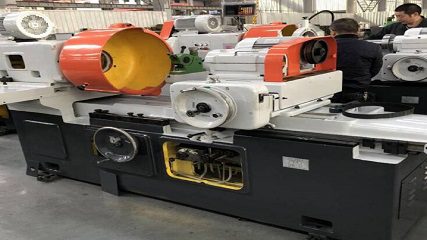
Struggling to get that perfect mirror finish and ultra-precise dimensions on your parts? When standard machining isn't enough, CNC grinding provides the ultimate finishing touch for your components.
CNC grinding is a precision machining process that uses a computer-controlled rotating abrasive wheel to remove tiny amounts of material from a workpiece. Its main purpose is not bulk removal but achieving achieving extremely tight tolerances, often down to ±0.001mm (+/- 0.00004 inches), a capability we are proud to offer at Worthy, superior surface finishes, and precise geometric shapes that other methods can't match.
At Worthy, we often get requests for parts that demand incredible accuracy. I remember a client who needed a series of custom shafts where the tolerance was just a few microns. For jobs like that, CNC grinding isn't just an option; it's the only way to guarantee the result. It's our go-to process for the most demanding projects. Let's look closer at what this process is and why it's so important.

What is grinding in CNC?
In simple terms, CNC grinding is a finishing process. Think of it like using super-precise, automated sandpaper. After a part has been shaped by milling or turning, it might still have tiny imperfections or not be exact enough for its final use. Grinding is the step that fixes this.
The process uses a high-speed rotating wheel made of abrasive particles. This wheel spins against the workpiece and carefully shaves off very small amounts of material. The main goal isn't to remove a lot of metal or plastic. Instead, it’s all about refining the surface. We use it to create mirror-like finishes and to make sure the dimensions are perfect, sometimes down to 0.001mm. It is the key to achieving the highest levels of precision.
I recall a project for a client in the medical device industry in Canada. They needed a series of custom titanium shafts for a surgical instrument. The design specified a tolerance of ±0.003mm and a surface roughness of Ra 0.2μm to ensure perfect biocompatibility and smooth operation. Standard turning couldn't meet this. Through our cylindrical grinding process and rigorous inspection, we delivered parts that exceeded their requirements, solving a critical production challenge for them
What is CNC on a grinder?
The "CNC" part of CNC grinding is what makes it so powerful. CNC stands for Computer Numerical Control. This means a computer program controls the entire grinding process, instead of a person doing it by hand.
On a manual grinder, an operator has to move the part and the grinding wheel, relying on their skill and eyes to get it right. With CNC, we load a digital design file into the machine. The computer then directs every movement with incredible accuracy. It controls:
- The speed of the grinding wheel.
- The exact position of the wheel against the part.
- The movement of the workpiece.
- The amount of pressure applied.
This automation means every single part we make is identical to the last one. It removes human error and allows us to create complex shapes with a level of repeatability that is impossible to achieve manually. For clients in industries like aerospace or medical, where every part must be perfect, this is not just a benefit; it is a requirement.
The Working Principle of CNC Grinding
The working principle of a CNC grinding machine is straightforward but highly effective. It can be broken down into a few key steps.
First, one of our engineers takes your part design and creates a set of instructions for the CNC machine. This program tells the machine exactly what to do.
Next, we securely fix the workpiece onto the machine's bed. The correct grinding wheel is then installed. We have different wheels and optimized parameters for a wide range of our 100+ available materials, from 6061 aluminum and 316 stainless steel to advanced plastics like PEEK..
Then, the process begins. The computer runs the program, and the grinding wheel starts to spin at a very high speed. The machine moves the workpiece, the wheel, or both, according to the programmed path. The wheel makes contact with the part, and the tiny abrasive grains on its surface shear away microscopic chips of material. Coolant is constantly flushed over the part to prevent overheating and to wash away the tiny bits of removed material. This keeps the process stable and the finish clean.
This continues until the final dimensions and surface finish are achieved. Because the computer controls everything, the process is incredibly precise and efficient, delivering a perfect part every time.
Different Types of CNC Grinding
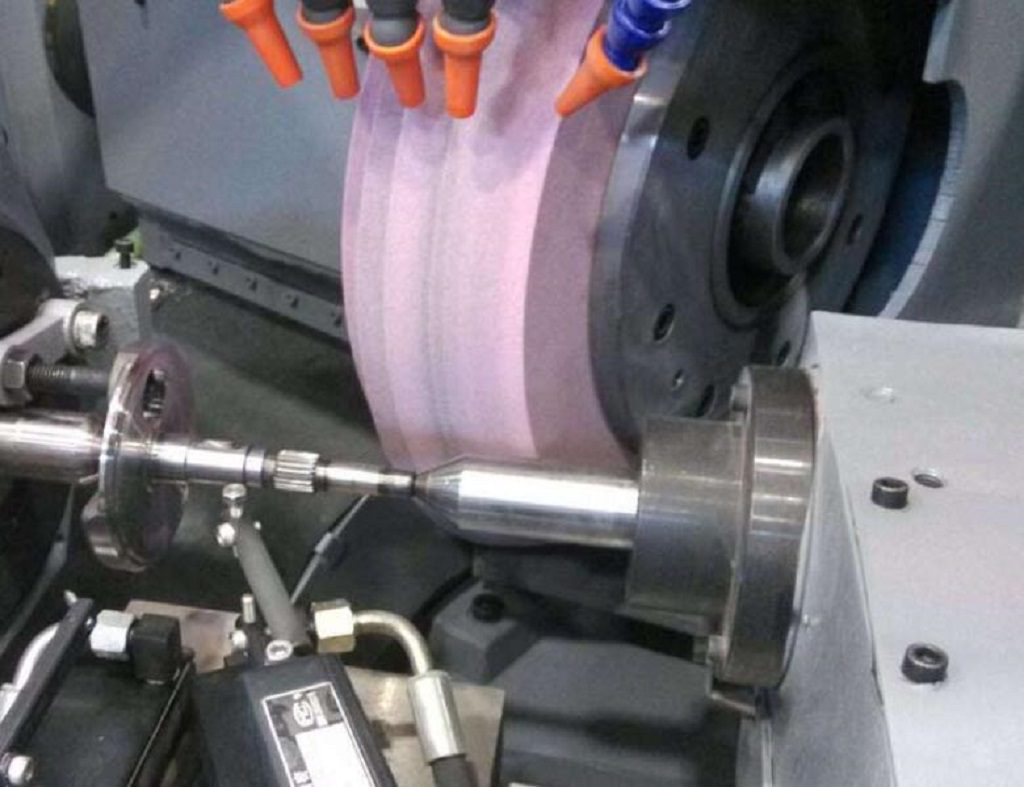
There isn't just one type of CNC grinding. We use different methods depending on the shape of the part and the features we need to create. Here are a few common types:
Surface Grinding
This is used to produce flat surfaces. The workpiece is held on a flat magnetic chuck, and the grinding wheel moves back and forth over the surface to make it perfectly smooth and level.
Cylindrical Grinding
As the name suggests, this is for grinding cylindrical parts, like shafts and rods. The workpiece is rotated between two centers while a grinding wheel moves along its surface. We use this to achieve perfect roundness and a smooth finish on the outside diameter.
Internal Grinding
This is the opposite of cylindrical grinding. It is used to grind the inside surface of a hole. A small grinding wheel is used to make the internal diameter perfectly round and precise. This is essential for parts like bearings and bushings.
Centerless Grinding
This is a high-volume method for grinding cylindrical parts without needing to mount them between centers. The workpiece is held between the grinding wheel and a regulating wheel, which controls the rotation of the part. It’s a very fast and efficient process for producing large quantities of small, cylindrical components.
This is our go-to method for a North American automotive client who needs tens of thousands of steel dowel pins monthly. It allows us to maintain tight tolerances while offering a highly competitive price due to its efficiency
What is the description of grinding?
At its core, grinding is what we call an abrasive machining process. This sounds complicated, but the idea is simple. Unlike milling or turning, which use a single cutting edge to slice off material, grinding uses a wheel made of thousands of tiny, hard, and sharp particles.
Think of it like this: cutting with a knife is like milling. You remove a big piece at once. Sanding a piece of wood with sandpaper is like grinding. You are removing very small amounts of material with many tiny sharp points to get a perfectly smooth surface.
That’s exactly what grinding does, but on a much more precise level with materials like steel, aluminum, and even titanium. Each tiny abrasive grain on the grinding wheel acts as a microscopic cutting tool. As the wheel spins at high speed, these grains shave off incredibly small chips from the workpiece. This controlled, fine removal is what allows us to achieve such high accuracy and a mirror-like finish. So, the best description of grinding is a precision finishing process that uses abrasion to perfect a part's size, shape, and surface.
What is the grinding method?

When a customer comes to us with a project that requires grinding, we follow a very specific method to ensure we get it right every single time. It's a systematic approach that guarantees quality from start to finish.
First, our engineers review the design. We look closely at your drawings, paying special attention to the tolerances and the required surface finish. This helps us decide on the best type of grinding machine and the exact kind of grinding wheel we need for your specific material. Our standard tolerances are held to ISO 2768-m, but we specialize in precision grinding to achieve much tighter specifications as required by your drawings
Next is the setup. This is a critical step. We program the CNC machine with the precise instructions. The workpiece is carefully secured so it won't move even a fraction of a millimeter during the process. We also prepare the grinding wheel itself through a process called "dressing." This ensures the wheel's surface is perfectly flat and sharp, which is essential for accuracy.
Then, the grinding operation begins. The machine executes the program, moving the wheel and the part in perfect harmony. A constant flow of coolant is used to prevent the part from overheating, which could change its properties or ruin the finish. The coolant also washes away the tiny metal particles, keeping the working area clean.
Finally, every part goes to our inspection department. This is a non-negotiable step at Worthy. We use advanced measuring equipment to check every dimension and verify the surface roughness. We don't ship anything until we are 100% certain that it perfectly matches your specifications. This method ensures that what you designed is exactly what you get.
What exactly does CNC stand for?
This is a question I get from time to time, and it's a great one because it gets to the heart of modern manufacturing. CNC stands for Computer Numerical Control.
Let's break that down. "Computer" is the easy part. It means the machine is controlled by a computer. "Numerical Control" means the computer uses numbers—specifically, coordinates on a digital map—to control the machine's movements.
In the old days, a skilled machinist would stand at a machine, turning wheels and pulling levers by hand to create a part. They relied on their hands, eyes, and years of experience. With CNC, we translate a digital design file into a program made of code. This code tells the machine exactly where to move, how fast to go, and what tool to use.
For my customers, this is the most important part. Because a computer is in control, we can achieve a level of precision and consistency that is almost impossible by hand. Every single part is an exact copy of the one before it. This technology is the reason we at Worthy can confidently promise tolerances as tight as +/- 0.005" on every single order, from the first piece to the ten-thousandth.
How much do CNC grinders make?
This is an interesting question because it highlights the importance of the human element in our very technical business. The question is about the salary of the skilled operator, and the simple answer is that it varies a lot. It depends on their location, years of experience, and the industry they work in. A highly skilled CNC grinder in the aerospace industry will make more than someone just starting in a general job shop.
But from my perspective as a business owner, the more important question for my clients is, "What is the value of that skill?" When you order parts from us, you're not just renting time on a machine. You are paying for the expertise of the engineer who programs it and the machinist who runs it.
First, one of our four senior engineers, each with rich experience in design-for-manufacturability, reviews your file. They don't just create a program; they look for ways to optimize the process, potentially saving you costs. A great operator can look at a part, listen to the machine, and know exactly how to adjust the process to get a better finish or a tighter tolerance. They can solve problems before they even become problems. This skill saves time, reduces waste, and is the ultimate guarantee of quality. So while their salary is a business cost, their expertise is an essential investment that ensures every part we ship from Worthy is absolutely perfect.
What is a type 7 grinding wheel?
The "type" number of a grinding wheel simply tells you its shape. There are many different shapes, and each one is designed for a specific job.
A Type 7 grinding wheel is a wheel that is recessed on both sides. Imagine a standard flat wheel, which is called a Type 1. Now, imagine carving out a circular area on both sides, around the center hole. That gives you a Type 7 wheel.
So, why would we need this shape? It’s all about clearance. The parts that hold the wheel onto the machine are called mounting flanges. On a flat Type 1 wheel, these flanges stick out. The recesses on a Type 7 wheel allow these flanges to sit deeper inside the wheel's profile.
This design is incredibly useful when we need to grind a surface that is right next to a shoulder or another raised feature on the part. The recessed shape lets us get the abrasive edge of the wheel right into that corner without the mounting hardware getting in the way. It’s one of those small details in tooling that makes a huge difference in our ability to produce complex parts accurately.
Choosing the right wheel type is critical. An incorrect choice can lead to wheel chatter or burning the workpiece, compromising the surface finish. Our engineers' expertise ensures the perfect wheel is selected for your specific geometry and material
Why Trust Worthy for Your Precision Grinding Needs?
We understand that inefficient communication is a major frustration. At Worthy, you have direct access to our engineering team. We provide clear, proactive updates, ensuring you're never in the dark about your project's status.
For us, quality is not an afterthought. It's built into our process. Every ground part undergoes a 100% inspection using advanced measuring equipment before it ships. We provide inspection reports upon request, so you have complete peace of mind, knowing that what you receive is exactly what you ordered
We know that meeting your production deadlines is critical. We offer flexible delivery times and a transparent production schedule to help you avoid missing your peak sales seasons
Ready to achieve the perfect finish and precision for your parts?
Whether you have a complex design with tolerances down to ±0.001mm or need a reliable partner for high-volume production, our team at Worthy is here to help. We combine expert knowledge with a commitment to 100% inspection and on-time delivery.
Contact me, Sandra Gao, directly at [email protected] or request a free quote on our website today. Let's discuss how we can solve your manufacturing challenges.”