
What Industries Benefit Most from CNC Routing Services?
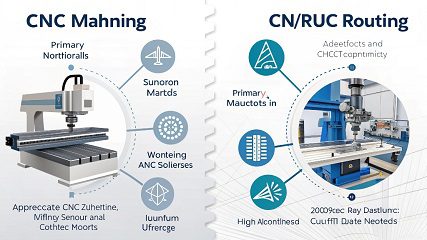
Struggling to create large, intricate designs with precision? This limitation can increase costs and waste materials, hindering your product's potential. CNC routing services offer the perfect, versatile solution for you.
CNC routing services are most beneficial for industries that work with large sheet materials. This includes woodworking for furniture and cabinetry, sign making for advertising, and prototyping for product development, especially with plastics, wood, and composites.
I've seen firsthand how the right technology can transform a business. My clients, like Mark from Canada, are always looking for quality and efficiency. They know that choosing the right manufacturing process is key to staying competitive. CNC routing is one of those game-changing technologies, but its benefits are not always obvious. Let's explore which sectors truly get the most out of it and see how it might fit into your own production needs.
Which industries mostly use CNC machines?
You know CNC technology is widely used, but it's hard to pinpoint where it’s most essential. This makes it challenging to understand its full potential for your projects.
Industries that demand high precision and repeatability rely heavily on CNC machines. Key sectors include aerospace, automotive, medical, and consumer electronics, where complex metal and plastic parts are a daily requirement.

When people talk about CNC machining, they often think of the high-stakes world of aerospace or automotive manufacturing. And they're right. At my company, Worthy Hardware, we create incredibly precise parts for these industries using 5-axis milling and turning. We work with materials like titanium and high-grade aluminum, holding tolerances as tight as +/- 0.001 inches. But CNC is a broad field. It's important to understand the difference between general CNC machining and the specific application of CNC routing.
CNC Machining vs. CNC Routing
CNC machining is the umbrella term for computer-controlled manufacturing processes like milling and turning. CNC routing is a specific type of CNC machining. Routers typically have large workbeds and are designed to cut softer materials from large sheets.
Here’s a simple breakdown of where each process shines:
| Industry Sector | Primary CNC Process | Common Materials | Key Benefit |
|---|---|---|---|
| Aerospace & Defense | 5-Axis Milling, Turning | Titanium, Aluminum, Inconel | Extreme Precision & Complexity |
| Automotive | Milling, Turning | Steel, Aluminum, Mold Plastics | High Volume & Repeatability |
| Woodworking/Furniture | Routing | Wood, MDF, Plywood | Large-Scale Cutting & Carving |
| Sign-Making | Routing | Acrylic, PVC, Aluminum | Intricate Lettering & Shapes |
While we machine complex metal parts for automotive clients, we also use our routing capabilities for clients in design or consumer products who need large prototypes from plastic or wood. It's all about matching the right tool to the job.
What industries need CNC machining?
Unsure if CNC machining is right for your specific industry? Without this clarity, you might be missing out on major improvements in efficiency, quality, and cost savings for your products.
Essentially, any industry that requires precise, repeatable, and complex parts needs CNC machining. This ranges from medical device manufacturing and electronics to industrial machinery, consumer product design, and even education.

From my experience working with clients worldwide, the need for CNC machining is almost universal. One day, I might be discussing a project for a medical device company in Europe that needs flawless, biocompatible parts. The next, I’m helping a hardware startup in North America prototype a new electronic enclosure. The core need is always the same: turning a digital design into a perfect physical object. This is especially true when quality and consistency are non-negotiable.
The Universal Need for Precision
Think about the device you're using to read this. Its casing, internal brackets, and connectors were almost certainly made using CNC machines. The same goes for the parts in your car or the surgical tools in a hospital. This technology is the backbone of modern manufacturing.
At Worthy Hardware, we serve an incredibly diverse range of customers:
- Medical and Dental: We create custom surgical guides and device components where precision is a matter of safety.
- Consumer Products: We help bring new gadgets to life, from initial prototypes to full production runs.
- Industrial: We manufacture robust components for machinery and automation systems that need to withstand heavy use.
- Robotics: This fast-growing field relies on custom CNC parts for everything from structural frames to complex joints.
Even if you’re not in a high-tech field, CNC routing can be vital. We work with designers who need perfectly cut furniture pieces or artists creating large-scale installations. The ability to produce a reliable, high-quality part from a digital file is a universal advantage.
Where do CNC operators make the most money?
Wondering where the most lucrative opportunities in CNC machining are? Knowing this helps you understand the value and complexity of different manufacturing applications, guiding your own supplier choices.
CNC operators earn the most in industries that require the highest levels of skill and precision. This typically includes aerospace, defense, and the medical device sector, where working with exotic materials and incredibly tight tolerances is standard.

The salary of a CNC operator is a great indicator of the complexity of the work involved. An operator cutting signs from acrylic sheets has a very different skillset than a machinist programming a 5-axis machine to create a turbine blade for a jet engine. My team of engineers has years of experience, and that's why we can confidently help customers improve designs and handle difficult projects. This expertise is what high-value industries pay for.
Skill, Materials, and Industry Demand
Several factors determine why certain sectors pay more for CNC expertise. It's not just about pushing a button; it's about deep knowledge and problem-solving skills.
Factors Driving Higher Pay and Costs:
- Material Difficulty: Machining titanium or a super-alloy like Inconel is far more challenging and expensive than machining aluminum or wood. The material is costly, and a single mistake can scrap a part worth thousands of dollars.
- Tolerance Requirements: Standard tolerances might be +/- 0.005". For our aerospace and medical clients, we often work to sub +/- 0.001" tolerances. This requires better machines, advanced measurement tools, and highly skilled operators.
- Complexity (GD&T): Geometric Dimensioning and Tolerancing (GD&T) defines how features on a part relate to each other. Complex GD&T callouts, common in aerospace and defense, require advanced programming and inspection skills.
This is why a job in the aerospace industry in North America or Europe will command a higher salary. The risks are higher, the materials are more expensive, and the required precision is extreme. As a manufacturer in China, we offer a competitive advantage by providing access to this high-level skill at a more sustainable cost, without compromising on quality.
What are the advantages of CNC routing?
You've heard CNC routing is useful, but what are the specific benefits for your business? Without knowing the advantages, you can't justify the investment or see its true impact.
The main advantages of CNC routing are its incredible precision, repeatability, and efficiency for cutting large sheet materials. It reduces material waste, allows for complex designs, and speeds up production significantly compared to manual methods.

When I speak with new clients, especially those from industries like furniture making, sign making, or cabinetry, their biggest pain points are often slow production times and inconsistent quality. Manual cutting is labor-intensive and prone to human error. One bad cut can ruin an entire expensive sheet of plywood or acrylic. This is where I explain the transformative power of CNC routing. It takes the guesswork and variability out of the equation.
Key Benefits for Your Production
The switch from manual to automated routing isn't just an upgrade; it’s a complete change in what’s possible.
Top 4 Advantages:
- Precision and Consistency: A CNC router follows the digital instructions perfectly every single time. Every part is an exact copy of the last. This is crucial for products that require assembly, like flat-pack furniture.
- Efficiency and Speed: The machine works faster than any human and doesn't need breaks. This drastically cuts down on lead times, helping clients like Mark avoid missing peak sales seasons due to production delays.
- Reduced Material Waste: Advanced software can arrange multiple parts on a single sheet in the most optimal way, a process called "nesting." This minimizes scrap material, which directly saves money.
- Design Freedom: Complex curves, intricate patterns, and detailed engravings are easy for a CNC router. Designs that would be impossible or incredibly time-consuming to create by hand become simple and affordable to produce.
At Worthy Hardware, we use our large-format routing capabilities to help customers create everything from detailed architectural models to full production runs of consumer goods.
Conclusion
CNC routing excels in woodworking, sign making, and prototyping. It offers precision and efficiency for any industry working with large sheet materials, transforming production and enabling complex, repeatable designs.