
What Industries Benefit Most from CNC Machined ABS Components?
Are you trying to find a strong, reliable plastic for your project? ABS is a great choice, but knowing if it's right for your industry is the key.
Industries like automotive, consumer electronics, and medical devices benefit the most from CNC machined ABS. They choose it for its excellent strength, high impact resistance, and great machinability, making it perfect for both functional prototypes and final production parts that need to be durable.
I've worked with ABS for years at my company, Worthy Hardware. It’s one of the most versatile plastics we machine. Many of my clients, especially those in fast-moving industries, rely on it to bring their designs to life quickly and affordably. They need parts that can take a hit without breaking and look good while doing it. ABS delivers on all fronts. Let’s dive deeper into the specific industries that get the most out of this material and why CNC machining is the perfect way to shape it.
What are some industries that heavily rely on CNC machining?
Need high-precision parts for your business? You might be surprised how many top industries depend on the accuracy and consistency that only CNC machining offers.
The aerospace, automotive, medical, and electronics industries are some of the biggest users of CNC machining. They require it to manufacture complex, high-tolerance components from metals and plastics that are absolutely critical for performance and safety.
In my experience, CNC machining is not just a manufacturing method; it's a foundational technology for modern innovation. For example, I have a long-term client from Canada, Mark, who owns an automotive parts company. He needs parts that are identical every single time, whether he orders 10 or 10,000. CNC machining is the only way to get that level of repeatability. Different industries need it for different reasons.
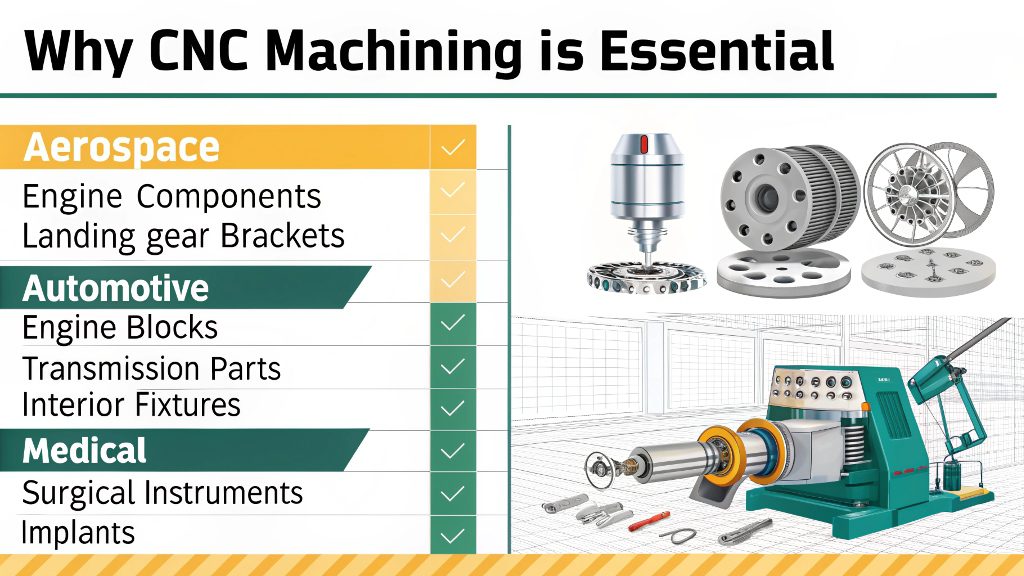
Why CNC Machining is Essential
| Industry | Common CNC Machined Parts | Key Reason for Using CNC |
|---|---|---|
| Aerospace | Engine components, landing gear, brackets | Unmatched precision for safety-critical parts, lightweight materials. |
| Automotive | Engine blocks, transmission parts, interior fixtures | High-volume consistency and tight tolerances for performance. |
| Medical | Surgical instruments, implants, device housings | Biocompatible materials and extreme accuracy for patient safety. |
| Electronics | Heatsinks, enclosures, connectors | Complex geometries and miniature parts for compact devices. |
These industries can't afford mistakes. A tiny error in an airplane part or a surgical tool can have huge consequences. That’s why they turn to CNC machining. It removes human error from the cutting process and can hold tolerances as tight as +/- 0.001", something we do regularly at Worthy Hardware. It’s this reliability that makes it the go-to choice for the world's most demanding applications.
What is ABS most commonly used for?
Thinking about using ABS plastic for your next part? Its common uses might surprise you. From your keyboard to your car's dashboard, ABS is everywhere for good reason.
ABS is most commonly used for making durable, impact-resistant consumer and industrial products. You'll find it in LEGO bricks, computer keyboard keys, power tool housings, and automotive interior components like dashboards and trim.
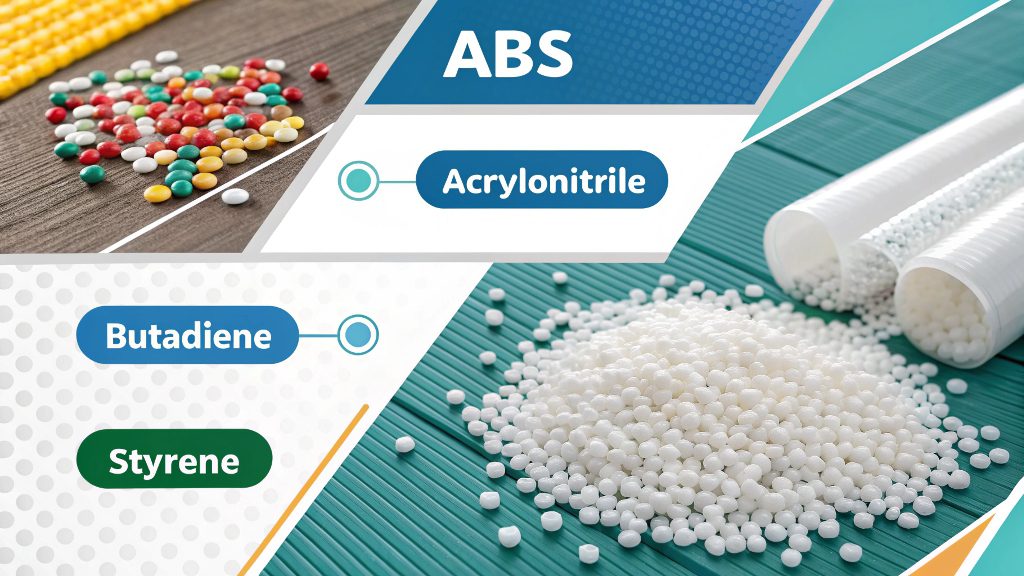
ABS, or Acrylonitrile Butadiene Styrene, is a true workhorse in the world of plastics. Its popularity comes from the unique combination of its three main ingredients. Each one brings something special to the table, making the final material tough, stable, and good-looking. I often recommend it to clients who need more strength than standard plastics but don't want the cost or weight of metal.
Breaking Down ABS Properties
- Acrylonitrile: This provides chemical resistance and heat stability. It means ABS parts won't easily degrade when exposed to many common chemicals and can handle moderate temperatures without deforming.
- Butadiene: This is a rubbery substance that gives ABS its legendary toughness and impact strength. It's the reason a part made from ABS can be dropped or struck without cracking, unlike more brittle plastics like acrylic.
- Styrene: This gives the plastic a rigid structure and a nice, glossy finish. It also makes ABS relatively easy to process, which is a huge benefit for us during CNC machining.
Because of these properties, ABS is the perfect middle-ground material. It's stronger than PLA but easier to machine than polycarbonate. It’s an excellent choice for functional prototypes that need to withstand testing, or for end-use parts that will see a lot of handling and daily use.
What industries need machined parts?
Wondering if CNC machining is the right fit for your business? So many industries would stop functioning without it. See if your needs match those of the biggest players.
Virtually every industry that creates a physical product needs machined parts at some stage. This includes aerospace, automotive, medical, industrial equipment, robotics, and consumer electronics. If a part requires precision, strength, or a complex shape, machining is often the best solution.
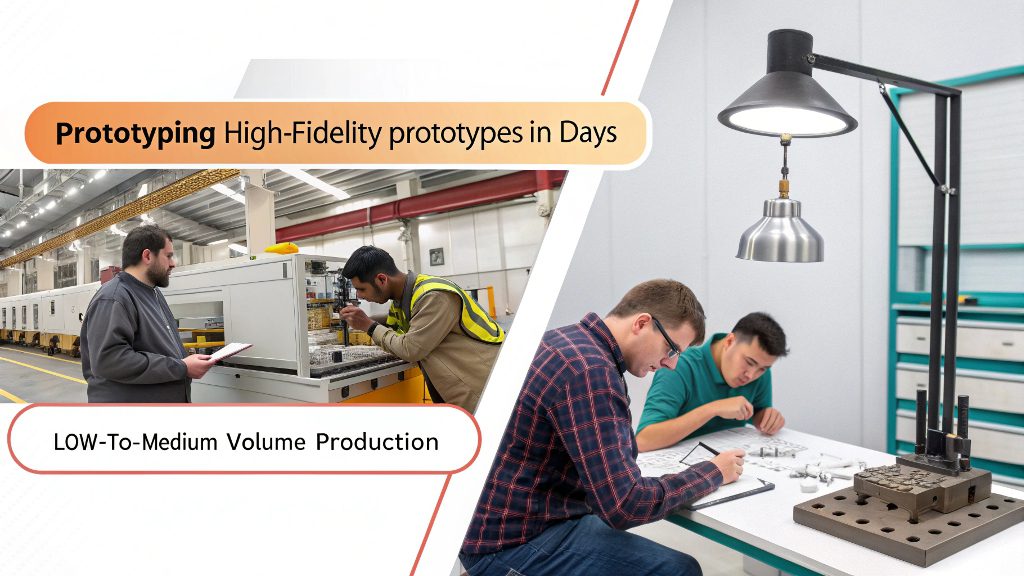
The need for machined parts goes beyond just mass production. In my business, I see companies from all sectors order machined parts for very different reasons. A hardware startup might need a single perfect prototype to show investors. A large factory might need a custom replacement part to fix a broken machine and avoid a long shutdown. CNC machining is flexible enough to handle both of these jobs. The core reasons a company chooses machining usually fall into a few key categories.
When to Choose CNC Machining
-
Prototyping: When you have a new design, you need to test it in the real world. CNC machining lets you create a high-fidelity prototype from the actual production material, like ABS or aluminum. This is much better than 3D printing if you need to test for strength and function. We can make a prototype in as little as 3 days.
-
Low-to-Medium Volume Production: Setting up an injection mold is very expensive. If you only need a few hundred or a few thousand parts, it's often much cheaper and faster to machine them directly. We have no minimum order quantity, so we can support projects from a single part to thousands.
-
Complex Geometries: When parts have intricate shapes, deep pockets, or strange angles, CNC machining is one of the only ways to make them accurately. Our 5-axis CNC machines can create incredibly complex parts in a single setup.
-
High-Strength Materials: Methods like 3D printing are limited to certain plastics. If you need a part made from steel, titanium, or a high-performance plastic like PEEK, machining is the way to go.
What are the applications of ABS in the automotive industry?
Are you designing parts for cars or trucks? ABS plastic might be your best bet. This tough, lightweight material is a favorite among automotive engineers for many different components.
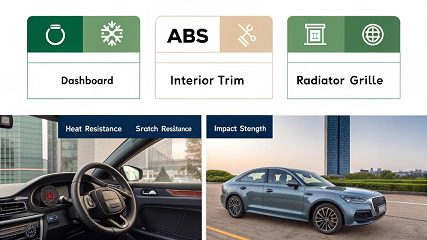
In the automotive industry, ABS is widely used for interior and exterior parts. Common applications include dashboards, center consoles, trim pieces, radiator grilles, and mirror housings. Its impact strength, heat resistance, and paintability make it ideal.
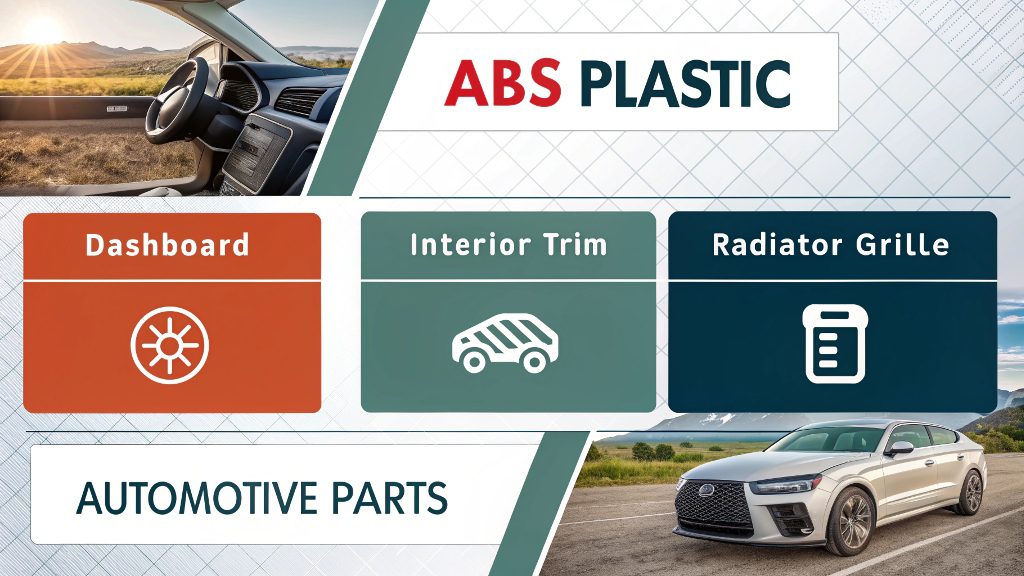
The automotive industry is one of the biggest consumers of ABS, and for good reason. Cars are complex products that have to withstand years of use, extreme temperatures, and constant vibration. Parts need to be safe, durable, lightweight to improve fuel efficiency, and look good. ABS checks all of these boxes, which is why we machine so many ABS parts for our automotive clients. From the moment you get in your car, you are surrounded by it.
Where You Find ABS in a Car
| Automotive Part | Key ABS Property | Benefit for the Vehicle and Driver |
|---|---|---|
| Dashboard | Heat Resistance, Texture | Prevents warping in the sun and provides a high-quality feel. |
| Interior Trim | Scratch Resistance | Keeps door panels and consoles looking new after years of use. |
| Radiator Grille | Impact Strength | Resists damage from road debris like stones and insects. |
| Mirror Housings | Paintability, UV Stable | Allows for a perfect color match and resists fading from sunlight. |
One of the most valuable uses of CNC machined ABS in the auto industry is for prototyping. Before a car company invests millions in molds for a new dashboard design, they will CNC machine several prototypes from ABS. These prototypes are dimensionally accurate and strong enough for real-world testing. They can be installed in a test vehicle to check for fit, clearance, and user experience. This step saves a huge amount of time and money by catching design flaws early. It’s a critical part of developing the safe and reliable cars we drive every day.
Conclusion
In short, CNC machined ABS is a powerful solution for industries like automotive and consumer electronics. Its strength, low cost, and great versatility make it a top choice for many projects.
For any inquiries about your next CNC machining project, feel free to contact me, Sandra Gao, at [email protected] or visit our website at www.worthyhardware.com.