
What Are the Pros and Cons of ABS Plastic for CNC Machining Projects?
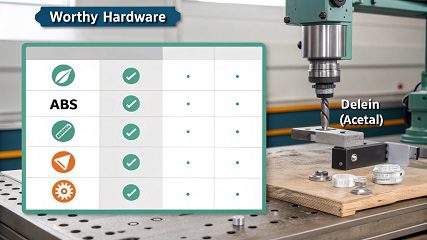
Choosing the wrong plastic for your CNC project can be a costly mistake. Imagine your prototype cracking or warping because the material just wasn't right for the job.
Acrylonitrile Butadiene Styrene (ABS) is a top choice for CNC machining due to its excellent toughness, impact resistance, and machinability. Its main drawbacks are poor UV and weather resistance, which can cause it to degrade outdoors, and a vulnerability to certain solvents and chemicals.
So, you have the quick answer. But is ABS the right material for your specific part? The details really matter here. Choosing the right material from the start saves you time, money, and a lot of headaches down the road. Let's dive deeper into the specific strengths and weaknesses of ABS, how it compares to other plastics, and what that means for your project. This will help you make a smart, informed decision.
What are the pros and cons of ABS plastic?
Using ABS without knowing its weaknesses can cause big problems. A part might look perfect when you get it, but then it could turn yellow and brittle in the sun.
The primary pros of ABS plastic are its high impact strength, good structural stiffness, and its ability to take an excellent surface finish. Its main cons are poor resistance to UV light, which makes it unsuitable for outdoor use, and lower resistance to certain solvents.
When we talk about a material, we need to look at its core properties. For ABS, the balance of these properties is what makes it so popular. It’s a bit of a jack-of-all-trades in the plastics world, but that also means it’s a master of none. Understanding this balance is key.
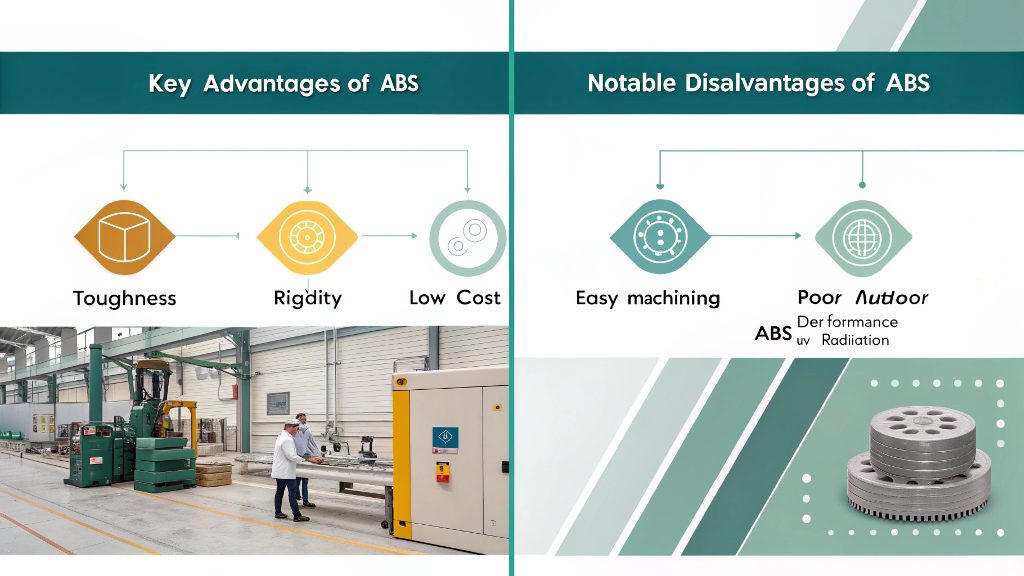
Key Advantages of ABS
ABS is known for being tough. You can drop an ABS part, and it's more likely to bounce than crack. This impact resistance makes it great for things that get handled a lot, like electronic enclosures or consumer products. It’s also quite rigid, so it holds its shape well under normal loads. On top of that, it's a low-cost material, which is a huge plus for both prototyping and mass production. From a manufacturing standpoint, it machines like a dream, creating clean cuts and smooth surfaces.
Notable Disadvantages of ABS
The biggest weakness of ABS is its poor performance outdoors. When you expose it to direct sunlight, the UV radiation makes it brittle and causes the color to fade or yellow. This is why you rarely see raw ABS used for outdoor applications. Another point to consider is its chemical resistance. While it holds up fine against water and many weak acids, it can be damaged by solvents like acetone, esters, and certain oils.
Here’s a simple table to break it down:
| Feature | Pros (Advantages) | Cons (Disadvantages) |
|---|---|---|
| Mechanical | High impact resistance, good toughness, and rigidity. | Lower fatigue strength than plastics like Nylon or Delrin. |
| Environmental | Stable in controlled indoor environments. | Degrades and yellows in sunlight (poor UV resistance). |
| Chemical | Good resistance to aqueous acids, alkalis, and oils. | Poor resistance to acetone, esters, and aromatic hydrocarbons. |
| Aesthetics | Easily colored and can achieve a high-gloss finish. | Can discolor with prolonged exposure to UV light. |
| Cost | Relatively low cost for an engineering plastic. | Can be more expensive than commodity plastics like Polypropylene. |
What are the advantages and disadvantages of ABS?
You know the properties, but how does that affect your project in the real world? Choosing ABS for an outdoor part could lead to failure, hurting your product's reputation.
Practically, ABS's advantages make it perfect for prototypes, consumer electronics housings, and car interiors because it's tough and looks good. Its main disadvantage is its unsuitability for anything used outdoors or exposed to harsh solvents unless it has a protective coating.
Theory is one thing, but application is everything. I've seen clients succeed brilliantly with ABS, and I've also helped clients move away from it when it was the wrong choice. The difference was knowing where the material shines and where it falls short in a real-world setting. A good choice here depends entirely on the part's final use and its environment.
Where ABS Shines: Common Applications
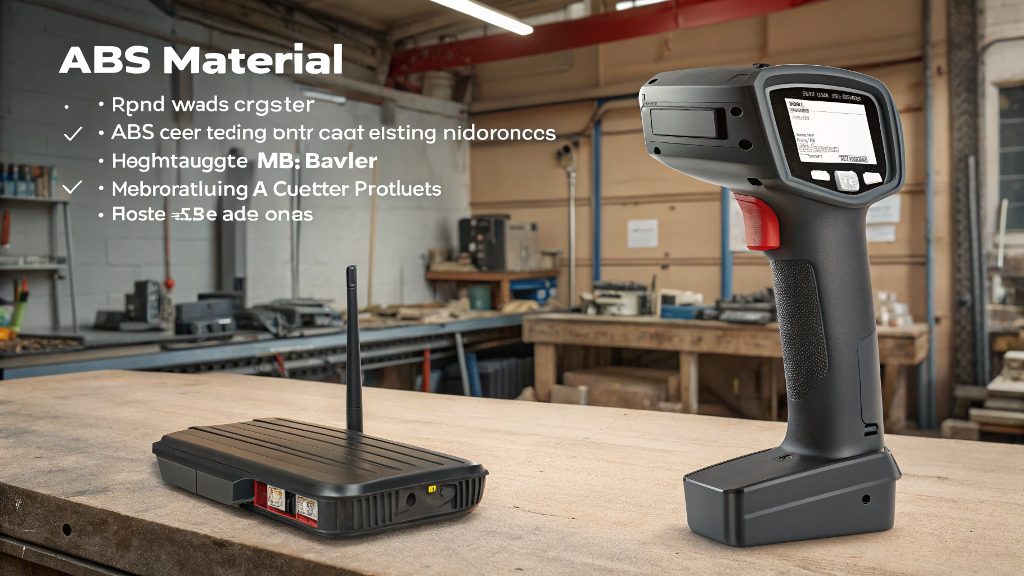
ABS is one of our go-to materials for rapid prototyping. Because it machines so easily and is inexpensive, we can create accurate physical models for our customers quickly. This helps them test the form, fit, and function of their design before committing to expensive production tooling. For a client in Canada developing a new handheld scanner, we made several prototype enclosures from ABS. They were strong enough for testing and gave a perfect sense of the final product's weight and feel.
Beyond prototypes, ABS is a star in consumer electronics. The case for your Wi-Fi router, the body of your printer, or the keys on your keyboard are very likely made of ABS. Its strength and ability to be molded in any color with a nice finish make it ideal. The same is true for automotive interiors. Dashboards, center consoles, and trim pieces are often ABS because it’s rigid and withstands the bumps and knocks of daily use.
When to Avoid ABS: Common Pitfalls
As I mentioned, the number one rule is to keep raw ABS out of the sun. I once had a new customer ask us to make some brackets for outdoor lighting fixtures. They specified ABS because of the low cost. I had to explain that after one summer, those brackets would likely become weak and could fail. We switched the material to a UV-stabilized plastic, which was a much safer choice. You can use ABS outdoors if it’s painted or plated, as the coating will protect it from UV radiation. However, if the coating gets scratched, the material underneath is still vulnerable. Similarly, if your part will be in a workshop or factory where it might be exposed to strong cleaning agents or lubricants, you need to check if ABS is compatible with those chemicals.
What are the pros and cons of CNC machining?
CNC machining is an amazing process, but it isn't always the best or cheapest choice. You might spend a fortune machining a part that could be made better with another method.
The main pros of CNC machining are its incredible precision, consistency, and ability to work with a huge range of materials. Its cons include higher costs for simple, high-volume parts, material waste from its subtractive nature, and some geometric limitations.
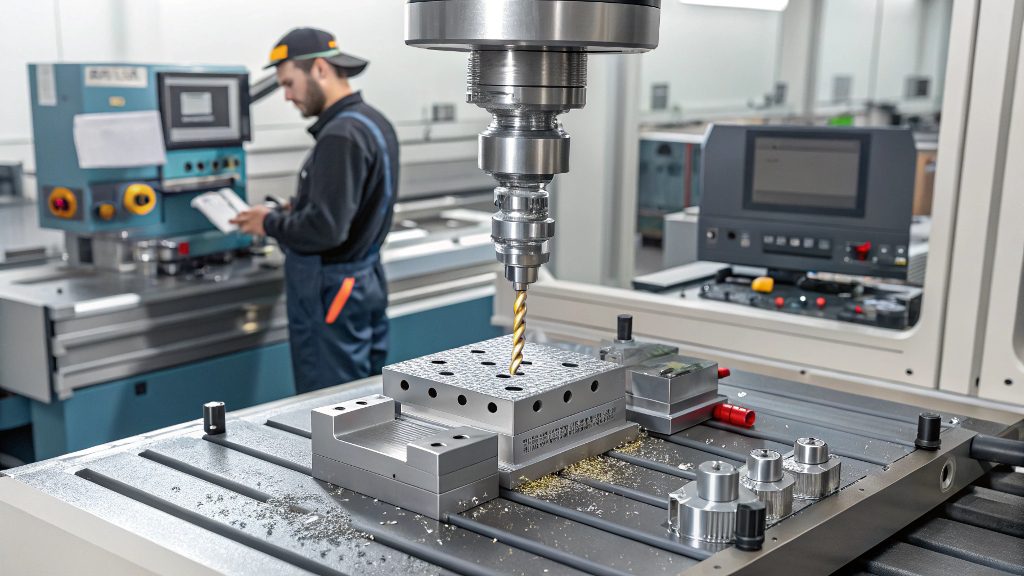
Now, let's switch gears from the material (ABS) to the manufacturing process itself. CNC machining is at the heart of what we do at Worthy Hardware. It’s a subtractive process, meaning we start with a solid block of material and use computer-controlled tools to cut away everything that isn't the final part. This method has huge benefits, but it also has trade-offs you need to understand.
Why We Love CNC Machining at Worthy Hardware
The biggest advantage is precision. At Worthy, we can hold incredibly tight tolerances, sometimes less than +/- 0.001 inches. This level of accuracy is essential for our customers in the aerospace, medical, and industrial sectors, where parts have to fit together perfectly every single time. Another massive benefit is material flexibility. We work with over 100 different metals and plastics. Whether you need a part made from lightweight aluminum, strong stainless steel, or a specialty plastic like PEEK, CNC machining can handle it. This process also produces parts with fantastic mechanical properties because they are made from a solid block, without the internal stresses that can sometimes occur in other processes. The surface finish is also excellent right off the machine.
Important Considerations and Limitations
The main drawback of CNC machining is material waste. Since we are cutting material away, that leftover material (in the form of chips) is waste. For expensive materials like titanium or PEEK, this can add significantly to the part cost. There are also some limits to the shapes you can make. Very deep, narrow internal pockets or complex, organic shapes can be difficult or impossible to machine. This is where a process like 3D printing might be a better fit. Finally, for very large quantities of simple plastic parts, injection molding is usually more cost-effective. CNC machining is ideal for prototypes, low-to-medium production runs, or when the highest precision is needed.
What plastic is best for CNC machining?
With so many plastics, picking the "best" one feels impossible. Choosing a plastic that's hard to machine can drive up your costs and lead times for no good reason.
There is no single "best" plastic for CNC machining; the right choice depends on your application. However, for general-purpose use, materials like Delrin (Acetal), ABS, and Polycarbonate offer a great balance of machinability, performance, and cost for most projects.
This is a question I get almost every day. The perfect plastic for a children's toy is very different from the perfect plastic for a high-performance gear in a robot. The "best" material is the one that meets all of your project's specific needs—from strength and temperature resistance to cost and final appearance. My job is to help you navigate these choices to find that perfect fit. As engineers, we have a lot of experience helping customers not only select a material but also improve their design to save money.
Comparing Top CNC Machining Plastics
Let's look at some of the most common plastics we machine at Worthy Hardware and see how they stack up. This will give you a good starting point for your own project.
| Plastic | Key Strengths | Best For... | Machinability |
|---|---|---|---|
| ABS | Toughness, low cost, good aesthetics | General prototypes, consumer electronics housings, automotive interiors. | Excellent |
| Delrin (Acetal) | High stiffness, low friction, excellent dimensional stability. | Gears, bearings, high-performance mechanical parts. | Excellent |
| Polycarbonate (PC) | Extreme toughness, transparency, temperature resistance. | Lenses, safety guards, transparent covers, tough enclosures. | Good |
| Nylon | Wear resistance, chemical resistance, strength. | Bearings, wear pads, flexible structural parts. | Good |
| PEEK | High-temp performance, chemical resistance, extreme strength. | Aerospace, medical, and high-performance industrial parts. | Fair (Abrasive) |
How to Choose the Right Plastic
When a client like Mark from Canada comes to me, we walk through a simple checklist to narrow down the options. You can do the same. Ask yourself:
- Mechanical Needs: How strong, stiff, or impact-resistant does it need to be?
- Environment: Will it be used outdoors? Near heat? Exposed to chemicals?
- Appearance: Does it need to be a specific color? Does it need to be clear?
- Budget: What is your target cost per part?
Answering these questions will quickly eliminate many materials and point you toward the best two or three candidates for your project.
Conclusion
ABS is a versatile, low-cost choice for many indoor CNC machined parts. By understanding its pros and cons, you can decide if it’s the right fit for your project.