
What Are The Cost Differences Between Various Anodizing Colors And Processes?
Struggling to budget for anodizing? The final price can be a surprise if you don't know what factors are at play. Let me clarify how colors and processes affect your costs.
Anodizing costs vary based on the process type and color. For example, black anodizing costs about 30% more than standard clear anodizing. A more durable Type III hard anodize can cost over 50% more than a standard Type II anodize due to its complexity.
Now you have a basic idea of the price differences. But understanding the 'why' behind these costs is key to making smart decisions for your projects. If you want to optimize your budget without sacrificing quality, it's important to dig a little deeper into how these finishes are priced. Let's break it down so you can choose the best option for your needs and wallet.
How much does anodizing cost?
Worried about anodizing costs blowing your budget? It's often hard to get a straight answer on pricing. I will break down the real factors that determine your final price.
Anodizing cost isn't a single flat rate. It depends on the part's size, the quantity you order, the anodizing type, and your color choice. Expect to pay per part or by batch size, and remember that there are often initial setup fees for each job.
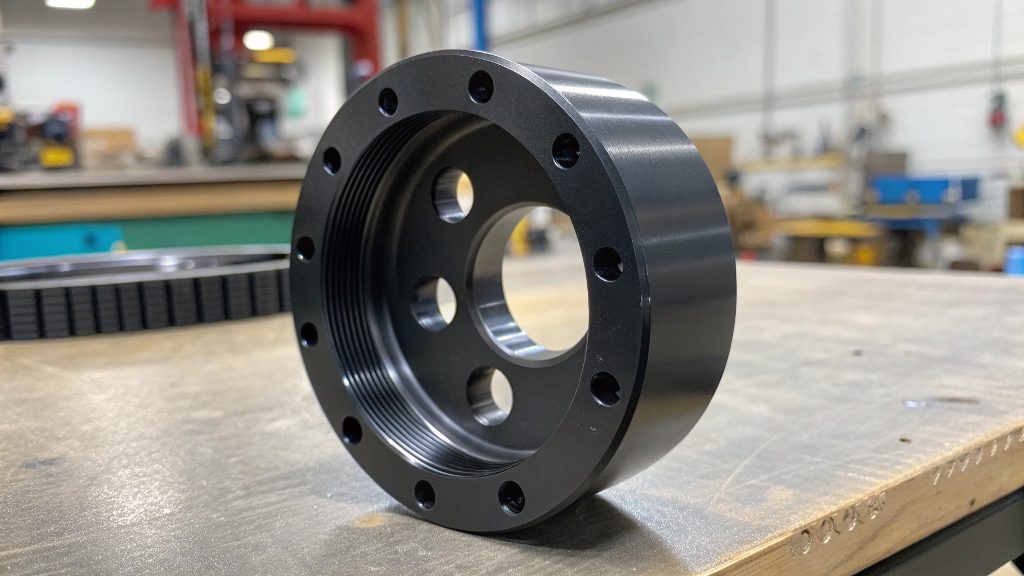
The price you pay for anodizing is a mix of several things. It’s not just about the color. At my company, Worthy Hardware, we handle these quotes every day, so I see firsthand what drives the cost up or down. A big factor is the type of anodizing. A standard Type II anodize is much cheaper than a Type III hard anodize. Why? The hard anodize process takes longer, uses more electricity, and needs very cold temperatures, which all add to the cost.
Then there's the color. As I mentioned, a simple clear or silver finish is the cheapest. When we do black anodizing, the cost goes up by about 30%. This is because of the special organic dyes and the careful controls needed to get a consistent, deep black color. The quantity of your parts also matters. We often have a minimum lot charge, so anodizing a few prototypes can seem expensive per piece compared to a large production run.
Key Factors Influencing Anodizing Price
To give you a clearer picture, here are the main things that affect the cost:
| Cost Factor | Why It Matters |
|---|---|
| Anodizing Type | Type III (hard) is more energy-intensive and time-consuming than Type II. |
| Color | Clear is cheapest. Black costs ~30% more. Custom colors cost even more due to dye costs and setup. |
| Part Size & Geometry | Larger parts take up more tank space. Complex parts may require special racking, increasing labor. |
| Quantity | Small batches have a higher per-part cost due to minimum lot charges. Mass production is cheaper per part. |
| Masking | If some areas of a part must remain uncoated, the manual labor for masking will add to the cost. |
What are the different colors of anodizing?
Want a specific color for your parts but are unsure of the options? The world of anodizing colors is vast. Let’s explore what's possible and what's practical for your project.
The most common anodizing colors are clear (silver), black, red, blue, and gold. Many other colors are possible through dyeing, but availability can vary. The final color also depends heavily on the specific aluminum alloy being used, as some alloys take color better than others.


When a customer asks for a specific color, I always start by asking about their aluminum alloy. The material itself plays a huge role in the final look. For instance, alloys in the 6000 series, like 6061, are great for anodizing and produce bright, consistent colors. However, alloys with high silicon content, like those used in casting, can result in a cloudy or greyish finish, especially with lighter colors. Clear anodizing isn't actually a color; it's a transparent protective layer that shows the natural silver look of the aluminum underneath.
Black is by far the most popular color we do. It provides a clean, professional look and is very consistent across different batches. After black, red and blue are also common choices, especially for consumer products or parts that need to be visually identified. While we can do a wide range of colors, it’s important to understand that custom colors can be expensive. They often require special dyes and a lot of testing to match a specific shade, which adds to the lead time and cost.
Common Anodizing Colors and Their Characteristics
Here’s a quick guide to some of the most requested colors:
| Color | Common Use Cases | Cost Comparison (Relative to Clear) | Notes |
|---|---|---|---|
| Clear/Silver | General corrosion protection, maintaining a metallic look. | Baseline | The most affordable and fastest option. |
| Black | Electronics, automotive parts, professional equipment. | +30% | Very popular, offers a consistent and durable finish. |
| Red/Blue | Consumer products, warning labels, color-coding parts. | +30-40% | Bright colors can fade over time with UV exposure. |
| Gold/Bronze | Architectural details, decorative items. | +30-40% | Often used to mimic the look of brass or bronze. |
| Custom Colors | Branding, specific design requirements. | +50% or more | Requires color matching, special dyes, and testing. |
What is the 7 20 rule for anodizing?
Heard about a "720 rule" for anodizing and wondering what it means? It’s a guideline people use to estimate coating thickness. Let me explain how it works and if it’s reliable.
The 720 rule is a simple formula to estimate the time needed to achieve a specific anodizing thickness. It states that at a current density of 12 amps per square foot, it takes 720 minutes (or 12 hours) to build up a 1 mil (0.001 inch) thick coating.

The 720 rule is more of a theoretical calculation than a practical one we use every day in the shop. It's based on perfect conditions: 100% efficiency, a specific current density, and a particular sulfuric acid solution. In the real world, things are never that perfect. The efficiency of the process can change based on the acid concentration, the temperature of the tank, and the specific aluminum alloy being processed. So, while the rule gives you a rough idea, we don't rely on it to run our production.
Instead of using a simple rule, our engineers and technicians rely on experience and precise controls. We monitor the process in real-time. We use advanced rectifiers to control the current density and carefully manage the tank's temperature and chemical balance. For us, the most important thing is meeting the customer's specification. If a drawing calls for a 0.0005-inch coating, we adjust our process parameters—time, current, and temperature—to hit that target exactly. We then verify the thickness using specialized measuring tools. The 720 rule is a good starting point for understanding the theory, but practical application requires much more expertise.
Why The 720 Rule Isn't Always Practical
- Varying Efficiency: The actual anodizing process is never 100% efficient. Factors like alloy composition and bath chemistry affect the rate of oxide growth.
- Alloy Differences: Different aluminum alloys anodize at different rates. The 720 rule doesn't account for this.
- Process Control: Modern shops use precise controls to manage the outcome, rather than relying on a simplified time calculation.
- Hard Anodizing: The rule is mainly for Type II anodizing. Type III hard anodizing operates under very different conditions (lower temperature, different voltages), so the rule doesn't apply.
What is type 3 anodizing process?
You need a finish that is tough, wear-resistant, and can handle harsh environments. Standard anodizing isn't enough. This is where Type III hard anodizing comes in.
Type III anodizing, also known as hardcoat or hard anodizing, is an electrochemical process that creates an extremely hard, dense, and abrasion-resistant aluminum oxide layer on the surface of a part. It is much thicker and more durable than standard Type II anodizing.

The key difference between Type II and Type III anodizing is the operating conditions. To create a harder, denser coating, we run the Type III process at a much lower temperature, usually near freezing (around 0°C or 32°F). We also use a higher voltage and current density. This forces the aluminum oxide layer to grow in a very compact, organized way, which is what gives it its incredible hardness—often comparable to case-hardened steel. This makes it perfect for parts that experience a lot of friction or wear, like pistons, gears, and machine components.
Because the hardcoat layer is so thick (typically over 0.001 inches), it can affect the final dimensions of a part. Our engineers always account for this during the initial CNC machining stage. We machine the part slightly undersized so that after the hard anodizing is applied, it meets the final required tolerances. The natural color of Type III anodize is usually a dark gray or bronze, depending on the alloy and coating thickness. It can be dyed black, but achieving other bright colors is difficult because the coating is so dense.
Type II vs. Type III Anodizing: A Comparison
| Feature | Type II (Standard Anodizing) | Type III (Hard Anodizing) |
|---|---|---|
| Primary Goal | Corrosion resistance, aesthetics. | Wear resistance, hardness, durability. |
| Thickness | 0.0002" - 0.001" | > 0.001" |
| Hardness | Rockwell C 20-40 | Rockwell C 60-70 |
| Operating Temp. | Room temperature (~21°C / 70°F) | Near freezing (~0°C / 32°F) |
| Color Options | Wide range of bright colors possible. | Limited, typically gray or dark bronze. Can be dyed black. |
| Cost | Lower | 50% or more expensive than Type II. |
Conclusion
In short, black anodizing costs more than clear, and Type III hard anodizing is the most expensive. Understanding these differences helps you choose the right finish for your budget and needs.