
What Are The Best Practices for Large Part CNC Machining?
Struggling with machining large components? A single mistake can scrap an expensive workpiece, leading to massive delays and costs. Following a few key best practices changes everything for the better.
The best practices for large part CNC machining include a two-stage process of roughing and finishing, active vibration control, and managing thermal expansion. You should also use collision avoidance systems and select spindle speeds appropriate for the material.
Mastering the machining of large parts can feel like a huge challenge, but it's really about controlling a few key factors. I've been in this business for years, and I've learned that overlooking the basics is what causes the biggest problems. Once you understand how to manage the unique stresses of large-scale work, the process becomes much more predictable and reliable. We're going to break down the most important practices so you can get great results every time.
What are the best practices for operating a milling machine efficiently?
Running a milling machine can be slow and inefficient if not done right. This wasted time costs you money and can lead to scrapped parts. But with the right techniques, you can boost productivity.
To operate a milling machine efficiently, you must use proper tool selection, create optimized toolpaths with CAM software, and ensure rigid workholding. You also need to perform regular machine maintenance and calibration for consistent results.
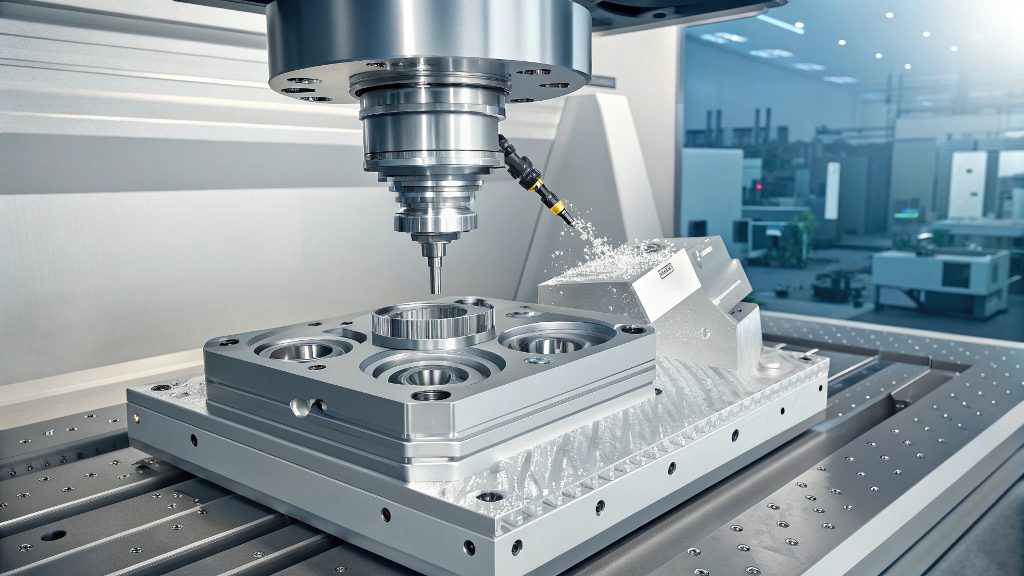
Getting the most out of your milling operations is about being smart and prepared. It’s not just about cutting metal; it's about how you plan and execute the entire process. From the moment you load the design to the final inspection, every step impacts efficiency. I tell my team that efficiency is built on a foundation of good habits and a deep understanding of the machine's capabilities and limitations, especially with large, complex jobs.
Toolpath and Workholding Optimization
The path your tool takes is critical. Modern Computer-Aided Manufacturing (CAM) software allows us to create highly efficient toolpaths that reduce machine time and tool wear. For example, using high-speed machining (HSM) techniques with smooth, arcing paths instead of sharp, sudden turns can drastically improve cutting speeds. Equally important is how you hold the part. For large parts, workholding must be extremely rigid to prevent any vibration. We use custom fixtures, heavy-duty clamps, and sometimes vacuum tables to lock the workpiece down securely. A part that moves even slightly during machining will never meet spec.
Machine Health and Cutting Strategy
An efficient machine is a well-maintained one. Regular maintenance is non-negotiable. This means checking and calibrating the axes, ensuring the spindle runs true, and keeping the coolant systems clean and functional. It prevents unexpected breakdowns and ensures the machine can hold the tight tolerances we promise. We also carefully choose our cutting strategy based on the material and part geometry.
| Milling Strategy | Best Use Case | Key Advantage |
|---|---|---|
| Climb Milling | Finishing passes, most materials | Better surface finish, less tool wear |
| Conventional Milling | Roughing passes, hard materials | Less chance of tool chipping on entry |
| High-Speed Machining | Complex geometries, soft materials | Faster cycle times, reduced cutting forces |
Which advantage makes CNC machines suitable for complex part manufacturing?
Making complex parts by hand is nearly impossible and takes too much time. The risk of human error is high, and you can't get consistent results. CNC machines solve this problem easily.
The primary advantage that makes CNC machines perfect for complex parts is their automation, which delivers incredible precision and repeatability. They can follow complex programmed toolpaths perfectly, something a human operator simply cannot match.
When I first saw a 5-axis CNC machine craft a complex aerospace component from a solid block of aluminum, I knew it was the future. The machine moved with a grace and accuracy that was just amazing. This ability to automate intricate movements is the core strength of CNC technology. It removes the limitations of human skill and fatigue, opening up a world of design possibilities. For customers like Mark in Canada, who need identical, complex parts for their products, this capability is not just an advantage; it's a necessity.
The Power of Automation and Precision
Automation is the key. A CNC machine follows a digital instruction set, or G-code, without getting tired or distracted. This allows for 24/7 operation with a level of consistency that is impossible to achieve manually. This is especially true for our 5-axis machines, which can machine complex features on five sides of a part in a single setup. This reduces setup time and eliminates errors that can occur when moving a part between machines. This automation directly translates to precision. At Worthy, we hold standard tolerances of +/- 0.005 inches, and we can achieve even tighter tolerances down to sub +/- 0.001 inches based on your drawings.
Repeatability and Versatility
Because the process is controlled by a computer program, we can produce thousands of parts that are functionally identical. The first part will be exactly the same as the last. This repeatability is critical for our customers who have assembly lines and need every component to fit perfectly every time. Furthermore, this precision isn't limited to just one or two materials. Our CNC machines work with over 100 different metals, plastics, and composites.
| Feature | Manual Machining | CNC Machining |
|---|---|---|
| Complexity | Very Limited | Almost Unlimited |
| Precision | Low to Medium | Very High |
| Repeatability | Poor | Excellent |
| Speed | Slow | Fast |
What are the standards for CNC machining?
You need parts made to a specific standard, but how do you express that? Without clear standards, you might get parts that don't fit or fail under stress. Universal standards solve this problem.
The main standards in CNC machining are ISO 2768 for general tolerances, GD&T (Geometric Dimensioning and Tolerancing) for critical features, and surface finish callouts like Ra. These standards create a universal language for quality.
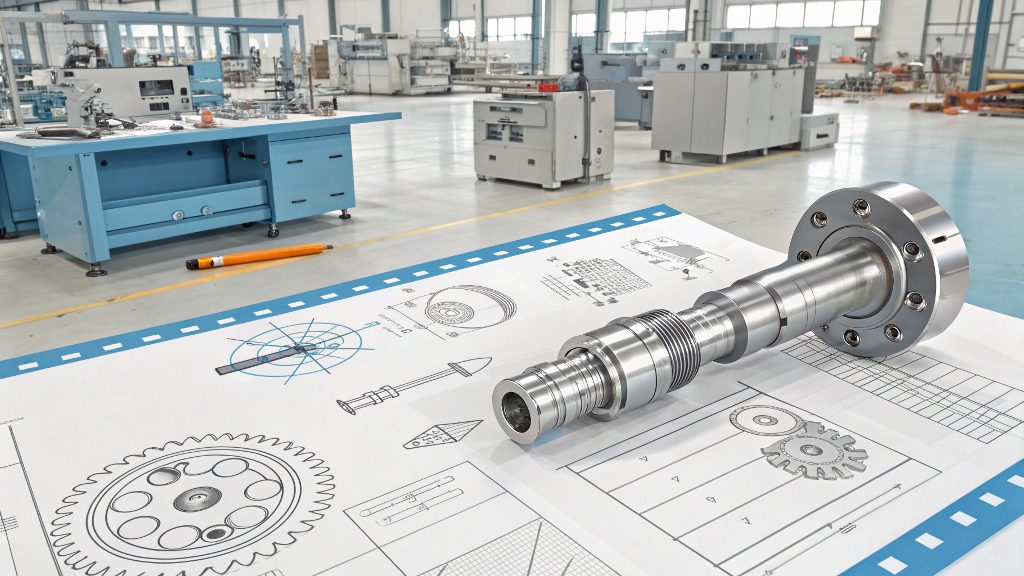
Standards are the foundation of trust in manufacturing. When a customer in North America sends us a drawing, we need to be speaking the same language. Standards like ISO and GD&T remove all the guesswork. They provide a clear and mathematical definition of what is acceptable and what is not. In my experience, a project's success often depends on how well the standards are defined on the print from the very beginning. It protects both us and the customer and ensures the final parts are exactly what they need to be.
ISO 2768: The General Rule
Think of ISO 2768 as the default setting for CNC machining. If a specific tolerance isn't called out on a drawing for a particular feature, this standard applies. It defines acceptable deviations for linear and angular dimensions. For example, our shop holds the medium (m) class of ISO 2768, which for metals translates to a general tolerance of +/- 0.005 inches. This ensures a good level of quality for non-critical features without adding unnecessary cost.
GD&T: For When It Really Matters
Geometric Dimensioning and Tolerancing is a more advanced language used to control the most important features of a part. It goes beyond simple size and controls form, orientation, and location. For example, it can ensure a hole is perfectly perpendicular to a surface or that two mounting surfaces are perfectly parallel. GD&T is essential for parts that must assemble with other components, as it guarantees not just that the part is the right size, but also that it has the right shape and alignment.
Surface Finish: How It Looks and Feels
The surface finish of a part can be critical for its function, affecting friction, wear, and corrosion resistance. The most common standard is Ra (Roughness Average), measured in micrometers (μm) or microinches (μin). Our standard as-machined finish is 125 Ra or better, which is smooth to the touch. But we can achieve much finer finishes through grinding, polishing, or other methods like anodizing or plating if the drawing requires it.
What is a large CNC?
You hear the term "large CNC," but what does that really mean? The definition varies, but it always involves machines built to handle massive workpieces. These aren't your standard shop machines.
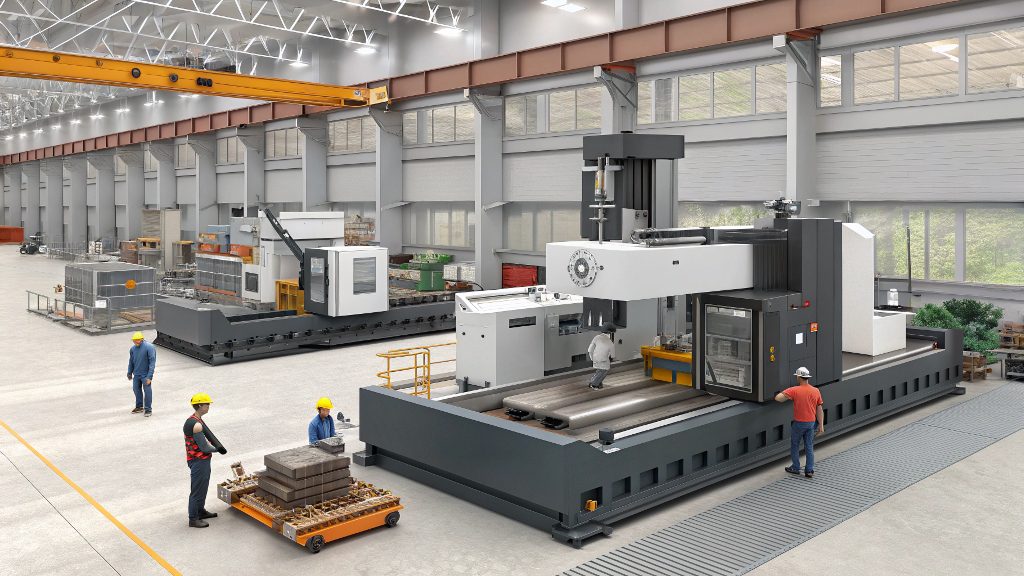
A large CNC is a machine tool with an extended work envelope designed to manufacture parts that are too big for standard machines. This includes gantry mills, horizontal boring mills, and large-format lathes with significant travel distances.
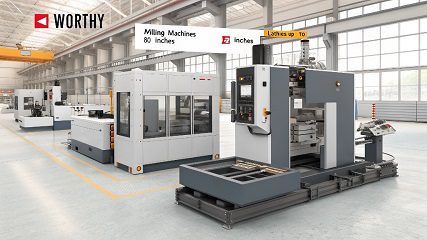
At Worthy, we define "large" by our capabilities. We invested in specific machines to serve clients who need oversized components. Our large milling machines can handle parts up to 80 inches long, while our lathes can turn parts up to 62 inches in length. Having this capacity allows us to take on projects in industries like aerospace, energy, and industrial equipment, where parts are often measured in feet, not inches. These machines are the heavyweights of our shop, built with massive, rigid frames to handle the huge cutting forces and weight of large workpieces without sacrificing precision.
Defining by Capability and Size
The most direct way to define a large CNC is by its travel, or the maximum size of the part it can machine. These machines have significantly larger X, Y, and Z axes. They are physically bigger, heavier, and more powerful than their smaller counterparts to ensure stability and accuracy across a large area.
| Machine Type | Maximum Part Size Handled at Worthy | Typical Applications |
|---|---|---|
| Large CNC Mill | 80” x 48” x 24” (2,032 x 1,219 x 610 mm) | Machine beds, large molds, structural frames |
| Large CNC Lathe | 62” length x 32” diameter (1,575 x 813 mm) | Large shafts, rollers, turbine components |
Avoiding Thermal Deformation and Collisions
With large parts, new challenges emerge. One of the biggest is thermal deformation. As the tool cuts a large workpiece for an extended period, both the part and the machine can heat up and expand, throwing off dimensions. We control this using high-volume flood coolant and sometimes by letting the part cool and stabilize before making final finishing passes. Another huge risk is a machine crash. On a large part, a collision can be catastrophic. Our large CNCs are equipped with advanced simulation software and on-machine probing systems. Before cutting, we run a digital simulation of the entire toolpath to check for any potential collisions. This attention to detail is how we machine large, expensive parts with confidence.
Conclusion
Following best practices for large part machining—from roughing and finishing to managing heat and vibration—is key to success. This ensures precision, efficiency, and reliable outcomes for even the most demanding projects.