
What Are The Best Epoxy For CNC Machining?
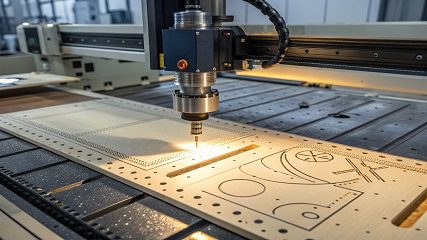
Choosing the right epoxy feels complicated. A bad choice can ruin your parts and your budget. I will help you understand the best options for your CNC machining project.
The best epoxies for CNC machining are composites like G-10 and FR-4. These materials are very stable, strong, and easy to machine. They are great choices for making precise parts for many different uses.
Finding the perfect material is the most important step for a successful project. If you get the material right, everything else becomes much easier. It all starts with knowing what your options are and which one fits your needs best. Let's look at the different materials you can use and how to pick the right one. I want to help you make a confident choice that leads to great results for your parts.
What materials are used in CNC machining?
There are so many CNC materials available. Picking the wrong one can be a very expensive mistake. Let's break down the common types to make your choice easier.
CNC machining uses many materials. This includes metals like aluminum and steel, and plastics like ABS and PEEK. It also includes composites like G-10, FR-4, and carbon fiber.


At my company, Worthy, we work with over 100 different materials. They generally fall into three main groups.
Metals
Metals are very popular for their strength and durability. We often machine aluminum for its light weight and steel for its high strength. We also handle materials like titanium for aerospace parts and brass for electrical components. Each metal has its own benefits.
Plastics
Plastics are great when you need specific properties like chemical resistance or light weight. We frequently use materials like ABS for its toughness and Delrin for its low friction. For high-performance needs, PEEK offers amazing heat and chemical resistance.
Composites
Composites are made from two or more materials. They offer unique benefits. Epoxy-based composites like G-10 and FR-4 are what this article is about. They are strong, stable, and excellent electrical insulators. We also machine carbon fiber for parts that need to be incredibly strong and light.
Here is a simple table to compare some of them:
| Material Category | Example | Key Feature | Best For |
|---|---|---|---|
| Metal | Aluminum 6061 | Lightweight & Strong | General-purpose parts, frames |
| Plastic | Delrin (Acetal) | Low Friction & Stiff | Gears, bearings, precision parts |
| Composite | G-10/FR-4 | High Strength & Insulator | Electrical components, fixtures |
What is the best epoxy for carbon fiber parts?
Machining carbon fiber is a real challenge. Using the wrong epoxy binder can cause the layers to separate, ruining the part. Here is the type of epoxy you need for strong results.
The best epoxy for machining carbon fiber parts is a system with high strength and high-temperature resistance. This epoxy keeps the fibers bonded securely, which stops delamination during machining and gives you a stable, durable part.

When you machine carbon fiber, the material itself is very abrasive and creates a lot of heat. The epoxy is not just a glue; it's a critical part of the material's structure.
Why High-Temperature Epoxy Matters
The heat from the CNC cutting tool can soften a standard epoxy. If the epoxy gets soft, it loses its grip on the carbon fibers. This leads to a poor surface finish and can even cause the tool to get gummed up. A high-temperature epoxyhas a high glass transition temperature (Tg). This means it stays hard and rigid even when things get hot during the machining process. This ensures clean cuts and maintains the part's structural integrity.
Preventing Delamination
Delamination is when the layers of carbon fiber peel apart. This is the biggest risk when machining these parts. A strong epoxy with excellent bonding properties holds the layers together tightly under the stress of cutting. This is essential for creating reliable, high-performance parts for industries like aerospace and automotive, where failure is not an option. At Worthy, we have a lot of experience machining carbon fiber and can help select the right grade for your design.
What is the best epoxy for small metal parts?
Joining small metal parts can be a real headache. Welding can warp them, and screws are often too bulky. The right epoxy gives you a strong, clean bond without these problems.
For bonding small CNC-machined metal parts, a two-part structural epoxy adhesive is your best option. You should look for epoxies with high shear strength and good chemical resistance. They make a powerful, permanent bond.


It is important to know we are talking about using epoxy as a glue here, not machining a block of epoxy. For small, complex metal parts, adhesive bonding is often better than traditional fastening methods.
Preparing Metal Surfaces for Bonding
You cannot just apply epoxy and hope for the best. The metal surfaces must be prepared correctly to get a strong bond. First, the surface must be perfectly clean. We use solvents to remove any oil or grease. Second, the surface needs to be slightly rough. We call this abrading. Sanding or sandblasting the metal surface gives the epoxy more area to grip onto. This preparation step is critical for creating a bond that is strong and will last a long time.
Choosing the Right Adhesive
While we focus on making parts at Worthy, we design them knowing how they will be used. If you plan to bond parts, we can add features to the design that make it easier.
Here's a quick comparison of adhesives for metal:
| Adhesive Type | Best For | Main Benefit |
|---|---|---|
| Epoxy | Structural Bonds | High Strength & Resistance |
| Cyanoacrylate | Quick Fixes | Very Fast Curing |
| Anaerobic | Threadlocking | Cures without Air |
How do I choose the right epoxy?
The number of epoxy options can feel huge. If you choose the wrong one, your project could fail. I will give you a simple checklist to help you pick the right one.
To choose the right epoxy, think about your project's needs. Check things like temperature, strength, chemical exposure, and how easy it is to machine. Based on my experience, materials like G-10 and FR-4 are great choices.

Over the years, I've seen many customers make choices for their projects. From my experience, I can tell you that G-10 is a material that many of our customers love to choose. Besides G-10, FR-4 is also very suitable for CNC machining. To make the right choice for your specific project, you should think about a few key things.
Key Factors to Consider
-
Mechanical Properties: How strong does your part need to be? G-10 is incredibly strong and stable, which is why it's used for jigs, fixtures, and high-stress parts.
-
Thermal Properties: Will your part get hot? Look at the material's glass transition temperature (Tg). This is the temperature where it starts to soften. G-10 and FR-4 have excellent thermal stability.
-
Electrical Properties: Does your part need to be an electrical insulator? This is where FR-4 shines. It is the standard material for printed circuit boards (PCBs) because it does not conduct electricity.
-
Machinability: You need a material that can be machined to tight tolerances without chipping or cracking. Both G-10 and FR-4 are known for their great machinability, which helps us at Worthy deliver precise parts quickly.
Our engineers have rich experience helping customers improve their designs. We can help you decide if G-10, FR-4, or another material is the perfect fit for your application.
Conclusion
Choosing the right epoxy is key for success. By focusing on your project's needs, like using G-10 or FR-4, you ensure strong, precise parts. We can help you.