
What Are The Best CNC Machining Methods For Silicone Parts?

Do you need a silicone part but dread the high cost of injection molding? Molds are slow and expensive for prototypes. CNC machining offers a faster, more flexible solution.
The best methods for CNC machining silicone are turning and milling. These techniques allow for the precise creation of complex shapes, drilled holes, and even threads directly from a solid block of silicone. This avoids high tooling costs and is ideal for prototyping and low-volume production.
You might be surprised that a soft material like silicone can be machined with precision. It's very different from cutting metal, but with the right expertise and equipment, the results are excellent. Let's explore how we machine silicone and what other materials you should know about for your next project.
Can you CNC silicone?
Are you wondering if it's even possible to machine something so soft? You might worry the material will just tear or deform. We can show you how it's done correctly.
Yes, you can absolutely CNC machine silicone. The key is using specialized techniques and extremely sharp tooling. We carefully control cutting speeds and feeds to prevent the material from deforming or tearing, which ensures a clean and precise part.
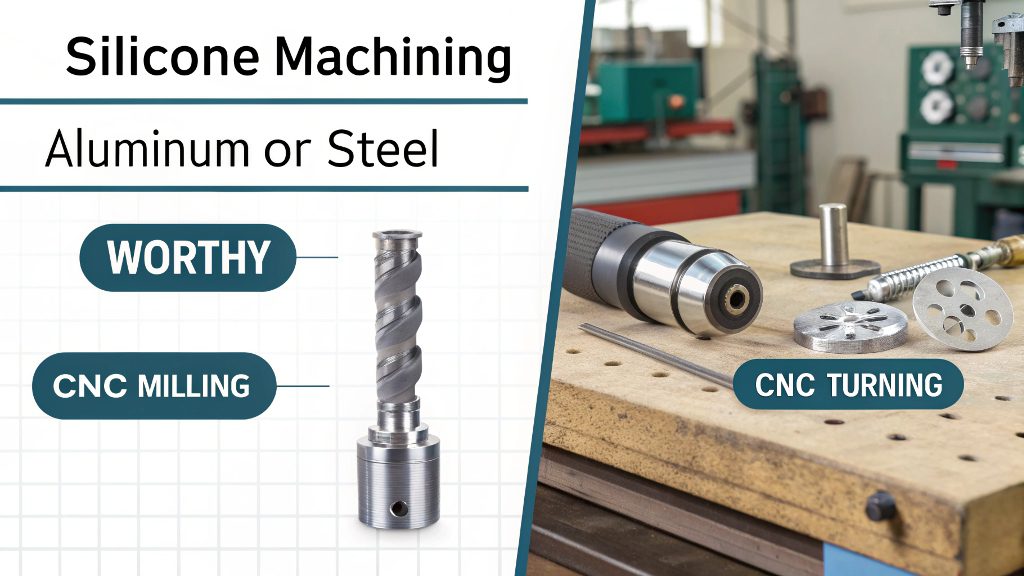
Machining silicone isn't like machining aluminum or steel. The material's flexibility is the biggest challenge. If you don't handle it right, it can stretch or compress during cutting, leading to inaccurate dimensions. We have to think differently about the entire process, from how we hold the part to the type of tool we use.
Key Machining Methods for Silicone
At my company, Worthy, we use a few core methods depending on the part's geometry. Each has its advantages.
| Machining Method | Best For... | Why It Works |
|---|---|---|
| CNC Milling | Complex shapes, pockets, slots, and holes | A sharp, fast-spinning tool removes material from a fixed block. |
| CNC Turning | Round or cylindrical parts, like seals | The silicone block rotates while a stationary tool cuts it. |
| Drilling | Creating precise holes | Requires a very sharp drill bit and slow feed rate to avoid tearing. |
| Laser Cutting | Thin sheets and intricate 2D patterns | A high-power laser vaporizes the silicone for a clean, sealed edge. |
The secret is sharp tools and the right parameters. A dull tool will just push the material aside instead of cutting it. Our engineers have years of experience figuring out the perfect speeds and feeds to get a clean finish on silicone parts.
What materials cannot be CNC machined?
Are you worried that your material choice won't work for CNC? Choosing the wrong material can waste a lot of time and money. Here is a simple guide on what to avoid.
Some materials are just not suitable for traditional CNC machining. This usually includes very soft substances that can't hold their shape, extremely brittle materials that shatter easily, or super-hardened metals that destroy cutting tools.
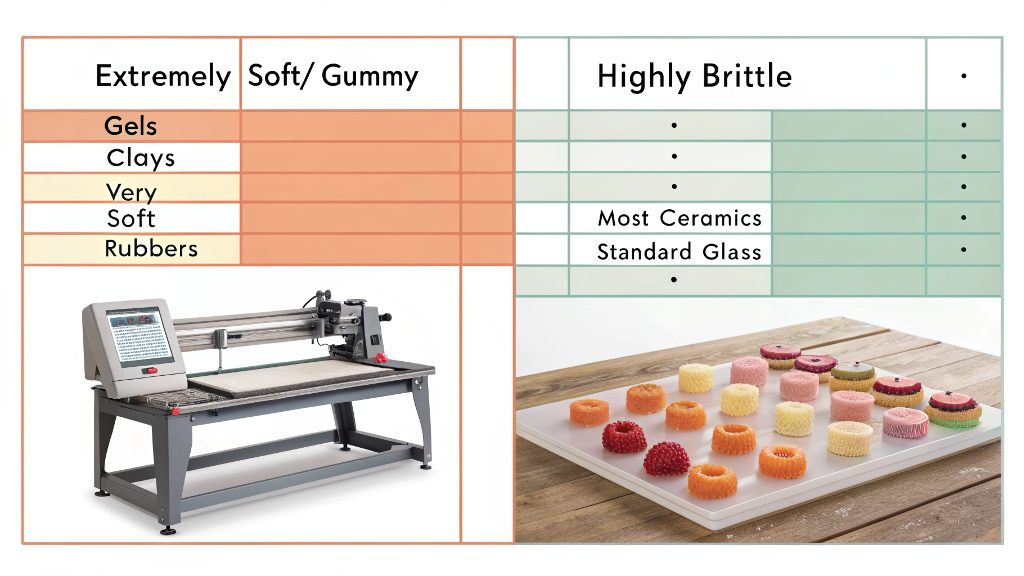
When we get a request for a part, the material choice is one of the first things we look at. While we can machine over 100 different materials at Worthy, some are simply not practical for this process. Understanding these limitations helps our customers, like Mark from Canada, avoid design dead-ends and choose a material that gives them the quality and price they need. It’s all part of how we help our clients improve their designs and save costs.
Here’s a breakdown of materials that are difficult or impossible to machine with standard CNC methods.
| Material Category | Examples | Reason for Difficulty |
|---|---|---|
| Extremely Soft/Gummy | Gels, clays, very soft rubbers | They cannot be held securely and deform instead of cutting. |
| Highly Brittle | Most ceramics, standard glass | They tend to crack and fracture under cutting pressure. |
| Extremely Hard/Abrasive | Hardened tool steel, tungsten | They cause rapid tool wear and require special machinery. |
| Certain Composites | Some carbon fiber layups | Can delaminate or create hazardous dust if not handled correctly. |
If your design requires a material on this list, don't worry. There may be another manufacturing process that is a better fit. Our team can always offer guidance.
Can you machine silicone rubber?
You know about solid silicone, but what about silicone rubber? The flexibility seems impossible to machine correctly. We can handle it with the right techniques and precision.
Yes, machining silicone rubber is a service we provide. It requires holding the material securely without distorting it and using extremely sharp cutting tools. Proper speeds prevent melting and ensure a smooth surface finish on the final part.
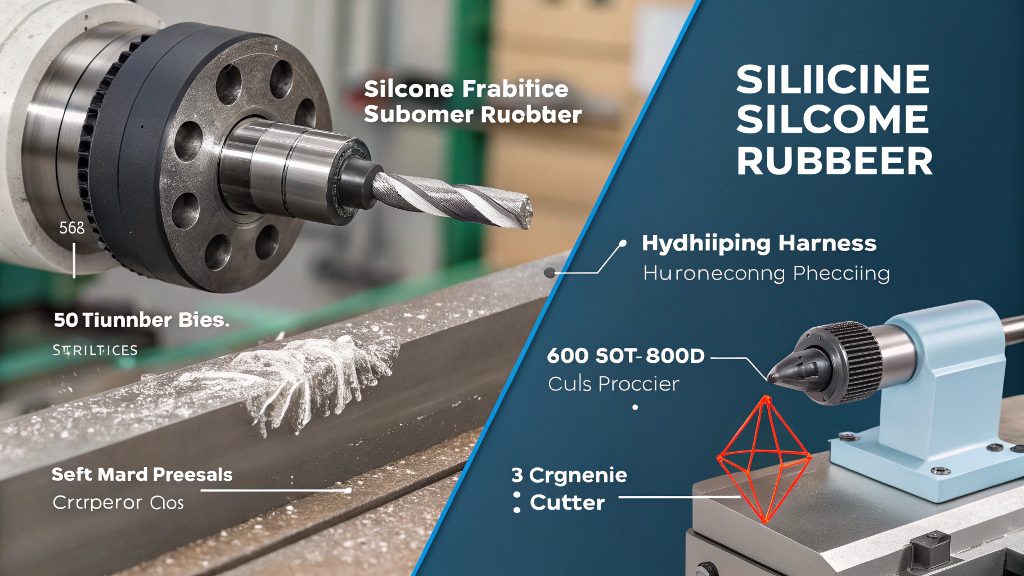
The main difference between "silicone" and "silicone rubber" is often just hardness, or durometer. Silicone rubber is very flexible, which creates two big challenges: workholding and tool sharpness. You can't just clamp it in a standard vise; it would squish and ruin the dimensions. We often have to create custom fixtures to hold the part gently but firmly. For very soft rubbers, sometimes an advanced technique called cryogenic machining is used, where the part is frozen with liquid nitrogen to make it temporarily rigid. This allows for very precise cuts.
Techniques for Machining Flexible Silicone Rubber
The hardness of the silicone rubber makes a big difference. A harder rubber with a durometer of 60A to 80A is much easier to machine than a very soft one below 30A. We always ask for this information to plan the job correctly. Sharp tools are non-negotiable. We use cutters with specific geometries designed for soft materials to slice through the rubber cleanly instead of tearing it. This prevents burrs and ensures the final part meets tight tolerances, sometimes down to +/- 0.005".
What plastic is best for CNC machining?
Choosing the right plastic for your project can feel overwhelming. If you pick the wrong one, you could face bad results or high costs. Let us guide you to the perfect choice.
For general-purpose CNC machining, Delrin (Acetal) is often considered the best choice. It provides amazing machinability, holds its shape well, and leaves a great surface finish. Other top choices include Polycarbonate for toughness and Acrylic for clarity.
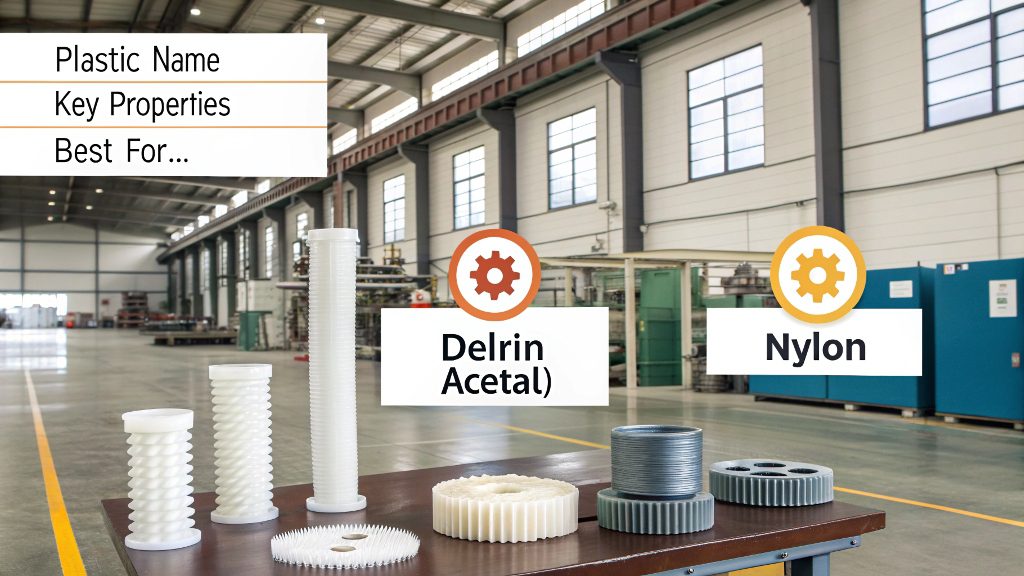
Many of our customers come to us needing plastic parts, from industrial components to consumer product enclosures. The "best" plastic really depends on the application. A part for a medical device has very different needs than a gear for a robot. That's why we offer a wide range of plastics. Our engineers can look at your design and help you decide. They can explain the trade-offs between cost, strength, chemical resistance, and ease of machining to find the perfect fit for your budget and performance needs.
Here is a quick reference table for some of the most common plastics we machine.
| Plastic Name | Key Properties | Best For... |
|---|---|---|
| Delrin (Acetal) | High stiffness, low friction, stable | Gears, bearings, bushings, precision parts |
| Nylon | Tough, durable, good chemical resistance | Wear pads, rollers, nuts, and bolts |
| Polycarbonate (PC) | Very high impact strength, transparent | Machine guards, clear covers, tough lenses |
| Acrylic (PMMA) | High clarity, rigid, weather-resistant | Light pipes, displays, decorative items |
| PEEK | High-temp performance, chemical resistant | Aerospace, medical implants, semiconductors |
| UHMW PE | Extremely wear-resistant, low friction | Chain guides, wear strips, star wheels |
Conclusion
In short, CNC machining is an excellent method for silicone parts, especially for prototypes. Success depends on the right tools, techniques, and an experienced partner like Worthy Hardware.