
What Are the Benefits of Choosing Metal Stamping Over Other Processes?
By Sandra Gao, Founder of Worthy Hardware
Not sure if stamping is the right choice compared to CNC machining, laser cutting, or sheet metal fabrication? Each process has legitimate strengths. The question isn't "which process is best?" — it's "which process is best for YOUR specific combination of geometry, volume, tolerance, and budget?"
Metal stamping offers the lowest per-part cost at volume, the fastest production speeds, and the highest part-to-part consistency of any metal forming process. For quantities above 5,000 parts with any forming or bending requirements, stamping almost always delivers the best combination of cost, speed, and quality.
I get this question frequently from new customers — especially those who've been using CNC machining or laser cutting for parts that could be stamped more efficiently. The short answer is: if your annual volume exceeds a few thousand pieces, switching to stamping can reduce your per-part cost by 50-90%. But the full answer is more nuanced, and being honest about when stamping is NOT the best choice is just as important as knowing when it is.
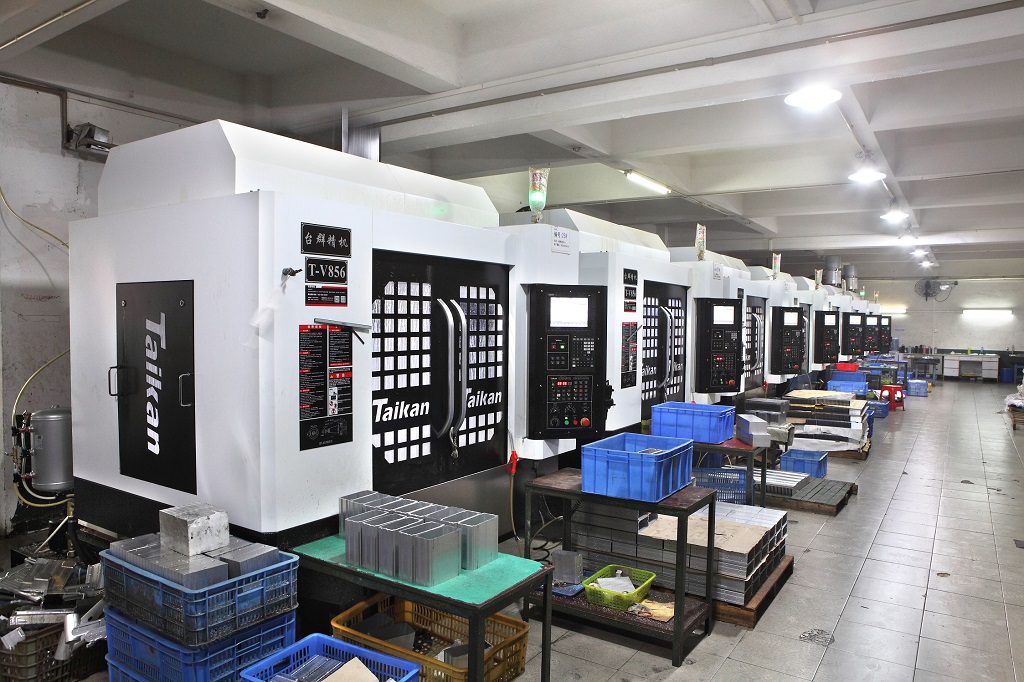
How CNC works: A computer-controlled cutting tool removes material from a solid block (or bar stock) to create the desired shape. It's a subtractive process — you start with more material than you need and cut away the excess.
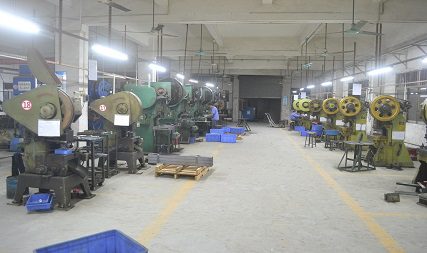
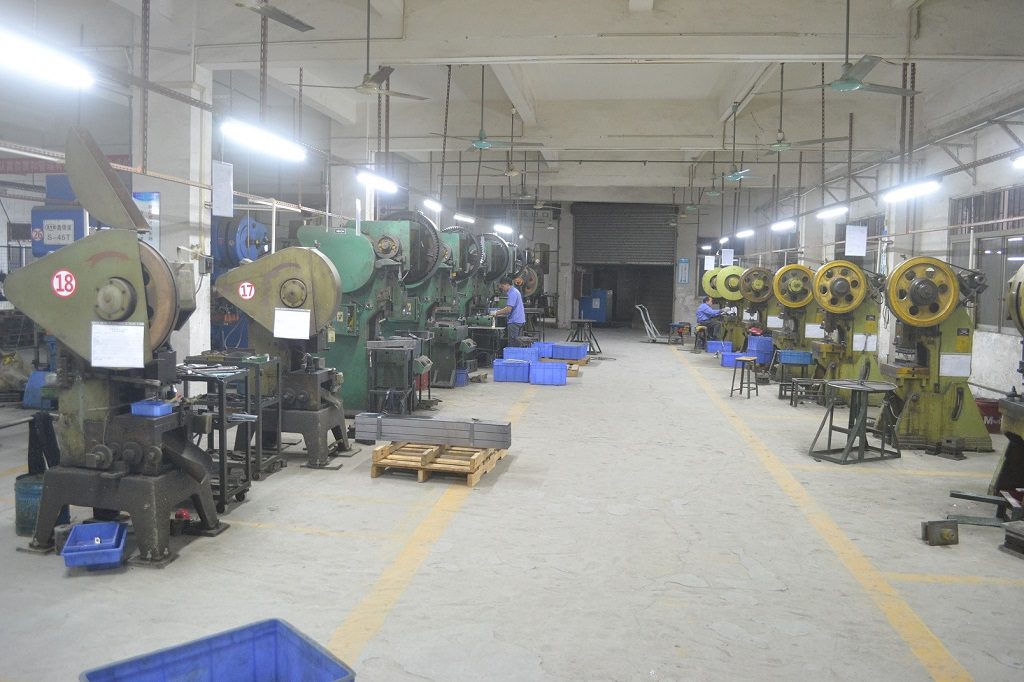
How stamping works: A die forms sheet metal into shape using pressure. It's a forming/shearing process — you start with flat material and shape it directly into the final geometry.
The critical crossover point:
For most parts, the cost comparison looks like this:
| Volume | CNC Cost Per Part | Stamping Cost Per Part | Winner |
| 1-50 pieces | 5−5-5−50 | 50−50-50−500 (tooling amortized) | CNC (no tooling needed) |
| 50-500 pieces | 5−5-5−50 | 10−10-10−50 (tooling amortizing) | Depends on part complexity |
| 500-5,000 pieces | 5−5-5−50 | 2−2-2−10 | Stamping starts winning |
| 5,000-50,000 pieces | 5−5-5−50 | 0.50−0.50-0.50−5 | Stamping clear winner |
| 50,000+ pieces | 5−5-5−50 | 0.05−0.05-0.05−2 | Stamping dominant |
Note: These are illustrative ranges. Actual costs depend heavily on part size, complexity, material, and tolerances.
The key insight is that CNC has a flat cost curve — the 10,000th part costs the same as the 1st part. Stamping has a declining cost curve — after the tooling investment is recovered, each additional part costs only the material plus a fraction of press time.
Where CNC still wins:
- Volumes below 500 pieces (tooling cost can't be justified)
- Extremely thick parts (>6mm) that can't be stamped
- Parts requiring very tight 3D tolerances on machined surfaces (bearing bores, precision holes requiring IT6 or better)
- Parts with internal features (pockets, channels) that stamping cannot create
- Design is not yet finalized and may change frequently
Where stamping wins:
- Volumes above 5,000 pieces (and increasingly dominant as volume grows)
- Parts made from sheet metal (0.1mm to 6mm thick)
- Parts with bends, forms, and features that can be created by forming rather than cutting
- When speed matters — stamping produces 100-800 parts per minute vs. CNC at 2-20 parts per hour
Real cost comparison example:
A customer in North America was buying 20,000 stainless steel brackets per year via CNC machining. Each bracket cost $8.50 from their CNC supplier (cutting from solid bar stock, then drilling and bending). We analyzed the part and determined it could be produced from 1.5mm SUS304 sheet via progressive stamping. Our quote:
- Tooling investment: $12,000 (one-time)
- Per-part cost: $0.85
- Annual savings: (8.50−8.50 - 8.50−0.85) × 20,000 = $153,000 per year
- Tooling payback: Less than 1 month of production
Additionally, the stamped version was actually lighter (1.2g vs 4.5g for the machined version), because CNC cuts from thick bar stock while stamping forms from thin sheet. For this customer, switching to stamping saved 90% per part and paid back the tooling investment in under 800 pieces.
Metal Stamping vs. Laser Cutting
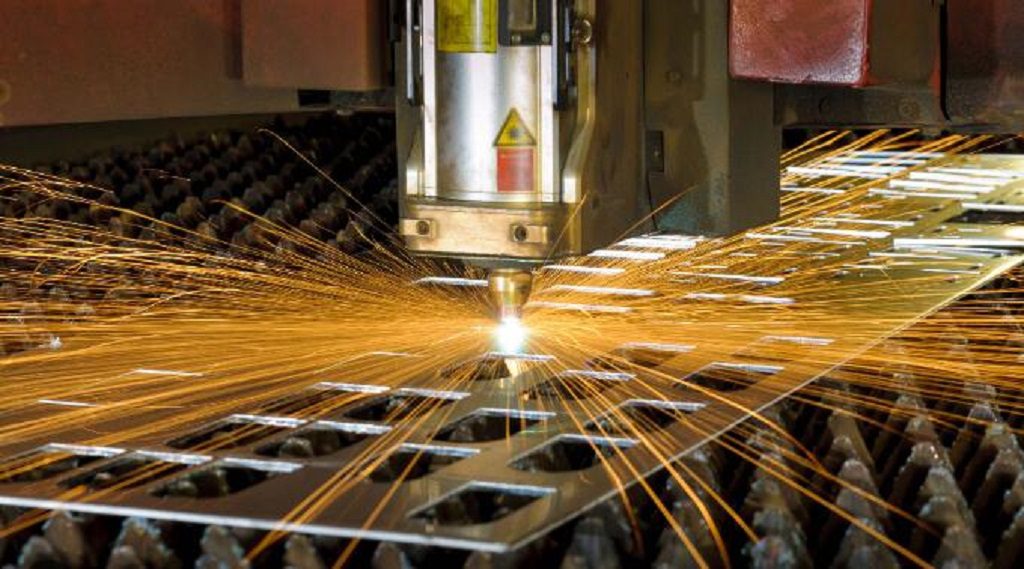
How laser cutting works: A high-powered laser beam cuts 2D profiles from flat sheet metal. It's extremely flexible (no tooling needed, change designs instantly) and produces excellent edge quality.
Key limitation: Laser cutting can only cut — it cannot bend, form, draw, or create any 3D geometry. If your part is anything other than a flat profile, you need additional operations after laser cutting (typically CNC bending on a press brake).
Where laser cutting wins:
- Flat 2D parts with no bends or forms
- Low to medium volumes (1-5,000 pieces) where tooling cost can't be justified
- Rapid design changes (no tooling to modify)
- Very thick material (laser can cut 20mm+ steel; stamping is limited to ~6mm)
- Irregular shapes with extremely long perimeters
Where stamping wins:
- Any part requiring bends or 3D forming (stamping does cut + form in one operation)
- High volumes (stamping is 10-50× faster than laser for equivalent parts)
- Parts requiring tight bend tolerances (die-controlled bends are more consistent than press brake bends)
- Parts with small features (stamping can punch holes faster and more precisely than laser drilling at volume)
Speed comparison:
- Laser cutting a bracket with 6 holes and a perimeter cut: approximately 45-90 seconds per part
- Same bracket on a progressive die: approximately 0.5-2 seconds per part (at 30-120 strokes per minute)
At 50,000 parts per year, the laser would need 625-1,250 hours of cutting time (plus brake press time for bending). The stamping die would produce the same 50,000 parts in approximately 8-25 hours of press time. The difference in productivity is enormous.
Real example:
An electronics customer was having EMI shield covers laser-cut and then bent on a press brake — two separate operations at two different work stations. Per-part cost at 30,000 parts/year: 1.80(laser)+1.80 (laser) + 1.80(laser)+0.60 (bending) + handling = 2.60total.Weconvertedtheparttoasingleprogressivestampingoperation:per−partcostdroppedto2.60 total. We converted the part to a single progressive stamping operation: per-part cost dropped to 2.60total.Weconvertedtheparttoasingleprogressivestampingoperation:per−partcostdroppedto0.35, and the combined cut-and-form operation eliminated the dimensional variation that occurred when transferring parts between laser and brake press. Quality improved while cost dropped by 87%.
Metal Stamping vs. Manual/Semi-Automatic Fabrication
What this includes: Hand bending on a press brake, turret punching, manual welding, hand assembly of fabricated parts.
Key limitation: Human-dependent processes introduce variability. The 1st part may be perfect, but the 500th part — produced by a different operator, at the end of a long shift — may be slightly different. This variability accumulates and causes assembly problems downstream.
Where manual fabrication wins:
- True one-off parts (1-10 pieces)
- Very large parts that exceed press capacity
- Prototyping when speed of first part matters more than consistency
Where stamping wins:
- Any volume above 100 pieces where consistency matters
- When parts must be interchangeable (every piece identical)
- When assembly tolerances are tight (manually-bent parts vary ±0.5mm; stamped parts vary ±0.05mm)
When Metal Stamping Is NOT the Best Choice
I believe in being honest about the limitations of our process. Stamping is not always the answer:
| Scenario | Better Alternative | Why |
| You need 10 prototypes next week | CNC machining or 3D printing | No tooling needed, fastest first-part delivery |
| Your design changes every month | Laser cutting | No tooling cost to absorb with each change |
| Part requires machined surfaces (bearing bores, precision flat surfaces) | CNC machining | Stamping produces formed surfaces, not machined surfaces |
| Part is thicker than 6mm | CNC machining or laser + brake | Exceeds stamping capability |
| Part has deep internal pockets or channels | CNC machining | Stamping cannot create internal features |
| Annual volume is under 500 pieces and may stay there | Laser + brake press | Tooling investment won't pay back |
The hybrid approach: For many of our customers, the optimal solution isn't purely stamping or purely CNC — it's a combination. For example, we stamp a bracket in high volume, then a CNC operation adds a precision-machined hole where the tolerance is tighter than stamping can achieve. Or we stamp the main body and weld on a machined fitting. We help customers figure out the most cost-effective combination for their specific requirements.
Complete Process Comparison
| Factor | Metal Stamping | CNC Machining | Laser Cutting | Manual Fabrication |
| Best for | High-volume complex formed parts | Low-volume precision parts | Flat 2D profiles, medium volume | One-off and very small batch |
| Cost at 10,000+ parts | Lowest (0.05−0.05-0.05−5/part typical) | Highest (5−5-5−50+/part) | Medium (1−1-1−10/part) | Very high (labor-intensive) |
| Production speed | 100-800 parts/minute | 2-20 parts/hour | 20-100 parts/hour | 5-30 parts/hour |
| Part-to-part consistency | Excellent (±0.025mm achievable) | Very good (±0.01mm achievable) | Good for 2D profiles | Poor (operator-dependent, ±0.5mm typical) |
| 3D forming capability | Yes (bends, draws, forms) | Yes (any 3D geometry) | No (flat cutting only) | Limited (press brake bending) |
| Tooling cost | 3,000−3,000-3,000−60,000 (one-time) | None | None | None |
| Material waste | Low (10-25% scrap, easily recycled) | High (50-90% of material becomes chips) | Low-medium (nesting-dependent) | Medium |
| Design flexibility | Low after tooling (die change = new tool) | Very high (program change only) | Very high (file change only) | High |
| Minimum economic volume | 500-5,000+ (depends on tooling cost) | 1 piece | 1 piece | 1 piece |
The bottom line: If your annual volume exceeds 5,000 parts and your geometry includes any bends or forms, stamping will almost certainly deliver the lowest total cost (tooling + per-part combined) within the first year of production. The higher your volume, the more dramatic the savings. For our typical customers ordering 10,000-500,000+ parts per year, stamping reduces per-part costs by 60-90% compared to alternative processes.
Not sure if your volume justifies the tooling investment? Send your drawing and expected annual quantity to [email protected] — our engineers will calculate the breakeven point and show you exactly when stamping becomes more economical than your current process.
About the Author
Sandra Gao is the founder and technical director of Worthy Hardware, a precision metal stamping manufacturer based in China serving global customers since 1998. With over 15 years of experience in metal stamping engineering and production management, Sandra leads a team of 4 engineers specializing in tool and die design, DFM optimization, and quality systems. Worthy Hardware exports to North America, Europe, Japan, Singapore, Australia, New Zealand, and the Middle East, serving industries from aerospace to medical devices.
Contact: [email protected] | www.worthyhardware.com
Have a part design you'd like us to evaluate? Send your drawing to [email protected]. Our engineering team will review it and provide DFM feedback, process recommendations, and pricing within 24 hours — no obligation.