
Which Stainless Steel Grade Is Best for Medical Device Components?

Choosing the wrong stainless steel for medical parts can cause failures or safety issues. This leads to costly problems and harms patient safety. Knowing the right grade ensures reliable, safe medical devices.
For many medical devices, 316 or 316L stainless steel is often the best choice. It resists corrosion very well and can handle high-temperature sterilization. This makes it great for surgical tools and implants.
Selecting the right material is a critical decision in medical device manufacturing. It impacts safety, performance, and regulatory approval. So, let's dive deeper into the common questions manufacturers and designers like you ask about stainless steel for medical uses. Understanding these details helps you make informed choices for your projects.
What stainless steel is used in medical devices?
Are you confused about which stainless steels are actually used in medical parts? Using the wrong one is risky and can lead to device failure. Learn the common types to make safe and effective choices for your components.
Many types are used, including 316L, 304, 420, 440, and 17-4 PH. The specific application dictates the best choice. But 316L is very common because of its excellent properties for many medical scenarios.
The medical field uses several different stainless steel grades. Each grade has specific properties that make it suitable for certain applications. Let's look at some common ones:
-
Austenitic Stainless Steels:
-
316 and 316L: These are perhaps the most widely used. The 'L' means low carbon, which improves corrosion resistance after welding. They offer excellent corrosion resistance, good formability, and biocompatibility. They are used for implants (like bone screws and plates conforming to ASTM F138/F139), surgical instruments (scalpels, forceps), and hypodermic needles. Their resistance to bodily fluids and cleaning agents is a major benefit. My experience shows clients often choose 316L for parts needing high corrosion resistance and biocompatibility.
-
304: This grade is also common, sometimes called 18-8 stainless steel. It has good corrosion resistance but is generally less resistant than 316, especially to pitting corrosion from chlorides (like saline solutions). It's often used for hospital equipment, trays, and some less critical instruments. As you mentioned, it's very common in the food industry too.
-
-
Martensitic Stainless Steels:
- 420 and 440 series (e.g., 440C): These can be hardened by heat treatment. This makes them very strong and wear-resistant. They are ideal for cutting instruments like surgical blades, dental tools, and scissors where a sharp, durable edge is needed. Their corrosion resistance is lower than the 300 series.
-
Precipitation-Hardening Stainless Steels:
- 17-4 PH: This grade offers a good combination of high strength, hardness, and corrosion resistance. It can be heat-treated to achieve different strength levels. It's used in surgical instruments and devices needing high strength and moderate corrosion resistance.
The choice always depends on the specific requirements of the medical device component.
What is the best medical grade stainless steel?
Do you want to know the absolute best stainless steel for medical use? Picking a material that isn't quite right can cost time, money, and affect performance. Understand the top choice and why it often stands out.
While the "best" always depends on the exact need, 316 and especially 316L are frequently considered top choices. Their excellent corrosion resistance and proven biocompatibility make them ideal for many demanding medical applications.
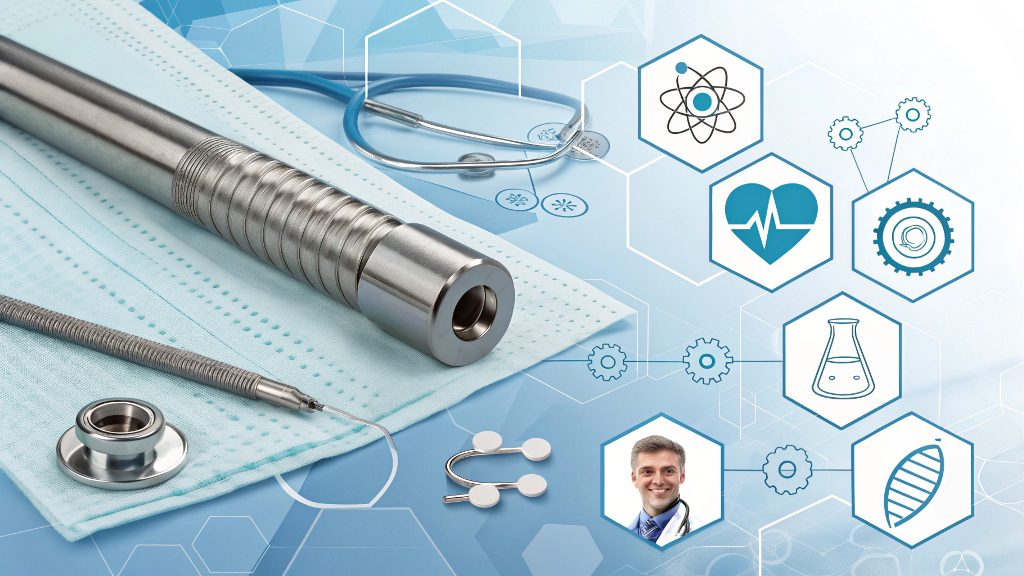
Calling one grade the absolute "best" is tough because the ideal material always depends on the job it needs to do. However, 316L is very often the preferred choice for a wide range of medical applications, especially for implants and instruments that come into contact with bodily fluids or tissues.
Here's why 316L is often considered a top contender:
-
Superior Corrosion Resistance: The addition of molybdenum (compared to 304) significantly enhances its resistance to pitting and crevice corrosion, especially in chloride environments found in the body. This is critical for implants and reusable instruments undergoing repeated sterilization.
-
Excellent Biocompatibility: 316L has a long history of successful use in medical devices and is generally well-tolerated by the human body. This reduces the risk of adverse reactions.
-
Good Strength and Formability: It offers a good balance of mechanical strength and the ability to be shaped into complex parts.
-
Sterilization Compatibility: It holds up well to common sterilization methods like autoclaving (steam and heat) and gamma radiation without significant degradation.
However, it's not always the "best" for every situation.
-
If extreme hardness and edge retention are needed (like for a scalpel blade), a martensitic grade like 440C might be better.
-
If very high strength is the primary requirement, 17-4 PH could be the choice.
-
For less critical applications where cost is a major factor and corrosion demands are lower, 304 might be sufficient.
I remember a customer, let's call him Mark from Canada, who needed parts for a diagnostic device. We initially discussed 304, but because the parts would be frequently cleaned with harsh chemicals, we recommended 316L for better long-term durability, even though it was slightly more expensive. The reliability justified the cost.
Is 316 stainless steel medical grade?
Have you heard about 316 stainless steel but feel unsure if it's truly medical grade? Using non-compliant materials is a serious risk in this industry. Get a clear answer to avoid mistakes and ensure safety.
Yes, 316 stainless steel, particularly the low-carbon version 316L, is widely recognized and used as a medical-grade material. It meets strict requirements for many medical and surgical applications, including implants.
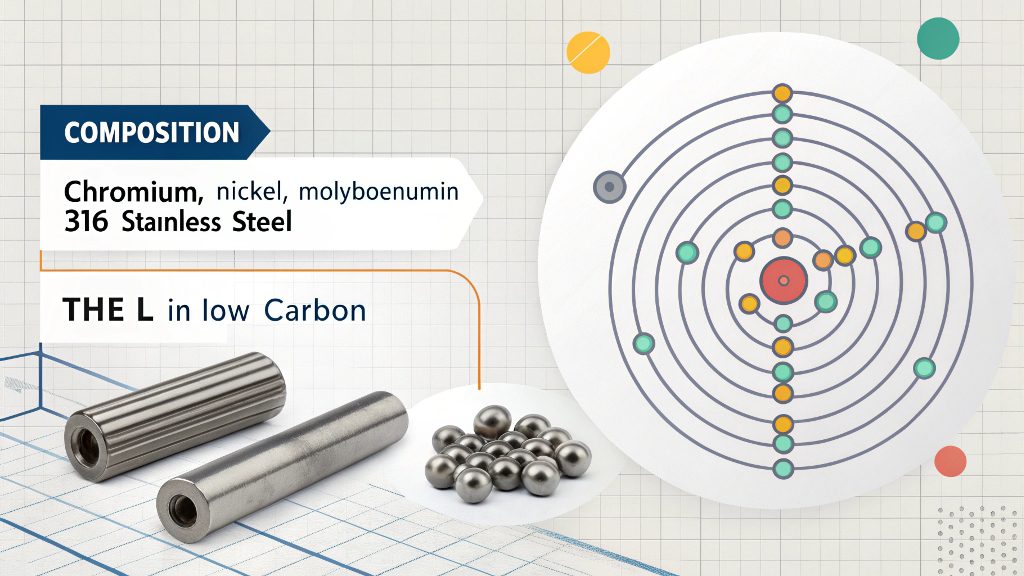
Yes, absolutely. 316 stainless steel is considered a medical-grade material, and its low-carbon variant, 316L, is even more widely specified for medical applications, especially for implants.
What makes it "medical grade"? It's about its specific properties and composition meeting the demanding requirements of the medical industry.
-
Composition: 316 contains chromium (for corrosion resistance), nickel (for formability and corrosion resistance), and importantly, molybdenum. Molybdenum significantly increases resistance to pitting and crevice corrosion, which is vital when materials are exposed to bodily fluids containing chlorides.
-
The 'L' in 316L: This designates 'Low Carbon' (typically below 0.03%). Lower carbon content minimizes harmful carbide precipitation during welding. Carbide precipitation can reduce corrosion resistance at the weld seams. Since many medical devices involve welding or are used in corrosive environments, 316L is often preferred over standard 316 for critical applications, especially implants.
-
Biocompatibility: Decades of use have shown that 316L is generally well-tolerated by the human body, meaning it doesn't typically cause harmful reactions when implanted or in contact with tissues.
-
Meeting Standards: Medical-grade 316L often needs to meet specific industry standards, like ASTM F138 and ASTM F139 (Standard Specification for Wrought 18Chromium-14Nickel-2.5Molybdenum Stainless Steel Bar and Wire for Surgical Implants (UNS S31673)) or ISO 5832-1. These standards define precise chemical composition, mechanical properties, and microstructure requirements.
So, when someone refers to medical-grade stainless steel, 316 and especially 316L are prime examples due to this combination of corrosion resistance, biocompatibility, and established use defined by specific standards. At Worthy Hardware, we ensure material traceability and can provide certifications confirming the material meets these specifications when required by our clients.
What are the FDA approved stainless steel grades?
Are you looking for an official list from the FDA naming approved stainless steel grades? Relying on guesswork about regulatory acceptance is risky. It's important to understand how the FDA actually handles materials for medical devices.
The FDA doesn't publish a list of "approved" stainless steel grades. Instead, the FDA approves the final medical device. Manufacturers must demonstrate that the materials used, like specific stainless steels meeting ASTM or ISO standards, are safe and effective for that device's intended use.
This is a common point of confusion. The U.S. Food and Drug Administration (FDA) does not actually "approve" specific materials like stainless steel grades in isolation. There isn't an official list of FDA-approved stainless steels.
Instead, the FDA regulatory process focuses on the finished medical device. Here's how it works:
-
Manufacturer Responsibility: The company designing and manufacturing the medical device is responsible for selecting appropriate materials.
-
Demonstrating Safety and Efficacy: The manufacturer must then demonstrate to the FDA, through testing and documentation, that the entire device, including all its materials, is safe and effective for its intended use.
-
Role of Consensus Standards: This is where specific stainless steel grades come in. Manufacturers often use materials that conform to recognized consensus standards (like those from ASTM International or ISO). For example, using 316L stainless steel that meets the requirements of ASTM F138 ("Standard Specification for Wrought 18Chromium-14Nickel-2.5Molybdenum Stainless Steel Bar and Wire for Surgical Implants") provides strong evidence of the material's suitability for certain implant applications. The FDA recognizes many of these standards.
-
Biocompatibility Testing: A critical part of demonstrating safety involves biocompatibility testing, often following guidelines like the ISO 10993 series. This testing evaluates how the material interacts with biological systems. Using a material with a long history of safe use and adherence to standards (like 316L) can streamline this process.
So, while the FDA doesn't approve the steel itself, they review the manufacturer's choice of material (e.g., 316L conforming to ASTM F138) as part of the overall device submission. Using well-characterized materials defined by recognized standards is the standard industry practice for gaining FDA clearance or approval for a device. Working with a supplier like us, who understands the importance of material certification and traceability, is crucial for regulatory submissions.
Conclusion
Choosing the right stainless steel, often 316L for its balanced properties, is vital for medical devices. Always consider the specific application requirements and relevant industry standards for safety and performance.