
How to Reduce Manufacturing Costs Through Smart Edge Design Choices?

Struggling with high manufacturing costs? Unsure how design affects the bottom line? Smart edge choices can slash expenses significantly.
You can reduce manufacturing costs by making smart choices in your product's edge design. Specifically, opting for larger chamfers instead of sharp edges or small radii can significantly cut down on machining time, tool wear, and manual labor, leading to substantial savings.
It might seem like a small detail, but the way edges are designed on a part can have a surprisingly big impact on the final cost. Many designers overlook this, but I've learned that focusing here can unlock real savings. If you want to understand how these subtle design features influence your budget, then this article will explain things clearly. Let's explore how these choices play out in the real world.
How can product design reduce costs in the manufacturing process?
Are your product designs unintentionally inflating manufacturing expenses? Simple design tweaks can lead to big savings. It's about designing smarter, not just cheaper.
Product design can reduce manufacturing costs by simplifying features for easier machining. For example, choosing larger chamfers over tight radii or sharp edges minimizes complex tooling, speeds up production, and reduces manual finishing, directly lowering expenses.
When I first started, I didn't always think about how my design choices would affect the actual making of the part. I focused on function and looks. But I learned quickly that the factory floor has its own demands. One key area is edge treatment.
Consider these options for an edge:
-
Sharp Edges: These often look clean on a drawing. But in reality, truly sharp metal edges can be a safety hazard. They also frequently require a secondary operation called deburring. This is often done by hand, which adds labor costs.
-
Small Radii (Fillets): A small curve on an edge can look good. But machining a very small, precise radius can be slow. It might need special small-diameter tools. These tools can break more easily and might require the machine to run at slower speeds. This all adds to the machine time and cost.
-
Larger Chamfers: A chamfer is a sloped or angled edge. Making chamfers, especially slightly larger ones, is often very efficient. Standard chamfering tools can do this quickly. A larger chamfer also effectively breaks the sharp edge, reducing the need for manual deburring. This simple choice – opting for a generous chamfer – can directly reduce machining time and eliminate or lessen secondary operations. This means less cost for you. I found that communicating this preference for larger, functional chamfers early on helps my clients save money.
How can we reduce the cost of manufacturing?
Constantly battling high production costs? Looking for practical ways to trim your budget? Smart manufacturing starts with smart design decisions, often in unexpected places.
We can reduce manufacturing costs by applying Design for Manufacturability (DFM) principles. This includes simplifying edge designs, such as using larger chamfers, which cuts machining time, tool wear, and manual labor, directly lowering overall production expenses.
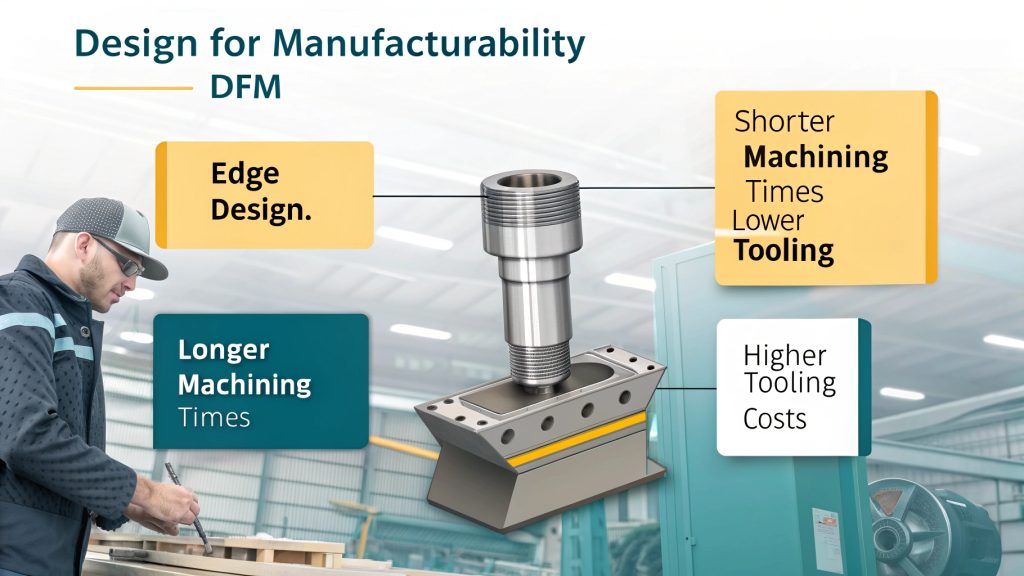
Reducing manufacturing costs is a constant goal for many of us. There are many strategies, from material selection to process optimization. But one area that often gets overlooked is how the actual design of a part impacts cost. This is where Design for Manufacturability, or DFM, comes in. DFM means designing parts so they are easier and cheaper to make.
A big part of DFM is looking at features that add complexity without adding much function. Edges are a prime example.
Here’s how thinking about edges helps:
-
Machining Time: Sharp corners or very small, tight radii often require slower machining speeds or specialized tooling. A machine might need to make multiple small passes. If we instead specify a larger chamfer, a standard tool can often create that edge in a single, quick pass. Less machine time means less cost.
-
Tooling Costs & Wear: Complex edges might need custom tools or small, delicate tools that wear out or break faster. Larger chamfers can typically be made with robust, standard tools that last longer. This saves on tooling expenses.
-
Secondary Operations: As I mentioned before, sharp edges often need deburring. This is usually a manual process where a worker physically removes the sharp burrs. This adds labor cost. A well-placed chamfer can eliminate the need for this step. It's like building the "deburring" into the machining process.
I always tell my clients, let's look at the edges. Can we make that chamfer a bit bigger? It seems minor, but these small changes add up to significant savings.
What is one way to lower manufacturing costs?
Need a straightforward tactic to cut manufacturing expenses? Sometimes the simplest changes yield the biggest results. One specific design choice can make a real difference.
One effective way to lower manufacturing costs is by strategically designing part edges. Specifically, opting for larger chamfers instead of sharp corners or small radii significantly reduces machining time, tool wear, and the need for manual deburring.
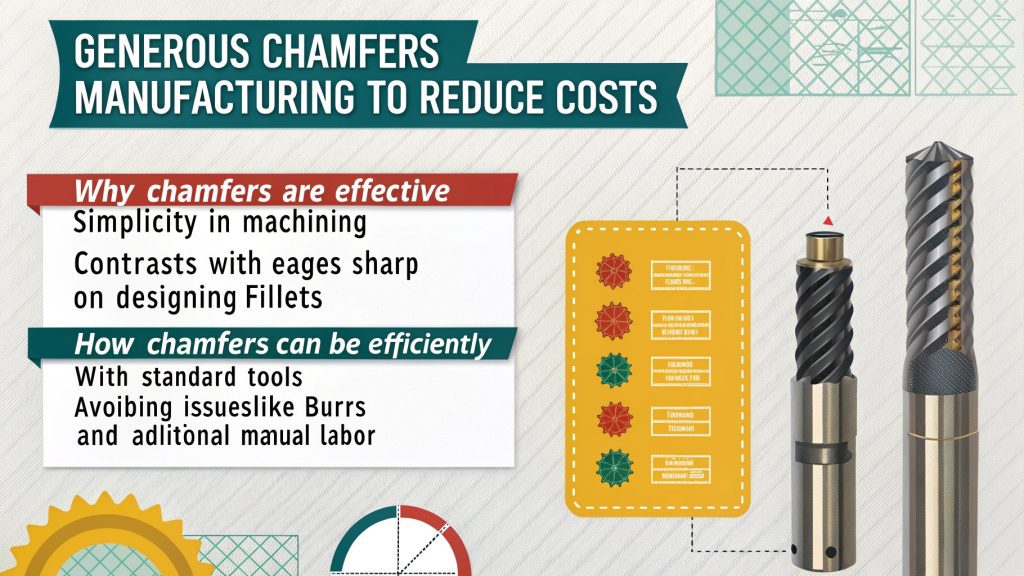
If you're looking for just one impactful way to lower manufacturing costs, I'd point you towards edge design, specifically the use of generous chamfers. It’s a simple concept but powerful in practice.
Let's break down why this single change is so effective:
-
Simplicity in Machining: Creating a chamfer, especially one that isn't tiny, is a straightforward operation for most CNC machines. Standard chamfering tools are readily available and efficient. They can remove material quickly and create a clean, broken edge in a single pass.
-
Contrast with Alternatives:
-
Leaving an edge "as-machined" to be perfectly sharp sounds simple. But it often results in burrs – small, sharp bits of material left over from cutting. These burrs usually must be removed for safety or fit, leading to extra manual labor (deburring).
-
Designing a small, precise radius (fillet) can be more complex. It might require a ball-end mill and slower, more careful machining paths to achieve the precise curve. This increases machine cycle time.
-
-
The Benefit of Larger Chamfers: By specifying a slightly larger chamfer (say, 0.5mm to 1mm or more, where appropriate), you achieve several things. You get rid of the dangerous sharp edge. You reduce or eliminate the need for a separate deburring step. You use a common, efficient machining process. I remember working on a project where the original design had many small, 0.2mm radii on all edges. We discussed it with the client, proposed changing them to 0.5mm chamfers, and the machining time per part dropped by nearly 15%. That’s a significant saving, just from one small design adjustment.
How to reduce cogs in manufacturing?
Are your Cost of Goods Sold (COGS) eating into profits? Pinpointing areas for reduction is key. Smart edge design offers a tangible way to decrease these direct costs.
To reduce COGS in manufacturing, focus on design choices that cut direct labor and machining overhead. Using larger chamfers on part edges achieves this by speeding up machining, reducing tool wear, and minimizing manual finishing tasks.
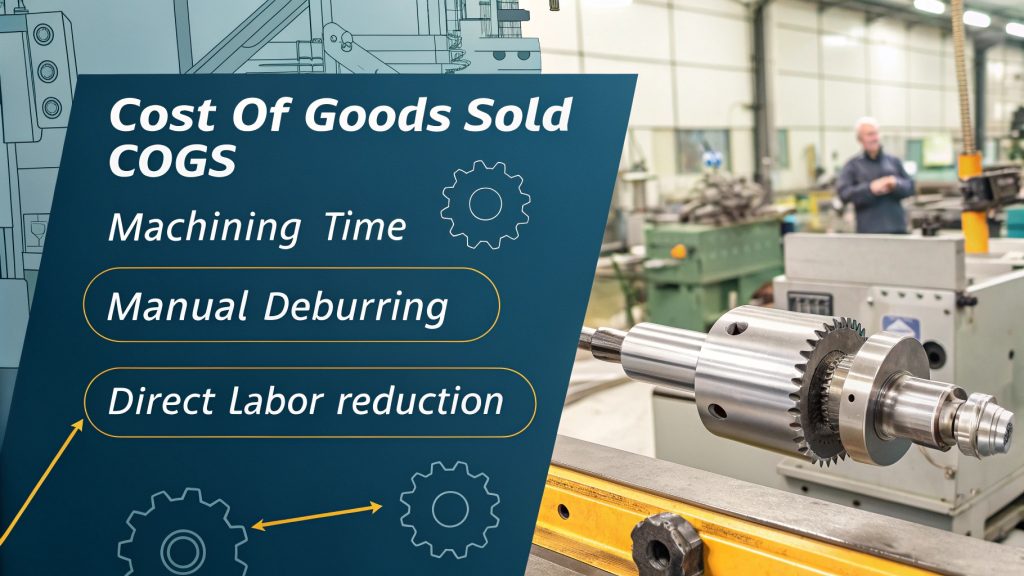
Reducing the Cost of Goods Sold (COGS) is vital for any manufacturing business. COGS includes the direct costs tied to producing your goods: materials, direct labor, and manufacturing overhead. While material costs are important, labor and overhead associated with machining time are often where significant savings can be found, especially through design. And yes, edge design plays a role here too.
Let's see how enlarging chamfers can impact COGS:
-
Direct Labor Reduction:
-
Less Machining Time: As we've discussed, larger chamfers are generally quicker to machine than small radii or dealing with the aftermath of sharp edges (burrs). Less time on the machine means less direct labor cost attributed to the machine operator for that part.
-
Reduced Manual Deburring: If a chamfer effectively breaks an edge and removes burrs during the main machining cycle, it reduces or eliminates the need for a separate, manual deburring stage. Manual deburring is pure direct labor, and it can be surprisingly time-consuming and inconsistent. I've seen cases where deburring took almost as long as the machining itself before we optimized the edge design.
-
-
Manufacturing Overhead Reduction:
-
Increased Machine Throughput: Faster cycle times per part mean more parts can be produced on the same machine in the same amount of time. This improves overall equipment effectiveness (OEE) and spreads the fixed overhead costs (like machine depreciation, electricity, factory space) over more units, lowering the overhead per part.
-
Lower Tooling Costs: Using standard chamfering tools, which are robust, instead of delicate small-radius tools, means fewer tool breakages and less frequent tool replacement. This directly impacts tooling expenses, which are part of manufacturing overhead.
-
By focusing on details like chamfer size, we are directly influencing these components of COGS. It's a practical application of DFM that has a real financial benefit.
Conclusion
Smart edge design, like using larger chamfers, is a simple yet powerful way to cut manufacturing costs, reduce COGS, and improve overall production efficiency.