
Are PTFE Coatings Safe for Industrial Machinery Parts?
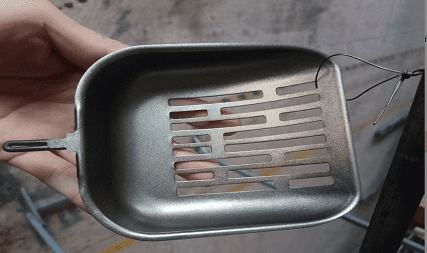
Worried if the PTFE coating on your machine parts is actually safe? Hear confusing things about chemicals? We understand the concern and can help clear it up.
Yes, PTFE coatings are generally very safe for industrial machinery parts. The key is temperature. Below 260°C (500°F), PTFE is stable and does not release harmful fumes. Most industrial applications operate well below this threshold, making PTFE a reliable and safe choice.
Now that you know the basic safety guideline, you probably have more questions. PTFE is a fantastic material, but like anything, it's good to understand it fully before deciding if it's right for your specific parts. Let's explore some common questions I get asked about PTFE coatings.
What are the disadvantages of PTFE coating?
Thinking PTFE is the perfect solution for everything? While it's great, every coating has limits. Knowing the potential downsides helps you make the best choice.
The main disadvantages include relatively low wear and abrasion resistance compared to harder coatings, specific surface preparation needs for good adhesion, potentially higher costs, and its upper-temperature limit of 260°C (500°F). Repairing damaged areas can also be difficult.
Let's dive deeper into these points. PTFE is famous for being non-stick and slippery (low coefficient of friction). That's a huge plus for many moving parts or surfaces needing easy release. But, this softness means it's not the best choice if the part experiences heavy rubbing or abrasive forces. Harder coatings like certain types of plating or specialized polymers might last longer in those cases.
Getting PTFE to stick properly also needs careful work. The part's surface must be very clean and often needs special preparation, like grit blasting or chemical etching, to create a good anchor for the coating. This adds steps and requires expertise, which can influence the cost. Speaking of cost, while the raw PTFE material might not be extremely expensive, the specialized application process (often spraying followed by baking) requires specific equipment and controls, adding to the overall price compared to maybe a simple paint finish.
And we always come back to the temperature limit. 260°C (500°F) is quite high for many applications, but if your parts run hotter than that, PTFE will start to degrade, losing its properties and potentially releasing fumes. Finally, if a PTFE coating gets scratched or damaged, patching it up isn't easy. Often, the entire coating needs to be stripped and reapplied, which means downtime and more cost. At Worthy Hardware, we consider all these factors when discussing surface finish options like PTFE with our customers. We look at the part's function, operating environment, and budget to recommend the best solution, drawing on our experience with over 50 surface finishes.
| Disadvantage | Detail | Consideration for Industrial Parts |
|---|---|---|
| Wear Resistance | Softer than many metals or hard coatings | Not ideal for high-abrasion environments. |
| Adhesion | Requires meticulous surface preparation | Adds complexity and cost to the manufacturing process. |
| Cost | Application process can be specialized/costly | Balance cost against required performance (e.g., friction). |
| Temperature Limit | Degrades above 260°C (500°F) | Unsuitable for very high-temperature applications. |
| Repair Difficulty | Hard to patch; often requires full recoating | Can lead to longer downtime and higher maintenance costs. |
Is PTFE getting banned?
Heard rumors about PTFE being banned? Concerned about regulations affecting your parts? Let's separate fact from fiction, as this causes unnecessary worry sometimes.
No, PTFE itself is not being banned. The regulations you hear about target specific chemicals, like PFOA and PFOS, which were sometimes used in the past manufacturing processes of PTFE. Reputable manufacturers now use different, compliant methods.
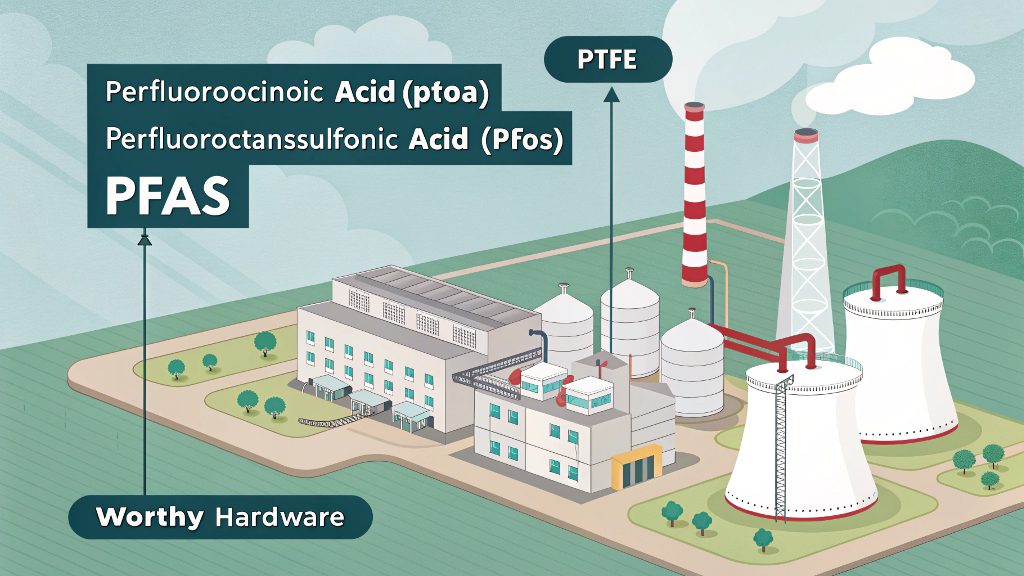
This needs a bit more explanation because it's a common point of confusion. Chemicals like Perfluorooctanoic acid (PFOA)and Perfluorooctanesulfonic acid (PFOS) belong to a larger group called PFAS (Per- and polyfluoroalkyl substances). These were historically used as processing aids to help make PTFE dispersion – basically, helping to mix and apply the PTFE material smoothly during production.
The problem is that PFOA and PFOS are very persistent in the environment (they don't break down easily) and have raised health concerns. Because of this, international agreements (like the Stockholm Convention) and national regulations have heavily restricted or banned the use of PFOA and PFOS.
Good news is, the industry responded. Major chemical companies and coating applicators, including the suppliers we trust at Worthy Hardware, have switched to newer manufacturing processes that do not use PFOA or PFOS. They might use other, shorter-chain PFAS chemicals that are considered less persistent and less harmful, or entirely different technologies. So, the PTFE coatings applied today by responsible companies are compliant with current regulations regarding PFOA and PFOS. When you work with a supplier focused on quality and compliance, like Worthy Hardware (we offer 100% inspection!), you can be confident the materials meet standards. The focus is on how PTFE is made, not banning PTFE itself.
Which industry also uses PTFE?
Do you associate PTFE mainly with non-stick frying pans? You might be surprised! Its unique properties make it valuable in many demanding industrial sectors.
PTFE is widely used across many industries beyond cookware. Key examples include aerospace and defense, automotive, medical and dental, electronics and semiconductors, chemical processing, energy, and industrial equipment manufacturing.
Let's look at why these industries rely on PTFE. Its combination of properties is quite unique:
-
Very Low Friction: Makes parts slide easily, reducing wear and energy needs. Used in seals, bearings, gears, and sliding components.
-
Chemical Inertness: Resists almost all chemicals and solvents. Perfect for equipment handling corrosive materials in chemical plants or labs.
-
Temperature Range: Stable from very low temperatures up to that 260°C (500°F) limit. Useful in aerospace, automotive engines, and industrial processes.
-
Electrical Insulation: Excellent dielectric properties. Used for wire insulation, connectors, and components in electronics and semiconductors.
-
Non-Stick Surface: Prevents materials from sticking. Vital in food processing equipment, molds, and certain industrial machinery.
Here are some concrete examples:
| Industry | Common PTFE Uses | Key PTFE Property Leveraged |
|---|---|---|
| Aerospace & Defense | Seals, gaskets, wire insulation, low-friction surfaces | Temp. range, low friction, inertness |
| Automotive | Fuel hoses, seals, gaskets, bearings, wire coatings | Chemical resistance, temp. range |
| Medical & Dental | Catheters, surgical tools, implants (special grades) | Biocompatibility, low friction |
| Electronics/Semiconductor | Wire/cable insulation, circuit boards, connectors | Electrical insulation, purity |
| Chemical Processing | Linings for pipes/tanks, seals, gaskets, valves | Chemical inertness |
| Food Processing | Non-stick coatings on chutes, molds, conveyors | Non-stick, FDA compliant grades |
| Industrial Equipment | Bearings, seals, valve components, pump parts | Low friction, chemical resistance |
At Worthy Hardware, we machine custom CNC parts for clients in many of these sectors, from aerospace to medical to industrial equipment. We often see drawings specifying PTFE coatings precisely because these properties are needed for the part's function. Our ability to work with various materials and apply finishes like PTFE makes us a versatile partner.
Is PTFE coating the same as Teflon coating?
Heard the names PTFE and Teflon™ used interchangeably? Wonder if there's a difference? It's a simple point, but good to clarify.
Essentially, yes. Teflon™ is simply the registered trademark (brand name) used by the company Chemours (formerly part of DuPont) for its range of PTFE-based coatings. PTFE (polytetrafluoroethylene) is the generic chemical name for the material itself.
Think of it like this: "tissue" is the generic product, while Kleenex® is a specific brand of tissue. Similarly, "PTFE" is the type of polymer, and Teflon™ is Chemours' brand name for their products made using that polymer.
DuPont invented PTFE back in 1938 and branded it Teflon™. The patent eventually expired, allowing other companies to manufacture and sell PTFE resin and coatings. While Chemours (which spun off from DuPont's performance chemicals segment) still holds the famous Teflon™ trademark, many other reputable companies now produce high-quality PTFE coatings under different brand names or simply as generic PTFE.
So, when someone asks for a Teflon™ coating, they are specifically asking for the Chemours brand product. When they ask for a PTFE coating, they are asking for a coating made from the polytetrafluoroethylene polymer, which could be the Teflon™ brand or another manufacturer's equivalent. The core properties people usually want—low friction, chemical resistance, temperature stability—come from the PTFE material itself.
At Worthy Hardware, if a customer drawing specifies "Teflon™ coating," we source that specific brand. If it just says "PTFE coating," we typically use a high-quality generic equivalent that meets the required performance specifications, ensuring the customer gets the properties they need for their custom machined parts. We always clarify specifications if there's any ambiguity.
Conclusion
So, for industrial machinery parts, PTFE coatings are safe if used below 260°C. They offer great benefits but understand their limits. At Worthy Hardware, we machine quality parts and help with finishes.
Need custom CNC machined parts with specific coatings like PTFE? Contact me, Sandra Gao, at [email protected] or visit www.worthyhardware.com to learn how Worthy Hardware in China can help! We offer precision machining, various finishes, and work with clients worldwide.