
How To Prevent Warping When CNC Machining Polyamide Parts?

Warped polyamide parts are a costly headache. These defects can derail your project's budget and timeline. I'll show you how to machine them perfectly without any deformation.
To prevent warping in polyamide, you must control the heat. Use sharp carbide tools, maintain low and consistent cutting speeds, and machine in a temperature-controlled environment. Cool the part with air or water-based coolants, never oil, as it can cause swelling and deformation.
Preventing warping is about more than just a single trick. It is about understanding the entire process, from what warping is to how different factors affect your machining. I remember a project for a client in Canada where we had to machine a complex nylon part. The initial prototypes kept warping. By applying these principles, we solved the issue. Let's break down the key elements you need to know to achieve the same success.
What is warping in machining?
Received a machined part that isn't flat? This defect, called warping, can make your components completely useless. Let's define this frustrating problem so you can start preventing it.
Warping in machining is an unwanted deformation where a part bends, twists, or bows during or after the process. It's caused by the release of internal stresses within the material, often triggered by heat from cutting, or improper clamping and support.
Warping doesn't just happen randomly. It's a direct result of forces and stresses acting on your workpiece. To really get a grip on it, you need to understand the main causes.
The Main Culprits of Warping
The biggest cause is the release of internal stresses. Raw material, especially extruded or molded plastics like polyamide, has stress locked inside it from its own manufacturing process. When we start machining and removing material, we're releasing that stored energy. The part then moves to find a new, stable shape, which we see as warping. Another major factor is thermal stress. The friction from the cutting tool generates a lot of heat. This heat causes the material to expand, and as it cools down, it contracts. If this heating and cooling cycle is uneven across the part, it will twist and bend out of shape.
Warping in Different Materials
Plastics are particularly susceptible to this compared to metals. They have a higher rate of thermal expansion and lower thermal conductivity. This means heat builds up quickly in the cutting zone and causes more movement. Let's look at a summary of these causes.
| Cause of Warping | Description | How to Mitigate |
|---|---|---|
| Internal Stress | Stress locked inside the raw material from its manufacturing process. | Use stress-relieved materials or perform a roughing pass and let it rest. |
| Thermal Stress | Heat generated during the cutting process causes uneven expansion/contraction. | Use proper cooling, sharp tools, and optimized cutting parameters. |
| Clamping Force | Too much pressure from clamps can bend the part, which then springs back after release. | Use appropriate clamping force and support the workpiece correctly. |
Can nylon be CNC machined?
Considering nylon for your CNC parts? You might worry about its softness and tendency to melt. But I can tell you, nylon is very machinable with the right knowledge.
Yes, nylon (polyamide) can be CNC machined very effectively. It's a popular choice for its strength, wear resistance, and low friction. The key to success is managing heat to prevent melting or warping, and using very sharp tools to get a clean cut.
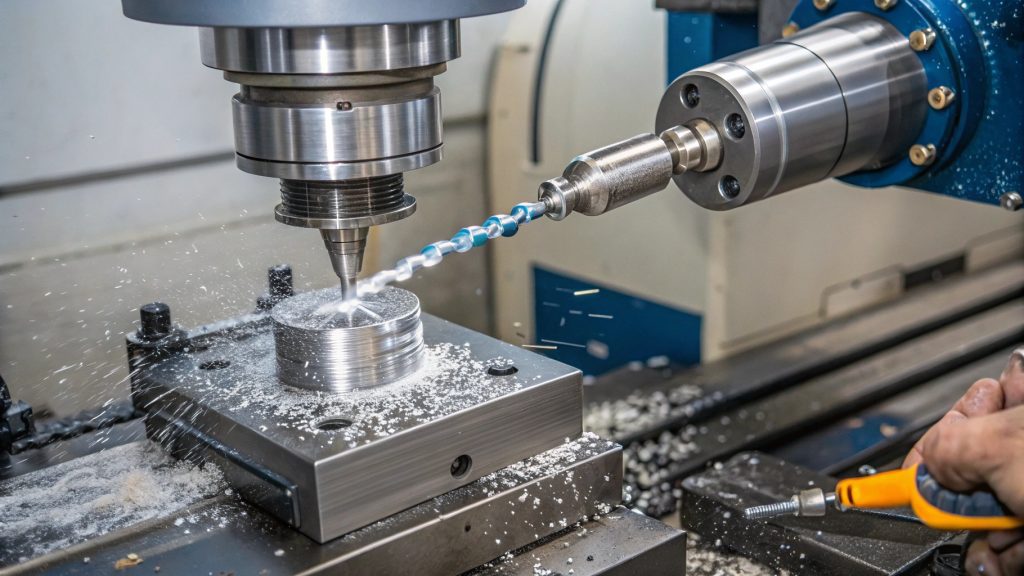
Machining nylon isn't like machining aluminum or steel. It has its own unique properties that you must respect to get a good result. In my experience, focusing on a few key areas makes all the difference.
Key Considerations for Machining Nylon
The single most important factor is heat management. Nylon has a relatively low melting point, and it starts to soften well below that. I always tell my team to keep the cutting temperature below 100°C.
If it gets too hot, the nylon will get gummy, stick to the tool, and deform easily. To help with this, tool selection is critical. We use extremely sharp carbide tools, often with a high positive rake angle. A sharp tool slices through the material cleanly instead of plowing through it. This reduces friction, which in turn reduces heat and leaves a much better surface finish.
Best Practices for Coolant and Speeds
When it comes to cooling, the choice is vital. We always use compressed air or a water-based coolant. You must never use oil-based coolants. Nylon is hygroscopic, meaning it absorbs moisture and oils.
An oil-based coolant will actually cause the part to swell and change its dimensions, destroying your tolerances. For cutting parameters, we stick to low, constant cutting speeds and moderate feed rates. This provides a stable cutting process that minimizes heat buildup and prevents the material from warping.
Which material is typically harder to machine in CNC?
Ever feel like your machine is fighting the material? Some materials are notoriously difficult to work with. This can lead to broken tools and scrapped parts, costing you money.
Superalloys like Inconel and titanium alloys are typically the hardest to machine. Their high strength at high temperatures, toughness, and work-hardening properties create extreme tool wear and cutting forces, requiring specialized tools, rigid machines, and specific strategies.
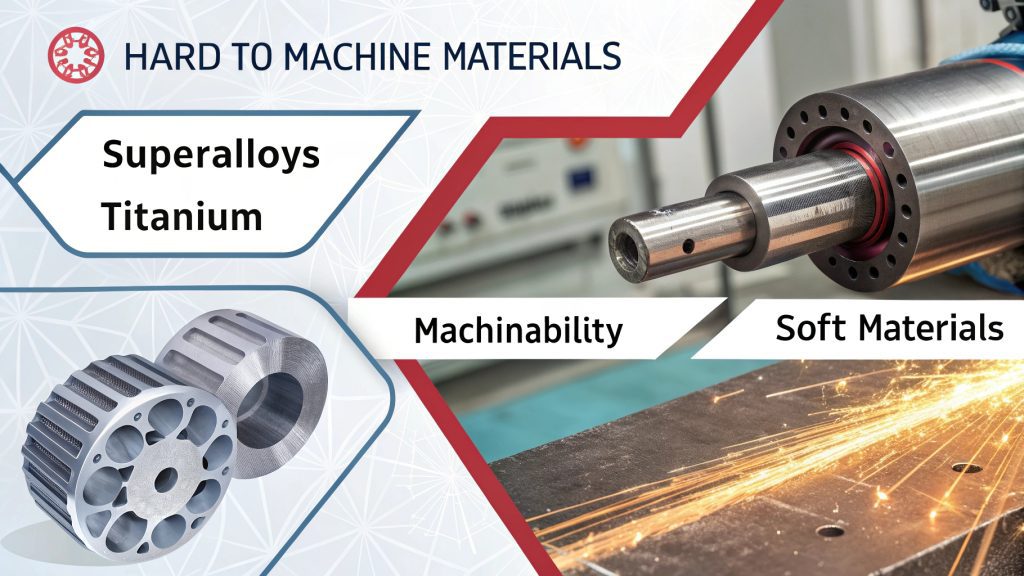
The term 'hard to machine' can mean different things. It isn't just about the material's physical hardness. It is about a combination of properties that make cutting difficult.
The Challenge of Superalloys and Titanium
When engineers talk about the most difficult materials, they are usually referring to superalloys and titanium. Materials like Inconel are designed for jet engines, so they keep their strength even when red-hot. This is bad for machining because the material doesn't soften at the cutting edge. This leads to immense pressure on the tool. They also work-harden instantly.
The very act of cutting makes the surface you're about to cut even harder. On top of that, they have poor thermal conductivity. So all the cutting heat gets trapped in the tool, causing it to wear out incredibly fast. This is why we need very rigid machines and special cutting strategies for these metals.
Comparing Material Machinability
But even soft materials can be 'hard to machine' in their own way. Let's compare a few classes.
| Material Class | Example | Key Machining Challenge |
|---|---|---|
| Soft Plastics | Polyamide (Nylon), PEEK | Heat management, warping, holding tolerance. |
| Free-Machining Metals | Aluminum 6061, Brass | Generally easy, but can have burrs. |
| Steels | Stainless Steel 304/316 | Gummy, work-hardens, poor chip breaking. |
| Hardened Steels | Tool Steel (A2, D2) | Extreme hardness, requires very hard tooling (CBN/Ceramic). |
| Superalloys | Inconel, Titanium | Extreme work hardening, high-temp strength, tool wear. |
Which factors affect the machining time when using CNC machines?
Are long machining times delaying your projects? Every extra hour on the machine costs money and pushes back your deadlines. Let's look at the key factors that determine speed.
The single biggest factor affecting CNC machining time is the Material Removal Rate (MRR). This is determined by the material being cut, the part's complexity and size, the required tolerances and surface finish, and the cutting parameters used.
While many things contribute to how long a job takes, they can be grouped into a few main categories. As a manufacturer, I balance these factors every day to give our customers like Mark accurate lead times.
The Core Factors: Material and Geometry
The type of material is a primary driver. As we discussed, machining Inconel is much slower than machining aluminum because you have to use lower speeds and take smaller cuts. The part's geometry and size are also huge factors. A large, simple plate will machine faster than a small, highly complex part with dozens of features, pockets, and holes. Every time the machine has to change tools or re-orient the part, it adds time. For example, our 5-axis machines can create complex geometries in a single setup, which often saves time compared to multiple setups on a 3-axis machine.
The Finishing Touches: Tolerance and Surface Finish
Finally, the required precision level has a massive impact. A part with standard tolerances of +/- 0.005" can be made relatively quickly. But if a drawing calls for precision tolerances of +/- 0.001", we need to run slower finishing passes and spend more time on quality inspection. This is a service we provide, but it's important for customers to know it adds to the machining time. Similarly, a standard 'as-machined' finish is fast, but if you need powder coating, anodizing, or polishing, these are additional post-processing steps that add to the overall lead time.
Conclusion
Preventing polyamide warping requires heat control, sharp tools, and the right coolant. Understanding warping, materials, and time factors helps you get quality machined parts efficiently, every time.