
What Are The Latest Innovations In Polypropylene Manufacturing Technology?

Material tech changing fast? Outdated info costs money. Discover new polypropylene manufacturing innovations now.
Key innovations in polypropylene manufacturing refine existing processes like Spheripol and Unipol. They focus on better catalysts, improved reactor designs, and creating tailored PP grades for new uses.
Understanding these advancements is key for anyone using polypropylene. We'll explore how current manufacturing works and where the latest breakthroughs are making a difference. Let's get started.
What is the industrial manufacturing process of polypropylene?
Polypropylene production seems complex? Not knowing the basics can lead to wrong choices. Let’s clarify the main industrial manufacturing processes simply.
Industrial polypropylene manufacturing mainly involves polymerizing propylene monomer. Key methods include slurry, bulk, and gas-phase processes, often using Ziegler-Natta or metallocene catalysts to create various PP grades.
Polypropylene is a very common plastic. We see it in so many products around us. As a company, Worthy Hardware, we machine many parts from polypropylene for our clients. So, understanding how it's made is important for us. It helps us advise our customers on the best material choices. The way polypropylene is made affects its final properties.
Currently, polypropylene production processes can be divided into five major categories. This division is based on the type of polymerization used. Let's look at each one.
Solution Process
The solution process was one of the earlier methods. Here, propylene monomer, catalyst, and the polypropylene polymer all dissolve in a liquid solvent. The reaction happens in this solution. After polymerization, the solvent needs to be removed. It also needs to be recovered. This step can add to the cost of production. So, this process is less common today for making large amounts of polypropylene. It is mostly used for some specialty grades.
Slurry Process
In the slurry process, the propylene monomer and catalyst are in a liquid hydrocarbon diluent. The polypropylene polymer, however, does not dissolve in this diluent. It forms as solid particles. This creates a mixture called a slurry. These polymer particles are then separated from the diluent. This method is quite efficient. It is used to produce various grades of polypropylene. The properties can be controlled well.
Bulk Process
The bulk process uses liquid propylene itself as the reaction medium. This is a very efficient method. There is no need for a separate solvent or diluent that needs to be removed later. This saves costs and simplifies the process. The polymerization happens directly in the liquid monomer. Spheripol technology, which we will discuss in more detail later, is a good example of a bulk process. This method produces high-quality polypropylene with good particle morphology.
Gas Phase Process
The gas phase process is another very popular and modern method. Here, gaseous propylene monomer reacts with a solid catalyst. This reaction happens in a fluidized bed reactor. In this reactor, the growing polymer particles are kept suspended by a flow of gas. It’s like a constantly moving cloud of particles. This method is very flexible. It can produce a wide range of polypropylene types, from homopolymers to complex copolymers. The Unipol technology, which we will also cover, is a well-known gas-phase process.
Bulk-Gas Phase Combination Process
Many modern polypropylene plants use a combination of processes to get the best results. Often, a bulk process (like a loop reactor where liquid propylene circulates) is used for the first stage of polymerization. This is then followed by one or more gas-phase reactors for further reaction. This combination allows for even better control over the polymer structure.
It helps to make special polypropylene copolymers. These copolymers can have improved properties, like much higher impact strength or specific melt flow characteristics. This approach gives manufacturers great versatility.
At Worthy Hardware, we often machine parts from these advanced polypropylene grades. Their specific properties are crucial for performance in the demanding applications our customers, like Mark Chen from Canada, require.
What are the industrial applications of polypropylene?
Wondering about polypropylene's uses? You might be overlooking its versatility and cost-effectiveness. Let's explore its many industrial applications together.
Polypropylene is incredibly versatile. It's widely used in packaging (containers, films), automotive parts, consumer goods, fibers for carpets and textiles, and even medical devices due to its properties.
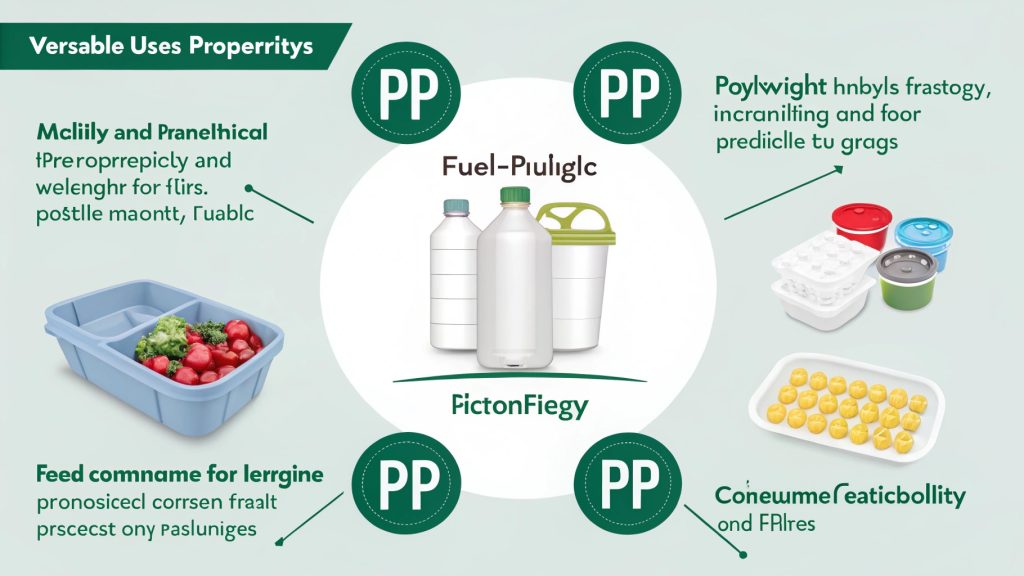
Polypropylene, or PP, is one of the most widely used plastics in the world. Its popularity comes from a great combination of properties. It is lightweight. This is good for fuel efficiency in cars. It's also good for portable consumer goods.
PP has excellent chemical resistance. This means it doesn't easily react with acids, bases, or solvents. This makes it ideal for containers holding chemicals or food. It is also great for medical labware. PP can be made very strong and stiff. Or, it can be made more flexible, depending on the specific grade. It is also easy to process. Manufacturers use methods like injection molding, extrusion, and thermoforming to shape it.
Here are some key areas where you will find polypropylene:
-
Packaging: This is a huge market for PP. Think about food containers like yogurt pots and margarine tubs. Bottle caps are often made from PP. Clear films for wrapping products like biscuits or snacks are also common. BOPP (Biaxially Oriented Polypropylene) film is very strong and clear, used a lot in food packaging. We at Worthy Hardware sometimes make molds or fixtures that are used in the packaging industry.
-
Automotive Parts: Inside cars, you will find a lot of PP. Dashboards, door panels, interior trims, and pillar covers often use it. Under the hood, components like battery cases and air ducts can be made from PP. Its impact resistance and ability to be molded into complex shapes are important here. Its light weight also helps with fuel economy.
-
Consumer Goods: Many everyday items use PP. Examples include plastic furniture like chairs and tables. Housings for appliances like coffee makers or vacuum cleaners use PP. Luggage, storage crates, and toys are also frequently made from it. It can be easily colored, which is a plus for consumer products.
-
Fibers and Fabrics: PP fibers are very versatile. They are used in carpets and rugs because they are durable and resist staining. Upholstery fabrics, ropes, and twines also use PP. Non-woven fabrics made from PP are important too. You find them in disposable items like wipes, masks, and medical gowns.
-
Medical and Healthcare: In the medical field, PP is valued for its chemical resistance and ability to be sterilized. Syringes, medical vials, petri dishes, and some implantable devices like hernia meshes use medical-grade PP. Sterile containers for medical instruments are also common.
-
Industrial Applications: PP is also used for more heavy-duty applications. This includes pipes for chemical transport, tanks for storing liquids, and sheets used for construction or industrial equipment.
At Worthy Hardware, we get designs for CNC machined polypropylene parts for many of these sectors. For instance, we’ve made custom fixtures for medical device assembly from PP. We have also produced complex prototype parts for new consumer electronics. The versatility of PP makes it a go-to material for many of our customers.
What is Spheripol technology?
Heard of Spheripol but unsure what it is? This gap could limit your material choices. Let's break down this leading polypropylene technology.
Spheripol is a leading polypropylene manufacturing technology developed by LyondellBasell. It's a bulk process using loop reactors, known for producing spherical polymer particles with controlled properties and high efficiency.
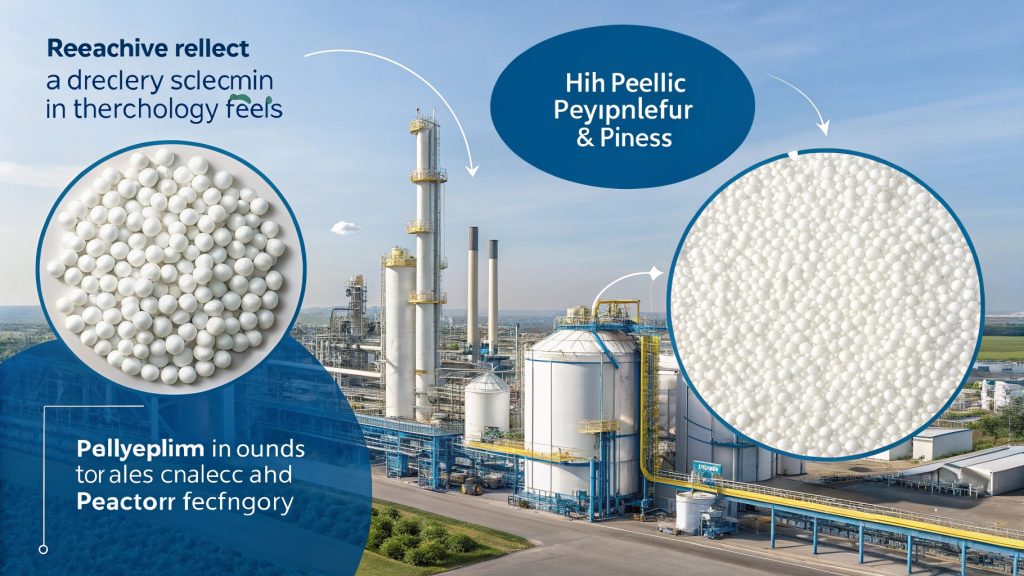
Spheripol technology is a well-known name in the world of polypropylene. It was developed by LyondellBasell, a major plastics and chemicals company. It is one of the leading technologies used to produce polypropylene globally. Many manufacturers license this technology for their plants.
The name 'Spheripol' actually gives a clue to one of its key features. It comes from 'spherical polymer'. This is a very important characteristic of the process. The polypropylene polymer forms into small, round pellets directly in the reactor system. These pellets are very uniform in size. They also have a high bulk density. This means they pack well together without much empty space.
These features make the polymer easy to handle during transport and storage. It is also easier to process into final products in machines like extruders or injection molders. There are fewer fine particles, or 'fines', produced. Fines can sometimes be a problem in other processes, causing dust or flow issues.
The Spheripol process is primarily a bulk polymerization process. This means it uses liquid propylene as the reaction medium. Typically, it involves one or two loop reactors. In these reactors, liquid propylene and catalyst circulate rapidly. This is followed by one or more gas-phase reactors. The gas-phase reactors are used to incorporate ethylene or other comonomers. This allows for the production of impact copolymers, which are much tougher.
High-activity Ziegler-Natta catalysts are a core part of Spheripol technology. These catalysts are very efficient. They help make a lot of polymer quickly and control its structure precisely. This technology is very versatile. It can make homopolymers, which are made from only propylene monomer.
It can also make random copolymers. In random copolymers, propylene is polymerized with a small amount of another monomer, like ethylene, mixed in randomly along the polymer chain. This often improves clarity and flexibility. And, as mentioned, it can make heterophasic impact copolymers. These have a polypropylene matrix with a rubbery ethylene-propylene phase dispersed in it, giving excellent toughness, especially at low temperatures.
LyondellBasell has continuously improved the Spheripol technology over the years. Newer generations of catalysts and advancements in reactor design keep it at the forefront of PP production. These innovations lead to better product properties, higher plant capacities, and improved operational efficiency.
For us at Worthy Hardware, when we machine parts from PP made by the Spheripol process, we often see good consistency in the material. This consistency in molecular weight and particle shape helps us achieve the tight tolerances and smooth surface finishes our customers, like Mark Chen who values quality, expect.
What is Unipol polypropylene process technology?
Is the Unipol polypropylene process a mystery? This could mean overlooking flexible and efficient PP options. Let’s explore this key gas-phase technology.
The Unipol process, from Dow, is a gas-phase polypropylene technology. It uses a fluidized bed reactor, offering flexibility to produce a wide range of PP grades efficiently.

The Unipol polypropylene process is another very important and widely used technology for making polypropylene. This technology was originally developed by Union Carbide. Union Carbide later became part of Dow Chemical Company. So, Dow is now the primary licensor of Unipol PP technology. Grace is also a significant player in licensing gas-phase polypropylene technology, sometimes with similar principles.
The heart of the Unipol process is its use of gas-phase polymerization in a fluidized bed reactor. Let me try to explain this. Imagine a large, vertical cylindrical reactor. Gaseous propylene monomer, along with any comonomers like ethylene, and hydrogen (to control molecular weight), is continuously fed into the bottom of this reactor. Inside the reactor is a bed of catalyst particles and growing polypropylene granules. The upward flow of the gas mixture is controlled so that it lifts and suspends these particles. This makes the solid particles behave like a bubbling fluid. That’s why it's called a 'fluidized bed'.
This fluidized bed system offers several advantages. The design is relatively simple compared to liquid-phase processes. This can lead to lower investment costs for building a plant. Operating costs can also be lower. A big advantage is its flexibility.
By carefully controlling the operating conditions (like temperature, pressure, and gas composition) and the type of catalyst used, manufacturers can produce a very wide range of polypropylene grades. This includes homopolymers, random copolymers, and impact copolymers, all within a single reactor line. For impact copolymers, a second, smaller fluidized bed reactor is often used in series.
The Unipol process often uses what are called SHAC™ (Super High Activity Catalyst) systems. These catalysts are very efficient. They can produce a large amount of polymer per unit of catalyst. This high activity means that the amount of catalyst residue left in the final polymer is very small. Often, it's so low that no step is needed to remove it, which simplifies the process.
Innovations continue in Unipol technology too. For example, an operating technique called 'condensing mode' can be used. In this mode, some of the circulating gas is cooled until part of it condenses into liquid. This liquid, when reinjected into the reactor, evaporates and helps to remove more heat from the polymerization reaction. This allows for higher production rates from the same reactor size.
The polypropylene produced by the Unipol process is suitable for a huge number of applications, from clear packaging films to strong and durable automotive parts. We at Worthy Hardware machine many parts from Unipol-grade PP. Its wide availability and broad spectrum of properties make it a common and reliable choice for our clients’ custom CNC parts.
Conclusion
Polypropylene manufacturing sees constant innovation in processes and catalysts. This delivers better materials for diverse applications, impacting many industries positively. Always stay updated.
I'm Sandra Gao from Worthy Hardware. We are a CNC machining parts supplier in China. We work with over 100 materials, including many grades of polypropylene. If you need custom machined PP parts with tight tolerances, from prototype to high volume, please contact me at [email protected] or visit www.worthyhardware.com. We ship worldwide and focus on 100% inspection for quality.