
PEEK Vs. Nylon: Which Is Better For High-Performance Engineering Components?

Choosing the wrong plastic can lead to component failure and costly replacements. You need the right material properties. This guide helps you decide between PEEK and Nylon for your demanding parts.
PEEK generally offers superior performance in extreme conditions (temperature, chemicals, mechanical stress), making it ideal for critical high-performance parts. Nylon provides good all-around properties at a lower cost, suitable for many less demanding engineering applications where high heat isn't a major factor.
Selecting the right material is crucial for the success of any engineering project. High-performance plastics like PEEK and Nylon are often considered, but they have very different strengths and weaknesses.
Understanding these differences is key before committing to production, especially for custom CNC machined parts where material choice significantly impacts performance and cost. Let's explore which material might be the better fit for your specific needs.
Is PEEK better than nylon?
Struggling to decide between PEEK and Nylon for your parts? Making the wrong choice could mean unexpected failures and project delays. Let's compare them directly to see which suits your needs best.
Generally, PEEK offers higher performance regarding temperature resistance, chemical inertness, and mechanical strength compared to Nylon. However, "better" depends entirely on your application's specific requirements and budget. Nylon is often sufficient and more cost-effective.
When we talk about "better," we need to look at specific properties. PEEK (Polyetheretherketone) stands out in several demanding areas. It maintains its excellent mechanical properties, like strength and stiffness, at very high temperatures (continuous use often up to 250°C or 482°F), where Nylon would soften or degrade significantly.
PEEK also has superior resistance to a wider range of chemicals, including aggressive acids and bases, and hot water or steam. Nylon, while having good chemical resistance to many common substances like oils and fuels, is more susceptible to strong acids, bases, and moisture absorption.
Here's a quick comparison:
| Feature | PEEK | Nylon (Typical, e.g., Nylon 6/6) | Why it Matters |
|---|---|---|---|
| Max. Service Temp | ~250°C (482°F) | ~80-120°C (176-248°F) (Varies by grade) | Critical for high-heat environments |
| Tensile Strength | Very High (~90-100 MPa) | Good (~70-85 MPa, dry) | Resistance to pulling forces |
| Chemical Resist. | Excellent (Broad range) | Good (Oils, fuels), Poor (Strong acids) | Performance in harsh chemical environments |
| Moisture Absorp. | Very Low (~0.1-0.5%) | Moderate to High (~1-3%+, depends) | Affects dimensional stability and properties |
| Cost | Very High | Moderate | Budget considerations are often significant |
| Machinability | More challenging (requires experience) | Good | Ease of manufacturing |
At Worthy Hardware, we machine both PEEK and various grades of Nylon regularly. We understand the specific tooling and techniques needed for PEEK to achieve tight tolerances like +/- 0.001" and avoid stress-induced issues.
While Nylon is easier to machine, its tendency to absorb moisture requires careful handling and consideration during the design and manufacturing process, especially for parts needing high dimensional stability. PEEK is often the choice for aerospace, medical, and semiconductor applications due to its robustness, while Nylon is common in automotive parts, gears, and general industrial components.
What is the strongest engineering plastic?
Need the absolute highest strength from your plastic component? Using a material that can't handle the load leads directly to failure. Let's identify some top contenders for strength.
While several plastics offer high strength, PEEK is frequently cited as one of the strongest unreinforced thermoplastics, especially considering its strength retention at high temperatures. Other plastics like Torlon (PAI) or Vespel (PI) can also exhibit extremely high strength.
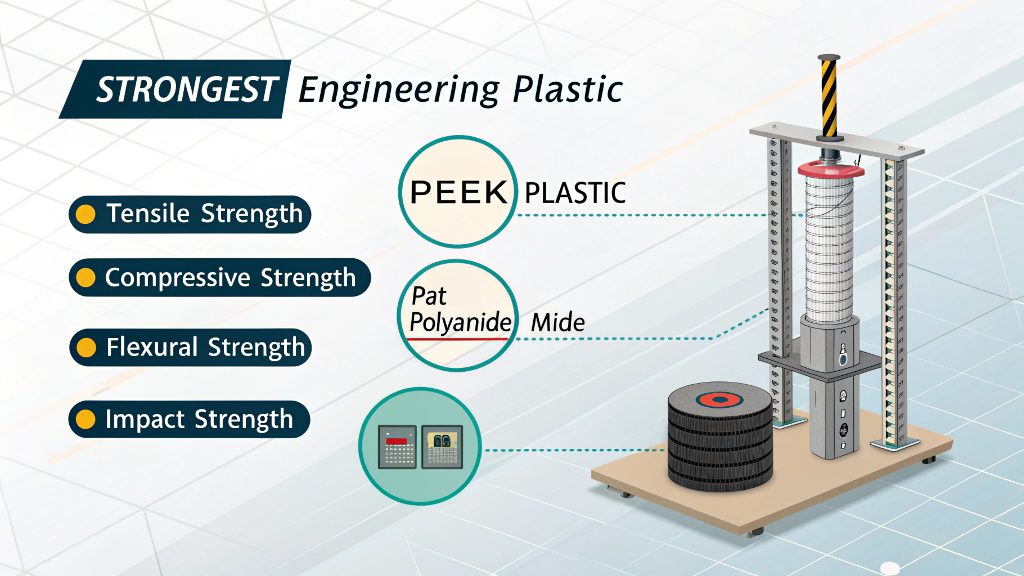
Defining the "strongest" engineering plastic depends on how you measure strength. We usually look at:
-
Tensile Strength: Resistance to being pulled apart.
-
Compressive Strength: Resistance to being squeezed or compressed.
-
Flexural Strength: Resistance to bending.
-
Impact Strength: Resistance to sudden shocks or impacts.
PEEK excels in tensile, compressive, and flexural strength, maintaining these properties even under high thermal and mechanical stress. Its unreinforced grades typically show tensile strengths around 90-100 MPa. When reinforced with materials like glass fiber or carbon fiber (Carbon PEEK), its strength and stiffness increase dramatically, sometimes exceeding 200 MPa in tensile strength, putting it in the range of some metals like aluminum but at a much lower weight.
Other ultra-high-performance plastics also compete for the title:
-
Torlon (PAI - Polyamide-imide): Offers exceptional strength, stiffness, and wear resistance, often exceeding PEEK at very high temperatures, but can be more difficult to process.
-
Vespel (PI - Polyimide): Known for performance at extreme temperatures (both high and low) and low wear/friction, often used in demanding bearing and seal applications. It doesn't melt.
-
Celazole (PBI - Polybenzimidazole): Often considered to have the highest temperature resistance and strength retention above 200°C, but extremely expensive and difficult to process.
For most high-strength applications we encounter at Worthy Hardware, where customers need reliable performance under load, PEEK (especially reinforced grades) provides an excellent balance of strength, temperature resistance, chemical resistance, and relative processability compared to more exotic options like PBI. We have the expertise to machine these tough materials to precise specifications, ensuring the final part leverages the material's inherent strength.
What is the highest compressive strength plastic?
Are your parts getting crushed under load? Compressive failure can halt operations and cause damage. You need a plastic that stands up to squeezing forces.
Plastics known for exceptionally high compressive strength include PEEK, Vespel (Polyimide), Torlon (PAI), and Celazole (PBI). Reinforced grades of these materials often exhibit the highest values, resisting deformation under significant loads.
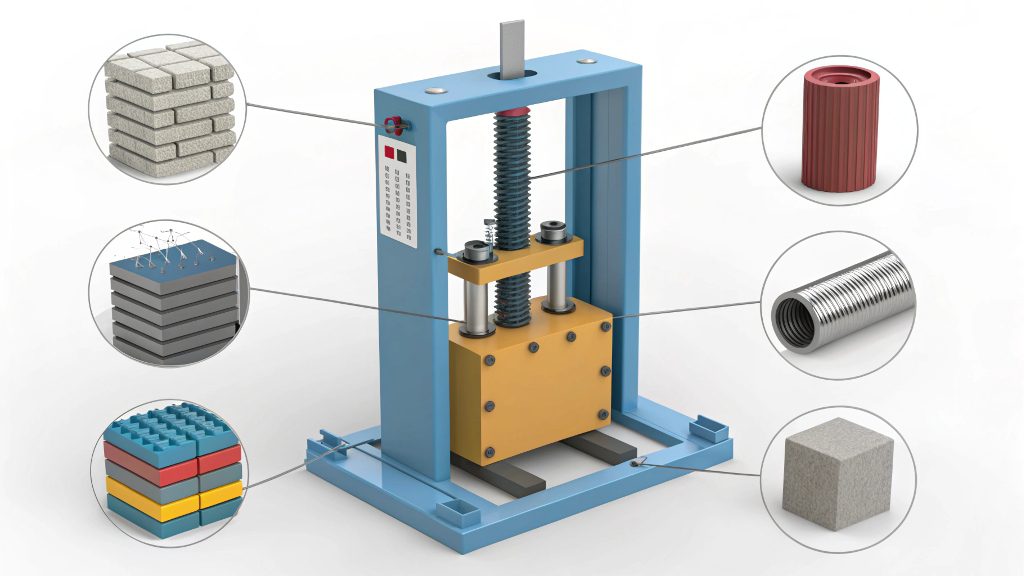
Compressive strength measures a material's ability to withstand forces pushing it together, trying to compress or crush it. This is a critical property for components like bearings, bushings, seals, structural supports, and fixtures that bear significant loads.
PEEK demonstrates excellent compressive strength, typically around 120 MPa for unfilled grades, and significantly higher for bearing grades or fiber-reinforced grades (often exceeding 200 MPa). Crucially, PEEK maintains good compressive strength even at elevated temperatures where many other plastics would deform easily.
Let's compare some top performers:
| Material | Typical Compressive Strength (Unfilled, approx.) | Key Characteristics |
|---|---|---|
| PEEK | ~120 MPa | Excellent balance of properties, high temp strength |
| Vespel (PI) | ~150-250 MPa (Varies greatly by grade) | Extreme temperature stability, low wear |
| Torlon (PAI) | ~180-270 MPa (Varies greatly by grade) | Very high strength and stiffness, wear resistance |
| Celazole (PBI) | >300 MPa | Highest temperature resistance, very high strength |
| Nylon (PA 6/6) | ~80-100 MPa (Dry) | Good general purpose, lower than PEEK/PAI/PI |
Adding fillers like glass or carbon fibers significantly boosts the compressive strength of many base polymers, including PEEK and even Nylon. For example, a 30% glass-filled PEEK can have compressive strength well over 200 MPa.
When selecting a material for high compressive loads, it's also essential to consider factors like temperature, chemical exposure, and wear resistance. PEEK often hits a sweet spot for applications needing high compressive strength combined with thermal stability and chemical resistance. At Worthy Hardware, we frequently machine PEEK components designed specifically for high-load bearing applications, ensuring dimensional accuracy is maintained even with these robust materials.
Does nylon have high tensile strength?
Considering Nylon for parts that need to resist stretching or pulling forces? Understanding its strength limits is vital to avoid failures. Let's examine Nylon's tensile properties.
Nylon (Polyamide) possesses good tensile strength for a general-purpose engineering plastic, making it suitable for many applications. However, its tensile strength is generally lower than high-performance plastics like PEEK, and it's sensitive to moisture and temperature.
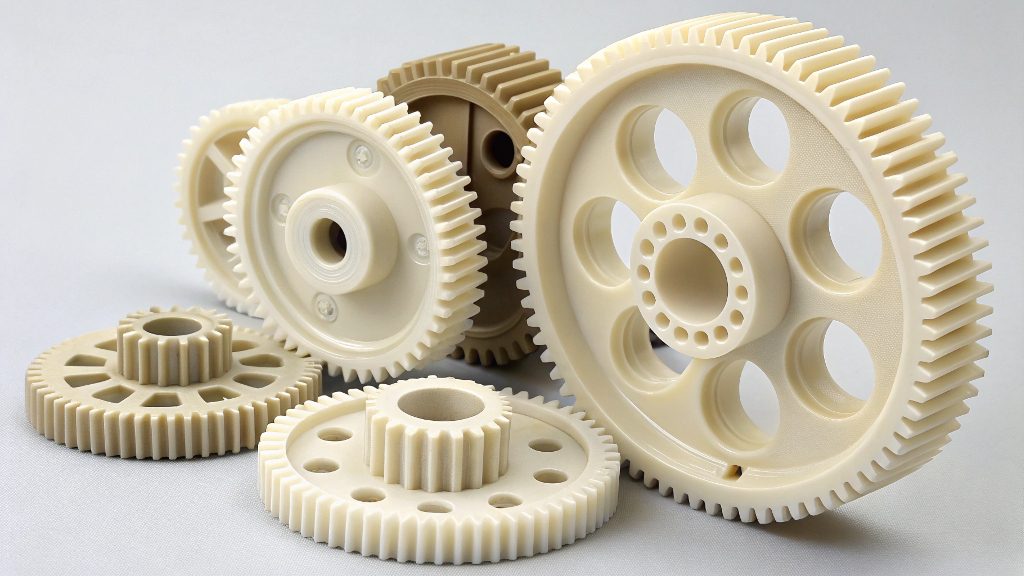
Tensile strength is a measure of how much pulling force a material can withstand before it breaks. Nylon, particularly common grades like Nylon 6 and Nylon 6/6, offers respectable tensile strength, typically ranging from 60 MPa to 85 MPa when dry at room temperature. This makes it significantly stronger than commodity plastics like Polypropylene or HDPE.
However, several factors influence Nylon's effective tensile strength:
-
Moisture Absorption: Nylon is hygroscopic, meaning it absorbs moisture from the environment. This absorption can significantly reduce its tensile strength (sometimes by 30% or more) and stiffness, while increasing its impact resistance and elongation. This change must be accounted for in designs, especially in humid environments.
-
Temperature: Like most plastics, Nylon's tensile strength decreases as temperature increases. At elevated temperatures (e.g., above 80°C), its strength reduction is more pronounced compared to high-temperature plastics like PEEK.
-
Reinforcement: Adding glass fibers or carbon fibers dramatically increases Nylon's tensile strength and stiffness. Glass-filled Nylon grades can achieve tensile strengths well over 150 MPa, making them competitive with some metals in specific applications, while still being lighter and often more cost-effective.
Here's a simplified comparison:
| Material | Typical Tensile Strength (Room Temp) | Key Considerations |
|---|---|---|
| Nylon 6/6 (Dry) | ~70-85 MPa | Strength decreases significantly when wet or hot |
| Nylon 6/6 (Conditioned) | ~50-60 MPa | Realistic strength in typical humidity |
| Glass-Filled Nylon | ~150-200+ MPa | Much higher strength & stiffness, more brittle |
| PEEK (Unfilled) | ~90-100 MPa | Maintains strength well at high temps, low moisture abs. |
| Carbon-Filled PEEK | ~150-200+ MPa | Very high strength, stiffness, temp resistance |
So, while standard Nylon might not be considered "high tensile strength" compared to elite materials like PEEK or reinforced composites, it offers a very good balance of strength, toughness, wear resistance, and cost-effectiveness for countless applications like gears, bushings, structural components, and housings, provided its environmental limitations (moisture, temperature) are respected.
We at Worthy Hardware machine various Nylon grades, including filled versions, helping customers select the right type based on their specific strength requirements and operating conditions.
Conclusion
Choosing between PEEK and Nylon depends heavily on your application's demands. PEEK excels in extreme heat, chemical, and load conditions, while Nylon offers solid performance and value for less demanding jobs. Worthy Hardware machines both materials expertly.