
How To Overcome Common Quality Issues When Machining Composite Materials?

Struggling with frayed edges and delamination when machining composites? These issues ruin parts and waste material. But there are ways to achieve perfect finishes every time.
Overcoming composite machining quality issues often involves using diamond-coated tools for ultimate hardness and wear resistance. Proper workpiece clamping and selecting PCD inserts for turning operations are also crucial for achieving superior results and reducing costs.
Achieving top-notch quality when working with composite materials can feel like a real puzzle. You might find yourself facing unexpected challenges like frayed edges or delamination that affect the final product. But don't worry, I've been there too.
In my experience here at Worthy, we've learned a few things that can make a big difference. Let's explore some of these common hurdles and how we can jump over them together. This will help ensure your composite parts meet the high standards you expect. We're going to look at specific tools and techniques that can turn frustration into success, so keep reading.
Are Diamond-Coated Tools the Ultimate Solution for Machining Composites?
Tired of tools wearing out quickly when cutting composites? This drives up costs and slows production. Diamond-coated tools offer a durable, cost-effective alternative for superior performance.
Yes, diamond-coated tools are often the ultimate solution for machining composites. Their exceptional hardness and wear resistance combat the abrasive nature of composites, leading to longer tool life, better surface finishes, and significantly reduced overall costs.
When we talk about machining composite materials, the abrasive nature of fibers like carbon or glass is a huge challenge. These fibers act like tiny files. They quickly dull standard cutting tools. This is where diamond-coated tools really shine. I remember a project where we were machining a complex carbon fiber part. Our initial tool wear was so rapid. We were changing tools multiple times a shift. This was incredibly inefficient and costly. Once we switched to diamond-coated end mills, the difference was night and day. These tools maintain their sharp cutting edge for much longer.
This is because diamond is the hardest known material. This extended tool life doesn't just save money on tooling. It also means less machine downtime for tool changes. And it means more consistent part quality. The superior wear resistance also leads to cleaner cuts. This reduces issues like delamination and fiber pull-out. These are common headaches with composites. It's a significant step towards cost-effective, high-quality composite machining. We've seen these tools make a huge impact on both the bottom line and the quality of the finished components.
Could Your Workpiece Clamping Be Ruining Composite Part Quality?
Are inconsistent dimensions and surface flaws plaguing your composite parts? Improper clamping might be the culprit. Secure workholding is key to precision and preventing damage.
Absolutely, your clamping method can ruin composite part quality. Insufficient or improper clamping leads to vibrations, delamination, and dimensional inaccuracies. Using appropriate fixtures that distribute pressure evenly and support the material correctly is essential.
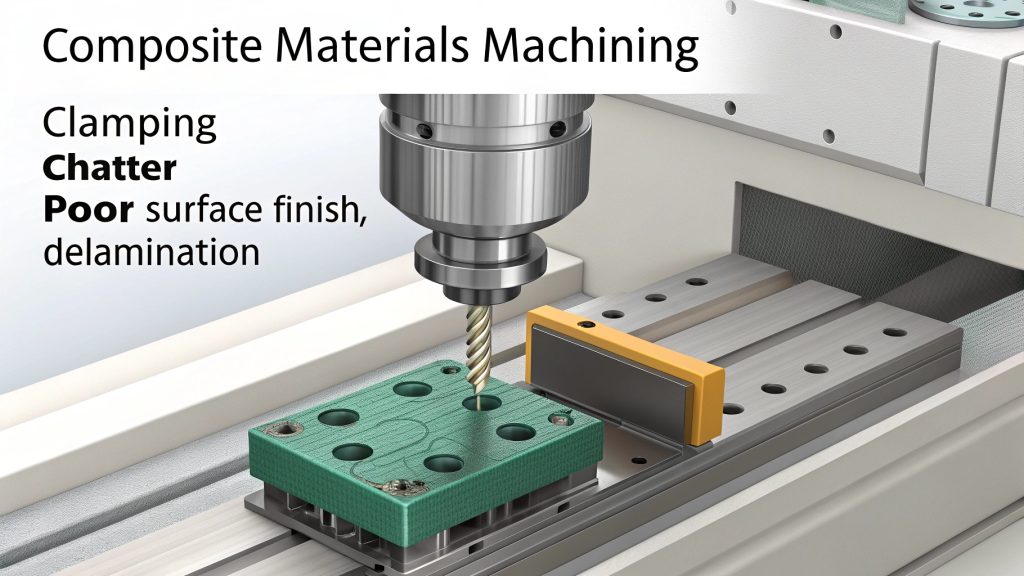
Securing composite materials for machining is more critical than many people realize. Unlike metals, composites can be quite sensitive to clamping pressures and vibrations. If the workpiece isn't held rigidly, you'll get chatter. Chatter leads to a poor surface finish. It can even cause delamination at the edges.
I've seen instances where a fantastic cutting tool couldn't deliver good results. This was simply because the clamping setup was inadequate. For example, thin composite sheets can easily flex or warp. This happens if they are not supported correctly. We often use vacuum fixtures at Worthy. Or we use custom-milled soft jaws that conform to the part's shape. This helps distribute the clamping force evenly.
It prevents localized stress that could crush or crack the composite. It's also important to consider the direction of cutting forces. The clamping should be designed to counteract these forces effectively. Good clamping minimizes vibration. It ensures dimensional stability. And it protects the integrity of the composite material throughout the machining process. It’s a foundational element for achieving high quality in every part.
Why Are PCD Inserts a Game-Changer for Turning Composite Materials?
Facing rapid tool wear and poor finishes when turning composites? Traditional inserts just don't last. PCD inserts offer exceptional durability and precision for these demanding tasks.
PCD (Polycrystalline Diamond) inserts are a game-changer for turning composites. Their extreme hardness and abrasion resistance dramatically extend tool life. This results in superior surface finishes, tighter tolerances, and reduced machining costs.
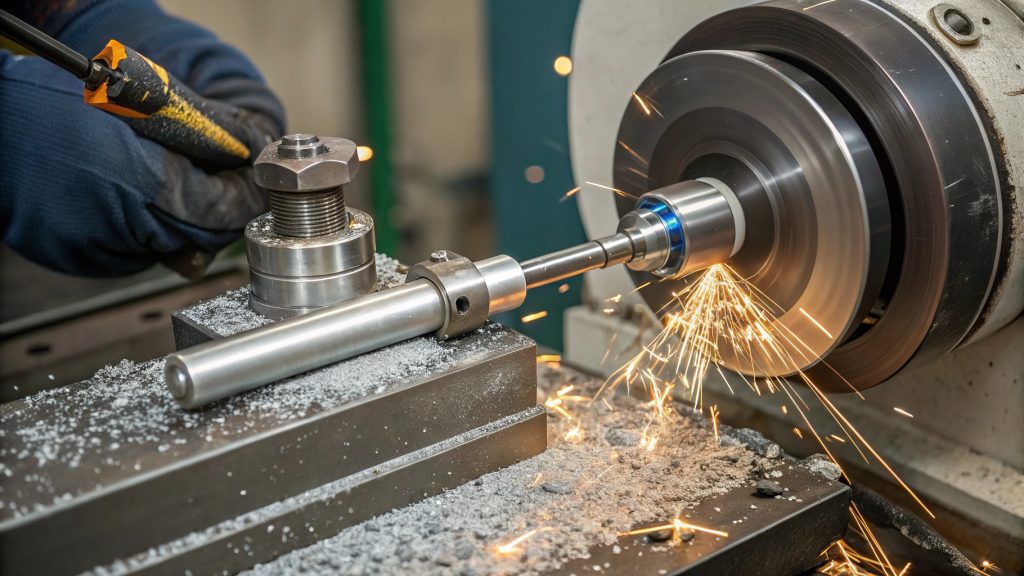
Turning operations on composite materials present a tough challenge for cutting tools. This is especially true for those with high fiber content. The continuous cutting action means the tool edge is constantly engaged with the abrasive material.
This is where Polycrystalline Diamond (PCD) inserts truly prove their worth. I recall a specific job involving turning long carbon fiber tubes. We initially tried carbide inserts. We even used specialized grades. But the tool life was disappointingly short. And the surface finish would degrade quickly. Switching to PCD inserts transformed the operation.
The PCD tip is made of sintered diamond particles. It offers incredible hardness and resistance to abrasive wear. This means the cutting edge stays sharper for much, much longer. The benefits are many. Significantly extended tool life reduces the frequency of tool changes.
It also lowers overall tooling costs. More importantly, the consistent sharpness of PCD inserts leads to a much better surface finish on the composite part. This often eliminates the need for secondary finishing operations. They also allow for higher cutting speeds. This improves productivity. For turning composites, PCD is often the best investment for quality and efficiency. It’s a choice we often recommend to our clients.
Conclusion
To overcome composite machining issues, use diamond tools, ensure proper clamping, and choose PCD inserts for turning. These steps improve quality and cut costs effectively.