
How To Select The Right Copper Material For Automotive Electrical Systems?
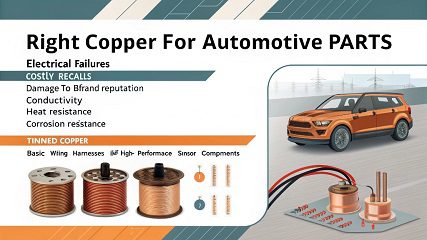
Choosing the wrong copper for automotive parts can cause serious electrical failures. This mistake can lead to costly recalls and damage your brand's reputation, all from one small component choice.
Selecting the right copper for automotive systems means balancing conductivity, heat resistance, corrosion resistance, and workability. Key materials include Red Copper (C110), Oxygen-Free Copper (OFC), and Tinned Copper. Each offers a unique profile for applications from basic wiring harnesses to high-performance sensor components.
But there’s more to it than just picking one type of copper. The specific application inside the vehicle dictates which material is best. As a manufacturer of precision metal parts for many years, I've helped clients navigate these choices to prevent future problems. Understanding the small differences between these materials is key to ensuring long-term reliability and performance. Let's break down the details so you can make an informed decision for your next project.
What property of copper makes it the best choice for electrical wiring?
Using inferior metals for car wiring often causes overheating. This is not just a performance issue; it is a major fire hazard that can have disastrous consequences for safety.
Copper's most important property is its superb electrical conductivity, which is second only to silver. It also has great ductility, heat resistance, and corrosion resistance. This combination makes it perfect for the tough environment inside a modern vehicle, ensuring safety and reliability.
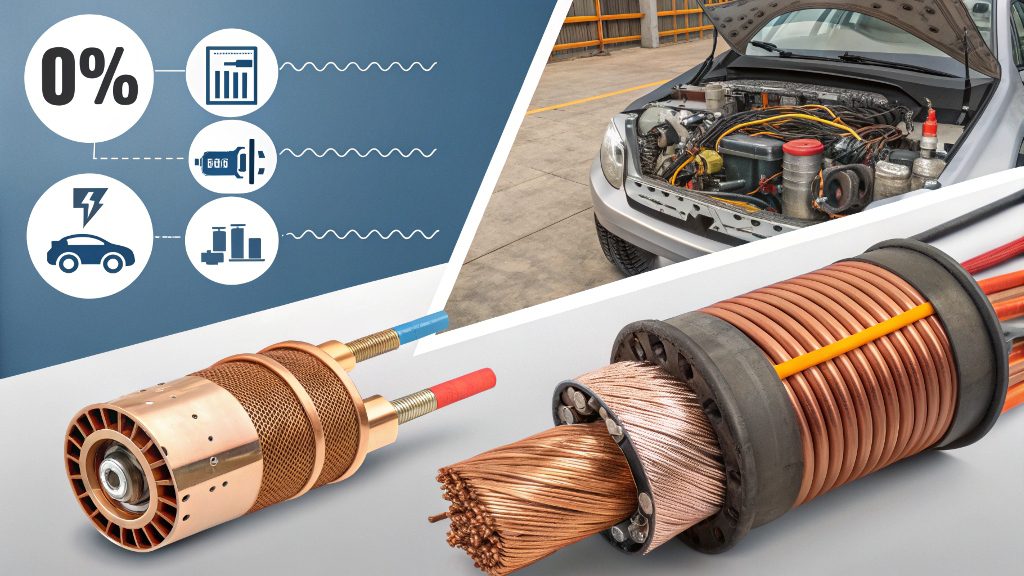
When we source materials for our clients' automotive parts, from simple brackets to complex terminals, we always look at the full picture. Copper stands out for several reasons beyond just conductivity.
Its ductility means it can be drawn into very thin wires without breaking. This is critical in cars where wiring harnesses must be routed through tight and complex spaces. The material needs to be flexible but also strong enough to handle vibrations and movement over the vehicle's lifetime.
Another key factor is thermal resistance. A car's engine bay can get extremely hot. Copper performs well at high temperatures without losing its structural integrity or becoming brittle. We also consider its resistance to corrosion. Vehicles are exposed to moisture, salt, and other chemicals. Copper naturally resists corrosion, which prevents connections from failing over time.
Here's a simple comparison:
| Property | Copper | Aluminum |
|---|---|---|
| Conductivity | High (100% IACS) | Lower (61% IACS) |
| Corrosion Resistance | Excellent | Fair (Oxide layer is an insulator) |
| Strength | Good | Fair |
| Ductility | Excellent | Good |
| Cost | Higher | Lower |
While aluminum is lighter and cheaper, its lower conductivity and tendency for its oxide layer to insulate connections make copper the safer and more reliable choice for most automotive electrical applications.
Why is copper the best choice to be used in electrical wires?
Have you ever dealt with electrical connections that fail over time? These intermittent faults are frustrating and incredibly difficult to diagnose, often leading to unhappy customers and warranty claims.
Copper is the best choice because it provides the perfect balance of high conductivity, strength, ductility, and resistance to corrosion. This unique mix ensures reliable, safe, and long-lasting performance in electrical wiring that other materials simply cannot match at a similar cost.
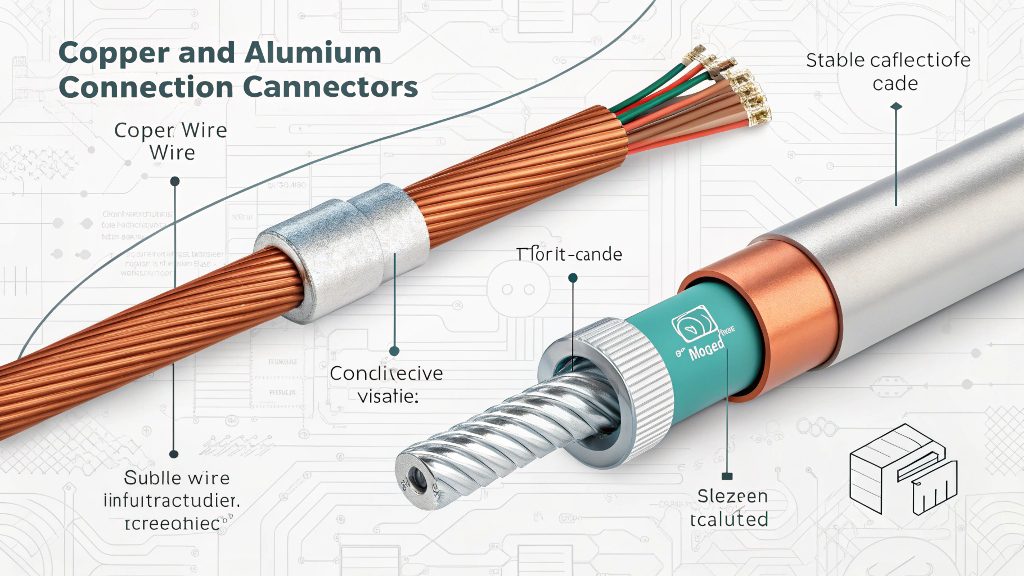
I remember a client, a procurement manager like Mark from Canada, who was struggling with a connector part. His company was using an aluminum alloy to save costs, but they faced high failure rates in the field. The connections would loosen over time, a problem known as "creep," and the insulating aluminum oxidelayer would form, causing intermittent signals. It was a nightmare for their service department.
He came to us looking for a better solution. We analyzed the design and recommended switching to a C110 copper alloy for the terminal.
Copper vs. Aluminum for Connections
The primary reason we recommended the switch was how copper behaves at connection points. When you terminate a copper wire, it creates a strong, stable mechanical connection. Even better, if copper oxide forms, it is still conductive. This means the connection remains reliable even if some oxidation occurs.
Aluminum, on the other hand, is a different story. Its oxide is a very effective insulator. Any oxidation at the connection point can interrupt the flow of electricity, causing the very type of intermittent faults my client was seeing. Plus, aluminum expands and contracts more with temperature changes and is softer, leading to loose connections over time. After we produced the new copper terminals for him, his field failure rate dropped to almost zero. This story really shows why copper’s fundamental properties make it the superior and safer choice for critical electrical parts.
What conductive material is commonly used in vehicle electrical wiring systems?
You often see different copper types specified for automotive parts. Using the wrong one can hurt performance, increase your costs unnecessarily, or even cause production delays if the material is not suitable.
The most common conductive material is copper, specifically in various forms to suit different needs. These include Electrolytic Tough Pitch (ETP or Red Copper), Oxygen-Free Copper (OFC), and Tinned Copper. Each is chosen for specific areas based on performance, flexibility, and anti-corrosion needs.
At my company, Worthy Hardware, we work with these materials every day. We manufacture custom terminals, clips, and shields, and the material choice is the first and most important step. Each type has its place in a vehicle's electrical system.
Common Copper Types in Automotive
-
Electrolytic Tough Pitch (ETP) Copper (e.g., C110): This is the workhorse of the industry. It has excellent conductivity and is easy to form, making it ideal for general-purpose wiring harnesses, terminals, and busbars. It offers great value and performance for most applications. Its main limitation is a susceptibility to "hydrogen embrittlement" if heated in a reducing atmosphere, which is a concern in some welding or brazing operations.
-
Oxygen-Free Copper (OFC): As the name suggests, this copper has had almost all oxygen removed. This small change makes a big difference. OFC has slightly better conductivity and purity than ETP. We recommend it for high-performance applications where signal integrity is critical, such as high-end audio systems, sensor wiring, and electronic control unit (ECU) components. It is also not susceptible to hydrogen embrittlement, making it a safer choice for high-temperature manufacturing processes.
-
Tinned Copper: This is simply ETP or OFC copper that has been coated with a thin layer of tin. The tin coating provides excellent corrosion resistance, especially against moisture. It also makes soldering much easier. We see tinned copper used extensively in high-humidity environments or for components that will be soldered onto a circuit board.
How to choose copper wire?
Your project budget is tight, but you also cannot afford quality issues. Balancing cost and performance when choosing copper wire can be difficult, as the wrong choice can lead to overspending or failure.
To choose the right copper wire, first define your application's needs for conductivity, flexibility, and corrosion resistance. Then, match these needs to a specific copper type: ETP for general use, OFC for high-performance, and Tinned Copper for humid environments or soldering.
Making the right choice is a practical process. I've guided many customers through this, and it always comes down to asking the right questions about the specific part we are manufacturing for them.
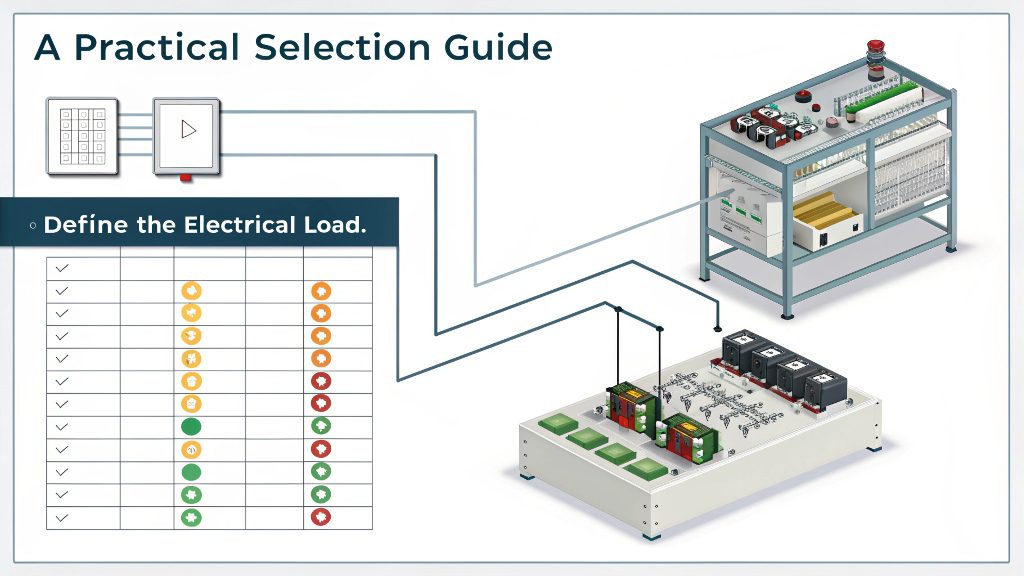
A Practical Selection Guide
Here’s how we break it down for our customers to ensure they get the perfect material for their stamping parts without overpaying.
-
Define the Electrical Load: Is the part carrying high current, like a battery terminal, or a low-voltage signal, like a sensor contact? High-current applications need the highest possible conductivity, making ETP or OFC the best choices. For low-voltage signals, other factors might be more important.
-
Assess the Operating Environment: Will the part be in the hot engine bay or inside the passenger cabin? Will it be exposed to moisture or road salt? For parts in harsh environments, the superior corrosion protection of Tinned Copper is often worth the small extra cost. Inside the dry cabin, standard ETP is usually sufficient.
-
Consider the Manufacturing and Assembly Process: Does the part need to be bent into a complex shape? Does it need to be soldered? For parts that require extreme flexibility, the high ductility of OFC can be beneficial. If the part will be soldered, Tinned Copper is the obvious choice to ensure a fast and reliable assembly process.
Here is a quick reference table our team uses:
| Application Example | Key Requirement | Recommended Copper | Why? |
|---|---|---|---|
| Main Wiring Harness | Good Conductivity, Cost-Effective | ETP (C110) | Balances performance and cost for general use. |
| ECU or Sensor Connector | High Signal Integrity | OFC | Highest purity ensures a clean signal. |
| Battery Terminal | Corrosion Resistance, High Current | Tinned Copper | Protects from acid/moisture and carries current well. |
| In-Cabin Clips | Low Cost, Standard Duty | ETP (C110) | The environment is controlled, so no special needs. |
By thinking through these three steps, you can confidently select the right copper, ensuring your component performs reliably for years to come.
Conclusion
In short, selecting the correct copper material is vital for automotive electrical system reliability. Match the specific copper type—ETP, OFC, or Tinned—to your application's unique conductivity and environmental demands.