
How To Evaluate The Quality Of Black Anodizing From Different CNC Machining Suppliers?

Sourcing black anodized parts from multiple suppliers can be frustrating. When parts arrive with inconsistent color and quality, it can ruin a whole batch and delay your entire project.
To evaluate the quality of black anodizing, you should perform a visual inspection for color uniformity and defects like pits or bare spots. You can also do a touch test to check for proper sealing. For precise data, use a colorimeter to check color consistency and a gauge to measure coating thickness.
It's a problem I've seen many times. A customer like Mark from Canada orders a batch of custom CNC parts, and the black finish varies from deep black to a light grey. This inconsistency is not just about looks; it points to deeper issues in the supplier's process control. Understanding how to spot good and bad anodizing is a critical skill for any buyer. It helps you reject bad parts early and choose reliable long-term partners. Let's look at the specific things you need to check to ensure you get the quality you pay for.
What is the quality of anodising?
You always ask for "good quality" anodizing, but what does that really mean? Without clear standards, you can't communicate your needs or fairly judge the parts you receive.
High-quality anodizing is defined by its uniform color and texture, correct film thickness for protection, effective sealing against stains, and strong adhesion to the metal. It should be free from visual defects like streaks, pits, or bare spots.
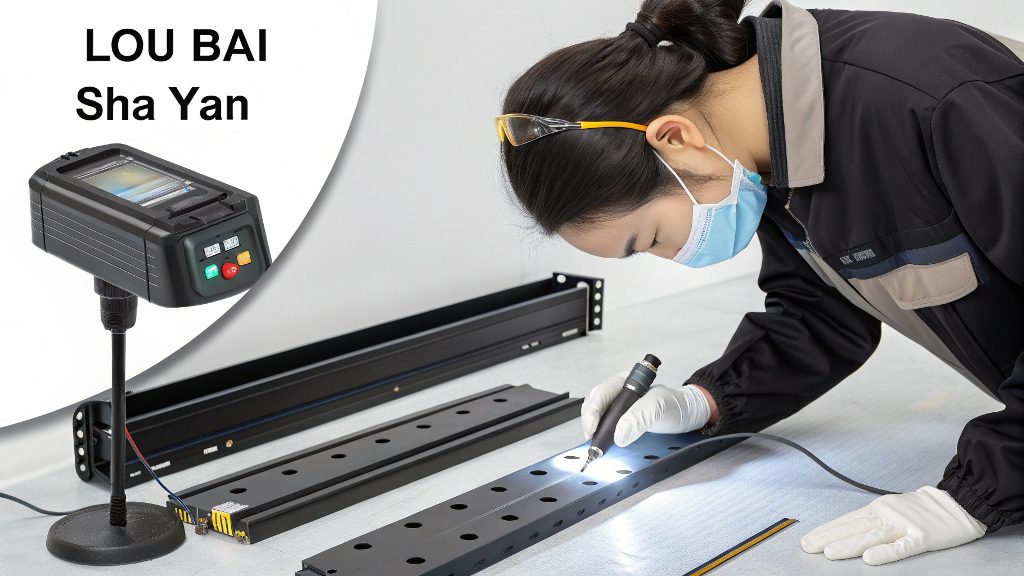
When I get a batch of black anodized parts, I always start with the basics. The first step is a simple visual check. I look at the surface under a good light. Is the black color even across the entire part? Are there any streaks, blotchy areas, or spots where the coating is missing? In China, we call these bare spots . I also look for small pits or pinholes, which we call sand hole. These are signs of a poor process.
Next, I use my hands. I run my finger across the surface. A poorly sealed part might feel slightly sticky or chalky. It might also pick up fingerprints very easily. This means the pores in the anodized layer weren't closed correctly, which will lead to poor corrosion resistance and staining. For a more technical approach, we use instruments. A film thickness gauge tells us if the protective layer meets the spec, and a colorimeter measures the exact color to ensure it matches the standard we agreed on.
| Quality Factor | Good Quality Signs | Bad Quality Signs |
|---|---|---|
| Appearance | Uniform, even black color | Streaks, blotches, bare spots |
| Texture | Smooth, clean surface | Pits, pinholes, chalky feel |
| Sealing | Doesn't feel sticky, resists fingerprints | Feels sticky, easily smudged |
| Thickness | Meets specified thickness (e.g., 8-25μm) | Too thin or too thick, inconsistent |
What is the 312 rule for anodizing?
You may hear engineers or suppliers mention technical terms like the "312 rule." Not knowing what they mean can make you feel at a disadvantage during technical discussions.
The "312 rule" is a guideline for Type II anodizing. It says that for every 0.001 inches of coating thickness, about two-thirds (2/3) builds up on the surface and one-third (1/3) penetrates into the base aluminum.
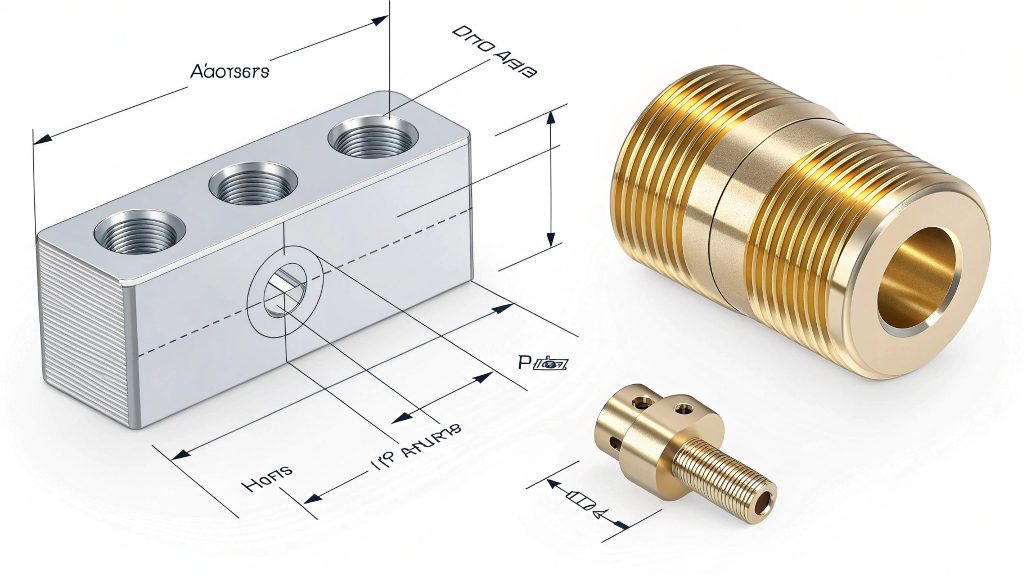
This rule is very important for precision machining. The anodizing process changes the final dimensions of a part. If your part needs to have very tight tolerances, you must account for this change. Let's say you want a final anodized coating of 0.0006 inches. According to the 312 rule, the coating will penetrate the aluminum by 0.0002 inches and build up on the surface by 0.0004 inches. This means the part's total dimension will increase by 0.0004 inches on every anodized surface.
As a buyer, you need to be clear with your CNC machining supplier. Do the dimensions on your technical drawing refer to the part before or after anodizing? If the drawing shows final dimensions, your supplier must machine the part slightly smaller to allow for the coating buildup. A good supplier like Worthy Hardware understands this and will always ask for clarification to avoid making parts that are out of tolerance. Communicating this clearly from the start saves a lot of time and money.
What is the difference between black anodizing and black oxide?
People sometimes confuse black anodizing with black oxide. They can look similar at a glance, but choosing the wrong one can cause your product to fail in its application.
Black anodizing is an electrochemical process for aluminum that creates a hard, durable, corrosion-resistant layer. Black oxide is a chemical conversion coating for steel that offers only mild corrosion resistance and minimal surface buildup.
The biggest difference is the material they are used on. Anodizing is almost exclusively for aluminum. The process uses electricity to grow a layer of aluminum oxide right from the aluminum part itself. This layer is hard, wear-resistant, and provides excellent protection against rust. Black oxide, on the other hand, is used on ferrous metals like steel and stainless steel. It's a chemical reaction that creates a thin layer of magnetite (Fe₃O₄) on the surface.
This black oxide layer offers very mild corrosion resistance and is mainly used for appearance or to reduce light reflection. It adds almost no thickness to the part, which is good for components with very tight tolerances. However, it provides very little wear resistance. You must choose based on your part's material and what you need the coating to do. If you need strong protection for an aluminum part, choose anodizing. If you just need a black look on a steel part, black oxide might be enough.
| Feature | Black Anodizing | Black Oxide |
|---|---|---|
| Primary Material | Aluminum | Steel, Ferrous Metals |
| Process | Electrochemical | Chemical Conversion |
| Corrosion Resistance | Excellent | Mild (often needs oil) |
| Wear Resistance | Good to Excellent | Poor |
| Dimensional Change | Adds thickness | Negligible |
| Primary Purpose | Protection & Appearance | Appearance & Mild Protection |
What is the 720 rule for anodizing?
You might hear another term in the industry: the "720 rule." This is another piece of technical information that can help you understand the anodizing process your supplier is using.
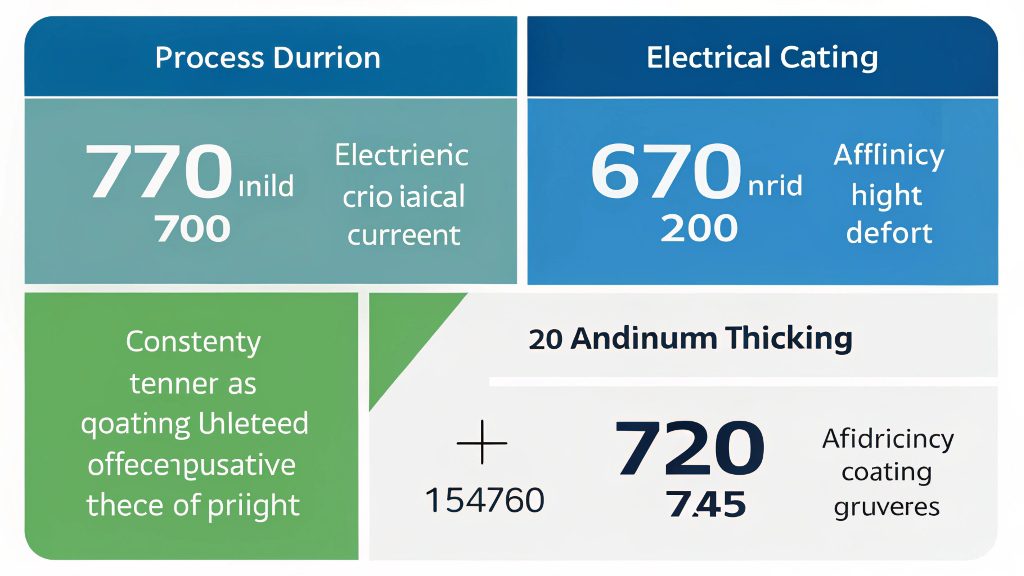
The 720 rule is a formula that helps estimate the anodizing time needed to achieve a specific coating thickness. The formula is: Time (minutes) = (Thickness in mils × 720) ÷ Current Density (Amps/ft²).
![]()![]()![]()![]()
Let's break this down. The rule connects three things: how long you run the process, how much electrical current you use, and how thick the final coating will be. The number 720 is a constant based on the efficiency of the anodizing process for aluminum. Current density is the amount of electricity applied to each square foot of the part's surface. A higher current density will build the coating faster.
While you, as the buyer, won't be using this formula yourself, knowing about it is powerful. It shows that anodizing should be a precise, controlled, and repeatable science. It is not guesswork. When you discuss lead times with a supplier, their estimates should be based on calculations like this. If a supplier can't explain their process parameters or their lead times seem random, it might be a red flag. It suggests they may not have the process control needed to deliver consistent quality on every order, which is a major pain point for buyers like Mark who rely on on-time delivery.
Conclusion
Evaluating black anodizing is straightforward. Check for visual flaws, test the surface seal with your hand, and talk to your supplier about their process to ensure consistent, high-quality parts.
If you have questions about getting the right finish for your CNC machined parts, contact me, Sandra Gao, at [email protected]. Our team at Worthy has the experience to help you improve your design and get the quality you need.