
How to choose the right milling method for different materials?
Struggling with poor surface finishes on your parts? Your milling method might be the problem. Choosing the wrong approach leads to wasted material, broken tools, and increased costs.
The right milling method depends on the material's hardness and your surface finish needs. For most modern applications, climb milling is preferred for its superior finish and tool life. However, conventional milling is better for materials with a hard outer scale, like forgings or castings.
Choosing the correct milling approach is a critical first step. But it's just one piece of the puzzle. The machine, the tools, and the specific settings all play a huge role in the final quality of your part. If you get any of these wrong, you risk running into problems later. Let's break down how to make the right choices for your project, so you can get perfect parts every time.
How to choose the right milling machine?
Does your machine struggle with complex parts? Choosing a machine that can't handle your design leads to compromises in quality and delays. You need the right tool for the job.
Select a milling machine based on your part's complexity, size, and material. A 5-axis machine is best for complex geometries, while a 3-axis machine is great for simpler parts. Also, consider the machine's size capacity and spindle speed to match your specific project requirements.
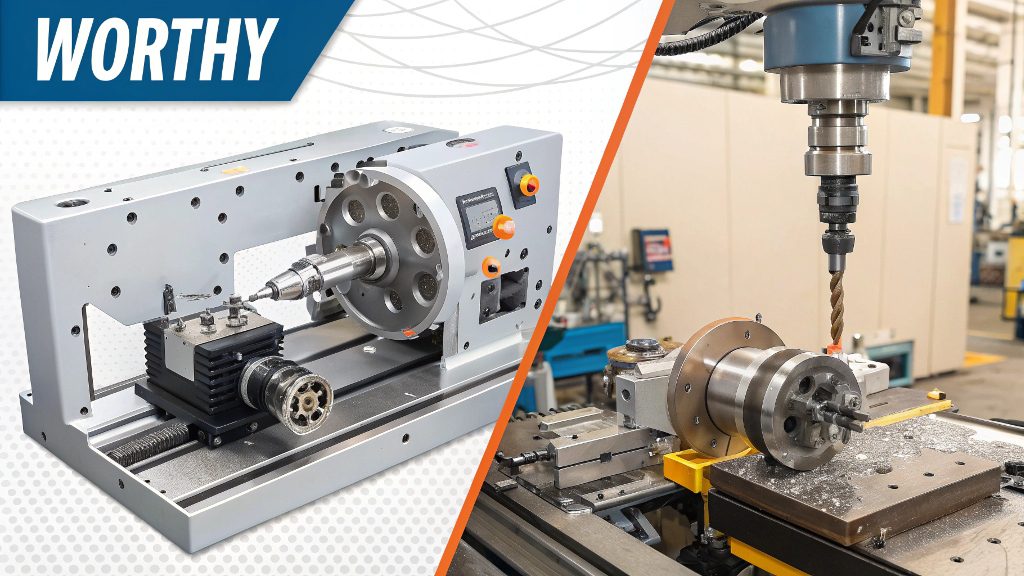
Choosing the right machine is fundamental. At my company, Worthy, we see how this choice impacts every project. You have to think about a few key things.
Axis Configuration
The first thing is the number of axes. A 3-axis mill is the standard. It moves in X, Y, and Z directions. It's perfect for flatter, simpler parts. But if you have complex curves or features on multiple faces, you need a 5-axis machine. This allows the tool to approach the part from many different angles in a single setup. This means better accuracy and faster production because you don't have to manually re-fixture the part.
Machine Size and Power
Next, consider the machine's work envelope. Can it fit your part? We have machines that can handle parts up to 2 meters long. You also need to check the machine's power and spindle speed. Softer materials like aluminum can be cut at very high speeds. Harder materials like stainless steel or tool steel need a machine with more torque and lower spindle speeds to avoid tool wear.
| Machine Factor | Best For Aluminum | Best For Stainless Steel |
|---|---|---|
| Spindle Speed | High (10,000+ RPM) | Low to Medium (2,000-8,000 RPM) |
| Machine Rigidity | Standard | High Rigidity Required |
| Axis Type | 3-axis for simple, 5-axis for complex | 5-axis often needed for efficiency |
What is the golden rule of milling?
Are you breaking tools or getting a bad finish? You might be ignoring the most basic rule of milling. This simple principle can make or break your entire machining process.
The golden rule of modern milling is "thick to thin," also known as climb milling. The cutter bites into the material at its thickest point and exits at its thinnest. This method reduces tool wear, improves surface finish, and is more efficient for most materials.
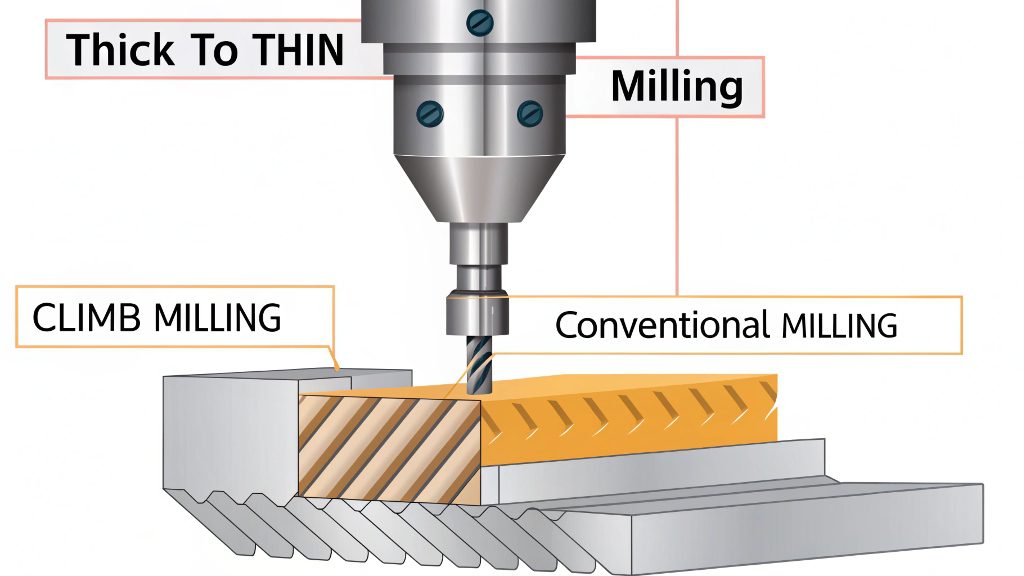
This "thick to thin" rule is about how the cutting tool engages with the material. There are two main ways this happens: climb milling and conventional milling. Understanding the difference is key. I always tell my engineers that this is the first thing they should think about when setting up a job.
Climb Milling (Down Milling)
In climb milling, the tool rotates in the same direction as the material feed. The cutting edge hits the material at the top, taking a thick chip, and then moves downward, with the chip thinning out as it exits. This is the preferred method for probably 95% of jobs today. The forces push the workpiece down into the table, which gives you more stability. It also means less heat transfers into the tool, so your tools last longer. The surface finish is much smoother. But, you need a rigid machine that has no backlash in the lead screws, which all modern CNC machines do.
Conventional Milling (Up Milling)
In conventional milling, the tool rotates against the direction of the material feed. It starts by scooping up material from the bottom, so the chip starts thin and gets thicker. This method creates more friction and heat. It can cause the tool to "chatter" and leave a worse surface finish. So why use it? It's necessary when you're cutting through a very hard outer layer, like the scale on a forging or a flame-cut edge. It helps the tool get under that hard skin without being damaged.
As a general guide, I tell my team: always start with climb milling. Only switch to conventional milling if you are dealing with very hard surfaces or using an old, manual machine with a lot of backlash.
How to choose a milling tool?
Does tool selection feel like a guessing game? Using the wrong tool material or coating can drastically slow down production and increase your costs per part. You need a systematic approach.
Choose a milling tool based on the material you are cutting. Use High-Speed Steel (HSS) for general-purpose work and softer materials. Choose solid carbide for harder materials, high-speed machining, and when you need the best possible surface finish and tool life.
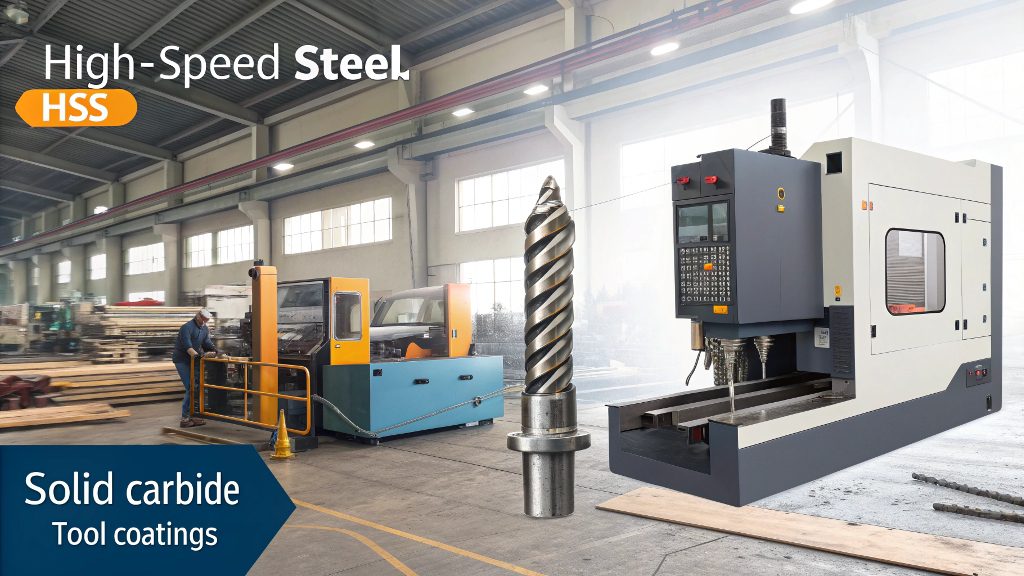
A great machine is useless without the right cutting tool. Many of my customers, like Mark in Canada, are very focused on quality, and tool selection is a big part of that. The tool's material, its coating, and even the tool holder all work together.
Tool Material
The two most common materials are High-Speed Steel (HSS) and solid carbide.
- HSS is tougher and more resistant to chipping than carbide. It's a good, cheaper option for general-purpose jobs, especially on softer materials like aluminum or mild steel.
- Carbide is much harder and can withstand higher temperatures. This means you can run your machine much faster with carbide tools. They are the standard for cutting hard steels, stainless steel, and for achieving high-precision finishes. They cost more, but the speed and long life often make them cheaper in the long run.
Tool Coatings
Coatings are micro-thin layers applied to the tool that make them even better. They add hardness and lubricity, which means less friction and heat. A common coating is Titanium Nitride (TiN), which you can recognize by its gold color. More advanced coatings like Aluminum Titanium Nitride (AlTiN) are better for high-temperature applications, like cutting steel without coolant. Choosing the right coating can double a tool's life.
Tool Holders
Finally, don't forget the tool holder. It connects the tool to the machine spindle. A high-quality, balanced tool holder is essential for high-speed machining. If the holder is low quality, it can introduce vibrations that lead to a poor finish and can even break the tool.
How to choose the right end mill?
Are your parts coming out with rough edges or burrs? The specific geometry of your end mill, especially the number of flutes, has a direct impact on the final result.
Choose an end mill based on the material and type of cut. Use a 2-flute end mill for soft materials like aluminum to clear chips quickly. Use a 4-flute or more for harder materials like steel to get a smoother finish and better tool stability.
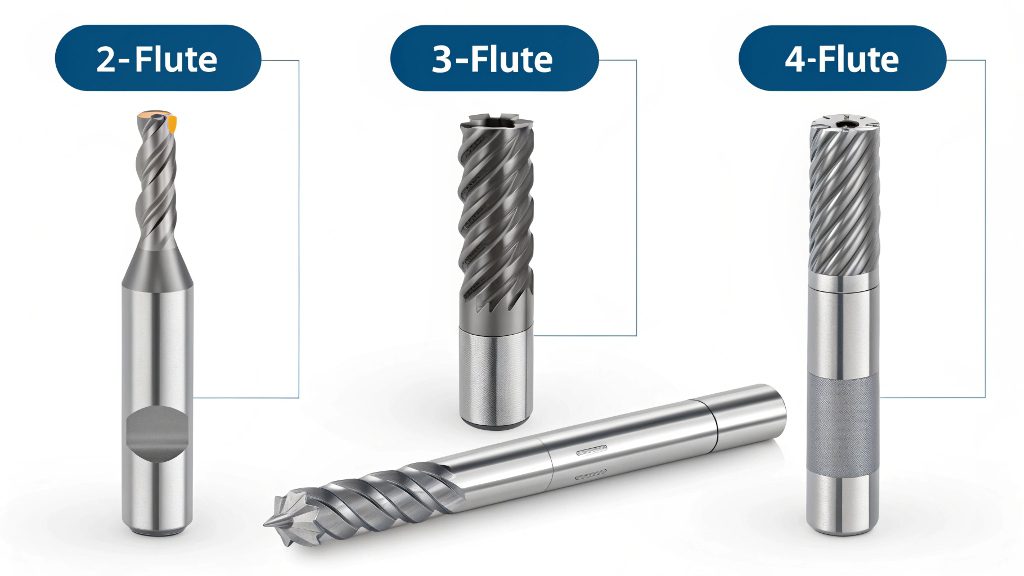
The end mill is the specific tool that does the cutting. Getting this part right is absolutely critical for the quality and efficiency of your job. I remember helping a client who was getting terrible results on an aluminum part. He was using a 4-flute end mill, and the chips weren't clearing fast enough, causing the material to melt and stick to the tool. We switched him to a 2-flute end mill, and the problem disappeared instantly.
Flute Count
The "flutes" are the sharp cutting edges on the side of the end mill. The number of flutes is the most important decision.
- 2-Flute: These have a lot of space between the cutting edges. This is great for clearing large chips, so they are perfect for softer materials like aluminum and plastics.
- 3-Flute: A good general-purpose option. They can be used on a variety of materials, including aluminum and steel.
- 4-Flute and More: These have more cutting edges engaged with the material at any time. This gives you a much smoother surface finish. They are the best choice for harder materials like steel and stainless steel. The smaller chip space means they are not good for soft, gummy materials.
End Mill Geometry
You also need to choose the shape of the tool's tip.
- Square End Mill: Creates sharp, 90-degree corners. Used for most general milling, like pockets and profiles.
- Ball End Mill: Has a rounded tip. Used for 3D contouring, filleting, and creating complex, organic shapes.
- Corner Radius End Mill: A square end mill with rounded corners. It makes the tool stronger and leaves a small radius at the bottom of walls, which helps prevent stress cracks in the final part.
| Material | Recommended Flute Count | Why? |
|---|---|---|
| Aluminum | 2 or 3 Flutes | Allows for fast chip evacuation to prevent clogging. |
| Plastics | 1 or 2 Flutes | Prevents melting and provides a clean cut. |
| Steel | 4 or 5 Flutes | Provides strength and a smooth finish. |
| Stainless Steel | 5 or more Flutes | Increases stability and reduces chatter in this tough material. |
Conclusion
Choosing the right milling method, machine, and tools is simple when you match them to your material. This ensures quality parts, extends tool life, and lowers your overall production costs.