
How to choose between hardwood and softwood for precision machined parts?

Struggling to pick the right wood for your CNC project? The wrong choice means wasted money and failed parts. Understanding the key differences between hardwood and softwood is your solution.
Choose hardwood for high-durability, long-lasting precision parts that require strength. Hardwoods like oak hold details very well. Choose softwood for projects where workability and cost are more important. Softwoods like pine are easier to machine but less dense, making them great for prototypes.
The choice between hardwood and softwood seems simple, but it goes much deeper than just "hard" versus "soft." Many factors influence which wood is truly best for your specific CNC machining needs. I’ve worked with many clients, like Mark from Canada, who need precise parts, and the wood choice is always a key discussion. Let's break down the details so you can choose with confidence every time.
What is the best wood for machining?
Searching for the one "best" wood for machining can be frustrating. The truth is, there isn't one. The best wood is always the one that matches your project's specific needs.
There's no single "best" wood. Hard Maple is fantastic for its fine grain and durability, making it great for detailed work. For easier machining and cost-effectiveness, Poplar or even a clear Pine can be excellent. The "best" choice balances your project's needs with the wood's properties.


The idea of a single "best" wood is a common misconception I encounter. At my company, Worthy, we machine parts from over 100 materials, including various woods, so I see this firsthand. The "best" choice is always a trade-off. To help my clients, I often break it down by their primary goal. Are you making a structural component that needs to bear weight? Or a decorative piece where aesthetics are key? For example, a client needing durable industrial jigs would benefit from Oak's strength. But someone making architectural models might prefer Basswood for its ease of carving and smooth finish. I've created a simple table to help guide your decision.
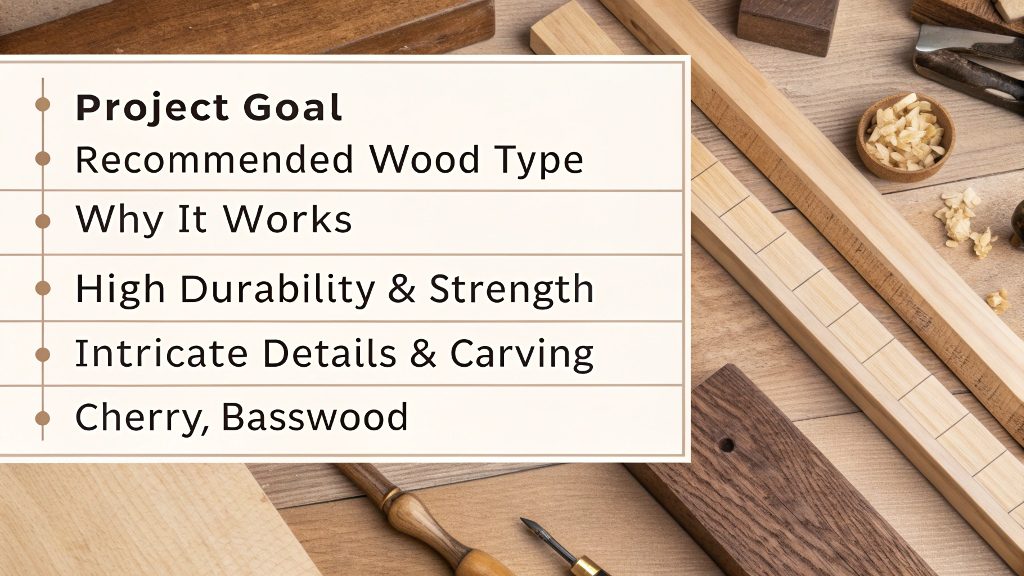
| Project Goal | Recommended Wood Type | Why it Works |
|---|---|---|
| High Durability & Strength | Hard Maple, Oak, Walnut | These hardwoods have dense grain structures that resist wear and hold tight tolerances well. They are ideal for functional parts. |
| Intricate Details & Carving | Cherry, Basswood | Cherry machines beautifully and holds crisp details. Basswood is softer and has very little grain, making it perfect for carving. |
| Cost-Effective Prototyping | Pine, Poplar, MDF | These options are inexpensive and machine very quickly. They are great for testing a design before committing to more expensive materials. |
| Outdoor/Moisture Exposure | Cedar, Teak | These woods have natural oils that make them resistant to rot and insects, which is essential for outdoor applications. |
This structured approach helps remove the guesswork. At Worthy Hardware, we can machine parts up to 2,032 mm, so no matter the wood, we can handle the project. It’s about matching the material to the application.
Why might a woodworker choose a hardwood over a softwood for a specific project?
Ever wonder why high-end projects use hardwood? Softwood seems cheaper, but the final product often disappoints. Craftsmen choose hardwood for its superior durability, beautiful grain, and long-lasting quality.
A craftsman chooses hardwood for strength, beauty, and longevity. Hardwoods resist dents and wear far better than softwoods, making them ideal for furniture and flooring. Their dense, beautiful grain patterns also provide a high-quality finish that justifies the higher cost and effort.

The decision to use hardwood often comes down to creating something of lasting value. Think about the growth cycle I mentioned earlier. Hardwoods, like oak or walnut, come from slow-growing deciduous trees. They can take over 150 years to mature. This slow growth creates a dense, strong wood fiber. This density is the source of its legendary durability. It can withstand daily use, bumps, and scratches in a way a softwood simply can't.
Then there's the appearance.
- Grain Pattern: Hardwoods have rich, complex, and often beautiful grain patterns. This adds character and a premium feel to any piece.
- Color: The colors are deep and varied, from the dark richness of walnut to the warm tones of cherry.
- Finishing: Hardwoods take stains and finishes exceptionally well, allowing for a smooth, lustrous surface that highlights the natural grain.
When a client in North America or Europe orders a consumer product from us, they often choose hardwood because the end customer perceives it as higher quality. They're not just buying a part; they're investing in an item that will look good and last for generations. It's a clear statement of quality.
How to distinguish between hardwood and softwood?
Can you really tell hardwood from softwood at a glance? Relying on feel is a common mistake. The true difference is scientific, based on the type of tree it comes from.
The key difference is the source tree. Hardwoods are from deciduous trees that lose their broad leaves annually, like oak and walnut. Softwoods come from coniferous (cone-bearing) trees with needles, like pine and cedar. This botanical difference is more reliable than simply testing the wood's hardness.

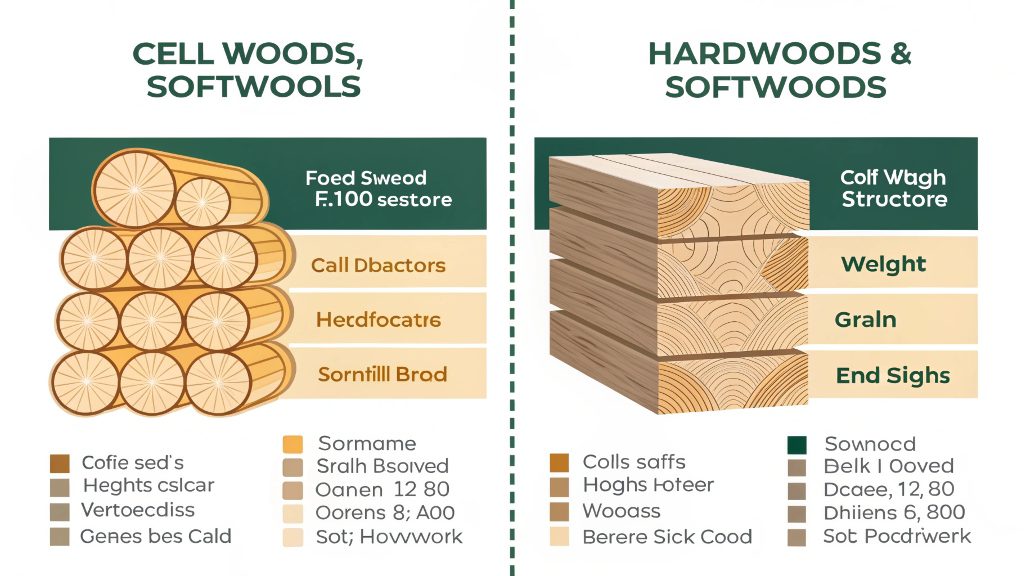
The botanical origin is the most accurate way to tell them apart. As I mentioned, hardwoods come from broad-leafed trees (deciduous), and softwoods come from needle-bearing trees (coniferous). This difference in origin leads to physical characteristics you can learn to spot.
Let's look at the science behind it.
- Cell Structure: Under a microscope, hardwoods have large pores called vessels that transport water. These look like tiny tubes on the end grain. Softwoods don't have these pores; they use smaller cells called tracheids. This is why hardwoods often have a more open, coarse grain texture.
- Weight: Generally, hardwood is denser and heavier than softwood of the same size. If you hold a block of oak and a similar-sized block of pine, the oak will feel noticeably heavier.
- End Grain: Look closely at the cut end of the wood. You can often see the pores in hardwoods, while softwoods will look more uniform and without visible pores.
While there are exceptions—some hardwoods like Balsa are very soft, and some softwoods like Yew are quite hard—these general rules hold true. For my clients, understanding this helps them better specify the materials for their custom CNC parts.
What are the disadvantages of using hardwoods?
Hardwood seems like the perfect choice, right? But its amazing qualities come with drawbacks. The higher cost, difficult workability, and heavy weight can be major issues for any project.
The main disadvantages of hardwoods are their higher cost, heavier weight, and difficulty to machine. They are more expensive due to slow growth cycles. Their density adds significant weight and causes more wear on tools, which can increase production time and tooling costs for CNC machining.

While hardwoods are fantastic, they are not always the right choice. As a manufacturer, I have to help my clients balance ideals with reality. The first and most obvious disadvantage is cost. As I noted, a hardwood tree can take 150 years to mature, compared to 40 for a softwood. This long growth cycle makes the raw material significantly more expensive. For a business owner like Mark, who needs competitive pricing, this is a major factor.
Second is workability. The same density that makes hardwood durable also makes it harder to cut and shape.
- Tool Wear: Machining hardwood is tough on CNC cutting tools, causing them to dull faster. This means more frequent tool changes and higher tooling costs.
- Slower Speeds: We often have to run our machines at slower speeds and feed rates to avoid burning the wood or breaking tools. This increases the machining time for each part.
Finally, there's the weight. A finished product made from oak is much heavier than one made from pine. This impacts everything from handling in the workshop to shipping costs, which can be a significant concern for international logistics. It's a trade-off you must consider.
Conclusion
Choosing between hardwood and softwood means balancing your project's needs. Consider durability, appearance, cost, and workability to select the perfect material for your precision parts.