
How to Choose a Reliable Metal Stamping Manufacturer
By Sandra Gao, Founder of Worthy Hardware
Finding a metal stamping supplier on Google is easy — you'll get hundreds of results in seconds. Finding a reliable one that won't waste your time, deliver late, or ship defective parts is much harder. The difference between a good supplier and a bad one often doesn't show up until after you've placed your order, waited weeks for delivery, and opened the box.
A reliable metal stamping manufacturer should demonstrate 100% quality inspection capability, transparent communication practices, flexible delivery schedules, engineering support depth, low or no MOQ for prototypes, and broad material and finish coverage. These factors directly reduce your risk of quality failures, missed deadlines, and the costly back-and-forth that erodes your profit margin.
I talk to procurement professionals every week who've been burned by a previous supplier. The stories follow a depressingly predictable pattern:
- Found a supplier with a great-looking website and competitive pricing
- Placed an order, paid a deposit
- Communication slowed or became vague after payment
- Parts arrived 2-3 weeks late
- Upon inspection, 5-15% of parts were out of spec
- Supplier was slow to respond to quality complaints
- Replacement parts took another 4-6 weeks
- Total delay: 3+ months. Customer relationship damaged. Sales season missed.
After 15+ years in this business, I know exactly which factors separate a dependable manufacturing partner from a risky one. Here's my honest assessment of what to look for — and what red flags to watch out for.
1. Quality Inspection Process — The Single Most Important Factor
This is non-negotiable. Ask your potential supplier: "Do you inspect every part, or do you use sampling inspection?"
The difference is enormous:
- Sampling inspection (AQL): The supplier checks a statistical sample (e.g., 125 pieces out of 10,000). If the sample passes, the whole lot is shipped. This means defective parts ARE in your shipment — the question is just how many.
- 100% inspection: Every single part is checked against specifications. Defective parts are caught before they leave the factory.
For stamped parts, defects can be subtle — a dimension 0.1mm out of tolerance, a burr on an edge, a bend angle off by 1°. These won't be visible in a quick visual check. They'll only show up when your customer tries to assemble the part and it doesn't fit. By then, you've lost time, money, and trust.
What to look for:
- ✅ 100% inspection as standard practice, not an optional upgrade you pay extra for
- ✅ In-process monitoring (electronic press monitoring that detects force variations in real-time)
- ✅ In-die sensing (detects misfeed, slug pull, and broken punches before they produce bad parts)
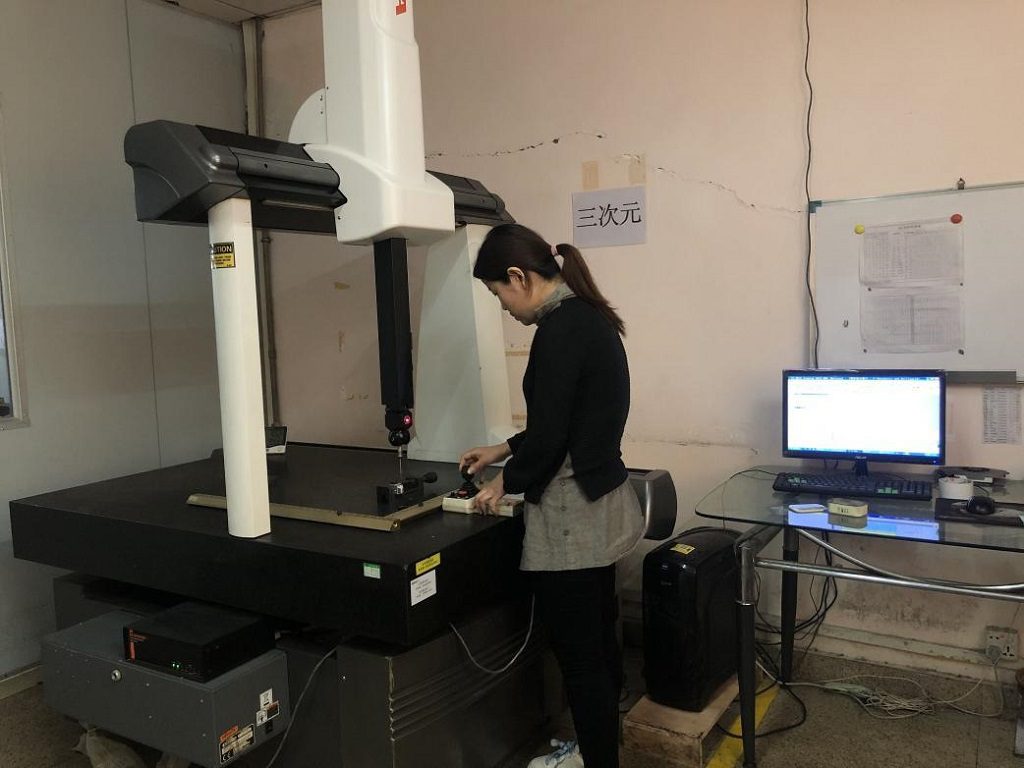
- ✅ Calibrated measurement equipment (CMM, optical comparators, pin gauges, go/no-go fixtures)
- ✅ Willingness to share inspection data, photos, and videos before shipping
- ✅ First Article Inspection (FAI) reports for new tooling
Red flags:
- 🚩 Supplier says "we do quality control" but can't explain their specific process
- 🚩 Only offers AQL sampling unless you pay for "premium inspection"
- 🚩 Refuses to share inspection reports or says "trust us"
- 🚩 No in-process monitoring (relying entirely on end-of-line inspection means defective parts may have been running for hours before being caught)
- 🚩 Measurement equipment is not calibrated or calibration certificates are expired
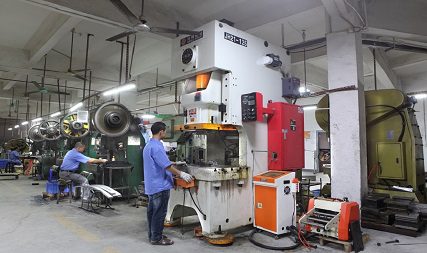
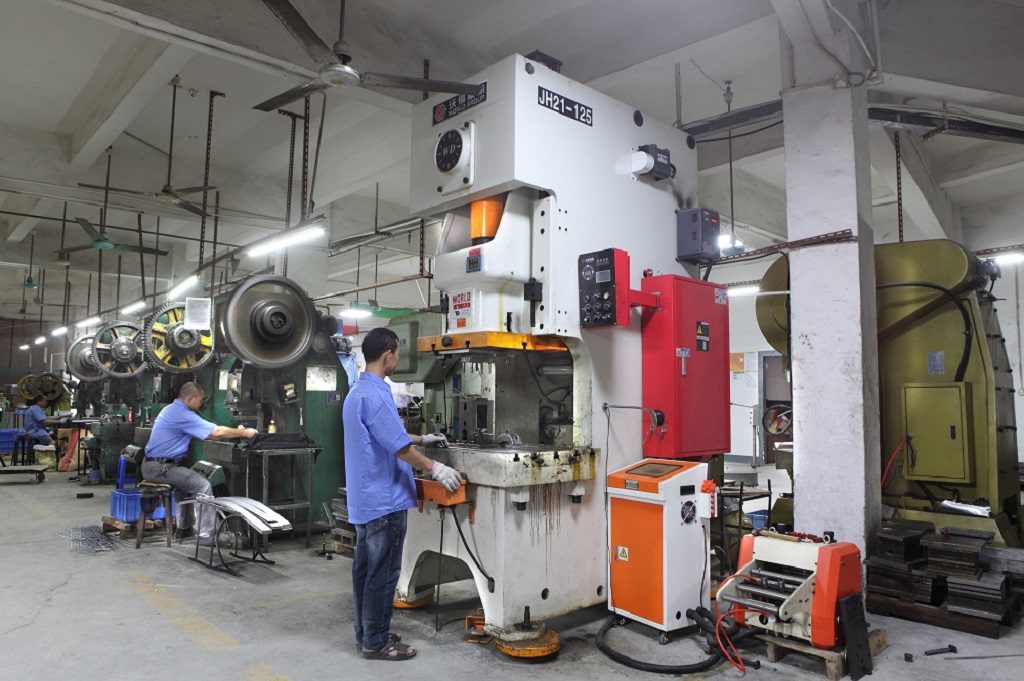
How Worthy handles quality: Every part we produce is 100% inspected — this is our standard, not an upgrade. Our presses have electronic monitoring that tracks tonnage, shut height, and feed progression in real-time. If anything varies beyond programmed limits, the press stops automatically. Additionally, our CMM equipment is calibrated annually by an accredited lab, and we provide inspection reports and photos with every shipment without being asked.
2. Delivery Reliability — Because Late Parts Cost More Than Expensive Parts
A part that arrives on time at 1.00 is worthin finitely more than apart that arrives 4 weeks late at 1.00 is worth infinitely more than a part that arrives 4 weeks late at 1.00 is worthin finitely more than apart that arrives 4 weeks late at 0.80. Late delivery can cascade through your entire business:
- Miss your assembly deadline → miss your shipment to your customer → damage your reputation
- Miss your product launch window → lose first-mover advantage
- Miss peak sales season → lose revenue you can never recover
What to look for:
- ✅ Clear lead time commitments given BEFORE you place the order (not vague "4-6 weeks")
- ✅ Proactive communication if any delay risk arises (you should hear about problems before they become crises)
- ✅ Ability to accommodate rush orders when your demand spikes unexpectedly
- ✅ Track record of on-time delivery (ask for their OTD rate — a good supplier tracks this metric)
- ✅ Flexible scheduling that can adjust to your demand fluctuations
Red flags:
- 🚩 Vague lead time ("about 4-6 weeks" without specifying tooling vs. production)
- 🚩 No proactive updates — you have to chase them for status
- 🚩 Every order is "on schedule" until suddenly it's 2 weeks late
- 🚩 Supplier has no inventory management system (they don't know their own production schedule)
- 🚩 Unwilling to commit to a delivery date in writing
How Worthy handles delivery: We break our lead time into clear stages: tooling (typically 2-6 weeks depending on complexity), sample approval (3-5 days), and production + shipping (2-4 weeks depending on volume and destination). Each stage has a committed date. If any factor threatens the schedule (material shortage, tooling issue, shipping delay), we notify the customer immediately with an explanation and a revised timeline — not after the deadline has passed. Our on-time delivery rate across all customers over the past 12 months: 97.2%.
3. Communication Efficiency — The Hidden Cost Multiplier
Poor communication is the #1 complaint I hear from buyers who've worked with overseas suppliers. It manifests in several ways:
- You ask a technical question → wait 3 days → get a vague one-line answer → ask again → wait 3 more days → still unclear
- You request a design modification → supplier says "ok" → parts arrive and the change wasn't actually made
- You report a quality issue → supplier deflects blame → no resolution for weeks
Each communication cycle that fails costs you 2-5 days. Over the course of a project, this can add up to weeks or months of lost time.
What to look for:
- ✅ Engineers who communicate directly — not sales reps relaying messages to a factory they've never visited
- ✅ Response time under 24 hours for routine questions, under 4 hours for urgent issues
- ✅ Technical competence — the person you talk to should understand tolerances, materials, and stamping process limitations without needing to "check with the factory"
- ✅ Proactive DFM feedback — a good supplier doesn't just say "yes, we can make this." They say "we can make this, but if you adjust this radius from 0.5mm to 1.0mm, the die will last 3× longer and your long-term cost drops by 15%"
- ✅ Clear documentation — quotes, timelines, and specifications confirmed in writing
Red flags:
- 🚩 Your contact is a trading company or agent who has never been inside the factory
- 🚩 Response times consistently exceed 48 hours
- 🚩 Technical questions get answered with "no problem" instead of actual engineering detail
- 🚩 Supplier never pushes back on your design or offers suggestions (they're either not reviewing it carefully, or they don't have the expertise to identify improvements)
- 🚩 Verbal promises but nothing in writing
How Worthy handles communication: Our team of 4 engineers (each with 10+ years of stamping experience) communicates directly with customers. When you send a technical question, it goes to an engineer — not to a sales person who then emails a factory manager who then asks a technician. This direct access means your questions get answered accurately on the first response. Typical response time: under 8 hours for technical questions, under 2 hours for urgent production issues. We also provide proactive DFM feedback on every new project — in many cases identifying design improvements that save the customer 10-30% before production even begins.
4. MOQ Flexibility — From 50 Prototypes to 5,000,000 Production Parts
Your manufacturing needs aren't static. At different stages of your product lifecycle, you need different quantities:
- Design validation: 50-200 prototype parts
- Market testing: 500-2,000 pieces
- Initial production: 5,000-20,000 pieces
- Full production: 50,000-2,000,000+ pieces per year
A rigid supplier that only accepts orders above 10,000 pieces forces you to find a different source for prototypes and early runs — then switch suppliers when volume grows. This creates re-qualification headaches, quality inconsistency between suppliers, and wasted time.
What to look for:
- ✅ Prototype capability with no minimum order (even 50-100 pieces)
- ✅ Bridge tooling options for medium volumes (soft tooling at lower cost)
- ✅ Seamless transition from prototype to production without changing suppliers
- ✅ Pricing that scales naturally with volume (not "prototype pricing" that's 10× production cost)
Red flags:
- 🚩 "Our minimum is 10,000 pieces" (inflexible business model)
- 🚩 "We don't do prototypes" (they only want high-volume easy work)
- 🚩 Prototype pricing is so high it discourages design iteration
- 🚩 Different factories for prototype vs. production (quality won't match)
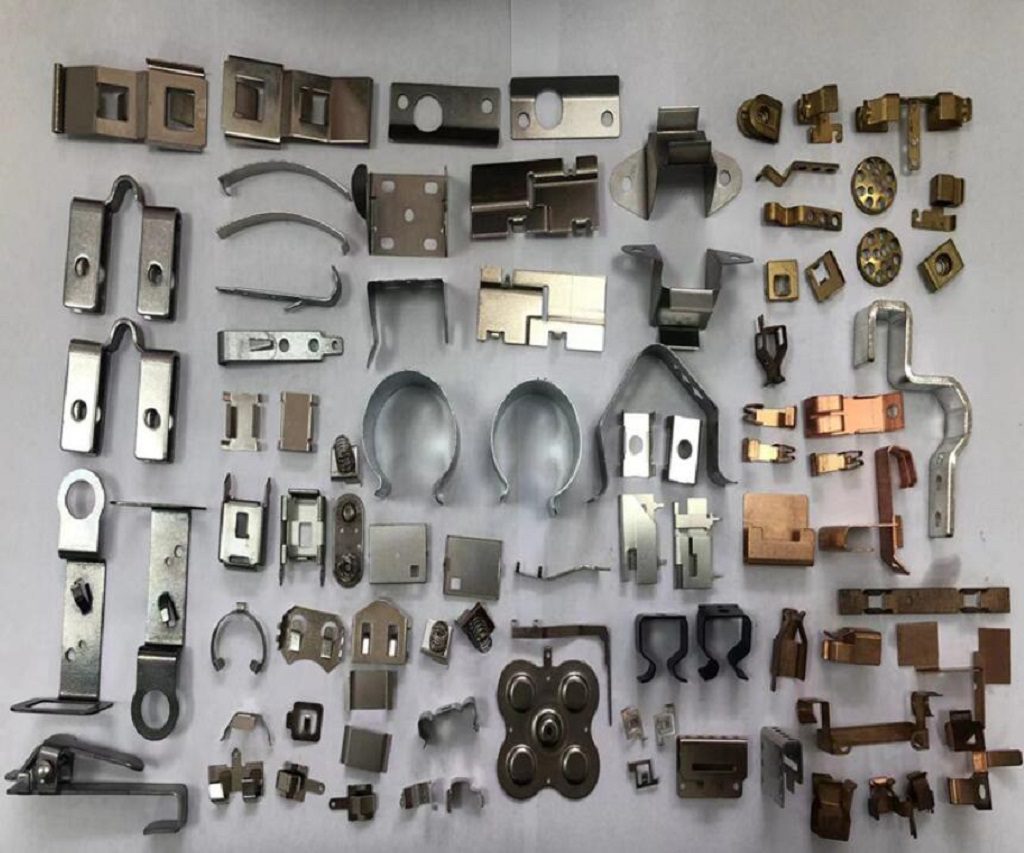
How Worthy handles MOQ: We have no minimum order quantity. Period. We produce prototype runs of 50-200 pieces on soft tooling for design validation, bridge runs of 500-5,000 pieces on semi-hardened tooling for market testing, and full production runs of 10,000-2,000,000+ pieces on hardened production tooling. All from the same factory, same engineers, same quality system. When your prototype becomes a production order, there's no supplier transition — just a tooling upgrade.
5. Engineering Support Depth — The Difference Between a Vendor and a Partner
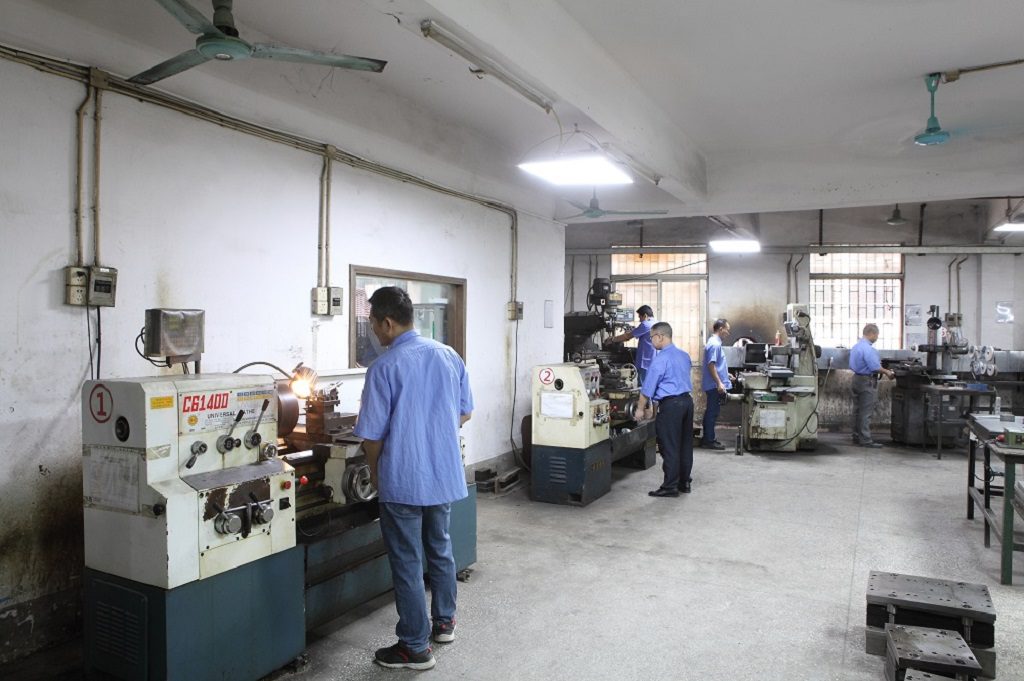
A vendor makes what you draw. A partner helps you design better parts.
The best metal stamping manufacturers don't just follow your drawings — they actively contribute to improving your design for manufacturability, cost, and performance. They catch problems before tooling is cut, suggest material alternatives that reduce cost, and recommend geometry modifications that improve die life.
What to look for:
- ✅ DFM (Design for Manufacturability) review offered on every new project
- ✅ Engineers with actual tooling design experience (not just theoretical knowledge)
- ✅ Willingness to suggest changes (even when it means telling you your current design has problems)
- ✅ Experience across multiple industries (broader perspective on design solutions)
- ✅ Fast 2D/3D drawing capability for proposed modifications
Red flags:
- 🚩 "We can make anything you draw" without any feedback (they're not reviewing your design critically)
- 🚩 No engineering staff listed on their website or available for direct communication
- 🚩 DFM review is a paid service rather than standard practice
- 🚩 Suggestions are always "use thicker material" or "relax the tolerance" (taking the easy way out instead of solving the challenge)
How Worthy handles engineering support: Our 4 engineers collectively have 45+ years of stamping and die design experience. Every new project receives a free DFM review before we quote tooling. In approximately 60% of cases, we suggest at least one modification that either reduces cost, improves quality, or extends die life. Common examples:
- Adding a radius to a sharp internal corner (prevents cracking, extends die life 3-5×)
- Adjusting hole-to-edge distance (prevents distortion during bending)
- Suggesting a material grade change (same performance, 20-40% cost reduction)
- Modifying a bend sequence to eliminate springback issues
These aren't upsells — they're engineering improvements that make your part better and cheaper to produce.
6. Material and Surface Finish Coverage — One Supplier for Everything
Managing multiple suppliers for different materials or surface finishes creates coordination overhead, quality variation, and logistics complexity. Ideally, your stamping supplier should handle:
- 100+ material grades — ferrous and non-ferrous, from 0.05mm to 6mm thick
- 50+ surface finish options — plating (zinc, nickel, tin, gold, silver), anodizing, powder coating, passivation, heat treating
- Secondary operations — tapping, riveting, welding, staking, assembly
What to look for:
- ✅ Broad material inventory or established supply relationships
- ✅ In-house or qualified subcontract finishing capability
- ✅ Assembly services that deliver finished components, not just raw stampings
- ✅ Material certifications and plating thickness reports
Red flags:
- 🚩 "We only do steel" or "we only do plating at external vendors we can't control"
- 🚩 Surface finish quality varies between orders (unstable finishing supply chain)
- 🚩 No material certifications available
How Worthy handles materials and finishes: We process 100+ material grades across all major metal families (steel, stainless, aluminum, copper, brass, bronze, phosphor bronze, titanium). We support 50+ surface finish options through our qualified finishing partners, and we manage the finishing process end-to-end — you don't need to coordinate with a separate plating vendor. Every material lot comes with mill certificates, and every plated batch comes with thickness verification reports.
Supplier Evaluation Scorecard
Here's a simple scorecard you can use to evaluate any metal stamping supplier. Rate each factor from 1-5:
| Evaluation Factor | Questions to Ask | Score (1-5) |
| Quality System | 100% inspection? In-process monitoring? Inspection reports provided? | ___ |
| Delivery Track Record | What's your OTD rate? How do you handle delays? Can you do rush orders? | ___ |
| Communication Speed | What's your typical response time? Who answers technical questions? | ___ |
| MOQ Flexibility | Can you do 50-piece prototypes? What's your minimum production order? | ___ |
| Engineering Depth | Do you offer free DFM review? How many engineers do you have? | ___ |
| Material Coverage | How many material grades can you process? Do you provide mill certs? | ___ |
| Finish Coverage | What surface finishes do you offer? Do you manage finishing in-house? | ___ |
| Pricing Transparency | Is pricing broken down (tooling, per-part, finishing)? Any hidden costs? | ___ |
| References/Track Record | Can you share case studies or reference customers in my industry? | ___ |
| Financial Stability | How long have you been in business? What's your annual capacity? | ___ |
| TOTAL | ___/50 |
Scoring guide:
- 40-50: Excellent partner candidate — proceed with confidence
- 30-39: Good but verify weak areas before committing large orders
- 20-29: Significant concerns — consider alternatives
- Below 20: High risk — not recommended
The Cost of Choosing Wrong
I want to be direct about this: choosing the wrong stamping supplier is expensive. Not just in direct costs, but in hidden costs:
| Wrong Supplier Behavior | Hidden Cost to You |
| Ships 2 weeks late | Your customer threatens to cancel; you expedite air freight at $3,000 |
| 5% defect rate (undetected until assembly) | Sort 10,000 parts ($2,000 labor); re-order replacements; 4-week delay |
| Slow communication (3-day response) | Project timeline extends by 3 weeks across 6 email exchanges |
| No DFM review | Die cracks after 50,000 shots because design had an unaddressed stress riser |
| Material substitution without informing you | Parts fail in the field; product recall; reputation damage |
The cheapest quote is rarely the cheapest total cost. A supplier who is $0.05/part cheaper but delivers late, ships defects, and communicates poorly will cost you far more in the long run than a slightly more expensive supplier who gets it right the first time.
Why Customers Choose Worthy
I won't pretend we're the only good stamping supplier in China — there are others who do solid work. But here's what our customers consistently tell us differentiates Worthy:
- 100% inspection is standard — not an upgrade, not optional, not extra cost
- Direct engineer access — you talk to the people who design your tooling and run your production
- No MOQ — prototype to mass production from the same factory
- Proactive communication — we tell you about problems before you have to ask
- Rich design improvement experience — our 4 engineers have collectively helped customers save hundreds of thousands of dollars through DFM optimization
- Flexible delivery — we work with your timeline, including rush orders when needed
- Full material and finish coverage — 100+ materials, 50+ finishes, secondary operations included
If you're currently evaluating stamping suppliers — or if you've been burned by a previous one and are looking for a more reliable alternative — I'd welcome the opportunity to show you how we work. Send your project details to [email protected] and experience the difference in our first response.