
How Does Metal Thickness Affect Die Selection in Precision Stamping?
Struggling with die selection for your stamping project? You worry that picking the wrong die for your material thickness will lead to costly errors and production delays.
Metal thickness is a consideration, but it is not the primary factor for die selection. The part's complexity, required precision, and production volume are more critical. However, for progressive dies, very thick materials are unsuitable because they are difficult to flatten and feed accurately.
You now have a basic idea of the relationship, but there is much more to consider for your specific project. This topic can get confusing, with many factors influencing the final decision. Let's break it down further to help you understand better and make an informed choice for your next production run.
What thickness of metal is used in stamping?
Are you unsure what metal thicknesses are standard for stamping? Choosing an unconventional thickness can limit your supplier options and increase your overall project costs unexpectedly.
Metal stamping can handle a wide range of thicknesses, from thin foils around 0.05mm (.002") to thick plates over 12mm (.500"). For most precision components we produce, the common range is between 0.2mm (.008") and 3mm (.118"), covering many applications.
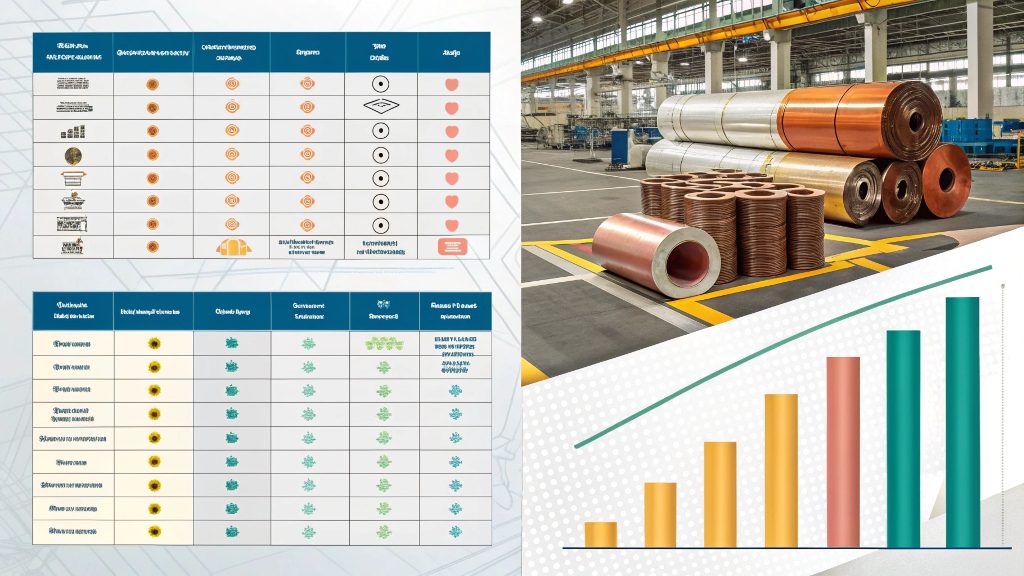
The "right" thickness really depends on the part's final use. A customer in the electronics industry might need extremely thin copper shields, while another in automotive will require thicker steel brackets for structural support. At our facility, we have experience with a huge variety of materials and thicknesses. One time, a client from Singapore needed a delicate, paper-thin retainer clip. The next week, we were setting up for a robust mounting plate for an industrial machine for a customer in North America. The key is that the stamping process is flexible. We can adjust our tooling and presses to handle what your design needs, from flimsy to rigid.
Common Thickness Ranges by Application
| Application Area | Typical Thickness Range | Common Materials |
|---|---|---|
| Electronics (Shields, Contacts) | 0.05mm - 0.5mm (.002" - .020") | Copper, Brass, Stainless Steel |
| Automotive (Brackets, Clips) | 0.8mm - 4mm (.031" - .157") | Steel, Aluminum, Alloy Steel |
| Consumer Products | 0.4mm - 2mm (.016" - .079") | Stainless Steel, Aluminum |
| Industrial (Mounting Plates) | 1.5mm - 6mm (.059" - .236") | Carbon Steel, Alloy Steel |
This shows that nearly any reasonable thickness is possible. The important thing is to match it to the product's function.
What is the rule of thumb for metal stamping?
You need a simple rule to guide your stamping designs. Without clear guidelines, you risk creating a part that is difficult or expensive to manufacture, causing delays.
A key rule of thumb is the relationship between hole diameter and material thickness. The diameter of any punched hole should be at least the same as the material thickness. This prevents the punch from breaking under pressure, especially with harder materials.


This rule is a great starting point, but it's not a strict law. We can sometimes bend this rule with the right tools and techniques. For example, a client from Canada, Mark, needed a part with holes smaller than the material thickness. For him, we used a special heavy-duty punch and die set made from highly durable tool steel. We also adjusted the press speed and used a specific lubricant to reduce stress on the tooling. This allowed us to successfully produce his parts without constant tool breakage. It costs a bit more in tooling setup, but it makes the design possible. This is a common challenge, and an experienced supplier knows how to manage it.
Other Important Guidelines
- Bend Radii: The inside bend radius should be at least 1x the material thickness to prevent cracking.
- Feature Spacing: The distance between two features (like a hole and an edge) should be at least 2x the material thickness.
Sticking to these general rules makes manufacturing smoother and cheaper.
What is the best gauge for metal stamping?
Trying to find the "best" gauge for your project? Selecting a non-optimal gauge can lead to parts that are too weak, too heavy, or unnecessarily expensive to produce.
There is no single "best" gauge; the ideal thickness depends entirely on your product's requirements. You must balance strength, weight, and cost. A thicker gauge provides more strength but increases material cost and weight, while a thinner gauge saves money but may compromise durability.

The decision process involves analyzing the part’s function. I often ask my clients, "What job does this part need to do?" A customer from Europe making medical devices needed a lightweight but rigid housing. We looked at different gauges of aluminum. We found that a slightly thicker gauge of a lighter aluminum alloy gave them the required stiffness without adding much weight. For another customer in the automotive sector, cost was the primary driver for a non-critical bracket. We helped them select the thinnest possible steel gauge that still met their minimum strength requirements, saving them a lot on a high-volume order. The "best" gauge is a custom solution, not a standard answer. It is a trade-off we can help you navigate.
What are the limitations of metal stamping?
You worry about the hidden limitations of metal stamping. If you design a part that can't be stamped effectively, you could face major redesigns and project setbacks.
The main limitations of metal stamping are part complexity, material thickness, and deep draws. Very intricate geometries can require extremely expensive tooling. As mentioned, thick materials are not suitable for progressive dies, and deep drawing has limits on how far metal can be stretched.
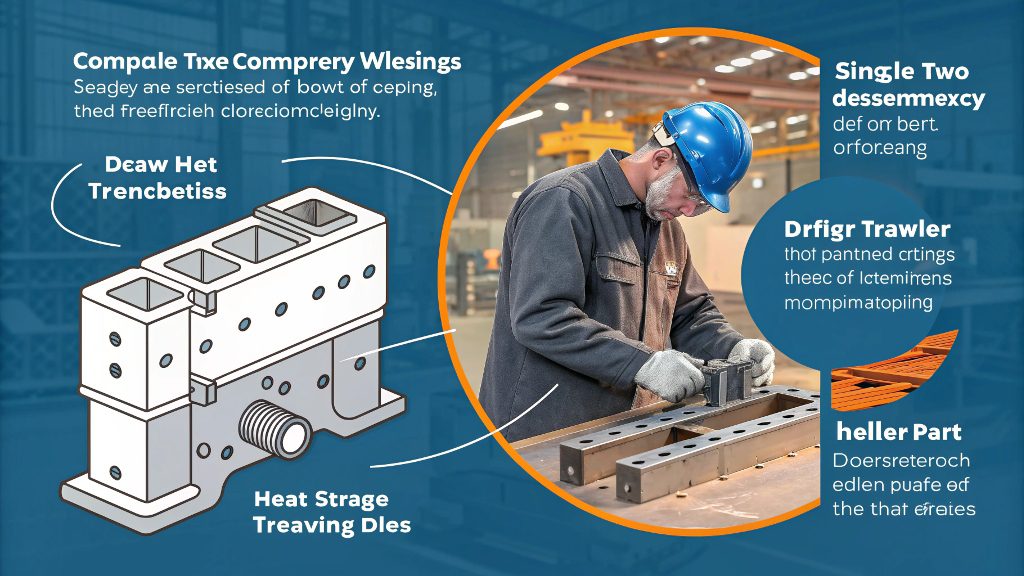
While these limitations exist, we can often find ways to work around them. For very complex parts, we might recommend breaking the component into two simpler pieces and then assembling them using riveting or welding. This can be cheaper than creating a single, highly complex progressive die. For parts that are too thick for a progressive die, we use single-stage or transfer dies. I remember a customer in Australia who needed a deep-drawn cup that was pushing the limits. We suggested adding an annealing step (heat treatment) between draws to soften the material, allowing us to achieve the final shape without cracks. There is almost always a solution if your supplier has the right experience and equipment. The key is open communication about your design early in the process.
Conclusion
In summary, material thickness is important but not the deciding factor for die selection. Part geometry, precision, and volume matter more. Good communication with your manufacturer resolves most challenges.