
How Does Anodizing Affect Aluminum’s Properties?
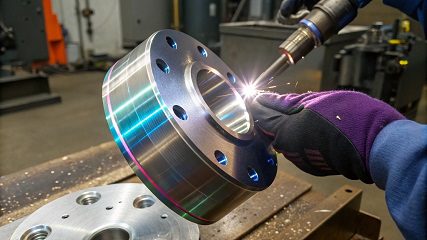
Struggling with aluminum parts that scratch, corrode, or just look plain? This can ruin your product's quality and cost you money. Anodizing offers a durable, attractive, and protective solution.
Anodizing transforms an aluminum surface into a durable, corrosion-resistant, and decorative oxide layer. It significantly improves hardness and wear resistance while allowing for various colors. This process enhances both the performance and aesthetics of aluminum parts for demanding applications.
This process is more than just a simple coating; it fundamentally changes the surface of the metal. I've worked with countless clients who were surprised by how much this one finishing step can transform their product. To make the best choice for your project, you need to understand exactly what happens to the aluminum, what its new properties are, and what trade-offs you might be making. Let's dive into the details.
How does anodizing affect aluminum?
You know anodizing is a good finishing option, but you're not sure about the specifics. This uncertainty can make it difficult to specify the right finish for your custom CNC parts.
Anodizing affects aluminum by growing a hard, stable oxide layer directly from the aluminum itself. This process increases surface hardness, improves corrosion and wear resistance, and creates a porous surface ideal for absorbing dyes, resulting in a durable, colored finish. It's an integral part of the metal.
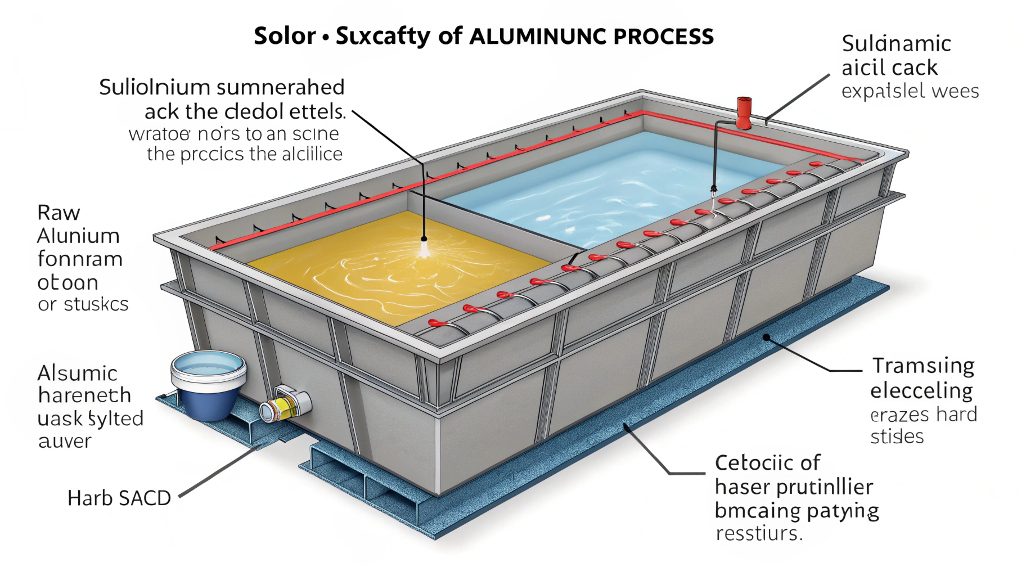
The anodizing process is an electrochemical conversion. We don't just add a layer on top, like paint. Instead, we submerge the aluminum part in an acid bath, usually sulfuric acid for the most common type (Type II), and pass an electric current through it. This forces the surface of the aluminum to react with oxygen and convert into aluminum oxide. Because this new layer is grown from the base material, it won't chip or peel off. I remember a client, Mark, who had issues with parts getting scratched during his assembly process. The damage was causing costly delays. Once we switched his parts to a black anodized finish, the problem disappeared completely.
From Soft Metal to Hard Surface
Raw aluminum is a relatively soft metal. Aluminum oxide, however, is a ceramic that is extremely hard—almost as hard as diamond on some scales. This transformation is the key benefit. The surface becomes much more resistant to daily wear and tear, abrasion, and scratches. For a clear comparison, look at the table below.
| Property | Raw Aluminum | Anodized Aluminum (Type II) |
|---|---|---|
| Surface Hardness | Soft, easily dents | Very Hard, scratch-resistant |
| Corrosion | Susceptible to rust | Excellent |
| Appearance | Dull metallic | Decorative, can be colored |
| Wear Resistance | Low | High |
What are the disadvantages of anodized aluminum?
Anodizing seems like the perfect finish, but you suspect there might be downsides. Not knowing the cons can lead to unexpected problems and costly mistakes in your project down the line.
The main disadvantages of anodized aluminum include the potential for the hard coating to crack under high stress, the difficulty in repairing scratches, and color fading with some dyes under prolonged UV exposure. The process also adds slight dimensional changes that must be managed.
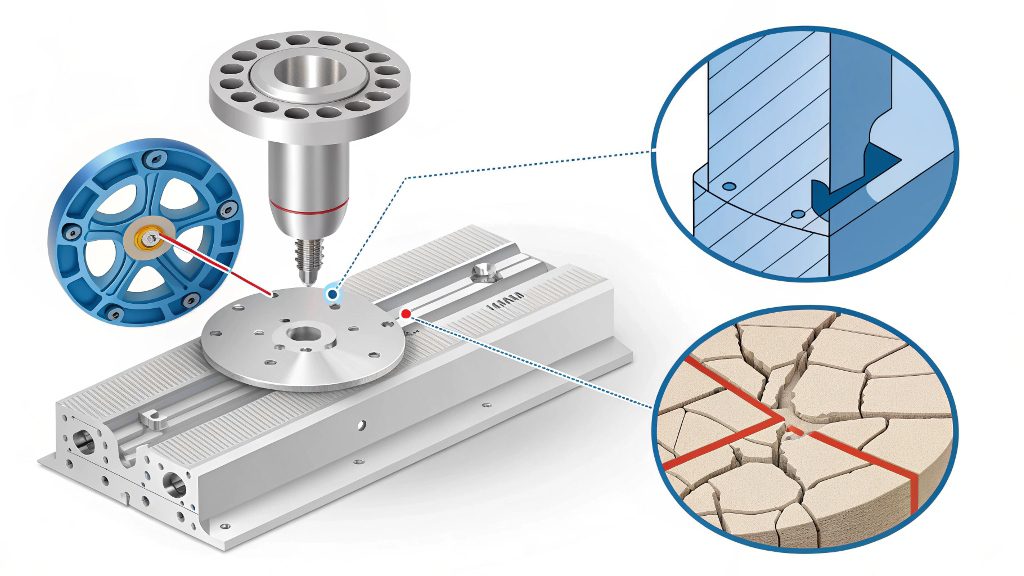
While anodizing is one of my most recommended finishes, it's important to be aware of its limitations. No single process is perfect for every application.
Brittleness and Cracking
The hard, ceramic-like oxide layer is not as flexible as the aluminum underneath. If you bend an anodized part too far, the coating can develop tiny cracks, a phenomenon known as "crazing." For most applications, this isn't an issue, but if your part is designed to flex, this is a critical consideration.
Repair Challenges
Unlike paint, you can't just "touch up" a deep scratch on an anodized surface. Because the finish is integral to the metal, a deep gouge that goes through the oxide layer cannot be easily repaired. The only way to fix it properly is to chemically strip the entire part and re-anodize it, which is both time-consuming and expensive.
Dimensional Changes
This is a crucial point for precision machining. The anodizing process builds the oxide layer both into and out of the surface. This means the final dimensions of your part will change slightly. At my company, Worthy Hardware, we always account for this. For parts with very tight tolerances, like +/- 0.001", we machine the part slightly undersized so it measures perfectly after the anodizing layer is added.
What are the properties of anodized aluminium?
You need a clear list of benefits to specify materials for your project. Vague knowledge leads to poor material choices and can compromise the final product's quality and lifespan.
Anodized aluminum has excellent corrosion resistance, high surface hardness, and superior wear resistance compared to raw aluminum. It also has a decorative, long-lasting finish, provides good color stability, and is a dielectric (electrically insulating) surface. The finish is integrated with the metal, preventing chipping.
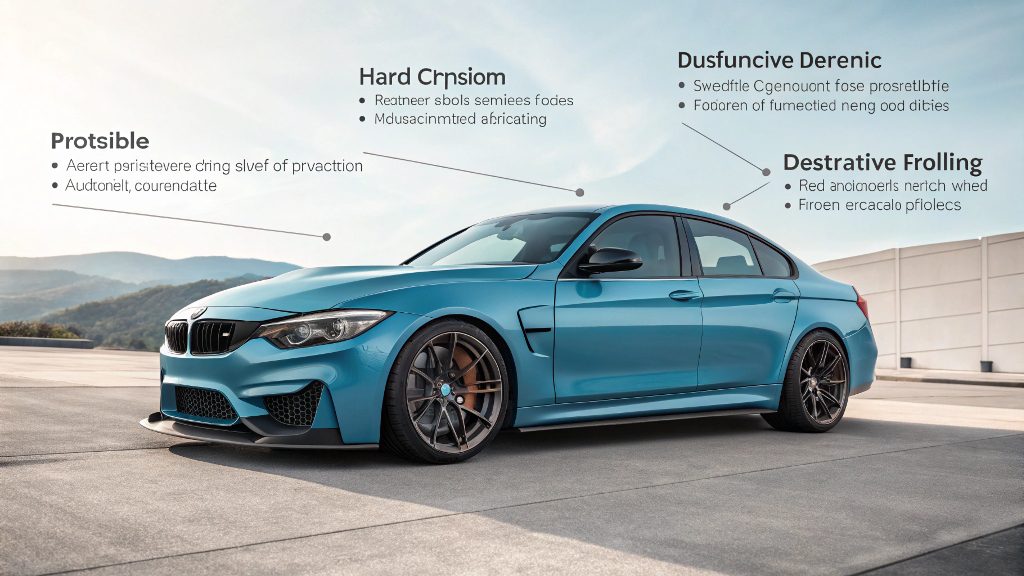
When you specify an anodized finish, you are choosing a set of powerful properties that fundamentally improve an aluminum part. I often explain these benefits to my clients to help them understand the value they are adding to their products.
Enhanced Durability
This is the combination of hardness and wear resistance. The aluminum oxide layer is a very hard ceramic. For even more demanding applications, we can use Type III anodizing, also known as "hardcoat." This creates a much thicker and denser layer, making it suitable for industrial machinery, aerospace components, and parts that face extreme abrasion.
Superior Corrosion Resistance
The dense, stable oxide layer acts as a powerful barrier. It prevents oxygen, moisture, and other corrosive elements from reaching the raw aluminum underneath. Anodized parts can pass hundreds of hours of salt spray testing, which simulates harsh marine environments, without showing any signs of corrosion.
Aesthetic Flexibility
The structure of a Type II anodized layer is naturally porous. These microscopic pores are perfect for absorbing organic or inorganic dyes. This allows us to offer a huge range of colors, from clear and black to vibrant blues, reds, and greens. We can also alter the pre-treatment process to achieve different visual effects, such as a matte or bright finish, giving you complete control over the final look.
Does anodizing aluminum affect conductivity?
You need to know if your aluminum part will conduct electricity after it is finished. Choosing the wrong finish can cause electrical shorts or grounding failures in your final assembly.
Yes, anodizing significantly affects conductivity. The aluminum oxide layer created during the process is an excellent electrical insulator, also known as a dielectric. It prevents the flow of electricity. If conductivity is required, those areas must be masked before anodizing.
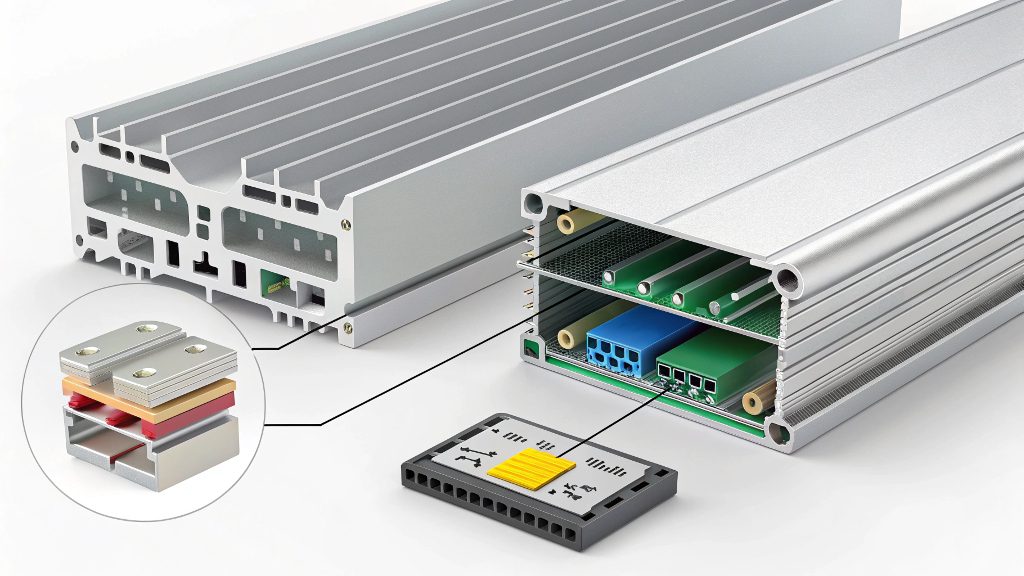
This property is a double-edged sword and something I always clarify with my customers, especially those in the electronics industry. Raw aluminum is a great electrical conductor. However, aluminum oxide is a ceramic and a very effective insulator. This can be a huge benefit or a major problem, depending on your design.
The Insulating Layer
For products like electronics enclosures, the insulating property is a feature. It helps prevent short circuits between the case and the internal components. The thickness of the anodized layer determines its effectiveness as an insulator; a thicker hardcoat layer has a higher dielectric strength than a thin decorative layer.
Solutions for Conductivity
But what if you need a part to be grounded or to make an electrical connection? We handle this frequently. The solution is masking. Before the part goes into the anodizing tank, we use special plugs, high-temperature tape, or a liquid masking agent to cover any areas that must remain electrically conductive. Screw holes for grounding, mating surfaces, and contact points are common examples. After anodizing, we remove the masking to reveal the bare, conductive aluminum underneath. This gives you the best of both worlds: a durable, corrosion-resistant body and clean, conductive connection points. It's a key service we provide for precision projects.
Conclusion
Anodizing boosts aluminum's hardness, corrosion resistance, and appearance. However, it makes the surface an insulator and harder to repair. Understanding these trade-offs is key to making the right choice.