
How Do Quality Standards for Automotive Stamped Parts Differ from Other Industries?
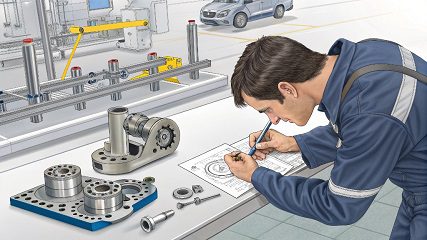
Worried about component failure? A single bad part can cause costly production delays and safety recalls. Strict automotive standards are your best defense against these risks.
Automotive stamping demands extreme precision, often with tolerances like 0.05mm, and requires supplier certification like IATF 16949. This standard ensures rigorous process control, traceability, and risk management far beyond what is typical for other industries.
When you source parts for a car, you are not just buying a piece of metal. You are buying a promise of safety and reliability. A bracket in a consumer electronic device failing is an inconvenience. A similar bracket failing in a car's braking system is a disaster. This is why the standards are worlds apart. I have seen clients like Mark from Canada switch to suppliers like us because their previous partners did not understand this critical difference. They faced delays and quality problems that hurt their business. It is essential to work with a manufacturer who lives and breathes these high standards. Let's explore what makes automotive stamping so unique and demanding.
What is stamping in the automotive industry?
Sourcing parts for cars? The process seems simple, but a small mistake can lead to major recalls. You need parts that are perfect every single time.
Automotive stamping is a manufacturing process that uses a die and a press to shape flat metal sheets into specific car parts. This process is essential for creating everything from body panels to small, complex brackets with the high precision and repeatability the industry demands.
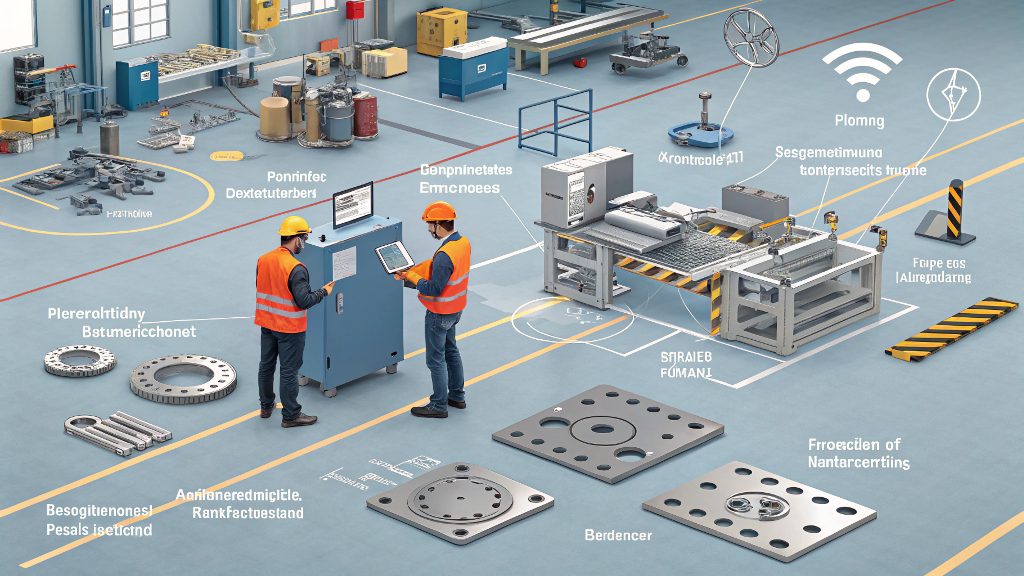
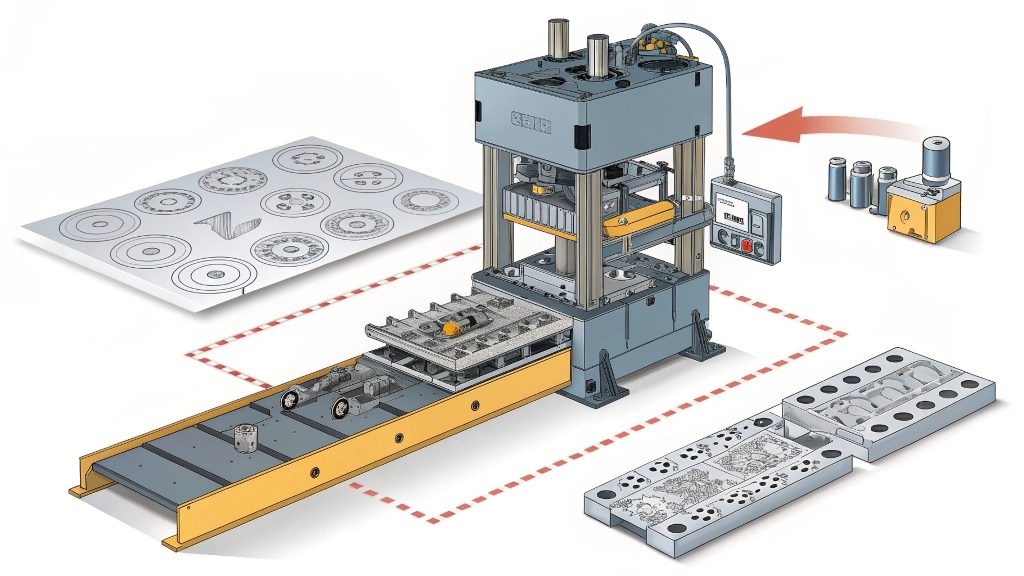
In my experience, automotive stamping is all about control and precision. It goes a step beyond general metal stamping. We place a sheet of metal, like steel or aluminum, into a stamping press. A custom tool, called a die, then presses down with immense force, cutting and forming the metal into its final shape. For a simple bracket, this might be a single hit. For a complex engine component, it could be a multi-stage process called progressive stamping, where the metal strip moves through several stations in the die to be gradually formed.
The Key is in the Certification
The main difference is the required level of process control. For automotive clients, we must be IATF 16949 certified. This isn't just a piece of paper. It is a strict quality management system that governs our entire process. It requires us to do:
- Advanced Product Quality Planning (APQP): We plan for quality from the very beginning of a project.
- Production Part Approval Process (PPAP): We provide detailed documentation to prove our processes can repeatedly produce parts that meet your specifications.
- Failure Mode and Effects Analysis (FMEA): We proactively identify and mitigate potential risks in the manufacturing process.
This ensures every single part, from the first to the millionth, is identical and meets the required tolerance, sometimes as tight as 0.05mm.
What are the applications of stamping?
Your product needs many different metal parts. Finding a single supplier who can make them all with consistent quality can be a huge challenge for your supply chain.
Stamped parts are the building blocks of modern manufacturing. They are used in almost every industry, from the phone in your pocket to the car you drive. Their versatility, strength, and cost-effectiveness make them an ideal choice for mass-produced components in countless applications.
Stamped parts are everywhere. Because we serve so many industries, I see the full range of applications every day on our production floor. The core process is the same, but the final use dictates the precision, material, and finish required. For an automotive client, a bracket might hold a critical sensor. For a consumer electronics client, a shield might just prevent radio frequency interference. The stakes are different, and so are the specifications. Here at Worthy, we make parts for everything from medical devices to aerospace, but the automotive sector remains one of the most demanding.
Common Stamping Applications by Industry
To give you a better idea, here is a simple breakdown of where our stamped parts go.
| Industry | Common Stamped Part Applications | Key Focus |
|---|---|---|
| Automotive | Brackets, clips, terminals, engine mounts, chassis parts, seat frames | Safety, reliability, tight tolerances, IATF 16949 |
| Electronics | EMI/RFI shields, connectors, contacts, lead frames, heat sinks | Miniaturization, electrical conductivity, consistency |
| Medical | Surgical instrument components, implantable devices, diagnostic equipment housing | Biocompatibility, cleanliness, extreme precision, traceability |
| Industrial | Levers, mounting plates, retainers, enclosures, fasteners | Durability, strength, cost-effectiveness |
| Aerospace | Brackets, clamps, connectors, fuselage components | Lightweight materials, high strength, extreme heat resistance |
This table shows why a "one-size-fits-all" approach to quality does not work. A supplier must understand the unique demands of your industry to deliver parts you can trust.
What is metal stamping?
You need custom metal parts for your project. But you are not sure which manufacturing method is the most efficient and cost-effective for your specific design and volume needs.
Metal stamping is a cold-forming process that transforms flat metal sheets into specific shapes. It uses a machine press and a specialized tool, known as a die, to cut, bend, and form the material. It's a fast, reliable, and cost-effective method for high-volume production.
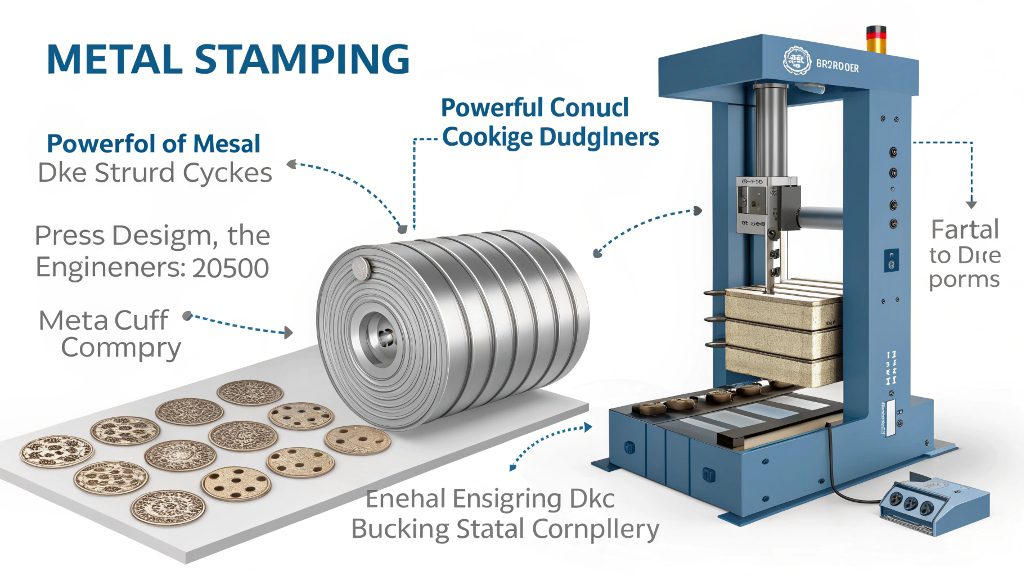
Think of metal stamping like using a very powerful and precise cookie cutter. We start with a large coil or sheet of metal. This metal is fed into our press. The press holds the die, which I consider the "brains" of the operation. Our engineers design this die specifically for the customer's part. As the press cycles, the die cuts or forms the metal. Depending on the part's complexity, we use different techniques. This is where our deep experience really helps clients. We can look at a design and recommend the absolute best process to make it.
Common Stamping Processes We Use
Choosing the right process is critical for quality and cost. Here are two main types we use at Worthy:
-
Progressive Die Stamping: This is for complex parts. A single die has multiple stations. A strip of metal is fed through, and at each station, a different operation (like cutting, bending, or punching) is performed. The finished part is cut off at the final station. It is very fast and efficient for high-volume orders.
-
Fourslide / Multi-slide Stamping: This is our specialty for intricate parts with complex bends, like clips and springs. Instead of one vertical motion, Fourslide machines have tools that move in from four different directions. This allows us to create very complex forms that would be impossible with a standard press, often without needing secondary operations, which saves our customers money.
We work with over 100 different materials, from standard steel and aluminum to more exotic alloys like titanium and bronze, ensuring we can meet the exact requirements of any project.
Conclusion
Automotive stamping standards are much stricter due to safety needs, requiring IATF 16949 certification, tight tolerances, and total process control not always found in other industries.