
Which Aluminum Alloy Is Best for High-Stress Applications?
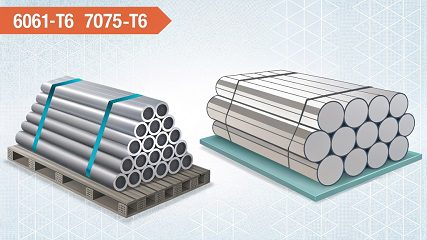
Struggling to pick an aluminum for tough jobs? Worried about failure under pressure? Find the strongest alloy for your needs right here in this guide.
For high-stress applications demanding maximum strength, 7075 aluminum alloy is often the best choice. Its exceptional strength-to-weight ratio makes it ideal for aerospace, military, and structural components where performance is critical.
Choosing the right aluminum involves looking beyond just one strength number. Factors like cost, workability, and the specific type of stress matter. Let's explore the strongest options and see how they fit different demanding situations.
What is the highest strength Aluminium alloy?
Need the absolute strongest aluminum readily available? Concerned other alloys might not handle extreme loads? Discover the peak of standard aluminum strength right here.
Generally, 7075 aluminum is considered the highest strength aluminum alloy widely available for machining. Its zinc alloying element provides superior hardness and strength compared to other common series like 6061 or 5052.
When we talk about high strength in aluminum, the 7000 series, particularly 7075, usually comes first to mind. This alloy gets its impressive strength from its main alloying element, zinc, combined with magnesium.
It's also heat-treatable, meaning we can use specific heating and cooling processes, like the T6 temper, to significantly boost its mechanical properties. The T6 temper involves solution heat-treating and then artificial aging, resulting in very high yield and ultimate tensile strengths.
Here's a quick comparison of typical ultimate tensile strengths (UTS) for common tempers:
| Alloy & Temper | Typical UTS (MPa) | Typical UTS (ksi) | Notes |
|---|---|---|---|
| 7075-T6 | 572 | 83 | Very high strength, lower toughness |
| 6061-T6 | 310 | 45 | Good strength, versatile, weldable |
| 5052-H32 | 228 | 33 | Good formability, corrosion resistance |
| 2024-T4 | 469 | 68 | High strength, used in aerospace |
While 7075-T6 stands out for sheer strength in common alloys, it's important to remember strength isn't everything. It has lower corrosion resistance compared to 5xxx or 6xxx series alloys and can be more difficult to weld. In my experience machining parts at Worthy Hardware, 7075 is chosen when maximum strength-to-weight is the absolute priority, often seen in aerospace structural parts or high-performance sporting equipment.
Is 6061 or 7075 aluminum stronger?
Choosing between 6061 and 7075 for your project? Unsure which one offers the better strength characteristics for your parts? Get a clear comparison to help you make the right decision.
7075 aluminum is significantly stronger than 6061 aluminum. In their common T6 temper, 7075 typically boasts nearly double the tensile and yield strength of 6061-T6, making it superior for high-load, high-stress applications.
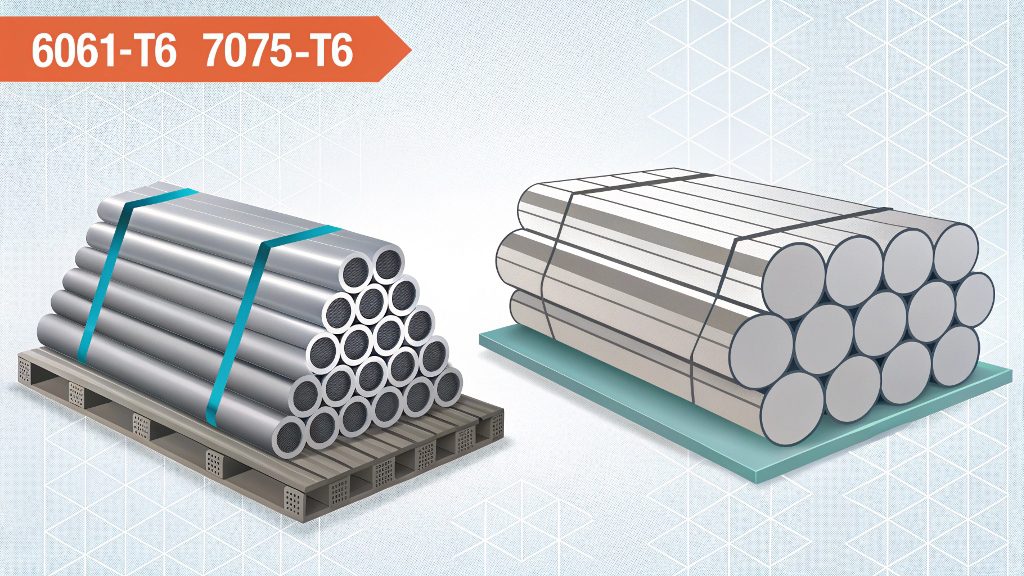
The strength difference between 6061-T6 and 7075-T6 is quite large. Let's look at some typical numbers:
-
Yield Strength: This is the stress needed to permanently deform the material. 7075-T6 is around 503 MPa (73 ksi), while 6061-T6 is about 276 MPa (40 ksi).
-
Ultimate Tensile Strength: This is the maximum stress the material can handle before breaking. 7075-T6 reaches about 572 MPa (83 ksi), compared to 6061-T6 at 310 MPa (45 ksi).
Clearly, if the main requirement is resisting high forces without bending or breaking, 7075 is the stronger choice. However, this strength comes with trade-offs. 7075 is generally:
-
More expensive: The alloying elements and processing make it costlier.
-
Less corrosion resistant: It requires more protection (like anodizing) in corrosive environments.
-
Harder to weld: Welding 7075 is difficult and often avoided in structural applications.
-
Less ductile: It's more brittle than 6061.
6061, on the other hand, offers a great balance. It has good strength, excellent corrosion resistance, good machinability, and is easily weldable. For many general engineering and structural applications, 6061-T6 provides sufficient strength at a lower cost and with easier fabrication. I often guide clients to choose 6061 unless the extreme strength of 7075 is truly necessary for the design, like in demanding aerospace components we machine.
| Feature | 6061-T6 | 7075-T6 | Winner for High Stress |
|---|---|---|---|
| Yield Strength | ~276 MPa (40 ksi) | ~503 MPa (73 ksi) | 7075 |
| Ultimate Strength | ~310 MPa (45 ksi) | ~572 MPa (83 ksi) | 7075 |
| Cost | Lower | Higher | 6061 |
| Corrosion Resist. | Good | Fair (needs protection) | 6061 |
| Weldability | Good | Poor | 6061 |
| Machinability | Good | Fair | 6061 |
Which aluminum is stronger, 5052 or 6061?
Comparing the strength of 5052 and 6061 aluminum? Do you need good formability but also require decent strength? Let's examine how these very popular alloys stack up against each other.
6061 aluminum is generally stronger than 5052 aluminum, particularly when comparing the common heat-treated 6061-T6 temper to typical 5052 tempers like H32. 5052 excels in formability and corrosion resistance, but 6061 provides higher mechanical strength.
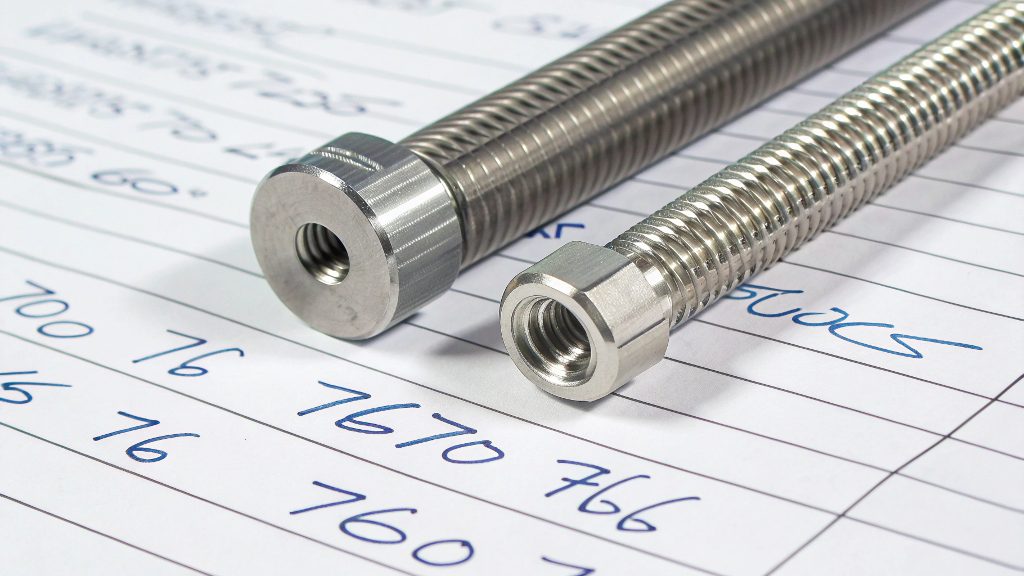
These two alloys belong to different series and get their strength in different ways. 5052 is in the 5xxx series, primarily alloyed with magnesium. Its strength comes mainly from strain hardening (work hardening), indicated by H-tempers like H32 or H34. 6061 is a 6xxx series alloy (magnesium and silicon) and gets its strength from heat treatment, typically the T6 temper.
Let's compare typical strength values:
-
5052-H32: Yield Strength ~193 MPa (28 ksi), Ultimate Strength ~228 MPa (33 ksi).
-
6061-T6: Yield Strength ~276 MPa (40 ksi), Ultimate Strength ~310 MPa (45 ksi).
So, 6061-T6 is clearly stronger than 5052-H32. But 5052 has key advantages. Its biggest strengths are:
-
Excellent Formability: It can be bent and shaped easily without cracking, making it ideal for sheet metal work.
-
Superior Corrosion Resistance: Especially in saltwater environments, 5052 holds up exceptionally well. It's often called "marine grade" aluminum.
-
Good Weldability: It can be welded effectively.
6061 offers higher strength and good machinability, making it great for structural parts, machine components, and general fabrication where higher loads are involved compared to what 5052 typically handles. We machine a lot of 6061 at Worthy Hardware for precisely these kinds of applications.
You choose 5052 when you need to form complex shapes or require top-tier corrosion resistance, like for boat hulls, fuel tanks, or enclosures. You choose 6061 when you need a stronger, versatile, machinable, and still reasonably corrosion-resistant material for structural or mechanical parts.
| Feature | 5052-H32 | 6061-T6 | Notes |
|---|---|---|---|
| Strength | Moderate | Good | 6061-T6 is significantly stronger |
| Formability | Excellent | Fair | 5052 is much easier to bend and shape |
| Corrosion Resist. | Excellent (Marine Grade) | Good | 5052 is better, especially in saltwater |
| Weldability | Good | Good | Both are weldable |
| Machinability | Fair | Good | 6061 generally machines better |
| Primary Use Cases | Sheet metal, marine, tanks | Structural, machine parts | Reflects their key strengths |
What is the best aluminum alloy for high temperature applications?
Does your aluminum part need to operate reliably in hot environments? Are you worried about standard alloys like 6061 or 7075 losing their strength when temperatures climb? Find out which alloys are designed for thermal stability.
For high-temperature aluminum applications, specialized alloys like 2219 or 2618 are often preferred. Common alloys like 6061 and 7075 lose significant strength above 150-200°C (300-400°F), while these 2xxx series alloys retain useful properties at higher temperatures.
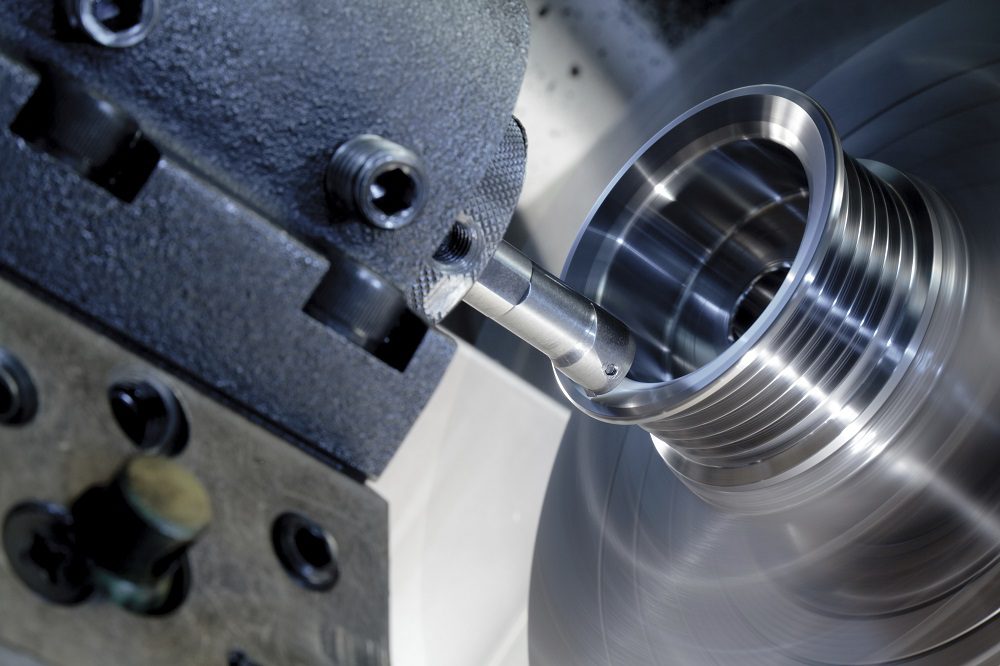
Most common aluminum alloys, including the popular 5xxx, 6xxx, and 7xxx series, don't perform well at sustained elevated temperatures. As temperature increases, their strength drops considerably, and they can become susceptible to "creep," which is slow deformation under constant stress. For applications consistently operating above roughly 150°C (300°F), we need to look elsewhere.
The 2xxx series aluminum alloys, which use copper as the primary alloying element, generally offer better high-temperature performance. Key examples include:
-
2219: This alloy maintains good strength up to about 300°C (572°F). It's known for good weldability and is famously used in aerospace applications like the external fuel tanks for the Space Shuttle and rocket boosters.
-
2618 (also known as RR58): Developed for high-performance piston engines (like in the Concorde supersonic jet), this alloy can handle temperatures approaching 250-300°C (482-572°F) while retaining significant strength. It offers good machinability but lower corrosion resistance.
There are also aluminum matrix composites (AMCs) reinforced with ceramics, or specialized alloys developed using powder metallurgy, that can push operating temperatures even higher, but 2219 and 2618 are more conventional choices available in standard forms like plate, bar, and forgings.
When a customer needs parts for high-temperature environments, we discuss these options, keeping in mind that even these specialized aluminum alloys have limits compared to materials like titanium or heat-resistant steels. The choice depends heavily on the exact temperature, required strength at temperature, and component life expectancy.
Conclusion
Choosing the right high-stress aluminum depends on your specific needs. 7075 offers top strength, but always consider temperature, cost, corrosion, and fabrication needs when selecting your final material.
Need help machining high-strength aluminum parts? At Worthy Hardware, we specialize in CNC machining services, including complex 5-axis work and tight tolerance parts from alloys like 7075, 6061, and more. Contact me, Sandra Gao, at [email protected] or visit www.worthyhardware.com to discuss your project.