
Galvanized Steel Vs. Stainless Steel: When To Choose Which Material For Your Parts?
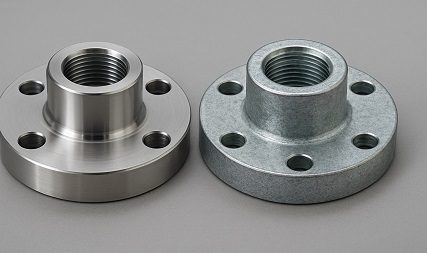
Confused about choosing between galvanized and stainless steel? Making the wrong choice can lead to rust, failure, and wasted money. This guide will help you decide which is right for your project.
Galvanized steel is cheaper and offers good rust protection through its zinc coating. Stainless steel costs more but provides superior, inherent corrosion resistance. Choose based on your budget, required lifespan, and the specific environment your parts will face.
Choosing the right material is critical for any CNC machining project. Both galvanized steel and stainless steel are popular choices, but they have very different properties and costs. Understanding these differences is key to getting the performance you need without overspending. Let's dive deeper into which material suits which situation, helping you make an informed decision for your next parts order.
Should I use stainless steel or galvanized?
Still wondering which steel type fits your needs best? Picking the wrong one can mean parts failing early or paying too much. Let's break down the key factors to make the choice clear.
Use galvanized steel when cost is a major factor and you need decent protection against rust in moderate conditions. Choose stainless steel for harsher environments, applications needing high purity (like food or medical), better appearance, or a longer lifespan.
Deciding between galvanized and stainless steel really comes down to balancing cost against performance requirements. Based on my 15 years of experience in CNC machining, the first question I always ask is about the application and the environment.
If your parts are mostly for indoor use or outdoor use in a relatively dry environment, and budget is tight, galvanized steel is often a great starting point. The zinc coating provides a sacrificial layer that protects the steel underneath from rusting. It's very cost-effective for things like brackets, structural supports, or enclosures where appearance isn't the top priority. We machine many galvanized parts for customers in construction and industrial sectors.
However, if the part will be exposed to moisture frequently, chemicals, salt spray (like near the coast), or high humidity, stainless steel is usually the better investment. Its chromium content forms a passive, self-healing oxide layer that prevents rust throughout the material, not just on the surface. This makes it ideal for marine applications, food processing equipment, medical devices, and architectural features. While the upfront cost is higher, it often saves money long-term due to its durability and low maintenance.
Here's a quick comparison:
| Feature | Galvanized Steel | Stainless Steel |
|---|---|---|
| Corrosion Resist | Good (sacrificial zinc coating) | Excellent (inherent chromium oxide) |
| Cost | Lower | Higher |
| Appearance | Dull, can have spangle pattern | Bright, various finishes available |
| Strength | Depends on base steel grade | Generally high strength, work hardens |
| Lifespan | Good, depends on coating wear | Excellent, very long-lasting |
| Welding | Needs fume extraction, coating removal | Easier, needs correct filler/gas |
| Typical Uses | Fencing, HVAC, structural, ducts | Food/Medical, marine, architectural |
Think carefully about how long the part needs to last and what conditions it will face. That usually points towards the right material.
What is the downside of galvanized steel?
Galvanized steel sounds like a good, affordable option for rust protection, right? But you might worry if there are hidden problems. Knowing the drawbacks prevents unexpected failures or issues down the line.
The main downsides are: the protective coating can be damaged by scratches or impacts, exposing the steel; its lifespan is generally shorter than stainless steel, especially in harsh conditions; welding requires special precautions; and the finish isn't as aesthetically pleasing.
While galvanized steel offers good value, it's not perfect. The biggest issue I see is the reliance on the zinc coating. This coating is relatively soft compared to the base steel. If it gets deeply scratched, gouged, or damaged during installation or use, the underlying steel is exposed and can start to rust in that spot. While the surrounding zinc offers some cathodic protection, significant damage compromises the part's integrity over time. Repairing the coating in the field can also be tricky.
Another point is lifespan. The zinc coating wears away slowly over time as it sacrifices itself to protect the steel. How fast it wears depends entirely on the environment. In mild conditions, it can last decades. But in more corrosive environments (acid rain, salt spray, industrial pollution), the coating depletes much faster than the inherent protection of stainless steel would degrade. So, while cheaper initially, you might need to replace galvanized parts sooner.
Welding galvanized steel also needs care. Burning off the zinc coating releases fumes that are hazardous to breathe, requiring good ventilation and proper respiratory protection. The zinc can also contaminate the weld pool, potentially leading to weaker or porous welds if not managed correctly. Often, the galvanizing needs to be ground off around the weld area before welding, and then the area needs recoating afterwards (like with zinc-rich paint) to restore protection, adding extra steps and cost.
Finally, appearance can be a factor. The typical finish of hot-dip galvanizing is a dull gray, sometimes with a crystalline "spangle" pattern. This is perfectly fine for industrial or structural uses, but it's not usually considered attractive for consumer products or architectural details where stainless steel's bright, clean look is preferred.
When to use galvanized steel?
So, knowing its pros and cons, when is galvanized steel clearly the right choice? Choosing it in the wrong situation leads to premature failure or dissatisfaction. Let's pinpoint the applications where it truly shines.
Use galvanized steel for applications where good corrosion resistance is needed at a lower cost, appearance is secondary, and the environment isn't extremely harsh. Common examples include structural beams, fencing, HVAC ductwork, industrial walkways, electrical conduit, and some automotive components.
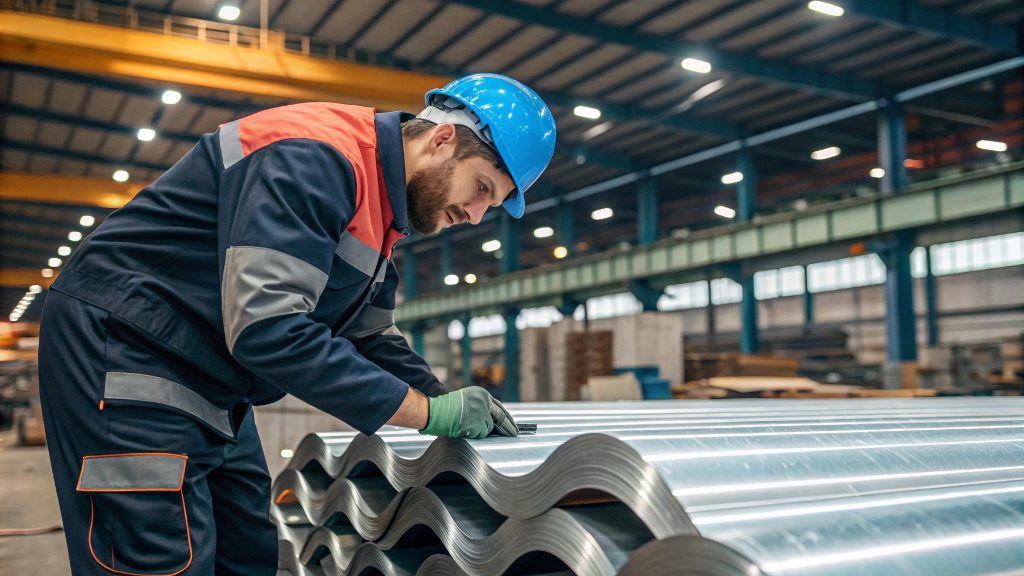
Galvanized steel hits a sweet spot for many practical applications where function and budget are the primary drivers. Based on the parts we manufacture here at Worthy Hardware, here are some classic examples where galvanized steel makes perfect sense:
-
Construction & Infrastructure: Think guardrails on highways, street light poles, structural steel for buildings (beams, columns where not visible), corrugated roofing sheets, and reinforcing bars in concrete (rebar). Here, strength and protection against atmospheric corrosion at a reasonable cost are key.
-
Agriculture: Fencing wire, posts, gates, animal enclosures, metal troughs, and parts for farm equipment often use galvanized steel. It holds up well against weather and typical farm conditions without the higher cost of stainless.
-
HVAC Systems: Ductwork for heating, ventilation, and air conditioning is very commonly made from galvanized sheet metal. It's easy to form, cost-effective, and provides sufficient corrosion resistance for air handling indoors or protected outdoor locations.
-
Outdoor Hardware: Nails, screws, bolts, nuts, washers, brackets, and hinges used outdoors often benefit from galvanization. It prevents unsightly rust streaks and ensures longevity in non-coastal areas.
-
Electrical: Electrical conduit, junction boxes, and utility towers frequently use galvanized steel for durable protection of wiring systems outdoors and in industrial settings.
-
Automotive (Less Critical Parts): Some underbody components, brackets, or internal structural pieces that aren't highly visible or exposed to extreme road salt might use galvanized steel for cost savings.
In all these cases, the zinc coating provides enough protection for the expected service life and environment, making the higher cost of stainless steel unnecessary. It's the workhorse material when you need reliable, affordable protection against rust.
Is galvanized chain better than stainless steel?
Choosing the right chain material is important for safety and longevity. You might wonder if the cheaper galvanized option is good enough, or if you need stainless steel. Using the wrong chain type can lead to failure, especially under load or in bad weather.
Neither is universally "better"; it depends on the application. Galvanized chain is much cheaper and suitable for general-purpose use where corrosion isn't extreme. Stainless steel chain offers far superior corrosion resistance, especially in marine or chemical environments, and often has a better appearance and longer life.
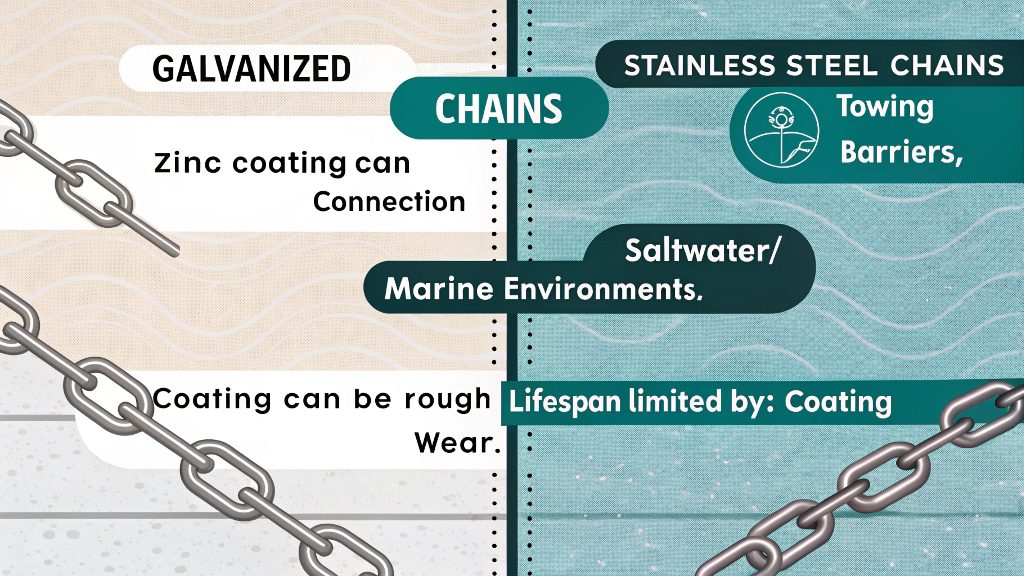
When comparing chains, the environment plays a huge role. Let's break down the specific pros and cons for chains:
Galvanized Chain:
- Pros: Significantly lower cost. Good resistance to atmospheric corrosion (rain, humidity). Decent strength (depends on grade). Widely available.
- Cons: Zinc coating can wear off, especially at link connection points where there's friction. Not suitable for saltwater/marine environments (corrodes relatively quickly). Coating can be rough. Lifespan limited by coating wear.
- Best Uses: General load binding, towing (non-critical), security chains, barriers, temporary fencing, hanging signs (inland), some agricultural uses.
Stainless Steel Chain:
-
Pros: Excellent corrosion resistance, especially against salt water, chemicals, and food products. Smooth, clean finish. Very long lifespan. Maintains strength well over time in corrosive conditions. Different grades available (e.g., 304 for general, 316 for marine).
-
Cons: Much higher cost (can be 3-5 times more expensive, or even higher for specialized grades). May have slightly lower tensile strength compared to an equivalent size alloy steel chain (but often stronger than basic carbon steel chain).
-
Best Uses: Boat anchoring and mooring, marine rigging, food processing plants, chemical handling, wastewater treatment, architectural railings, playground equipment.
In my experience, if a chain is going anywhere near salt water, like for a boat anchor, stainless steel (specifically grade 316) is almost always the recommended choice despite the cost. Galvanized chain used in saltwater will rust, weaken, and fail much sooner. For general use on land, like securing equipment on a trailer or for a temporary barrier, galvanized chain is often perfectly adequate and much more economical. So, assess the corrosion risk and the required lifespan – that will tell you whether the investment in stainless steel chain is necessary.
Conclusion
Choosing between galvanized and stainless steel depends heavily on your specific needs: the environment, required lifespan, and budget. Galvanized is cost-effective for moderate protection, while stainless excels in harsh conditions and longevity.
If you need help deciding or want a quote for your custom CNC machined parts in either material, feel free to reach out to me, Sandra Gao, at [email protected] or visit www.worthyhardware.com. We have extensive experience machining both.