
What Is The Difference Between Progressive Die Stamping And Four Slide Stamping?
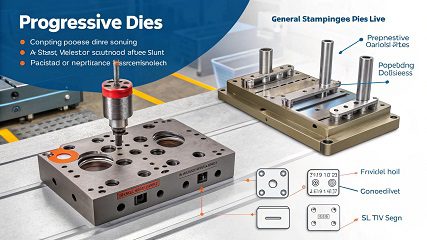
Struggling with the right stamping method for your parts? The wrong choice can inflate costs and delay your project. I can help you decide which process is best.
Progressive die stamping uses a single, complex die to perform multiple operations sequentially on a metal strip. In contrast, fourslide stamping uses simpler tools from four different directions, often for parts with complex bends. The key difference lies in tooling complexity, speed, and efficiency.
Understanding these differences is key to optimizing your production. I've seen clients save thousands just by choosing the right process from the start. Let's break it down further so you can see which method fits your needs and why making the correct choice matters so much for your bottom line.
What is the difference between progressive die and stamping die?
Is the confusion between "progressive die" and "stamping die" causing issues? Using the wrong term can lead to miscommunication with suppliers. Let's clarify this simple but important point.
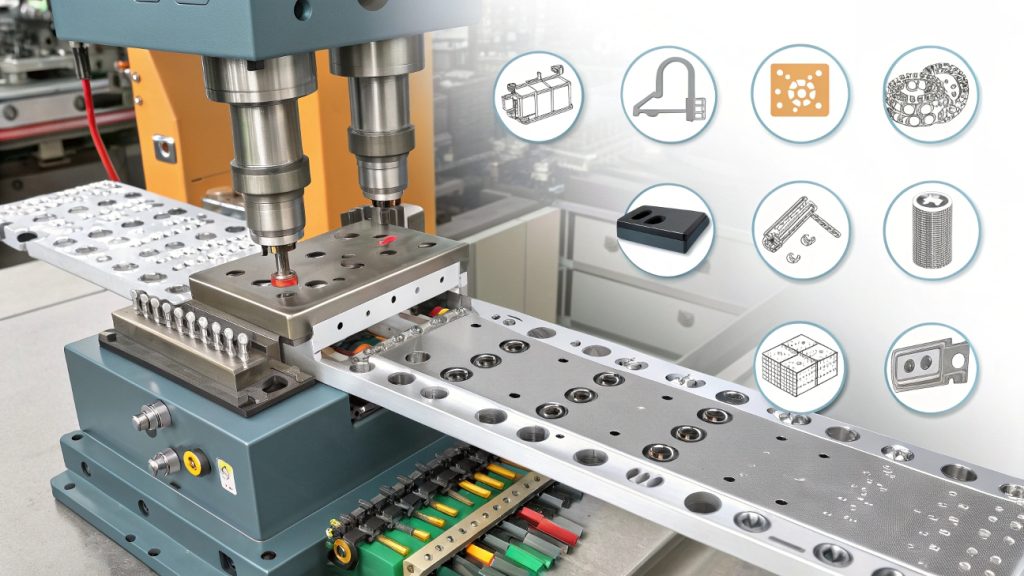
A "stamping die" is a general term for any tool used to cut or form sheet metal. A "progressive die" is a specific and more complex type of stamping die. It contains multiple stations that perform different operations in sequence as the metal strip feeds through it.
I often speak with clients like Mark from Canada, who need to communicate exact requirements to get competitive pricing. Understanding this difference is crucial. Think of "stamping die" as the word "vehicle." A "progressive die" is like a "bus." A bus is a type of vehicle, but it has a very specific function. Similarly, a progressive dieis a type of stamping die designed for a specific, multi-step process.
Stamping Die: The General Tool
A stamping die is any tool that performs an operation on a metal sheet in a press. This could be a very simple tool that only punches a single hole. If a part needs a hole punched and then a bend, it might require two separate, simple stamping dies and two separate operations. The part is handled twice.
Progressive Die: The Multi-Tasking Specialist
A progressive die is a single tool that houses all the steps needed to make a complete part. For a part that needs holes, bends, and to be cut to final shape, the progressive die has a station for each step. The metal strip "progresses" through the die, and with each stroke of the press, a finished part comes out.
| Feature | General Stamping Die (Single-Stage) | Progressive Die |
|---|---|---|
| Function | Performs one or two operations per press stroke. | Performs multiple sequential operations. |
| Complexity | Relatively simple tooling with lower initial cost. | Highly complex tooling with a higher initial cost. |
| Process | The part may need to move between different dies. | The entire part is made in one die from one strip. |
| Best For | Lower volume production or simple parts. | High-volume production of complex parts. |
At my company, Worthy, we create both simple stamping dies and complex progressive dies. Knowing the difference helps our customers specify exactly what they need, which improves design discussions and saves everyone time and money.
What is a progressive die stamping machine used for?
Are you wondering if progressive die stamping fits your project? Choosing the wrong process can lead to wasted materials and a higher budget. Let's examine what it's best for.
A progressive die stamping machine is used for high-volume production of small, complex metal parts. It's ideal for components that require multiple operations like punching, coining, and bending. Common examples include terminals, clips, shields, and brackets where speed and consistency are critical.
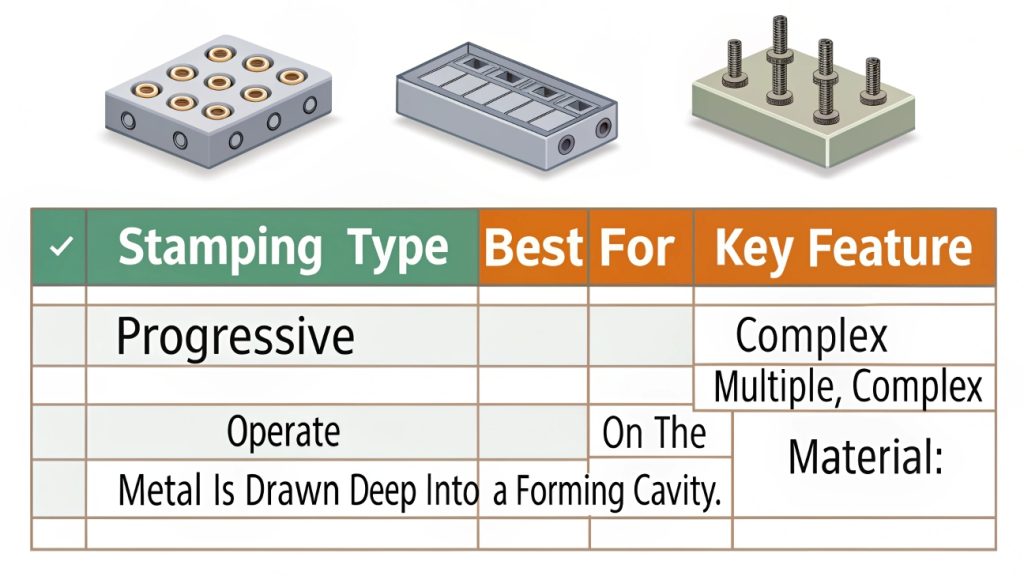
Progressive die stamping shines when a part needs several processes to be completed. For instance, if you need a part that requires punching holes, creating flanges, cutting slots, and then blanking it from the main strip, a progressive die does all of this in one continuous go. The metal strip feeds in, and a finished part comes out with every press cycle. This is why it is vastly more efficient than single-operation stamping for complex parts.
Key Applications and Industries
We use progressive stamping for customers across many sectors because it's so versatile and efficient.
- Electronics: Connectors, terminals, shields
- Automotive: Brackets, clips, retainers
- Aerospace: Small mounting plates, contacts
- Consumer Products: Levers, flat springs, cups
When to Choose Progressive Die Stamping
This process is the best choice under certain conditions.
- High Production Volumes: The initial tooling is expensive, but the cost is spread out over hundreds of thousands or millions of parts. This makes the price per part very low.
- Complex Part Geometry: If your part needs more than two or three forming operations, a progressive die simplifies the process immensely.
- Tight Tolerances: The process is extremely repeatable. Since the part stays connected to the metal strip until the very end, its position is precisely controlled. We can achieve tolerances as tight as .001" (.025mm).
For prototypes or low-volume runs, the high cost of the die might not make sense. But for mass production, it's one of the most cost-effective methods available.
What are the four main types of metal stamping?
Feeling overwhelmed by all the different stamping options available? Knowing the main types helps you have clearer and more productive conversations with engineers. Let's simplify the common methods for you.
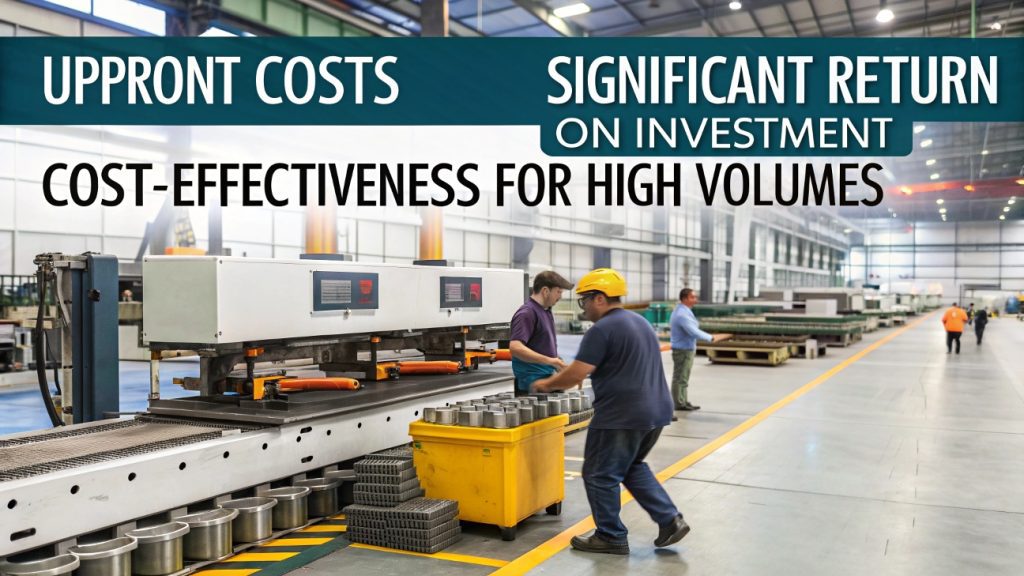
The four main types of metal stamping are progressive die, fourslide, deep draw, and transfer die stamping. Each method is suited for different part complexities, production volumes, and material types. They each offer unique advantages in cost, speed, and forming capability.
Choosing the right type is the first step in a successful project. As a supplier, we guide our clients through these options to match their goals. For example, a procurement officer focused on a low price for a simple bracket has different needs than an engineer designing a complex electronic shield. Here’s a simple breakdown to help you understand the differences.
A Quick Comparison
I find that a simple table helps organize the options clearly.
| Stamping Type | Best For | Key Feature | Example Part |
|---|---|---|---|
| Progressive Die | High-volume, complex flat parts | A metal strip feeds through a multi-station die. | Connectors, terminals |
| Fourslide | Parts with multiple, complex bends | Tools operate from four axes on the material. | Clips, wire forms, flat springs |
| Deep Draw | Cup-shaped or box-shaped parts | Metal is "drawn" deep into a forming cavity. | Cans, housings, sinks |
| Transfer Die | Large parts needing multiple operations | The part is separated and moved between stations. | Car door panels, frame parts |
Progressive die stamping is the high-speed champion for parts that can be formed from a single strip. Fourslide stamping, one of our core capabilities at Worthy, is brilliant for parts with bends in multiple planes, like intricate clips. Deep draw is for creating depth, like a metal can. Transfer die stamping is for larger parts that can't stay on a strip, like automotive body panels. Knowing these fundamentals will make your next sourcing discussion much easier.
What are the advantages of a progressive die?
Is the high initial cost of a progressive die making you hesitate? The long-term benefits might easily outweigh this investment. Let's look at the key advantages you should consider.
The main advantages of a progressive die are extremely high production speed, very low labor cost per part, and excellent repeatability. Because multiple operations happen in one tool, it produces finished parts quickly and consistently, making it the perfect choice for large production runs.
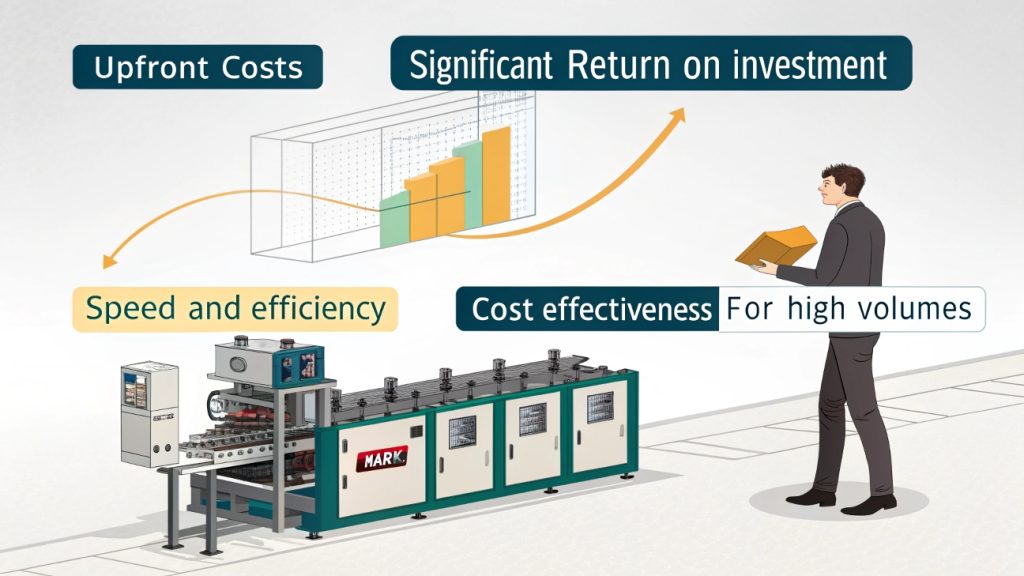
The upfront cost for a progressive die can be significant, I won't deny that. But for my customers who need mass production, the return on investment is huge. When you look at the total cost of ownership over a long production run, progressive die stamping often comes out as the most economical option. It's a classic case of investing more at the start to save a lot more down the road.
Speed and Efficiency
A progressive die machine can run continuously with very little human involvement, producing thousands of finished parts per hour. A single press stroke completes a part that might have otherwise taken several separate steps. This rapid production means we can meet flexible delivery times, even for very large orders.
Cost-Effectiveness for High Volumes
This is the main reason clients like Mark choose this method. The high initial tool cost is absorbed across a massive number of parts. With reduced labor needs and faster cycle times, the cost per piece becomes very low. This allows our customers to purchase high-quality parts at competitive prices, which they can then sell profitably to their own customers.
Consistency and Quality
Quality is non-negotiable. Because the part remains attached to the metal carrier strip until the final station, its positioning is exact throughout the process. This leads to incredible consistency from the first part to the millionth. It’s how we confidently guarantee tight tolerances and perform 100% inspection on all our products. The reliability of a progressive die is simply unmatched for high-volume jobs.
Conclusion
Choosing between progressive and fourslide stamping depends on your part's complexity and volume. Progressive dies offer unmatched speed and consistency for high-volume production, ensuring lower costs per part.