
What Materials Can Be Successfully Welded In Custom Metal Fabrication?
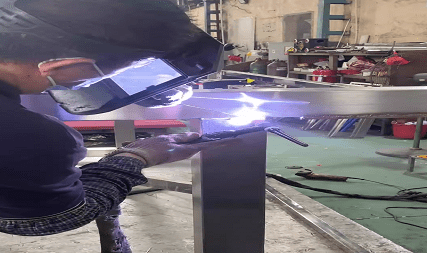
Struggling to choose the right metal for your welded parts? Selecting unweldable materials causes costly delays and rework. Find out which metals ensure successful fabrication.
Many common metals are weldable, including steel, stainless steel, aluminum, copper, and titanium. The key is selecting the right welding process and technique for each specific material and its thickness for successful custom metal fabrication.
Choosing the correct material is critical before any welding begins. It impacts the strength, appearance, and cost of your final product. Let's explore which materials work best and what factors influence their weldability. Understanding this helps avoid problems down the line.
Which material can be welded?
Confused about which metals bond well under heat? Choosing the wrong one means weak joints or project failure. Learn which common metals are readily weldable for strong results.
Steel, stainless steel, and aluminum are the most commonly welded materials in fabrication. Many other metals like copper, brass, titanium, and various alloys can also be successfully welded using appropriate techniques.
When customers like Mark Chen from Canada ask about materials for their projects, weldability is often a key concern. At Worthy Hardware, we handle a wide range of metals, and experience tells us which ones weld reliably. The ease of welding depends on the metal's properties.
Common Weldable Metals
Many metals readily accept welding, making them popular choices for fabrication projects. Here's a breakdown:
-
Steel: Carbon steel is perhaps the most commonly welded material due to its strength, availability, and cost-effectiveness. Low-carbon steels are generally very easy to weld. Higher carbon content can make it trickier, sometimes requiring preheating or post-weld heat treatment.
-
Stainless Steel: Various grades (like 304 or 316) are frequently welded for applications needing corrosion resistance. While weldable, controlling heat input is important to maintain its properties. Different grades might require specific filler materials.
-
Aluminum: Lightweight and corrosion-resistant, aluminum is widely used. However, it presents challenges like its high thermal conductivity and the oxide layer that forms on its surface. Techniques like TIG (GTAW) or MIG (GMAW) welding with appropriate shielding gas are essential. I recall a project where precise TIG welding was crucial for an aluminum enclosure for an electronics client.
-
Copper and Brass: These materials conduct heat very well, which can make welding difficult as heat dissipates quickly. Preheating is often necessary. Specific techniques and filler metals are required.
-
Titanium: Strong, lightweight, and corrosion-resistant, titanium is used in aerospace and medical applications. It requires extremely clean conditions and inert gas shielding (like Argon) to prevent contamination during welding, which can make it brittle.
Here's a simple table summarizing common weldable metals:
| Material | General Weldability | Common Welding Methods | Key Considerations |
|---|---|---|---|
| Carbon Steel | Excellent | MIG, TIG, Stick | Carbon content affects ease |
| Stainless Steel | Good | TIG, MIG | Heat control, filler selection |
| Aluminum | Good (with skill) | TIG, MIG | Oxide layer, thermal conductivity |
| Copper/Brass | Fair | TIG, Brazing | High thermal conductivity, preheating |
| Titanium | Good (with care) | TIG | Extreme cleanliness, inert shielding |
Choosing the right material involves balancing weldability with other requirements like strength, weight, corrosion resistance, and cost.
What metals cannot be welded?
Worried about specifying a metal that fabrication shops refuse to weld? Some metals pose significant challenges or are practically unweldable. Avoid specifying these metals for welded assemblies.
While most metals can be joined somehow, some are considered "unweldable" using standard fusion methods due to their properties, leading to brittle or cracked joints. Examples include certain cast irons or powder metallurgy parts.
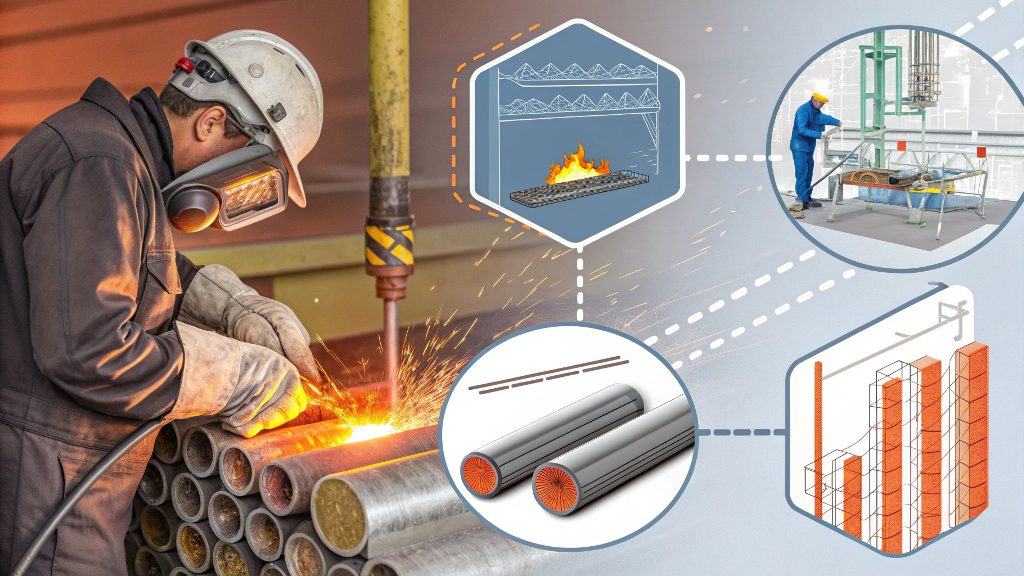
It's frustrating for clients when they design a part around a specific metal, only to find out later that welding it is problematic or impossible. Understanding the limitations helps in the design phase. Let's look at why some metals resist conventional welding.
Challenges in Welding Certain Metals
Saying a metal "cannot be welded" often means it cannot be reliably joined using common fusion welding processes (like MIG or TIG) without significant issues or specialized techniques.
-
High Carbon Content: As mentioned with steel, very high carbon content makes welding difficult. The rapid heating and cooling cycle can lead to hardening and cracking in the heat-affected zone (HAZ). Special procedures like extensive preheating and controlled cooling might be needed, but success isn't guaranteed.
-
Cast Irons: Many types of cast iron have high carbon and silicon content, making them prone to cracking when welded. While specialized rods and techniques (like nickel-based fillers and careful preheating/peening) exist, achieving a strong, reliable weld is difficult and often avoided for critical applications. Brazing is sometimes a better joining alternative.
-
Dissimilar Metals: Welding two vastly different metals together can be impossible due to differences in melting points, thermal expansion rates, and metallurgical incompatibility, leading to weak or brittle joints. For example, directly fusion welding aluminum to steel is generally not feasible. Specialized techniques like explosion welding or using transition inserts might work, but not standard arc welding.
-
Powder Metallurgy (PM) Parts: Parts made by sintering metal powders often have inherent porosity. This porosity can trap gases and contaminants, leading to very poor weld quality with excessive defects.
-
Certain Heat-Treated Alloys: Some alloys derive their strength from specific heat treatments. The heat from welding can ruin these properties in the HAZ, significantly weakening the part even if the weld itself holds.
Why are they difficult?
| Metal/Condition | Primary Challenge | Possible Alternatives/Solutions |
|---|---|---|
| High-Carbon Steel | Cracking, Hardening | Pre/Post-heating, Special Fillers |
| Cast Iron | Cracking, Brittleness | Specialized Rods, Brazing, Preheating |
| Dissimilar Metals | Metallurgical Incompatibility | Brazing, Mechanical Fastening, Inserts |
| Powder Metallurgy Parts | Porosity, Contamination | Brazing, Infiltration, Redesign |
| Heat-Treated Alloys | Loss of Properties in HAZ | Careful Process Control, Redesign |
If a design requires joining materials considered unweldable, it's crucial to consult with fabrication experts like us at Worthy Hardware early on. We can explore alternative joining methods like brazing, riveting, bolting, or using adhesives, or suggest design modifications.
Which materials can be fabricated using a welding process?
Need to know if your chosen metal fits standard welding fabrication? Not all fabrication involves welding, but many common materials rely on it. Confirm your material choice works well with welding.
Most structural and sheet metals used in fabrication, especially steels, stainless steels, and aluminum alloys, are readily fabricated using various welding processes. These materials allow for strong, permanent joints.
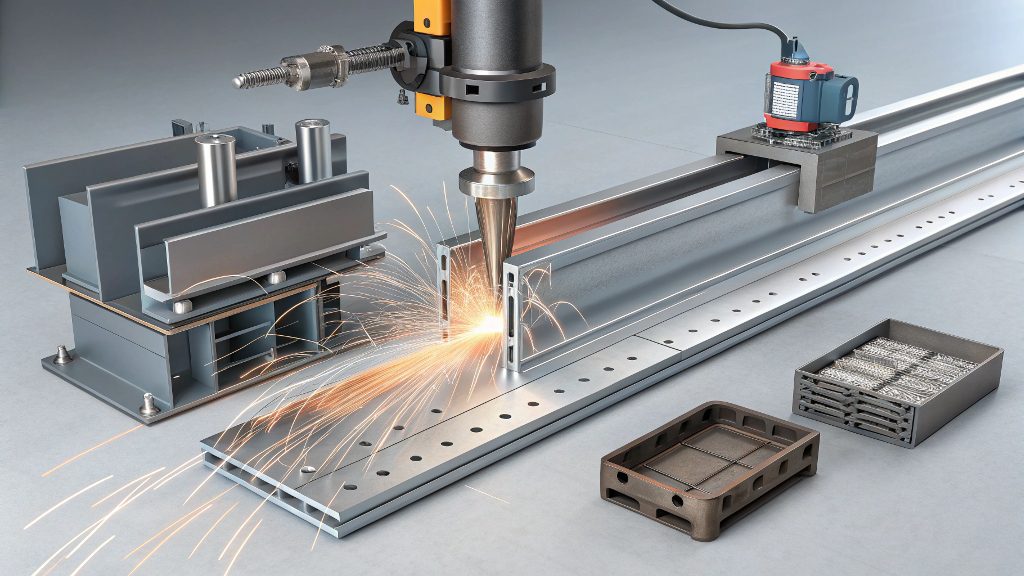
Welding is a cornerstone of metal fabrication, allowing us to join pieces cut by laser or waterjet, bent on press brakes, or formed in other ways. The suitability of a material for welding directly impacts how easily we can fabricate complex assemblies.
Integrating Welding into Fabrication
Welding isn't just about joining; it's a key step integrated within the broader sheet metal fabrication workflow. Materials suitable for welding are often chosen because they also respond well to other fabrication steps like cutting and bending.
-
Steel: Both carbon and stainless steels are stars in fabrication involving welding. They can be easily cut (laser, plasma), bent, and then welded using cost-effective methods like MIG or robust methods like TIG. Their strength makes them ideal for structural frames, enclosures, and machine parts. We fabricate countless steel components daily using welding.
-
Aluminum: While needing more specialized welding techniques (TIG/MIG with Argon), aluminum is extensively fabricated using welding. Its lightweight nature makes it perfect for automotive, aerospace, and electronic enclosures. We often laser cut aluminum sheets, form them, and then TIG weld the seams for a clean, strong finish.
-
Other Weldable Metals: Materials like titanium, copper, and nickel alloys, while sometimes more challenging or expensive to weld, are specifically chosen for applications where their unique properties (e.g., high strength-to-weight ratio for titanium, conductivity for copper) are essential. Fabrication processes are adapted to accommodate their welding requirements.
The Fabrication Flow with Welding:
- Design: Material selection considers weldability alongside other factors.
- Cutting: Sheets are cut to size (Laser, Waterjet, Plasma).
- Bending/Forming: Parts are shaped using press brakes or other methods.
- Welding: Components are joined using the appropriate welding process (TIG, MIG, Spot Welding etc.).
- Finishing: Welds might be ground smooth, and the part may undergo surface treatments like powder coating or anodizing.
Compatibility Table:
| Material | Common Fabrication Processes | Welding Suitability | Typical Applications in Fabrication |
|---|---|---|---|
| Carbon Steel | Laser Cutting, Bending, Punching, Welding | Excellent | Frames, Brackets, Enclosures, Structures |
| Stainless Steel | Laser Cutting, Bending, Welding | Good | Food Grade Eqpt, Medical, Architectural |
| Aluminum | Laser Cutting, Bending, Welding | Good (with skill) | Enclosures, Automotive, Aerospace Panels |
Essentially, if a metal is considered generally "weldable," it can almost certainly be incorporated into a multi-step fabrication process that includes welding. The key is using the right welding technique for that specific material and application.
What type of welding is best for fabrication?
Overwhelmed by different welding types like TIG, MIG, Stick? Choosing the wrong process leads to poor quality or high costs. Understand which methods suit common fabrication materials.
MIG (GMAW) and TIG (GTAW) welding are the most versatile and widely used types for custom metal fabrication, offering good control and quality across materials like steel, stainless steel, and aluminum.
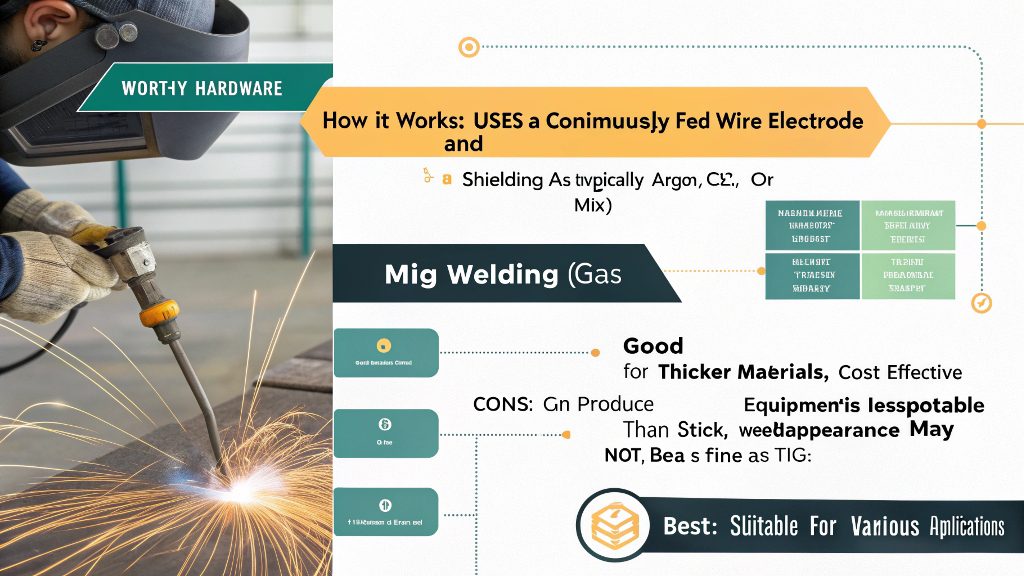
Selecting the optimal welding process is as important as choosing the right material. At Worthy Hardware, our engineers consider the material type, thickness, required joint strength, final appearance, and production volume to determine the best method. Let's compare the common choices.
Comparing Common Welding Processes in Fabrication
While various welding processes exist, a few dominate the custom metal fabrication landscape due to their versatility and the quality they produce.
-
MIG Welding (Gas Metal Arc Welding - GMAW):
- How it Works: Uses a continuously fed wire electrode and a shielding gas (typically Argon, CO2, or a mix).
- Pros: Fast, relatively easy to learn, good for thicker materials, cost-effective for production runs. Excellent for steel, good for aluminum and stainless steel with the right setup.
- Cons: Can produce spatter, equipment is less portable than Stick, weld appearance may not be as fine as TIG.
- Best For: General fabrication of steel structures, thicker aluminum, production welding where speed is important. We often use MIG for steel frames and brackets.
-
TIG Welding (Gas Tungsten Arc Welding - GTAW):
- How it Works: Uses a non-consumable tungsten electrode, an external filler rod (added manually), and an inert shielding gas (usually Argon).
- Pros: High-quality, precise, clean welds with excellent appearance. Great control over heat input, suitable for thin materials. Welds nearly all metals, including steel, stainless steel, aluminum, titanium, copper. No spatter.
- Cons: Slower process, requires more skill, generally more expensive than MIG.
- Best For: High-precision work, thin materials, applications where aesthetics are critical (e.g., stainless steel kitchen equipment, aluminum enclosures), welding tricky metals like titanium. Many of our aerospace and medical parts rely on TIG.
-
Stick Welding (Shielded Metal Arc Welding - SMAW):
- How it Works: Uses a consumable electrode stick coated in flux, which creates shielding gas and slag when burned.
- Pros: Simple, portable equipment, effective outdoors and on dirty or rusty materials. Good for thicker materials and structural work.
- Cons: Slower than MIG, produces spatter and slag that needs cleaning, requires more skill for clean welds, not ideal for thin materials or reactive metals like aluminum or titanium.
- Best For: Field repairs, heavy structural steel, less critical appearance applications. Less common in precise custom sheet metal fabrication shops like ours, but still used for certain heavy jobs.
Process Selection Guide:
| Feature | MIG (GMAW) | TIG (GTAW) | Stick (SMAW) |
|---|---|---|---|
| Speed | Fast | Slow | Moderate |
| Quality | Good to Excellent | Excellent | Fair to Good |
| Appearance | Good | Excellent | Fair (requires cleaning) |
| Material | Steel, SS, Alum | Most Metals | Mostly Steel/Iron |
| Thickness | Medium to Thick | Thin to Medium | Medium to Very Thick |
| Skill Level | Moderate | High | Moderate to High |
| Cost/Setup | Moderate | Higher | Low |
| Primary Use | Production, General Fab | Precision, Thin Mat'l | Structural, Field Repair |
For most custom sheet metal fabrication at Worthy Hardware, TIG and MIG cover the vast majority of our clients' needs, offering the best balance of quality, speed, and material compatibility.
Conclusion
Most common metals like steel, stainless steel, and aluminum are weldable. Success depends on choosing the right material and the appropriate welding process like MIG or TIG for your fabrication needs.