
What Are The Most Common CNC Machining Problems And How To Solve Them?
Are your CNC projects failing? This costs you valuable time and money. Here is how you can identify the most common issues and solve them before they become big problems.
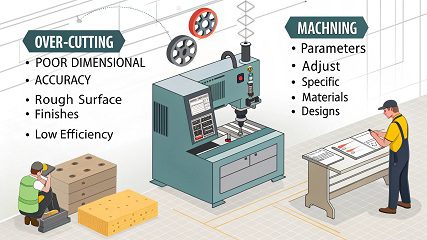
The most common CNC machining problems are over-cutting, poor dimensional accuracy, rough surface finishes, and low efficiency. You can solve over 80% of these issues by keeping detailed records of all machining parameters and carefully adjusting them for the specific material and design of each part.
Solving problems is a huge part of my job as a CNC machining expert. I've learned that most issues are not random. They are predictable and preventable if you know what to look for. In my experience, a little bit of preparation and careful documentation can save you from major headaches down the road. It turns a frustrating process into a smooth and reliable one. Let's look at the specific problems you might face and how to fix them.
What are the common problems in a CNC machine?
You get an unexpected error that ruins your parts. This creates wasted material and project delays. You can prevent this by identifying the most frequent problems that happen inside the machine.
Common problems include over-cutting the workpiece, not meeting precision tolerances, a rough surface finish, and tools breaking or wearing out too quickly. These issues are often symptoms of incorrect machine settings or a worn-out tool that needs to be replaced.
In my workshop, we see these problems from time to time, but we have a system to catch them. Over-cutting is when the tool removes too much material, which ruins the part completely. Poor accuracy means the final dimensions are outside the specified tolerance. A rough surface finish looks and feels unprofessional, and customers like Mark Chen, who value quality, will reject it immediately. These issues are almost always connected. For instance, a worn tool can cause both poor accuracy and a rough finish. We have learned that the root cause is usually found in the details of the machine's setup. It's rarely a major machine failure. It is more likely a small, overlooked setting.
To make this clearer, here is a breakdown of common problems and their typical causes:
| Problem | Common Cause |
|---|---|
| Over-Cutting | Incorrect tool offset or a mistake in the G-code. |
| Poor Accuracy | A worn tool, machine vibration, or wrong speeds. |
| Rough Surface Finish | An incorrect tool, the wrong feed rate, or a bad coolant flow. |
| Fast Tool Wear | Cutting settings are too aggressive for the material. |
By understanding these links, we can quickly diagnose the problem instead of guessing.
How to solve a CNC machine problem?
A problem has stopped your production. Every minute of downtime is costing you money. You need a simple, systematic way to find the issue and get the machine running again.
The best way to solve a CNC problem is with systematic troubleshooting. First, check your G-code for errors. Then, inspect the cutting tool and its settings. Finally, verify the machine's setup. Your most valuable tool here is a detailed log of past jobs.
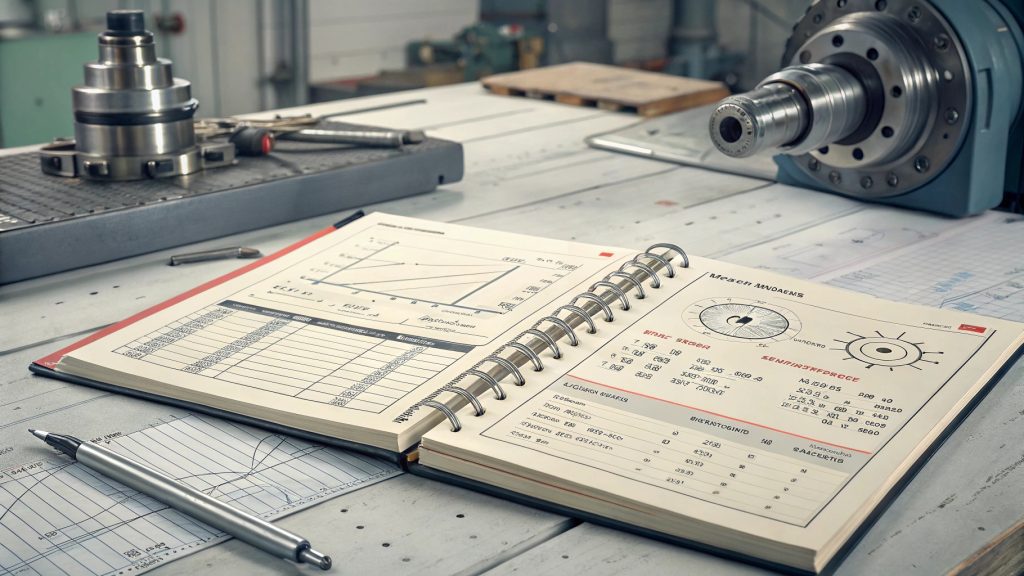
I can't stress this enough: write everything down. This is the core of my problem-solving strategy. When we encounter an issue, we don't just start changing settings randomly. We follow a clear process. The first step is always to look at our records. We have a logbook for every material and every complex job we've run. For example, if we are machining an aluminum 6061 part and get a rough finish, I open our log. I check the parameters we used on the last successful batch of aluminum 6061 parts.
This includes the exact tool, the spindle speed, the feed rate, and the coolant mixture. Nine times out of ten, we find a small difference between our proven settings and the current ones. Correcting this small difference usually fixes the problem instantly. This method is fast, reliable, and stops us from making the same mistake twice. It's how we maintain the tight tolerances our customers in North America and Europe demand.
How to make CNC more efficient?
Your jobs are taking too long to finish. This means you have lower output and less profit for your business. You can fix this by optimizing your process with a few key strategies.
To boost CNC efficiency, optimize your toolpaths to reduce wasted movement. Use high-quality, correct tools, and balance your cutting speed with feed rates. Batching similar jobs together also cuts down on setup time and increases your overall production.
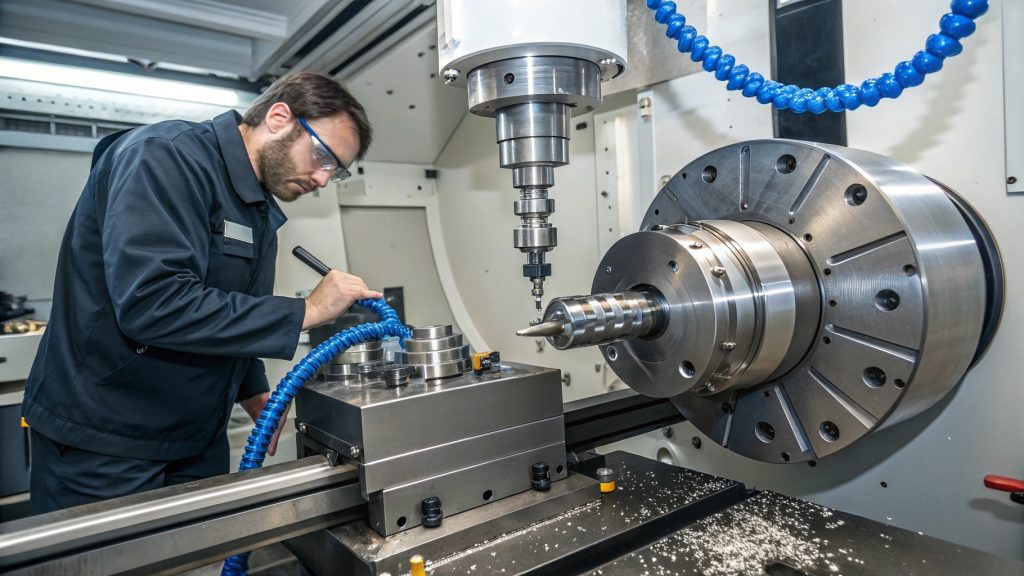
Making our CNC process more efficient is something I work on every day. It's not just about making the machine run faster. It's about being smarter. One of the biggest improvements we made was in toolpath optimization. Instead of just cutting in straight lines, our CAM software plans smarter routes. This means the tool is always cutting smoothly, which reduces wear and shortens the machining time. Another key area is setup time.
We prepare the next job while the current one is still running. We get the material, tools, and fixtures ready. When one job finishes, the next one is ready to go in minutes. This minimizes machine downtime. But the most important factor comes back to my main point: detailed parameters. Our records help us find the perfect "sweet spot" for each material. We know the fastest speed and feed rate we can use without risking a bad part. This allows us to offer fast, flexible delivery times, from a single prototype to high-volume production.
What are the problems with machining?
You think you have covered everything in the process. But hidden issues can still ruin your project. You need to understand the broader challenges that go beyond just the machine itself.
The biggest problems in machining often happen before the work even starts. These include issues with the raw material, flaws in the original CAD design, and poor communication between the designer and the machinist. A perfect machine cannot fix a bad design.

This is a lesson I learned the hard way. A customer sends a design, and we make it exactly as drawn. But then, the part fails. Why? The problem was not in our machining. It was in the design itself. For example, a design might have sharp internal corners, but a round cutting tool cannot make a perfectly sharp internal corner. As part of our service at Worthy, my engineers and I now review every design before we start cutting. We look for potential problems. We help our customers improve their designs to make them stronger and cheaper to produce. This is called Design for Manufacturability (DFM).
It is one of our strongest points. Another problem is communication. A customer like Mark might be an expert in his business, but not in machining. So, we make sure to clarify everything. What surface finish is needed? What are the most critical tolerances? This clear communication prevents mistakes and ensures the final parts are exactly what the customer needs. It helps us avoid the delays and quality issues that frustrate so many buyers.
Conclusion
Success in CNC machining is about more than just the machine. It requires careful planning, detailed records, and clear communication to prevent problems and deliver high-quality parts every single time.